Things to Do After a Long Flight – Your Complete Recovery Guide
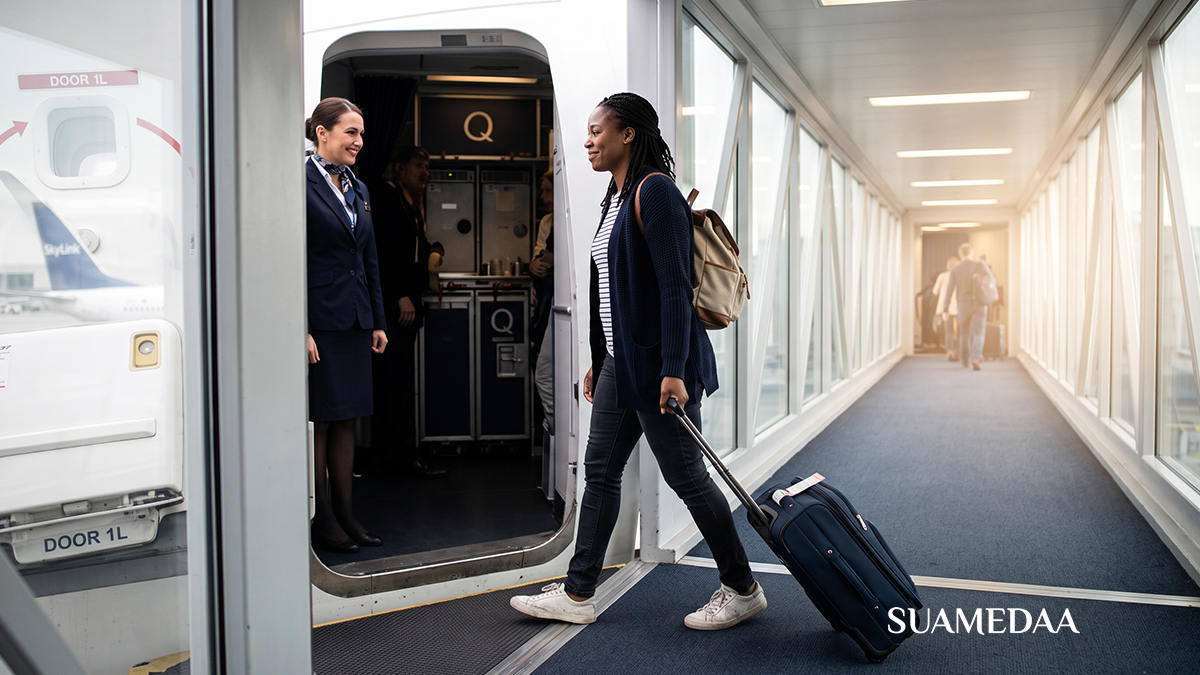
The aircraft door opens. You stand up, reach for your bag in the overhead locker, and feel it all at once: the stiffness in your back, the heaviness in your legs, the dry scratch at the back of your throat, and the disorientation of not being entirely sure whether you are tired or simply confused. Long-haul air travel is one of the more physically and mentally demanding things that modern life asks of us without us quite registering that it is demanding at all. We fold ourselves into a pressurised metal tube for eight, twelve, or sixteen hours, breathe recycled air drier than the Sahara Desert, sit still in ways our bodies were not designed for, cross time zones that our internal clocks will take days to reconcile, and then arrive at a destination and expect to function.
What you do in the hours and days after a long flight matters enormously. The right recovery routine can mean the difference between arriving and thriving versus arriving and simply surviving. Here is a complete guide to what your body and mind actually need, and how to give it to them.
Understanding What a Long Flight Actually Does to You
Before getting into the recovery steps, it helps to understand the specific ways that long-haul air travel stresses the body. This is not abstract: the physiological changes are measurable, well-documented, and directly relevant to what you should do once you land.

The cabin air is almost cartoonishly dry. Commercial aircraft maintain cabin humidity at somewhere between 10 and 20 percent, lower than the humidity of the Sahara Desert on a typical day, and far below the 40 to 60 percent range that the human body finds comfortable. At this humidity level, you lose moisture through respiration and through your skin continuously throughout the flight. Even mild dehydration of one to two percent of body weight measurably impairs cognitive performance, mood, memory, and reaction time. A twelve-hour flight without active hydration management leaves most travellers meaningfully dehydrated on arrival.
The air pressure in a commercial aircraft cabin is set to the equivalent of an altitude of 6,000 to 8,000 feet above sea level, not to sea level itself. At this simulated altitude, arterial oxygen saturation in healthy adults drops from the sea-level norm of 98 to 99 percent to approximately 93 to 96 percent. The body compensates by increasing cardiovascular workload. This hypobaric hypoxia elevates oxidative stress markers and leaves you more fatigued than you might expect from simply sitting still for many hours.
The circulatory system suffers specifically from immobility. When you sit for extended periods, the calf muscle pump that drives venous blood back up from the legs stops functioning properly. Blood pools in the lower extremities, which is why your ankles swell on long flights and why your legs feel heavy and stiff on arrival. The US Centers for Disease Control and Prevention identifies flights of more than four hours as risk factors for deep vein thrombosis, with the risk increasing for every additional two hours of flight time.
Then there is the circadian disruption. Your body’s internal clock is a biological timing system governed by light, temperature, and social cues. When you cross multiple time zones rapidly, the clock does not move with you. It continues running on home time even as your environment shifts to destination time. Research published in the journal Sleep in April 2025, drawing on 1.5 million nights of real-world data collected through wearable devices from 60,000 international trips, found that sleep quantity returns close to baseline within roughly two days of arrival. Sleep timing, however, takes far longer to normalise, with increased nighttime awakenings and shifted sleep timing persisting for more than a week in some cases. The study also confirmed what experienced long-haul travellers have long suspected: eastward travel causes more severe jet lag than westward travel, particularly for journeys crossing up to three time zones.
With this picture in mind, here is exactly what to do.



Step One: Rehydrate Immediately and Intentionally
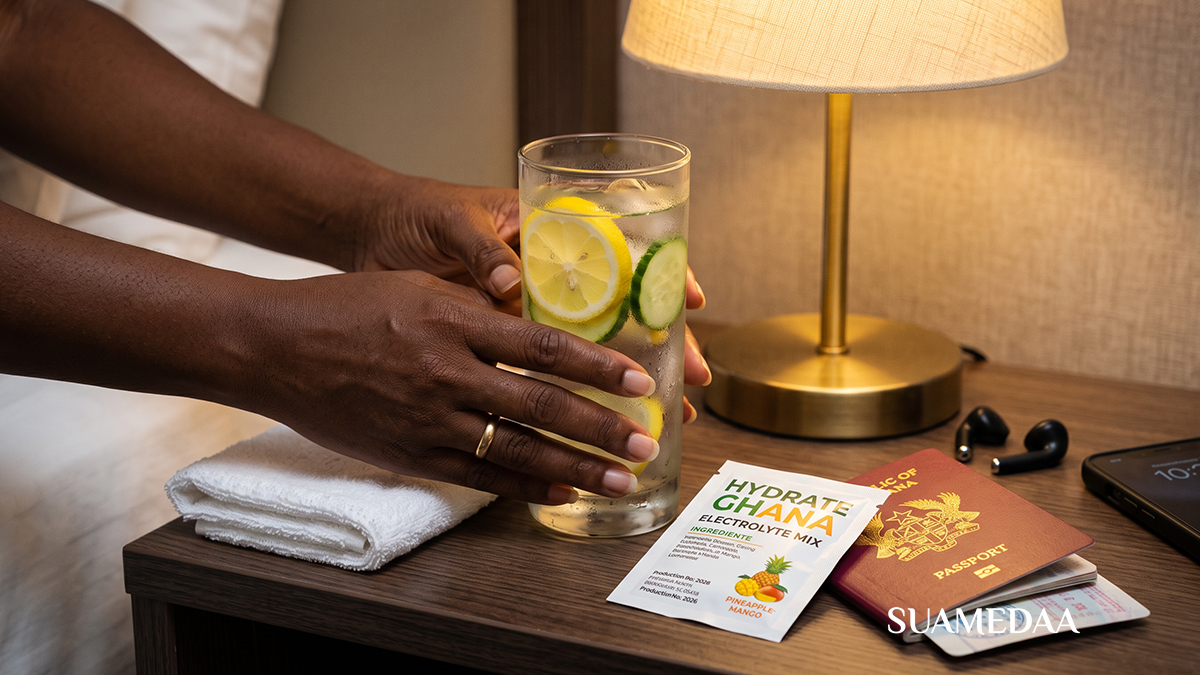
Your first priority on landing is hydration, and plain water alone is unlikely to be enough. The extended dehydration of a long flight depletes not just fluid volume but electrolytes, the minerals including sodium, potassium, and magnesium that your body uses to regulate cellular function, fluid balance, and nerve signalling. Drinking plain water without electrolytes can actually delay full rehydration if your electrolyte levels are significantly depleted.
Start with water, but aim to add electrolytes through coconut water, a dedicated electrolyte drink or tablet, or light vegetable broth. Herbal teas, particularly chamomile or ginger, serve double duty by hydrating and beginning the process of settling a digestive system that has been stressed by the flight. Avoid alcohol in the immediate hours after landing, even if it is offered at a welcome event or seems socially appropriate. Alcohol is a diuretic that will compound the dehydration you have just spent several hours accumulating. Limit caffeine as well in the first few hours, particularly if it is evening at your destination, since caffeine consumed late in the day will make sleep onset harder.
Aim to drink at least 500 millilitres of water or an electrolyte drink within the first hour of landing, and continue drinking steadily through the day at a rate higher than your normal baseline.
Step Two: Move Your Body, Starting with Your Legs
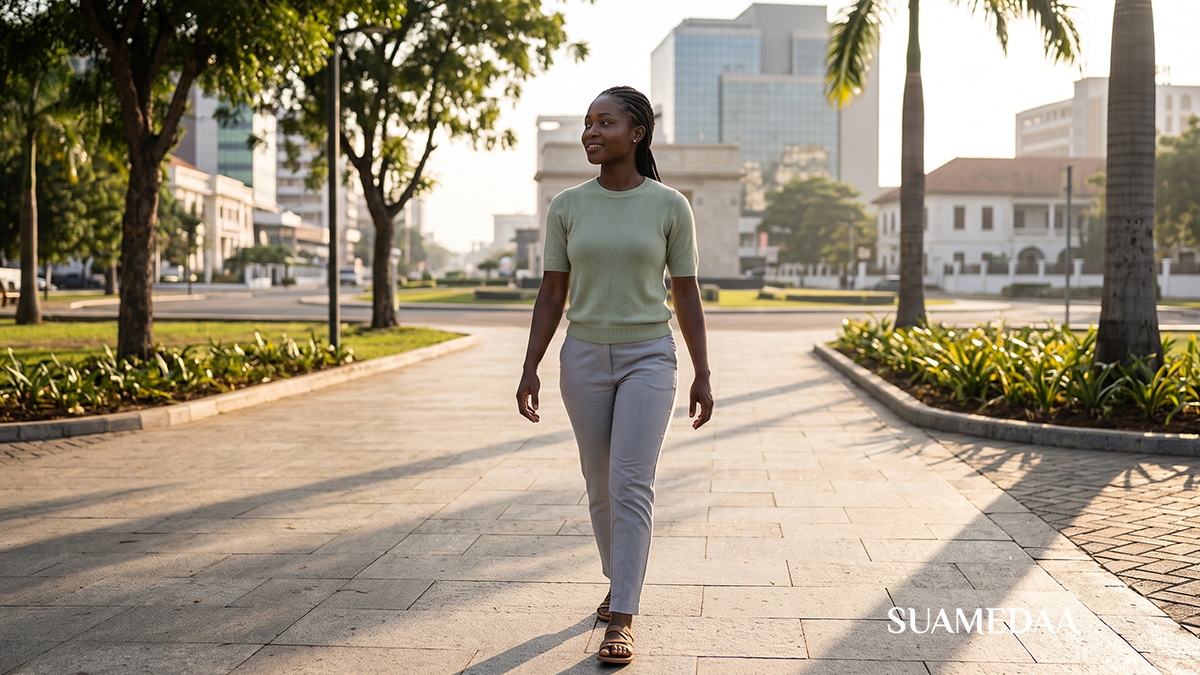
The moment you can walk freely, walk. The most important physical action after a long flight is restoring normal circulation to the lower limbs. The pooling of venous blood in the legs and the reduced function of the calf muscle pump during flight are corrected almost immediately when you begin to walk with a normal stride. A ten-minute walk through the airport on the way to baggage reclaim is more physiologically valuable than it might appear.
If your travel schedule allows it, do not go directly from the plane to a car seat. Spend time on your feet before sitting again. The transition from the aircraft seat to a car seat to a hotel chair to a bed involves very little of the movement your body needs. Find the opportunity to walk, even briefly, at each transition point.



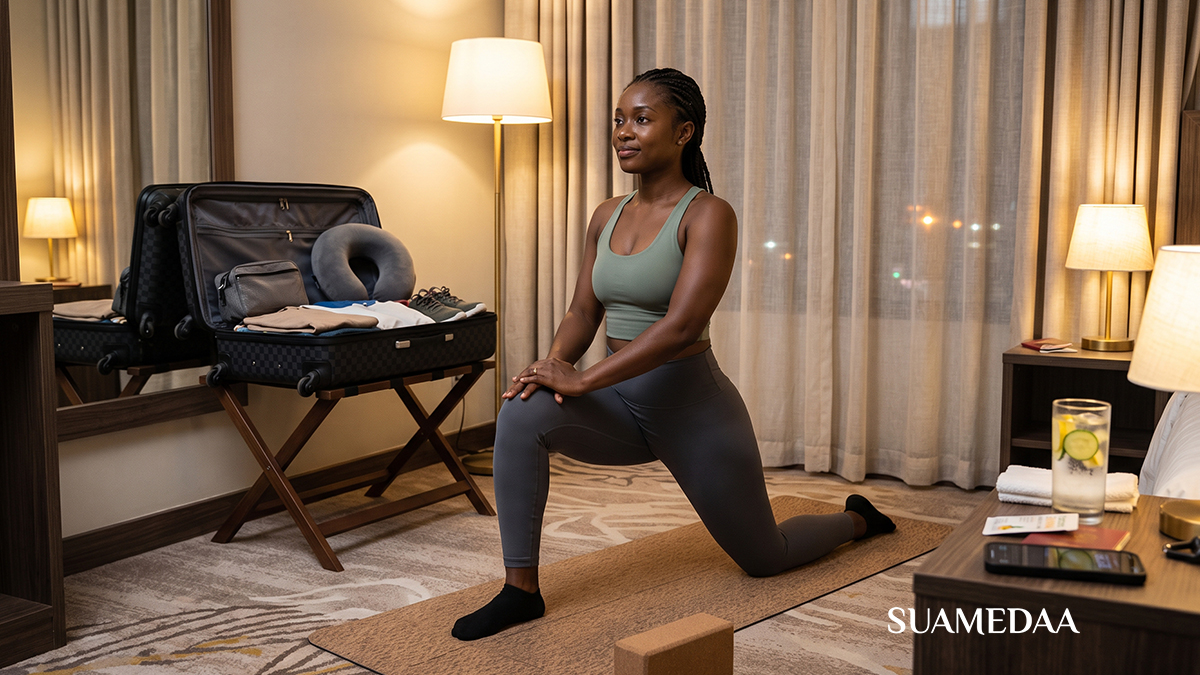
Once you reach your accommodation, take 15 to 20 minutes for deliberate stretching targeting the areas most affected by prolonged sitting. Hip flexors, which are in a shortened position for the duration of a long flight, benefit from lunging stretches and hip circles. The lower back, which bears compressive load from sitting in a fixed position, responds well to gentle cat-cow movements and child’s pose. The hamstrings and calves, both affected by the pooling of venous blood, benefit from standing forward bends and calf stretches against a wall.
If you have compression socks or stockings with you, continue wearing them for a few hours after landing if your legs feel heavy or swollen. Elevating your legs above heart level for ten to fifteen minutes, lying on a bed with your legs propped against the wall, accelerates the drainage of the pooled fluid that causes the characteristic post-flight ankle swelling.
Step Three: Get Into the Light
Light is the most powerful tool available for resetting your circadian clock, and it costs nothing. The body’s internal clock is calibrated primarily by the pattern of light and darkness it receives. Morning light, specifically the broad-spectrum natural light of outdoor daylight, signals to the brain that it is time to suppress melatonin and increase cortisol, promoting alertness and anchoring the circadian rhythm to the local time.
If you have arrived during daylight hours at your destination, go outside as soon as practically possible. Even fifteen to twenty minutes of outdoor exposure in the first few hours after arrival provides a meaningful signal to your circadian system that it is now anchored to local time. If it is overcast, the ambient light is still far brighter than indoor lighting and significantly more effective as a circadian cue.
If you have arrived late at night, the light strategy shifts. Avoid bright artificial light in the hour or two before your target bedtime. Dim your phone screen, lower room lighting, and resist the temptation to run through emails under full overhead lights. Darkness is the signal that promotes melatonin release and prepares the brain for sleep, and any bright light in the evening will delay that process.
For travellers crossing many time zones, particularly those crossing five or more, the timing of light exposure becomes nuanced. Light in the early morning advances the clock forward, helpful for westward travel recovery. Light in the evening delays the clock, helpful for eastward travel recovery when you need to push your sleep time later. A dedicated jet lag management app, or consultation with your doctor before a major time zone crossing, can provide personalised guidance on when to seek and when to avoid light.
Step Four: Eat to Reset, Not to Comfort
The body under circadian stress reaches for comfort food: simple carbohydrates, salt, and sugar feel appealing when you are fatigued and disoriented. Resisting this pull and choosing foods that actively support recovery instead is one of the more effective things you can do in the first 24 hours.
Prioritise anti-inflammatory foods. The oxidative stress of cabin pressure and dehydration is a form of low-level physiological stress, and the nutrients that counteract inflammation also counteract its effects. Berries, citrus fruits, leafy greens, and brightly coloured vegetables all contain antioxidants that support cellular recovery. A bowl of mixed berries with yogurt, or a large salad with a variety of coloured vegetables and a lean protein, is a genuinely more effective recovery meal than the heavy hotel meal that might be more tempting.
Include lean protein, which provides the building blocks for cellular repair and pairs with complex carbohydrates to support sustained energy. Sweet potatoes, quinoa, whole grain rice, and oats are good complex carbohydrate sources. Lean chicken, fish, eggs, and legumes provide the protein. The combination sustains blood sugar more evenly than simple carbohydrates, avoiding the energy crash that follows a large high-sugar meal.
Fermented foods deserve specific mention. Travel disrupts the gut microbiome, the community of bacteria that governs digestion and, through the gut-brain axis, influences mood and cognitive function. Yogurt, kefir, and fermented vegetables like sauerkraut provide live cultures that begin restoring microbial balance. Including a serving of fermented food in your first post-flight meal is a practical step with real physiological reasoning behind it.
Eat on destination time from arrival. The timing of meals is a secondary zeitgeber, or time-giver, for the circadian system, meaning that eating at the times that correspond to your destination’s meal schedule reinforces the clock-reset signal that light exposure begins. Eating breakfast when it is breakfast time locally, even if your body is demanding dinner, is one of the practical disciplines of faster jet lag recovery.
Step Five: Make Your First Sleep Count
Sleep after a long flight is both the most important and the most difficult element of the recovery process. The challenge is that the circadian disruption that makes sleep harder to initiate and maintain is also what makes high-quality sleep so urgently necessary.
The foundational principle is to target local bedtime. Whether you feel sleepy or not, aim to go to bed at a time that corresponds to a reasonable local bedtime at your destination. This is harder going eastward than westward: if you have flown from Accra to Tokyo and your body thinks it is 3:00 in the afternoon when local time is midnight, the discipline required to lie down and attempt sleep is real. But the alternative, staying up until you feel genuinely tired on body-clock time, means potentially staying awake until the early hours of the local morning, which pushes the entire clock reset process back by a day.
The sleep environment matters. A cool room, between 18 and 20 degrees Celsius, supports the body’s natural tendency to drop its core temperature as part of the sleep onset process. Black-out curtains or a quality sleep mask eliminate light that would otherwise signal wakefulness to the circadian system. Ear plugs or noise-cancelling headphones address unfamiliar ambient sound in a new hotel room or city. Lavender aromatherapy has modest but real evidence for facilitating relaxation and sleep onset.
For melatonin: a low dose of 1 to 3 milligrams of fast-release melatonin taken approximately 30 minutes before the target local bedtime on the first night at your destination is supported by reasonable evidence for assisting circadian adjustment. Fast-release preparations are preferred over slow-release versions, which may remain in the system longer than intended. Melatonin is not a sleeping tablet; it is a circadian signal that tells the brain it is night. The dose matters: the popular belief that more is better does not apply to melatonin, and higher doses do not produce proportionally stronger effects on the circadian clock.
If you wake in the night and cannot return to sleep, avoid reaching for your phone or turning on bright lights. Lie still in the dark, practice slow breathing, and allow your body the opportunity to return to sleep. The waking itself is normal: the 2025 study found that increased nighttime awakenings are among the most persistent effects of long-haul travel, and accepting them as temporary rather than responding to them with anxiety is itself part of the recovery process.
Step Six: Take a Shower Before Rest
A shower shortly after landing serves purposes beyond hygiene. The warm water provides a controlled form of heat exposure that relaxes muscles tightened by the fixed posture of the flight, promotes blood flow to the surface of the skin, and, if you time it correctly, can assist with sleep onset. Body temperature naturally drops in the hours before and during sleep. A warm shower raises surface temperature temporarily; when you exit and cool down, the drop in core temperature mimics and reinforces the body’s natural pre-sleep cooling process.
An alternative cold shower, or ending a warm shower with thirty to sixty seconds of cold water, has different but complementary benefits: it clears the cognitive fog of flight fatigue through a controlled adrenaline response and invigorates circulation. If your destination is hot and humid, a cool shower on arrival addresses the physical discomfort of transitioning from the dry aircraft environment to tropical heat.
Either way, build time for a proper shower into your post-flight routine rather than collapsing directly onto the bed still in your travel clothes. The act of washing and changing signals psychologically, as well as physiologically, a clean transition from the travel state to the arrival state.
Step Seven: Take Stock of Your Skin and Sinuses
The extreme dryness of cabin air affects exposed surfaces most directly. Your skin, particularly on the face, hands, and lips, will have lost significant moisture. Your nasal passages and throat may feel dry and irritated. Both conditions warrant immediate attention and simple remedies.
Apply a good moisturiser to the face and hands soon after landing. If you have a facial mist, using it liberally during the flight and again on arrival addresses the surface moisture loss that cabin air accelerates. A lip balm addresses the specific vulnerability of the lips, which are among the first places to show dehydration.
For the nasal passages, a saline nasal spray used once or twice after landing, and again before sleep, soothes dryness and helps clear the mucous membranes. The practical function of the nasal passages as a first line of defence against airborne pathogens is compromised when the membranes are dry and irritated. Restoring moisture to them is also a minor but genuine contribution to immune support.
If your eyes are dry and irritated, preservative-free lubricating eye drops provide relief. The combination of low cabin humidity and the recirculated air that aircraft ventilation systems circulate is particularly hard on contact lens wearers, and even those without contact lenses can experience significant eye dryness on long flights.
Step Eight: Do Not Overplan the First Day
One of the most common mistakes of the experienced traveller is scheduling too much for the day of arrival. The body’s honest capacity for processing new environments, navigating unfamiliar cities, and engaging in substantive meetings or activities in the first hours after a long flight is lower than confidence or optimism suggest.
Build a buffer. If you are travelling for business and your first meeting can reasonably be scheduled for the morning after arrival rather than the afternoon of arrival, schedule it for the morning after. The few additional hours of genuine rest you gain in exchange will be reflected in the quality of your presence in that meeting. If you are travelling for leisure, resist the pressure to immediately begin sightseeing. Allow yourself the first afternoon for rest, rehydration, a walk to get your bearings, and a quiet dinner. You will enjoy the destination more on day two, rested and adjusted, than on day one, exhausted and overstimulated.
The traveller who plans aggressively on arrival day and the traveller who gives the body what it needs on arrival day do not end up in the same place by day three. The former has often accumulated a sleep debt and a state of low-grade depletion that lingers through the trip. The latter has usually largely reset by day two and enjoys the remainder of the journey at full capacity.
Step Nine: Gentle Exercise on the Day After
The first full day at your destination is the right time to introduce gentle exercise, and this applies even if you are tired. Light physical activity on the morning after a long flight accelerates circadian adjustment, boosts mood through endorphin release, and addresses the residual muscular stiffness that a night of disrupted sleep on top of a long flight can leave behind.
The emphasis is on gentle. A thirty to forty-five minute outdoor walk in morning daylight combines the benefits of movement with the light exposure strategy from Step Three. If your destination has a pool, a leisurely swim is excellent: water supports the body, reduces joint load, and promotes relaxation of muscles that have spent many hours in a compressed position. A light yoga session addressing hips, back, and hamstrings is equally appropriate.
What to avoid on day one is intense training: long runs, high-intensity interval sessions, heavy weightlifting, or any activity that significantly stresses the cardiovascular or musculoskeletal systems. Your body is in recovery mode. Supporting that recovery with gentle movement is the right intervention. Demanding peak performance from a system that is simultaneously rehydrating, recalibrating its clock, and rebuilding its sleep architecture is counterproductive.
If you are an athlete or travelling for a sporting event, the research is even more specific. Studies on athletic performance after long-haul travel find consistent degradation of strength, power, and cognitive performance in the first days after crossing multiple time zones, with recovery tracking closely with circadian clock resynchronisation rather than with simple sleep duration. The practical implication is the same: protect the first day, prioritise recovery, and expect full performance capacity from day two or three onward.
Step Ten: Be Patient with Yourself
The last and in some ways the most important thing to do after a long flight is to extend yourself some patience. The expectation that the body should immediately perform at its normal level after being folded into a pressurised tube for twelve hours and transported across half a dozen time zones is not a reasonable expectation. It is not a failure of fitness or resilience when you feel foggy, irritable, heavy-limbed, or emotionally flat in the first day or two after a long flight. These are normal physiological responses to objectively unusual circumstances.
The evidence from the 2025 study is instructive: 1.5 million nights of data from wearable devices confirmed that sleep quantity normalises within roughly two days, but the timing and architecture of sleep continues to adjust for a week or more. Your body is genuinely working to resynchronise a system that runs on biological timescales, not on the schedule of your diary. Providing it with the conditions it needs, hydration, light management, appropriate food, gentle movement, and adequate rest, shortens the adjustment period substantially. But the adjustment period exists regardless of what you do, and accepting that fact is itself a form of support for the recovery process.
The long-haul flight is a feat of modern infrastructure that would have been unimaginable to previous generations. It is also a significant biological event. Treating it as such, with the seriousness and intention that genuine recovery deserves, is not indulgence. It is good management of the most important asset you travel with: yourself.