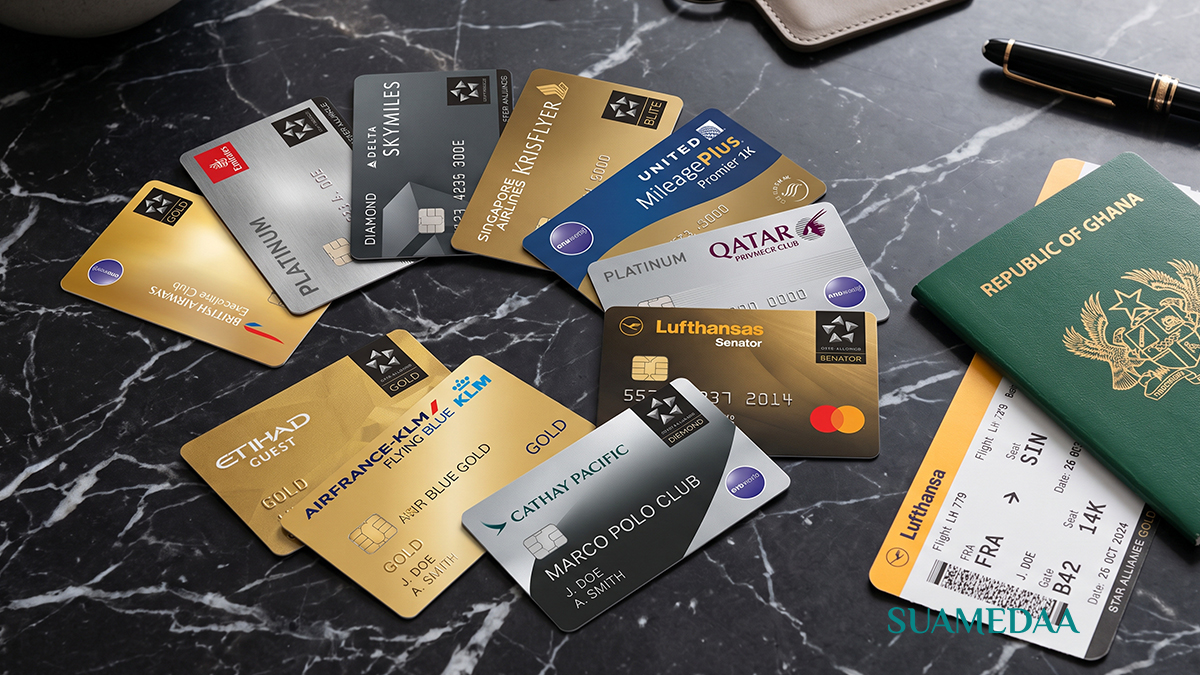
Airline Loyalty Programs – Everything Every Traveller Must Know
Every time you buy a plane ticket, there is a good chance you are leaving money on the table. Not in the literal sense, but in the accumulated value of miles and points that either go uncredited to a programme you have not joined, or sit unclaimed in an account you opened years ago and have not thought about since. Airline loyalty programmes represent one of the most accessible forms of structured reward available to ordinary travellers, but they are also among the most misunderstood, most frequently misused, and most quietly transformed financial products in the modern travel industry.
The industry has changed significantly in recent years. Programmes that once rewarded you for flying distances have become systems that reward you for spending money. Miles that once held stable values have become subject to the unpredictable forces of dynamic pricing. The lounge access, upgrade privileges, and companion benefits that once seemed generous have been gated behind ever-higher status thresholds. And yet, for the traveller who understands how these systems work and applies a clear strategy, airline loyalty programmes continue to offer genuine and sometimes extraordinary value.
This is what every traveller needs to know.



How Loyalty Programmes Work: The Basics
At their core, airline loyalty programmes operate on a simple promise: fly with us, and we will give you something back. That something is expressed in miles or points, which accumulate in your account and can later be redeemed for flights, upgrades, or partner rewards. The something back has a real monetary value, although that value is deliberately kept opaque by the airlines.
When you join a loyalty programme, you receive a membership number that links your identity to every qualifying flight, hotel stay, car rental, or credit card purchase you make through partners affiliated with that programme. Every qualifying transaction earns you a defined number of miles or points. Accumulate enough of them, and you can book an award flight, upgrade a paid ticket, or access other benefits.
The second dimension of most programmes is elite status. Fly enough qualifying miles or spend enough qualifying dollars in a programme year, and you move up through the programme’s tier structure, from basic membership to silver, gold, platinum, or whatever names a particular airline has assigned to its levels. Elite status unlocks privileges that are unavailable to ordinary members: priority check-in, complimentary seat upgrades, lounge access, bonus earning rates, priority baggage handling, and the ability to make last-minute changes without penalty fees.
The third dimension is the partnership ecosystem. Airlines do not operate their loyalty programmes in isolation. They partner with hotel chains, car rental companies, retail brands, financial institutions, and other airlines, creating webs of earning opportunity that extend far beyond flying.
The Shift That Changed Everything: From Miles Flown to Money Spent
For most of the history of frequent flyer programmes, the primary unit of status qualification was the mile flown. Fly further, earn more. This rewarded the traveller who covered long distances, even on discounted economy tickets. It was a model that genuinely benefited frequent leisure travellers as well as business travellers.



That model has been systematically dismantled by the major carriers. The four largest American airlines, American, Delta, Southwest, and United, have all shifted to revenue-based earning and status qualification systems. What matters now is not how far you fly, but how much you spend.
Delta uses Medallion Qualification Dollars (MQDs), which represent the actual fare value of your tickets. To reach Silver Medallion status, the entry level of Delta’s elite programme, you need $5,000 in qualifying spend in a programme year. Diamond Medallion, the top tier, requires $28,000. United uses Premier Qualifying Points (PQP), calculated from ticket cost, alongside a flight-count metric for higher tiers. American Airlines uses Loyalty Points, which are earned from a combination of flying and credit card spending.
The practical consequence of this shift is that the budget traveller who flies frequently but always books the cheapest available fares earns status far more slowly, and in many cases cannot earn status at all on basic economy fares. American Airlines confirmed in late 2025 that basic economy tickets purchased after December 17, 2025, earn no AAdvantage miles or Loyalty Points at all. Delta’s cheapest main basic fares similarly earn no miles. The message from the major carriers to leisure travellers is clear: if you want the programme to work for you, you need to spend more, not just fly more.
The Three Alliances and Why They Matter
One of the most powerful concepts in airline loyalty is the global alliance. Three major alliances dominate international aviation: Star Alliance, SkyTeam, and oneworld. Each brings together a network of airlines that recognise each other’s frequent flyer programmes, allowing members to earn and redeem miles across the member carriers and to carry elite benefits from one airline to partner airlines.
Star Alliance is the largest, with 25 member airlines including United Airlines, Lufthansa, Air Canada, Singapore Airlines, Turkish Airlines, Ethiopian Airlines, ANA, and Thai Airways. A Star Alliance Gold member, achieved through status with any member airline, gains access to business class lounges across the network, priority check-in at all member airlines, and bonus miles on partner flights.



SkyTeam has 19 members, including Delta, Air France, KLM, Korean Air, Kenya Airways, Virgin Atlantic, and China Southern. The SkyTeam Elite Plus status grants lounge access at over 750 lounges globally, priority boarding at all member airlines, and recognition across the full network.
oneworld has 13 members, including American Airlines, British Airways, Qatar Airways, Cathay Pacific, Japan Airlines, Finnair, and Iberia. The oneworld Sapphire and Emerald tiers are among the most coveted in aviation, with Emerald status providing access to first class lounges at member airlines even when travelling in business class.
For the international traveller who uses multiple carriers, the alliance structure is not an abstraction. It is the mechanism that determines whether the elite status you earned through one year of flying with one airline is recognised when you board a partner carrier on the other side of the world. Choosing which alliance to align with is one of the most important strategic decisions a frequent traveller can make, and it should be driven by the question of which alliance has the strongest network covering the routes you actually fly.
Elite Status: What It Takes and What You Get
Elite status is the aspirational tier of the airline loyalty world, and for good reason. The difference between flying as an ordinary member and flying as a top-tier elite is significant and sometimes transformative in terms of the experience at the airport and on the aircraft.
At the entry tier of most major programmes, the benefits are modest but useful. Priority check-in and baggage, a small bonus on miles earned, and occasional complimentary upgrades based on availability characterise the experience of an entry-tier elite. On a flight where upgrades are available, an entry elite member may clear to a premium cabin seat that would otherwise cost hundreds of dollars. The upgrade is complimentary. The improvement in comfort, food quality, and seat space is real.
At mid-tier status, the benefits become more substantive. Complimentary upgrades clear with greater frequency. Lounge access, either complimentary or on preferential terms, becomes a regular feature of the airport experience. Bonus earning rates of 75 to 100 percent on qualifying miles mean that the same flights earn significantly more currency for future redemptions. Same-day flight change fees are waived. The value of the status begins to compound.
At top-tier status, the programme benefits can be genuinely transformative. United’s Premier 1K members earn miles at eleven times the base rate, or seventeen times when holding a qualifying credit card. American’s Executive Platinum members receive complimentary upgrades that clear before any other non-premium status, making regular access to first class a practical reality on domestic flights. Delta’s Diamond Medallions receive three companion certificate vouchers for domestic first class travel annually, a benefit worth several hundred dollars. Alaska’s new Titanium elite tier includes complimentary international business class upgrades. The programmes compete aggressively for the highest-value travellers.
The qualification thresholds for top-tier status have, however, risen significantly in recent years. Airlines have acknowledged that the pandemic-era generosity of status qualification has given way to tighter requirements as travel volumes returned. Eight airline loyalty programmes have been identified as having quietly raised their elite status thresholds in 2024 and 2025, making the journey to meaningful status harder for the traveller who is not flying on the most expensive tickets.
Earning Beyond the Aircraft
One of the most significant opportunities that many travellers miss is the ability to earn substantial miles and points without setting foot on an aircraft. The credit card dimension of airline loyalty programmes has grown to the point where it represents the primary earning channel for many programme members.
Co-branded airline credit cards, issued in partnership between airlines and major banks, transfer spending directly into the airline’s loyalty currency. In the United States, cards like the Delta SkyMiles Reserve American Express, the United Explorer card, and the Citi/AAdvantage Executive card each earn miles on every dollar spent, with bonus multipliers on airline purchases and sometimes on dining, travel, and other spending categories. The welcome bonuses on premium cards can reach 75,000 to 100,000 miles on qualifying spend thresholds, enough for a long-haul business class redemption.
For travellers who prefer flexibility, transferable points currencies issued by banks rather than airlines offer a powerful alternative. American Express Membership Rewards points, Chase Ultimate Rewards points, and Citi ThankYou points can each be transferred to multiple airline programmes, often at a one-to-one ratio. This means that the points earned on a general-purpose travel credit card can be converted into miles in whichever airline programme offers the best redemption for a particular journey, rather than being locked into a single carrier’s economy.
Partner earning extends to hotels, car rentals, and retail. Major hotel chains partner with airline programmes to allow miles to be earned on hotel stays. Car rental companies similarly convert rental spending into airline miles. Retail and dining portals operated by the major programmes allow members to earn additional miles on everyday purchases by shopping through the programme’s portal links. Ethiopian Airlines ShebaMiles, for example, earns through a network of 20-plus partner airlines across the Star Alliance network, covering routes from Africa to Europe, Asia, and the Americas.

The Devaluation Problem: What Your Miles Are Really Worth
Here is the truth that the airlines prefer not to advertise: the miles in your account today are worth less than the same number of miles was worth two years ago, and they will likely be worth less again in two years’ time. Mile devaluation is a systemic feature of loyalty programmes, not an accident.
Airlines generate substantial revenue by selling miles to credit card companies, hotel chains, and retail partners. American Airlines earned $6.2 billion from credit card partnerships in recent years. Delta earned $8.2 billion from American Express in 2025 alone. These are not side revenues. For several major carriers, loyalty programme revenue now rivals or exceeds the profitability of actually flying aircraft. The loyalty programme has become a financial product in its own right.
The consequence is structural. When an airline sells miles to a credit card company, it creates an obligation to redeem those miles for future flights. To manage that liability and protect margins, the airlines periodically raise the number of miles required for award flights. This is called devaluation, and it happens regularly across most major programmes.
The mechanism of devaluation has changed in recent years. The old approach was a published award chart with fixed mile requirements by region and cabin class. When airlines wanted to raise prices, they updated the chart, giving members notice and a defined window to use existing balances at the old rates. Several major programmes have now abandoned fixed award charts entirely in favour of dynamic pricing, where the number of miles required for any given flight fluctuates based on demand, route, date, and the price of the cash ticket on the same flight.
Delta’s SkyMiles has led this shift, operating a fully dynamic pricing model where the relationship between cash ticket price and award price can be unpredictable. A route that costs 25,000 miles on a quiet Tuesday might cost 60,000 miles on a holiday Friday. The same number of miles in your account buys a different amount of travel depending on when and where you search. This opacity makes it difficult for members to plan redemptions with confidence and makes the value of accumulated miles fundamentally uncertain.
The US Department of Transportation launched a formal investigation into the loyalty programmes of American, Delta, Southwest, and United in 2024, citing concerns about reward devaluation, dynamic pricing, hidden fees, and reduced competition. The Protect Your Points Act was introduced in the US Senate that year, seeking to impose transparency requirements on airline loyalty programmes. These regulatory moves reflect a growing recognition that loyalty programmes have shifted from consumer benefits to revenue engineering tools, and that consumers deserve better information about what their miles are actually worth.
Finding the Sweet Spots: Award Redemptions That Still Deliver
Despite the devaluation trend, genuine value remains available in airline loyalty programmes for travellers who know where to look. The term in the points and miles community is the “sweet spot,” which refers to a specific combination of programme, partner, route, and cabin class where the miles required for an award significantly undervalues the cash price of the same journey.
Several outstanding sweet spots remain in 2026. ANA premium cabin awards booked through Virgin Atlantic Flying Club represent one of the most compelling options in the global programme landscape. A one-way business class ticket from the western United States to Japan on ANA, which features the acclaimed “The Room” product with full privacy doors, can be booked for 52,500 Virgin Atlantic Flying Club points. The same ticket in cash typically exceeds $3,000 one-way. The value ratio is exceptional.
Qatar Airways Qsuites, widely regarded as the finest business class product in the sky, can be booked using Avios, the currency shared across British Airways, Iberia, Aer Lingus, and Finnair. An off-peak one-way from the United States to Doha in a fully enclosed Qsuite starts at 70,000 Avios. Avios can be accumulated through flying across the oneworld network, through the Avios credit card programme, or by transferring from American Express, Chase, or other flexible currencies.
Japan Airlines business class from the United States to Japan or Korea is available through American Airlines AAdvantage at 60,000 miles one-way, against cash prices of $3,000 or more. Air France and KLM business class from North America to Europe can be booked through Flying Blue, the Air France/KLM programme, at 60,000 miles one-way, though fuel surcharges can add $300 or more each way.
Flying Blue’s monthly Promo Rewards offer discounts of up to 50 percent on selected routes on the first day of each month. Monitoring these releases and booking promptly when an attractive route appears can yield business class redemptions at rates that would otherwise be difficult to achieve. Ethiopian ShebaMiles offers one-way economy within Africa for 15,000 miles, and one-way economy from Africa to Europe for 30,000 miles, with business class to Asia from Africa available from 60,000 miles.
For domestic travel in the United States, Turkish Miles and Smiles has maintained a stable fixed award chart and allows redemption of American domestic economy tickets for 10,000 miles one-way, a rate that regularly beats the economics of other programmes for short-haul domestic flying.
The principle behind each of these sweet spots is that the award chart or pricing model of one programme undervalues a product or route relative to what other programmes charge for the same seat on the same aircraft. Finding and exploiting these asymmetries is the core skill of the advanced loyalty programme user.

Points Expiration: The Trap That Catches Most Travellers
One of the most financially painful experiences in loyalty programme management is watching a balance of miles simply disappear because of inactivity. Points expiration is a widespread policy across airline programmes, and it catches more travellers than any other single loyalty programme pitfall.
Most airline programmes require that an account show qualifying activity within a defined period, typically between 12 and 36 months, in order to maintain the validity of the miles balance. If no qualifying activity occurs within that window, the miles expire and are removed from the account. The qualifying activity required to reset the expiration clock varies by programme. In some, any earning activity suffices: a credit card spend, a hotel stay, a partner purchase. In others, only actual flight activity qualifies.
American Airlines AAdvantage miles expire if there is no qualifying activity within 24 months. British Airways Avios expire if no qualifying activity occurs within 36 months. Turkish Miles and Smiles miles expire if there is no qualifying activity within 36 months. Some programmes, including Delta SkyMiles and Southwest Rapid Rewards, have no expiration policy at all, allowing accumulated balances to sit indefinitely.
The practical protection against expiration is simple: make sure that some qualifying activity touches the account within the programme’s activity window. This can be as straightforward as earning one mile through a programme dining portal purchase, completing a partner credit card transaction, or taking a single qualifying flight. Monitoring accounts for expiration dates, particularly for programmes where a significant balance has accumulated over years of flying but recent activity has been low, is a basic but frequently neglected element of loyalty programme management.
The Africa Dimension: Programmes Built for the Continent
For travellers based in Africa or travelling regularly across the continent, the loyalty programme landscape has its own contours, shaped by the relatively small number of pan-African carriers and the alliance memberships that determine which international programmes provide the strongest coverage.
Ethiopian Airlines ShebaMiles is the dominant loyalty programme for Africa-focused travel. Ethiopian is Africa’s largest carrier by many metrics, flying to over 60 African destinations and maintaining membership in Star Alliance with earning partners across ANA, United, Lufthansa, Air Canada, Singapore Airlines, and 20 other carriers. ShebaMiles tiers progress from Blue to Silver, Gold, and Platinum, with each step unlocking bonus earning rates, lounge access, and priority benefits. Award tickets within Africa start at 15,000 miles one-way in economy, with business class awards to the Middle East from 45,000 miles and to Asia from 60,000 miles. The programme’s 2026 updates removed stopover charges on Ethiopian-operated flights for award tickets, a meaningful improvement for multi-city travellers.
Kenya Airways operates the Asante Rewards programme as a SkyTeam member. The programme allows earning on Kenya Airways flights and across the SkyTeam network, with status recognition extending to SkyTeam Elite and Elite Plus tiers. Kenya Airways has offered status matching from hotel and other airline programmes, providing a pathway for travellers with existing elite status in other systems to gain recognition without requalifying from scratch.
EgyptAir’s EgyptAir Plus programme provides earning across the Star Alliance network, adding another pan-African access point for continental and international travel under the Star Alliance umbrella.
The Africa loyalty market more broadly is in expansion. A September 2026 market analysis identified embedded rewards, omnichannel adoption, and rising platform spending as the key drivers of loyalty programme growth across the continent, reflecting the rapid growth of digital commerce and mobile-first consumer behaviour in African markets.
Which Programme Belongs in Your Wallet
The right loyalty programme is not the one with the most impressive-sounding benefits. It is the one whose earning opportunities align with where you actually travel and whose redemption options serve the trips you actually want to take.
The starting point is your home airport and the airlines that serve it most frequently. A traveller based in Accra who regularly flies to London, Dubai, New York, and cities across West Africa will find that the programmes of airlines that fly those routes most frequently are the ones most worth concentrating on. If British Airways, Delta, and Ethiopian are the three carriers you use most, then a combination of Avios, SkyMiles, and ShebaMiles built through credit card and partner earning, and redeemed strategically against sweet spots in each programme, is likely more valuable than splitting attention across six different programmes and achieving meaningful balances in none of them.
Concentration matters. It is generally better to accumulate a large, useful balance in two or three well-chosen programmes than to scatter small balances across a dozen programmes, none large enough to be redeemed for anything meaningful and each subject to independent expiration risk.
The programme’s partner ecosystem matters as well. A programme with broad earning partners allows a traveller to accumulate miles through hotel stays, car rentals, credit card spend, and retail, reducing dependence on flying alone to build a useful balance. Air Canada Aeroplan, with more than 50 partner airlines and 1,300 destinations, illustrates the breadth that is possible. Turkish Miles and Smiles, with its stable fixed award chart and access to hundreds of global destinations through the Star Alliance network, illustrates how a programme from a hub that may not be your home base can still deliver excellent redemption value.
Flying Blue’s monthly Promo Rewards make it valuable even for travellers who fly Air France or KLM only occasionally but want flexibility in when and how they access discounted business class to Europe. Qatar Airways Privilege Club, using Avios, makes sense for the traveller who values premium product access over volume of destinations.
For African travellers building a programme strategy, ShebaMiles as the anchor for intra-continental and long-haul Star Alliance redemptions, combined with a flexible points currency from a co-branded credit card that transfers to Flying Blue or Avios, covers most of the travel universe that matters.
The Rules That Protect You: Know Them Before You Redeem
Loyalty programme terms and conditions contain specific rules that can be the difference between a successful redemption and a frustrating experience. Several are worth knowing before you ever attempt to book an award.
Stopovers and open-jaws represent some of the most undervalued features in programmes that still permit them. A stopover allows you to break your journey in a connecting city for more than 24 hours, in effect building two destinations into a single award ticket. Aeroplan’s policy of allowing a stopover for just 5,000 extra points on one-way awards is among the most generous currently available. Alaska Atmos Rewards maintains a generous stopover policy on international awards that makes multi-city trips significantly more economical.
Partner award availability requires advance planning. Award seats on partner airlines are released by each operating carrier and made available to partner programmes, but the inventory is finite. A United flight might have 50 paid seats available but only 2 award seats open to Star Alliance partners. Booking far in advance, typically as soon as the award calendar opens at 330 to 365 days before departure, gives the best chance of securing partner award space in premium cabins.
Fuel surcharges are an additional cost that programmes do not always advertise prominently. British Airways Avios redemptions on British Airways flights carry fuel surcharges that can add several hundred pounds to what appears to be a free award. The same Avios redeemed on American Airlines or Iberia-operated flights carry no such surcharges. Understanding which programme-partner combinations are surcharge-free is part of calculating the real value of any given redemption.
The Future of Loyalty: Where the Programmes Are Going
The trajectory of airline loyalty programmes is towards greater personalisation and greater revenue extraction. Dynamic pricing is spreading from the early adopters to programmes that once maintained fixed award charts as a point of difference. The major carriers, having successfully pivoted their programmes into financial products that generate billions in credit card partnership revenue, will continue to optimise them for that revenue stream rather than for the simple reward of the frequent flyer.
The regulatory environment is, for the first time, beginning to push back. The US Department of Transportation’s 2024 investigation into the loyalty programmes of the four largest American airlines marked a significant shift in the regulatory posture. The Consumer Financial Protection Bureau’s joint hearing with the DOT on airline and credit card rewards addressed consumer complaints about programme opacity and devaluation. Legislative proposals to require transparency in how airlines price award tickets have not yet become law, but the direction of regulatory travel is toward greater consumer protection.
For the individual traveller, the practical response to this environment is strategic rather than passive. Earn actively through every available channel. Redeem regularly rather than stockpiling miles against a future devaluation. Focus on programmes with fixed or semi-fixed award charts where the value of your miles is knowable in advance. Use transferable points currencies to maintain flexibility. Monitor expiration dates. And when a sweet spot appears, recognise it, move on it, and book.
The miles in your account are a depreciating asset. Used well, they are also a genuine opportunity to access travel experiences that would otherwise cost significantly more. That combination, the depreciation pressure and the redemption opportunity, is what makes airline loyalty programmes demanding, occasionally frustrating, and still, for the traveller who understands them, worth the effort.