Do Not Patch It. Take It to the Bank – The Right Way to Handle a Damaged Cedi Note
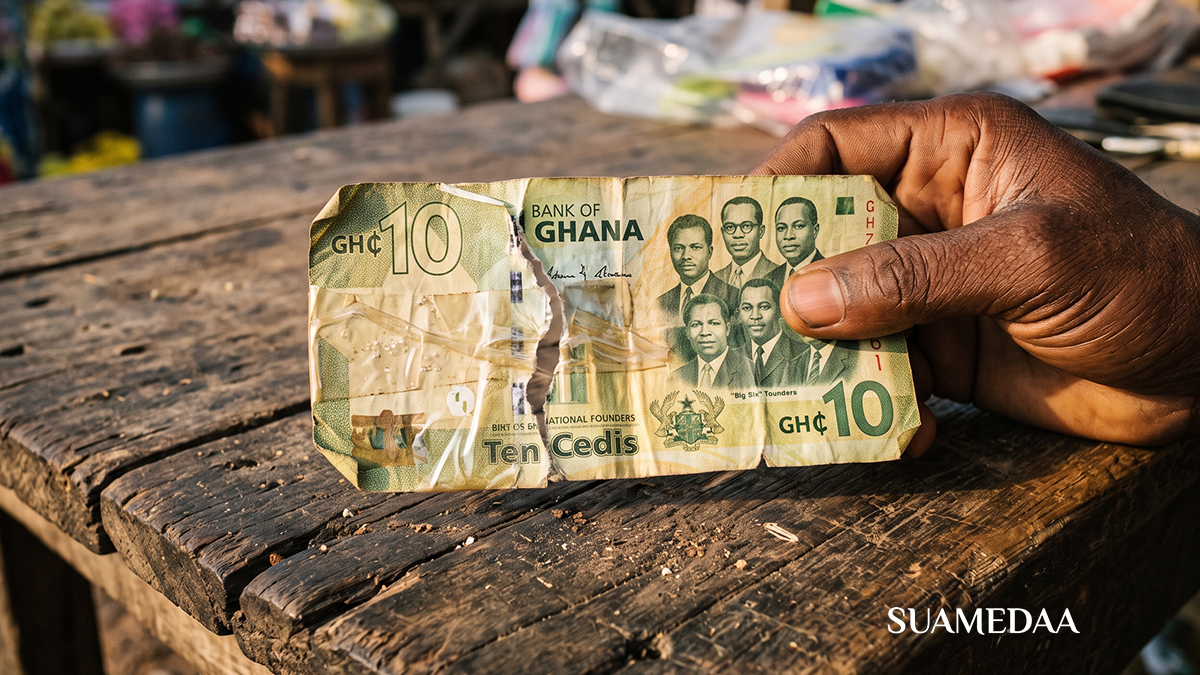
In early October 2026, a video circulated on Ghanaian social media showing something that had apparently been a quiet side hustle in some communities for some time. People were collecting torn, soiled, and damaged cedi notes, repairing them with adhesive tape, and returning them to circulation. The notes looked passable. The business, if it could be called that, was built on a simple premise: buy damaged notes cheaply, repair them for a few pesewas worth of tape, and spend or sell them at face value. The Bank of Ghana watched the video and issued a formal warning within days.
The central bank’s message was unambiguous. Taping, gluing, stapling, rejoining, or otherwise repairing a damaged cedi note is not permitted. Notes repaired in this way are unfit for circulation. Anyone holding a torn or damaged note should not attempt to fix it. They should take it to a commercial bank for examination and replacement under official procedures. And anyone who witnesses or knows of someone running an informal note-repair operation is asked to report it to the Bank of Ghana or to law enforcement.
The warning addressed a practice many Ghanaians may have engaged in casually, without realising the significance of what a repaired banknote actually represents, or what it fails to represent once the tape goes on.
What a Banknote Actually Is
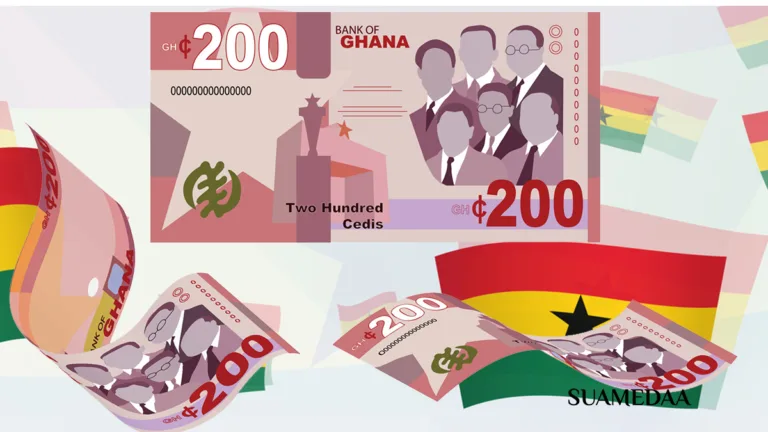
A cedi note is not just a piece of paper with a number printed on it. It is a precision-manufactured security document, engineered to be extremely difficult to counterfeit and straightforward to authenticate. Every element of its design serves a function beyond aesthetics.


Modern banknotes, including the Ghana cedi, incorporate multiple layers of security features. The paper itself is a specialist substrate, made from cotton and linen fibres rather than wood pulp, giving it a distinctive feel and durability that ordinary paper cannot replicate. Embedded within the paper is a security thread, a thin strip woven into the note that is visible as a dark line when held up and that often carries microprinted text or shifts colour when moved at an angle.
Watermarks are built into the paper during manufacture, visible only when the note is held to light. They cannot be added after the fact because they are part of the paper’s fibre structure, not printed on the surface. Colour-shifting ink is used on denomination numerals and certain design elements, changing appearance from gold to green, or copper to black, depending on the viewing angle. This effect is impossible to reproduce with standard printing.
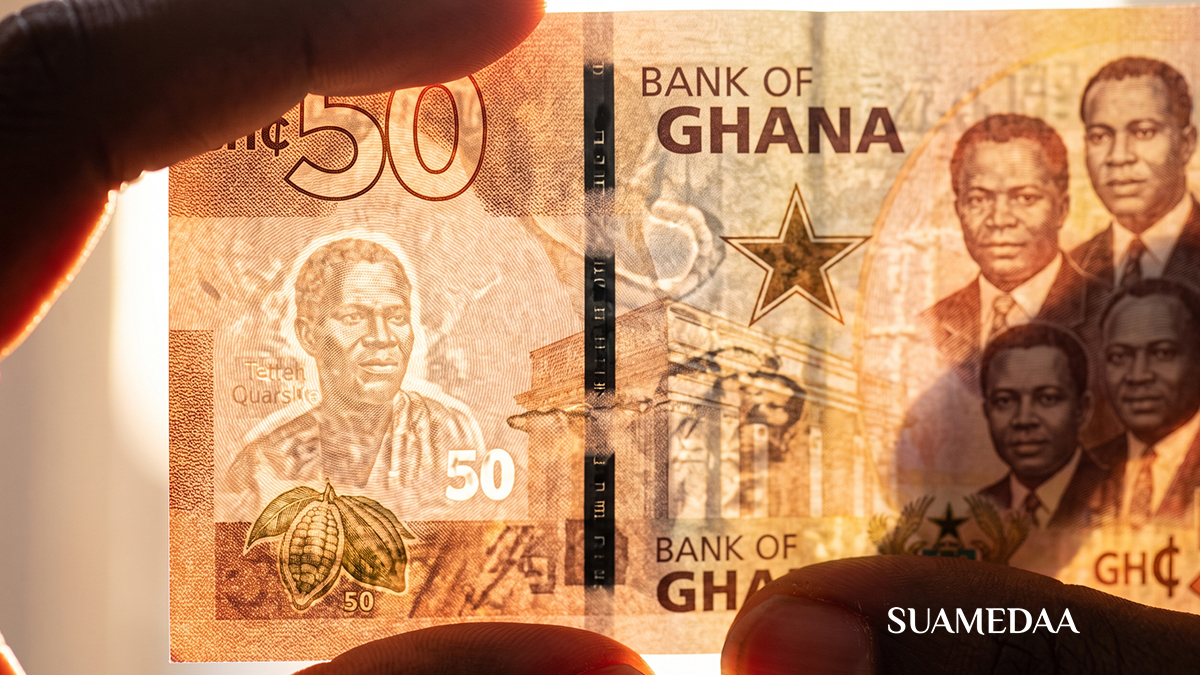
Ultraviolet features, invisible to the naked eye in ordinary light, appear under UV lamps used by banks and verification equipment. Microprinting, tiny text that is illegible to the naked eye but visible under magnification, runs through design elements on the note. Raised print, created through an intaglio printing process that involves pressing ink into the paper under extreme pressure, gives genuine notes a tactile quality that photocopies and fakes cannot match.
Ghana’s newer polymer-blend notes and higher denomination notes carry additional security features including transparent windows, holographic elements, and optically variable devices that change appearance at different angles.
Every one of these security features exists to answer a single question: is this note genuine? And the answer to that question is provided not by what the note looks like superficially, but by what it contains and how it responds to physical and optical examination.



What Tape Does to That System
When a note is repaired with adhesive tape, the integrity of that security system is compromised in ways that are not visible to the casual observer but are immediately apparent to anyone who examines the note carefully or runs it through verification equipment.
Tape applied across the surface of a note covers the tactile raised print that is one of the first things a trained cashier or bank teller checks. It alters the note’s texture entirely, replacing the engineered feel of intaglio printing with the flat, synthetic surface of adhesive tape. A note that should have a distinctive grip and texture feels wrong. Any person accustomed to handling genuine currency regularly will notice.
The adhesive in tape interacts chemically with the security inks and paper over time. Colour-shifting elements can be dulled or permanently altered by adhesive contact. UV-reactive inks can be masked. The watermark remains within the paper’s fibre, but if the tape covers the area where the watermark is located, it becomes impossible to read in the usual way.
Staples create physical holes through the note and through whatever security features occupy those positions. A staple through a security thread destroys the thread’s continuity. A staple through an optically variable device renders that element non-functional for verification purposes.
Glue can permanently bond sections of torn notes in ways that prevent proper examination. If two fragments of different notes are glued together, the resulting composite may superficially resemble a complete note while actually being worth nothing. Detection requires careful examination that becomes more difficult when adhesive obscures the boundary.



The fundamental problem with any adhesive repair is this: it makes the note harder to authenticate. And a note that cannot be authenticated cannot be trusted. A repaired note passed to a market trader, a transport operator, or a shopkeeper cannot be reliably verified by that recipient. The uncertainty falls on whoever receives it last.
The Problem for ATMs and Processing Machines
The practical damage extends beyond human verification. Ghana’s banking infrastructure processes millions of banknotes through ATMs, currency counting machines, and automated sorting equipment. These machines are calibrated to recognise genuine notes through a combination of optical sensors, magnetic readers, and thickness gauges.
A note with tape across it presents multiple problems for this equipment. The thickness of the tape can cause the note to jam in feed mechanisms designed for notes of a specific dimension. The optical sensors that read the note’s security features encounter the tape’s reflective or opaque surface instead of the note’s actual features, triggering a rejection. If the machine attempts to sort a note with protruding tape edges or a staple, it risks damaging the mechanism itself.
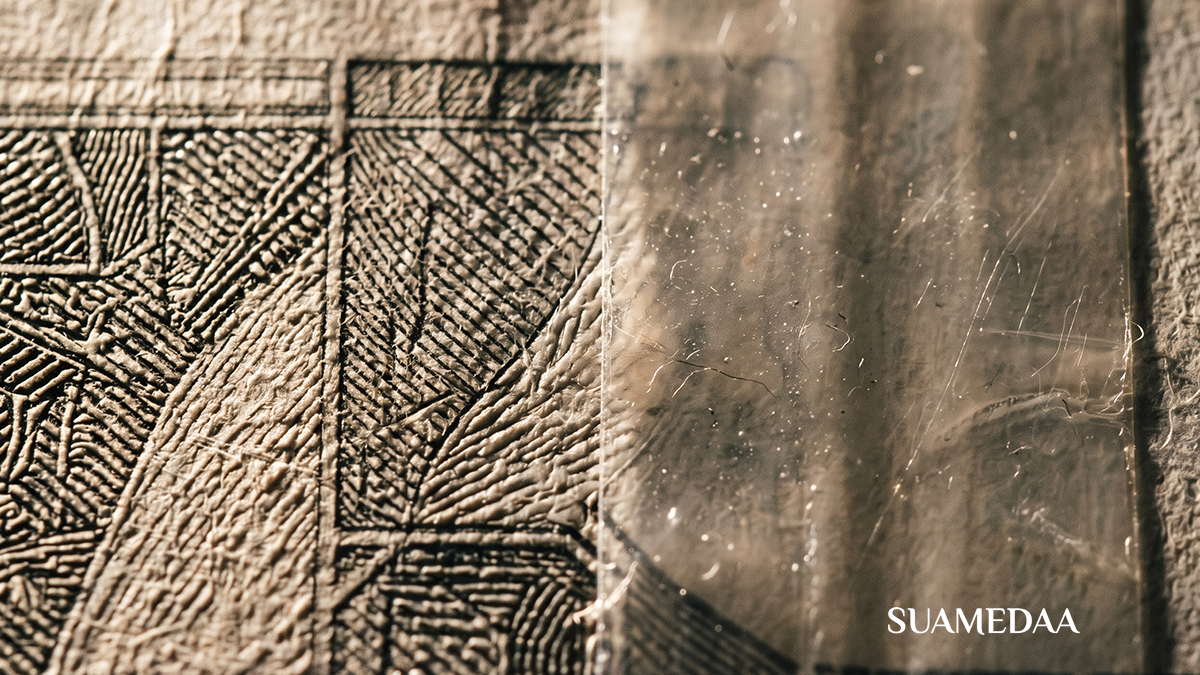
The Bank of Ghana’s warning specifically cited ATM damage as a consequence of taped notes entering circulation. A single damaged note causing an ATM jam can put that machine out of service until a technician attends, creating queues, denying access to customers, and generating maintenance costs. Multiply that across a population of users handling repaired notes without knowing the risk, and the cumulative disruption to the cash infrastructure is significant.
Why This Becomes Someone Else’s Problem
The note-repair practice that the Bank of Ghana’s warning addressed was not simply a matter of individual choice about one’s own money. It was a business: damaged notes repaired and returned to circulation through the hands of people who did not know they were receiving compromised currency. This is where the practice becomes genuinely harmful to ordinary Ghanaians.
A market woman who receives a taped two-cedi note in change at 6 a.m. has not examined it carefully. She puts it in her float and spends it later in the day. The trader who receives it from her takes it to the bank at closing time. The bank teller rejects it. The trader has now lost the value of that note. She goes back to the market woman, who may or may not be findable or willing to refund it. In the most common version of this story, someone in the chain absorbs a loss they did not cause and could not reasonably have anticipated.
The informal note-repair business profits by exploiting the gap between what a note looks like and what it is. The person who repairs and resells the note at face value earns the spread between what they paid for the damaged note and what they received for the repaired one. The loss lands on whoever holds the note when it is finally rejected, which is almost always someone who had nothing to do with the repair.

What to Do Instead: The Exchange Process
The Bank of Ghana’s instruction to the public is clear and the process it describes is accessible. A torn, soiled, or damaged cedi note should be taken to any licensed commercial bank for examination and possible replacement.
The commercial banks operate this exchange service on behalf of the Bank of Ghana, which holds the sole statutory mandate to manage Ghana’s currency. The bank will examine the damaged note and determine whether it qualifies for replacement under standard procedures.
The key condition for a mutilated note, one that is torn into pieces rather than simply soiled or worn, is that more than half of the original note must be present. This threshold exists to prevent fraudulent claims where a single note is torn and presented in fragments to claim double or more of its face value. A note that is torn cleanly in two, with both halves intact, is eligible for exchange. A note from which a significant portion is missing may not qualify, depending on the extent of the damage and the examiner’s assessment.
Soiled, limp, or heavily worn notes that remain complete and intact are accepted for exchange on the same basis. These notes are withdrawn from circulation, destroyed by the Bank of Ghana’s currency management process, and replaced with fresh notes from the central bank’s reserves. This is how the currency supply maintains its quality over time.
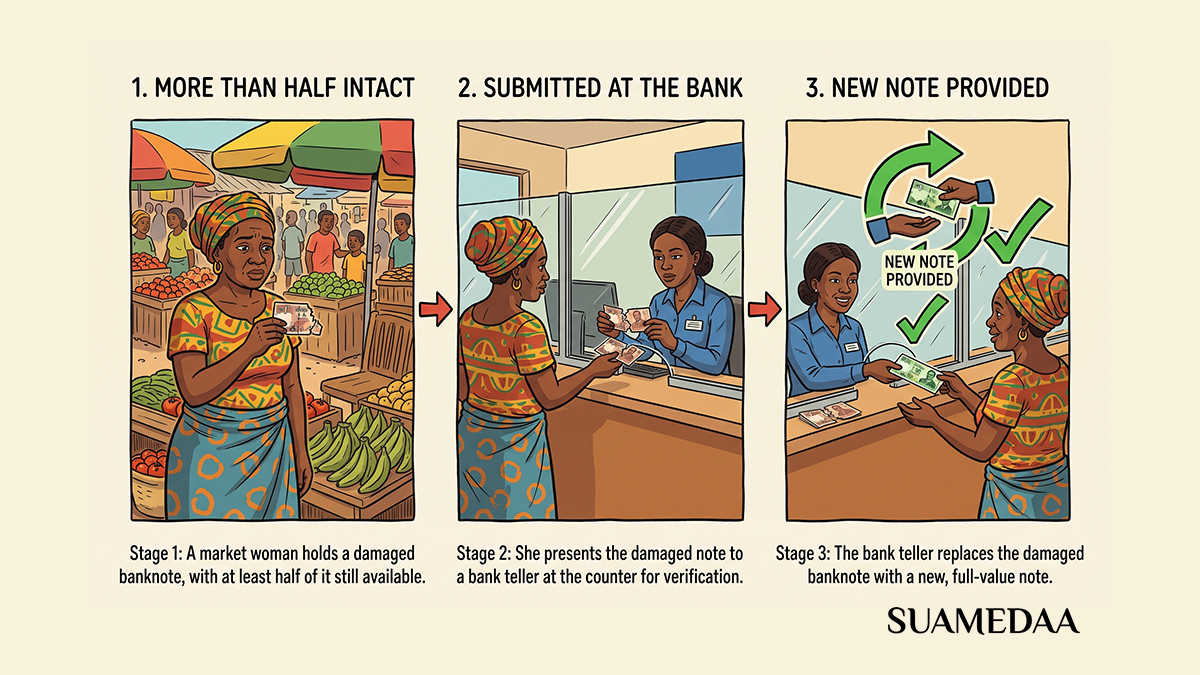
The process costs the note-holder nothing beyond the brief time required. There is no fee for exchanging a damaged note at a commercial bank. What the process does require is presenting the note in its damaged state, without any attempt at repair that might obscure the examiner’s view of the note’s actual condition.
The Deeper Principle: The Currency as a Common Good
The insistence on not repairing damaged currency is not a technicality. It reflects a principle about what a national currency is and what its integrity requires.
A currency works because everyone who uses it shares a common understanding: this note represents a specific value, it is genuine, and it will be accepted by others in exchange for goods and services. That shared understanding is the foundation of every transaction the currency enables, from the roadside kelewele seller to the multinational corporate invoice.
The Bank of Ghana’s role in maintaining that foundation includes managing the quality of notes in circulation. When repaired notes circulate, the shared understanding is undermined. Recipients cannot be certain what they are holding. Businesses develop their own informal assessment rules. Trust erodes at the margins. The currency becomes something to examine carefully rather than simply to use.
Central banks around the world refer to this as the clean note policy, the commitment to maintaining a standard of quality and authenticity in circulating currency such that any member of the public can handle a banknote with confidence in what it represents. Ghana’s currency management framework operates on the same principle. Damaged notes are supposed to leave circulation through the banking system, not return to it via a repair operation. The tape on a cedi note is not a repair. It is a transfer of risk onto the next person who receives it.
Handle With Respect
There is a second dimension to the Bank of Ghana’s message that goes beyond the technical and legal. The cedi is a national symbol. The currency of a country carries the imagery of that country’s history, its institutions, its natural heritage, and its public life. The portraits, landscapes, and cultural symbols printed on Ghanaian banknotes are not arbitrary. They are part of how a society represents itself to itself.

Treating those notes carefully, not folding them into tight bundles, not writing on them, not cramming them into damp pockets, not stretching or tearing them casually, is both practically sensible and something of a civic act. A note that enters the banking system after reasonable use, worn but intact, is a note that can be assessed, exchanged, and replaced cleanly. A note that enters after being folded into a damp ball, written on in marker pen, and then taped back together when it tears, has become a problem for everyone who touches it.
The Bank of Ghana’s October 2026 warning was addressed at a specific practice that had come to light on social media. But its underlying message is broader and worth carrying into daily habit. When a cedi note is damaged, the right action is to take it to a bank. Not because the rules require it, though they do. But because the alternative, patching it and passing it on, makes someone else’s economic life a little more uncertain, and there is no economy built on that.