Ghana’s New Vehicle Import Rules -Everything You Need to Know Before 1st of October
If you are a vehicle importer, a car dealer, a diaspora Ghanaian planning to ship a personal car home, or simply someone in the market for a used vehicle in the coming months, the next ten days matter more than you might realise. On October 1, 2026, the Ghana Standards Authority begins strict enforcement of rules that will fundamentally change how vehicles enter this country. The rules are not new. What is new is that they will finally be enforced, and vehicles that do not meet them will be turned away at the port.
This is not a ban on used vehicles. The Ghana Standards Authority has been careful to clarify that point. What it is, however, is the most significant regulatory shift in Ghana’s vehicle importation history in recent memory, and the consequences for anyone who does not prepare for it could be severe: shipments denied entry, money lost, and vehicles stranded at ports awaiting repatriation at the importer’s expense. Here is everything you need to know.
The Background: A Programme That Existed on Paper
The National Vehicle Homologation and Conformity Assessment Programme has technically been in operation since 2020. Ghana Standard GS 4510, which sets out the requirements for the importation of used vehicles, has been on the books for years. But enforcement was inconsistent at best, and the vehicle import trade largely continued on the old basis: buy the car abroad, ship it, and deal with any issues when it arrives at the port.

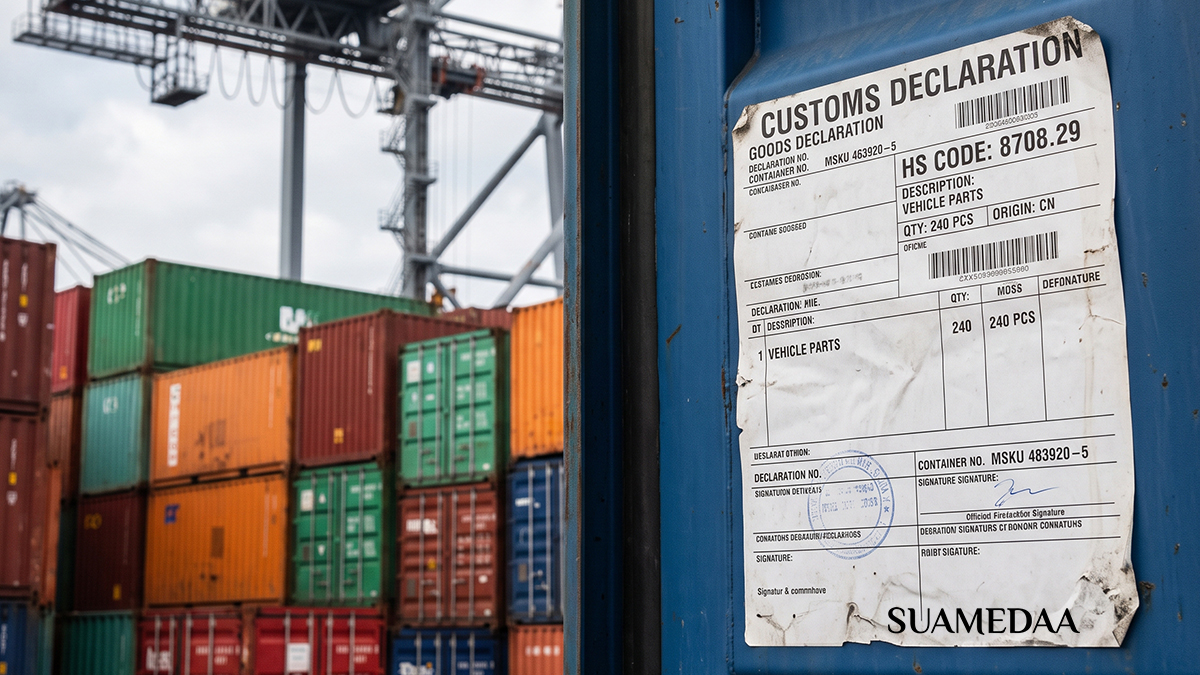

That era ends on October 1. The Ghana Standards Authority, working in collaboration with the Ghana Revenue Authority, the Ghana Ports and Harbours Authority, and other stakeholders, has confirmed that full enforcement commences on that date. Vehicles that do not meet the prescribed requirements will not be permitted entry on arrival. No exceptions. No negotiation at the port gate.
The 15-Year Age Limit
The headline rule that most people have heard about is the age restriction. Used vehicles more than 15 years old will be prohibited from importation into Ghana from October 1. In practical terms, this means only vehicles manufactured in 2011 or later are eligible.
It is worth noting that the age limit has already been revised once. The GSA initially announced that vehicles more than 10 years old would be barred, which would have set the cut-off at 2016 models. Following extensive engagements with stakeholders, the authority revised that threshold upward to 15 years in a statement issued on August 14, 2026, acknowledging the economic realities of the market and giving importers more room to source vehicles within the eligible range.

The revised 15-year limit keeps a considerably wider range of vehicles accessible to the Ghanaian market than the original proposal would have. But it does eliminate a significant segment of the used vehicle trade that has historically supplied the lower end of the market, where older vehicles from Japan, the United States, and Europe have been the dominant source of affordable transport for many Ghanaians.
The Pre-Shipment Inspection: The Biggest Change Nobody Is Talking About
While the age limit has attracted the most public attention, the more operationally consequential change is the mandatory pre-shipment inspection requirement. This is where the new framework will be felt most immediately by importers, dealers, and diaspora buyers.



Under the previous informal practice, many importers purchased and shipped vehicles based on visual assessment, seller representations, or their own familiarity with a particular vehicle type, then managed any issues that emerged after the vehicle arrived at Tema or Takoradi. That approach is no longer viable.
From October 1, every used vehicle must be physically inspected in its country of origin by a Ghana Standards Authority-approved third-party inspection body before it is loaded for shipment. That inspection body must issue a Certificate of Conformity confirming that the vehicle meets the applicable Ghana Standards. The Certificate of Conformity must travel with the vehicle. Without it, the vehicle will not be cleared for entry into Ghana, regardless of its actual condition.

This pre-shipment compliance requirement shifts the entire risk profile of vehicle importation. Previously, an importer could take a risk on a vehicle and see how it fared at the port. Now, the compliance question must be resolved before a single cedi of shipping cost is committed. A vehicle that fails inspection in Japan, the United Kingdom, Germany, or the United States means a lost purchase price plus the cost of any pre-inspection work, with no vehicle to show for it. The financial exposure of getting this wrong is considerably higher than under the old system.
Seven Things Every Vehicle Must Pass
The inspection by a GSA-approved body covers seven mandatory areas. A vehicle that fails any one of them will not receive a Certificate of Conformity and cannot be shipped to Ghana.
The first check is Vehicle Identification Number verification. The VIN must be present, legible, untampered, and consistent across all the vehicle’s documentation. Any discrepancy between the VIN on the vehicle and on its documents raises immediate questions about the vehicle’s history and ownership.
The second check covers valid documentation. All relevant paperwork must be in order, including proof of ownership and any applicable title or registration documents.
The third check is a safety conditions assessment. The vehicle’s primary safety systems must be functional: airbags must be intact and operational, braking systems must meet the required standard, and the vehicle must be mechanically roadworthy in the essential sense.
The fourth check is emissions compliance. The vehicle must meet a minimum Euro 2 emissions standard. This is not a demanding standard by contemporary international measures, but it does exclude the oldest and most heavily polluting vehicles from the market.
The fifth check is accident and flood history verification. The inspection body will assess whether the vehicle has a history of major accident damage or flood submersion. This is assessed through physical inspection of the vehicle’s structure, surfaces, and systems, alongside review of available vehicle history records.
The sixth check is the speedometer requirement. The vehicle’s speedometer must display readings in kilometres per hour. Vehicles from left-hand-drive countries with KPH instruments will generally satisfy this. The rule also implicitly reinforces that right-hand-drive vehicles are excluded, as addressed separately below.
The seventh check is structural integrity. The chassis, safety cage, and structural components must be free of breakage, cracking, bending, or twisting. A vehicle that has suffered structural compromise in a past accident, even if cosmetically repaired, may fail this check.
Vehicles That Cannot Be Imported at All
Beyond the age limit, certain categories of vehicle are outright prohibited regardless of their year of manufacture. These are not conditional restrictions that might be waived with the right paperwork. They are absolute bars.



Flood-damaged or water-submerged vehicles cannot be imported. The damage caused by water submersion to electrical systems, engine components, and structural elements is often extensive and not always apparent from visual inspection. The GSA’s position is that such vehicles have no place on Ghanaian roads.
Fire-damaged vehicles cannot be imported. The thermal and structural damage from fire, even after repair, compromises safety in ways that standard assessment may not fully capture.
Vehicles with damaged chassis or safety structures cannot be imported. A broken, cracked, bent, or twisted chassis fundamentally compromises the vehicle’s ability to protect its occupants in a collision. Minor cosmetic damage may be acceptable, but structural compromise is not.
Right-hand-drive vehicles cannot be imported. Ghana drives on the right side of the road. A right-hand-drive vehicle places the driver on the wrong side for road visibility, creating safety risks in overtaking and turning manoeuvres. The prohibition on right-hand-drive vehicles has been in policy for some time but will now be enforced.
Vehicles assembled from spare parts cannot be imported. The practice of assembling a vehicle from parts of multiple different vehicles, sometimes from different models or even different manufacturers, produces a vehicle whose safety and structural integrity cannot be reliably assessed against any single standard.
Vehicles without speedometers showing kilometres per hour cannot be imported. This primarily affects vehicles from markets where miles per hour is the standard, unless the speedometer has been updated to display KPH.
Registration with the Ghana Standards Authority
Every importer, distributor, dealer, manufacturer, and assembler operating in the Ghanaian vehicle market is now required to register with the Ghana Standards Authority’s Vehicle Homologation Unit. This registration requirement applies across the board, covering both used and new vehicle operators.
For new vehicle manufacturers and assemblers, the requirement goes further: all new vehicle models must undergo homologation before being imported. Homologation is the process by which a specific vehicle type is certified as meeting the applicable safety, emissions, and technical standards for a particular market. This ensures that the vehicle specifications sold in Ghana correspond to the standards in force here, not simply to those of the manufacturer’s home market.

The registration requirement creates a formal, accountable relationship between vehicle trade operators and the regulatory authority, replacing what was in many cases an informal and poorly documented market structure.
The Transitional Exemption: Your Window Is Closing
The GSA has confirmed one important transitional provision. Vehicles that were shipped before October 1, 2026 are exempt from the new requirements, even if they arrive in Ghana after the enforcement date. Vehicles already in Ghana before 1st of October are similarly unaffected.
This exemption is important for any importer who currently has vehicles on the water or in transit. If your shipment departed before October 1, you will not be caught by the new rules regardless of when it arrives at port. The enforcement date is the date of shipment, not the date of arrival.
However, the window for taking advantage of this transitional provision closes in ten days. Any vehicle that has not been loaded for shipment by the end of September 30 will be subject to the full requirements of the new framework.
What This Means for Importers and Dealers
For the commercial vehicle trade, the new framework demands an immediate and significant adjustment to sourcing and logistics practices.
The pre-shipment inspection requirement means that importers need to identify and establish relationships with GSA-approved inspection bodies in the markets from which they source vehicles. Japan, the United Kingdom, the United States, Germany, and South Korea are among the most common source markets for used vehicles entering Ghana. Whether approved inspection bodies are already operational and accessible in each of these markets at the scale needed to process the volume of Ghana-bound vehicles is a practical question that the trade will be working through in the coming weeks.
The cost structure of vehicle importation will change. The inspection and certification process adds a step, a cost, and a timeline to the sourcing process. For tightly margined businesses operating at the lower end of the used vehicle market, these additional costs will require either price adjustments or changes to the vehicle types being sourced.
The risk profile shifts substantially. Under the old system, a vehicle that failed informal port assessment could sometimes be recleared or handled through other means. Under the new system, a vehicle that lacks a valid Certificate of Conformity simply does not enter. The commercial loss falls entirely on the importer. Due diligence at the sourcing stage is no longer optional. It is the only protection available.
What This Means for Consumers
For the Ghanaian consumer buying a used vehicle, the new framework carries both promise and a possible price implication.
The promise is genuine: vehicles entering the market under the new rules will have been assessed for their structural integrity, safety systems, emissions compliance, and accident history before they arrive. The flood-damaged cars from American hurricane zones, the structurally compromised accident-write-offs from European markets, and the fire-damaged vehicles that have reportedly been entering the country will no longer be eligible for importation. The minimum quality of the used vehicle entering the Ghanaian market should rise.
The price implication is equally real. Compliance costs money. The inspection, the certification, the sourcing of vehicles that genuinely meet the requirements rather than simply appearing to: all of this adds to the cost of bringing a vehicle to market. In a country where many buyers are already stretching to afford a vehicle, an upward shift in market prices for compliant used vehicles will be felt. How significant that shift turns out to be will depend on how efficiently the inspection infrastructure scales up and how the market adjusts to the changed sourcing landscape.

What This Means for Diaspora Buyers and Returnees
Many Ghanaians living abroad have historically shipped personal vehicles home when relocating, or arranged for family members or agents to purchase and ship a vehicle on their behalf. These buyers are subject to the same rules as commercial importers.
If you are planning to ship a vehicle to Ghana, that vehicle must be inspected by a GSA-approved body in the country from which it is being shipped and must receive a Certificate of Conformity before shipment. If the vehicle is more than 15 years old, it cannot be imported regardless of its condition. If it is right-hand drive, it cannot be imported. If it has any of the prohibited damage categories, it cannot be imported.
For diaspora buyers who are not yet familiar with the landscape of GSA-approved inspection bodies in the country where they are based, the Ghana Standards Authority is the appropriate first contact for guidance on which bodies are authorised to conduct the required inspection.
Why This Is Happening
The rationale behind the new framework is straightforward. Ghana’s roads have been carrying a substantial volume of vehicles that would not pass a safety assessment in most of the countries from which they were imported. Structurally compromised vehicles, flood-damaged electrical systems presented under cosmetic repairs, and vehicles operating with dangerously worn braking and safety components have all made their way into the market because the compliance check, such as it was, happened after the commercial decision had already been made.
The direct consequences have been road accidents caused by mechanical failures, environmental damage from excessively polluting vehicles that would have been scrapped elsewhere, and consumer losses when vehicles purchased in good faith turned out to have undisclosed histories that made them unsafe or unregisterable.
The broader policy context is also relevant. Ghana, like many other African economies, has faced pressure to stop serving as a destination market for vehicles that wealthier markets have retired because they no longer meet the standards those markets enforce. The new framework places Ghana explicitly in the category of countries that enforce their own standards rather than accepting other countries’ cast-offs.
The Ten Days That Remain
As of today, September 21, 2026, exactly ten days remain before the new framework takes effect. For anyone in or adjacent to the vehicle import trade, those ten days are not the time for deliberation. They are the time for action.
Importers with vehicles not yet shipped need to assess immediately whether to accelerate shipment before the October 1 deadline or to align future sourcing with the new requirements. Dealers need to communicate clearly with their sourcing agents and partners abroad about what the new rules require. Buyers expecting vehicles from abroad need to confirm their shipment timelines and their compliance status.
For everyone else, including Ghanaians who may be in the market for a vehicle in the coming months, the new framework is worth understanding because it will shape the supply, variety, and pricing of used vehicles available in the country from October onward.

The Ghana Standards Authority has emphasised that this framework is not designed to harm the vehicle trade. It is designed to clean it up. Whether that goal is achieved will depend on how smoothly the inspection infrastructure rolls out, how consistently the enforcement is applied at the ports, and how quickly the import trade adapts its practices to meet the new requirements. What is not in doubt is that the rules change in ten days. The question is whether you are ready.