All the Applications and Benefits of Gold
When Warren Buffett famously dismissed gold as a useless metal that gets dug out of the ground only to be buried again, he was speaking about it as a financial instrument competing with productive assets. As a characterisation of gold’s broader utility, he was comprehensively wrong. Gold is not just money. It is one of the most functionally remarkable elements on the periodic table, and the range of applications it has found across medicine, technology, dentistry, aerospace, food, art, finance, skincare, environmental science, and spiritual practice is wider and more profound than almost any other material known to humanity.
The electronics industry used 270.4 tonnes of gold in 2025 alone, virtually unchanged from 2024, driven significantly by the artificial intelligence computing boom. The global gold nanoparticles market, valued at 6.3 billion US dollars in 2024, is projected to reach 12.8 billion by 2030. Total gold demand exceeded 5,000 tonnes for the first time in 2025, a record year driven by a combination of investment demand, central bank buying, technological use, and jewellery. And this is before accounting for the gold already sitting in dental fillings, surgical instruments, spacecraft, artworks, religious icons, and the financial reserves of over 100 national governments.
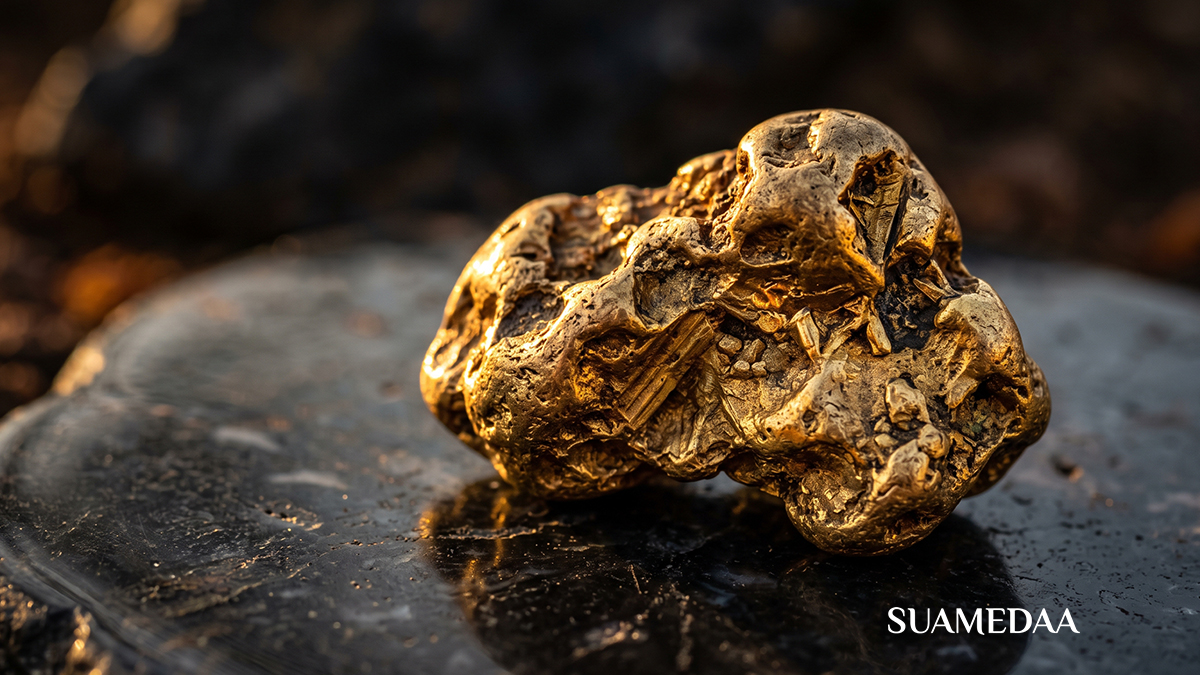
Gold is remarkable not because it is rare, though it is: all the gold ever mined in human history would fit into a cube roughly 22 metres on each side. It is remarkable because the specific combination of physical and chemical properties it possesses is unlike any other element and proves useful across an extraordinary breadth of human endeavour. This article covers every major application and benefit of gold in full, from the ancient to the cutting edge, from the macroscopic to the nanoscale.



The Physical and Chemical Properties That Make Gold Unique
Understanding why gold is so broadly useful begins with understanding what makes it physically and chemically distinctive.
Gold is the most malleable and ductile metal in existence. A single gram of gold can be beaten into a sheet one square metre in area, or drawn into a wire nearly three kilometres long. This extreme workability means gold can be formed into virtually any shape at any scale, from the thinnest decorative leaf to the finest bonding wire in a microprocessor.
Gold is an exceptionally good conductor of electricity, third only to silver and copper among all metals, but unlike silver and copper it does not tarnish, oxidise, or corrode under normal conditions. This combination of conductivity and resistance to degradation makes it uniquely valuable in applications where electrical reliability over time is critical, since contacts made of other metals develop resistance-increasing oxides over time while gold contacts remain clean and functional indefinitely.
Gold is chemically inert under virtually all conditions encountered in ordinary environments. It does not react with oxygen, water, most acids, or most other chemicals. It resists the biological fluids of the human body, which is why it can be implanted in the body without triggering immune rejection. It resists the corrosive conditions of space, deep-sea environments, and industrial chemical exposure. This chemical stability means that gold-containing systems continue to function correctly in conditions that would degrade most other materials.
Gold has a distinctive surface plasmon resonance when fabricated at the nanoscale: gold nanoparticles of different sizes absorb and scatter light at different specific wavelengths, producing vivid colours ranging from red to purple depending on particle size. This optical property is the basis of gold nanoparticle-based diagnostics, sensing, and imaging technologies that have transformed medical testing and are now entering clinical cancer treatment.



Gold has a high density of 19.3 grams per cubic centimetre, nearly twice that of lead, which makes it an excellent radiation shield in medical and space applications. It reflects infrared radiation very effectively, making it valuable for heat management in both spacecraft and high-performance buildings. And it has a distinctive yellow colour and reflective lustre that has made it aesthetically prized across every human culture in recorded history.
These properties, taken together, explain why gold appears in every sector of human activity examined below.
Jewellery and Decorative Arts
The oldest and still the largest single use of gold by volume is jewellery. Approximately 2,000 tonnes of gold are used in jewellery manufacturing annually, representing roughly 40 percent of total annual gold demand. This use predates written history: gold jewellery has been found in archaeological sites dating back over 7,000 years, and it appears in the earliest recorded civilisations of Mesopotamia, Egypt, the Indus Valley, and China.
The appeal of gold for jewellery is not arbitrary. Gold’s malleability allows it to be worked into forms of extraordinary intricacy that no other metal of comparable beauty can achieve. Its resistance to tarnishing and corrosion means that gold jewellery retains its appearance indefinitely: gold objects recovered from tombs sealed for 3,000 years are found in the same pristine condition as the day they were placed there. Its rarity confers value, and its visual quality, a warm yellow that becomes more vivid in high-karat forms, is intrinsically appealing to the human visual system across cultures and millennia.
Gold used in jewellery is alloyed with other metals to improve hardness and working properties. Pure 24-karat gold is too soft for most jewellery applications. 18-karat gold, which is 75 percent gold and 25 percent alloying metals such as silver, copper, palladium, or zinc, provides a good balance of gold content, durability, and workability. 14-karat gold, at 58.3 percent gold, is the most common standard in the United States. 9-karat gold, at 37.5 percent, is common in the United Kingdom and parts of Africa.




White gold is created by alloying gold with white metals such as palladium or nickel, producing a silver-white appearance that has become one of the dominant aesthetic choices in contemporary fine jewellery. Rose gold is created by alloying with copper, producing the warm pinkish tone that became fashionable globally from the 2010s. Green gold, used in specialist jewellery, is produced by alloying with silver.
Gold leaf, beaten to thicknesses of less than 0.1 micrometres, is used in decorative gilding across a vast range of applications: picture frames, furniture, architectural decoration, religious objects, illuminated manuscripts, and contemporary art installations. Gold leaf applied to glass, stone, wood, or paper creates a visual presence that no paint or imitation finish fully replicates, because real gold leaf reflects light with the same quality as solid gold, shifting in appearance as the angle of view and the quality of light change.
Finance, Investment, and Monetary History
Gold has functioned as money for approximately 5,000 years, longer than any other monetary instrument in human history. The reasons it was chosen for this function map directly onto its physical properties: it is durable, does not degrade over time, is divisible without loss of value, is portable relative to its value, is recognisable, and is scarce enough to be valuable but not so rare as to be impractical for exchange.
The gold standard, under which national currencies were backed by fixed reserves of gold, governed international monetary systems for most of the 19th and early 20th centuries, finally being abandoned by the United States in 1971 when President Nixon closed the gold window, ending the convertibility of the US dollar to gold. Since then, all major currencies have been fiat currencies: money by government decree rather than by gold backing.
Despite the end of the gold standard, gold has retained its monetary character. Central banks around the world collectively hold over 35,000 tonnes of gold in reserve, and central bank gold buying reached record levels in both 2022 and 2023, with China, India, Poland, Turkey, and several other countries significantly expanding their gold reserves. The World Gold Council has documented this sustained official sector buying as evidence that central banks continue to regard gold as a monetary reserve asset of unique credibility in a world of fiat currency risk.
For individual investors, gold has historically served as a store of value and a hedge against currency debasement, inflation, and financial system instability. Gold prices have risen from approximately 35 US dollars per ounce when the gold standard ended in 1971 to record highs exceeding 3,000 US dollars per ounce in 2025, a compound annual growth rate that has significantly outpaced inflation over the same period. Gold’s behaviour in financial crises, rising or holding its value when equity markets fall and currencies weaken, has cemented its role as a portfolio diversifier and safe haven asset in modern investment practice.
Gold Exchange-Traded Funds, the most significant financial innovation in gold investment of the past two decades, allow investors to gain exposure to gold price movements without holding physical gold. SPDR Gold Shares, the largest gold ETF, holds physical gold bars in vaults on behalf of its investors and has become one of the largest ETFs in the world by assets under management.
Electronics and Technology
The electronics sector is the second-largest industrial consumer of gold after jewellery, and its demand for the metal has been consistently growing, driven most recently by the artificial intelligence revolution.
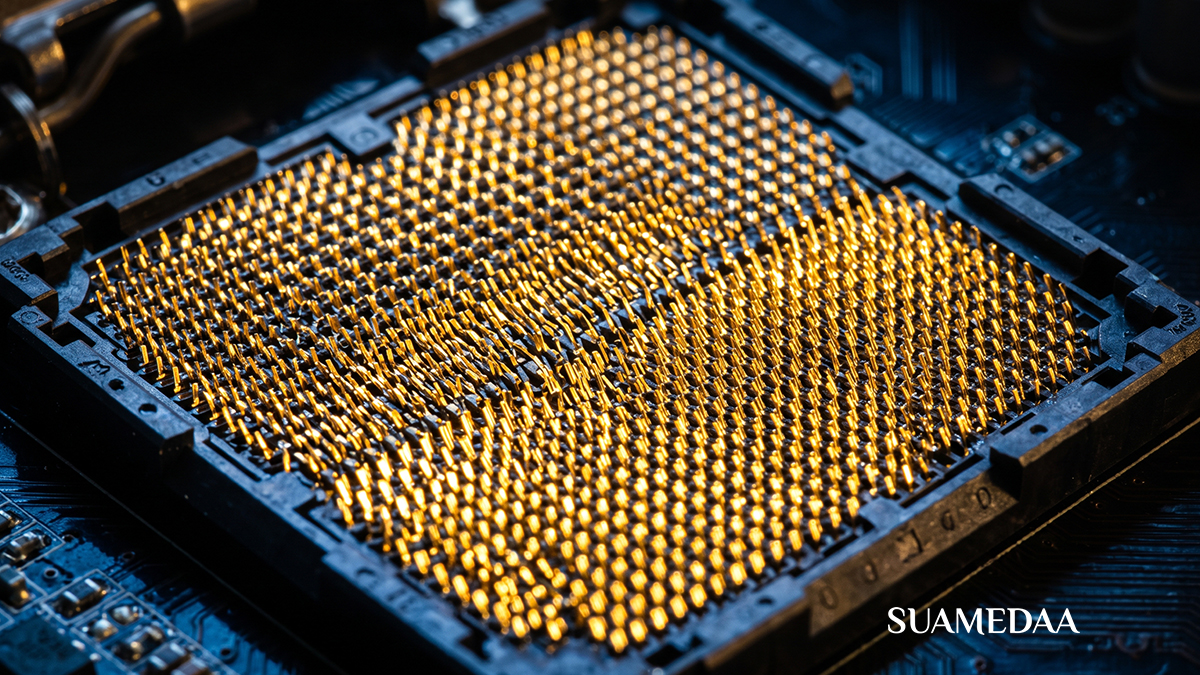
Gold’s combination of exceptional electrical conductivity, complete resistance to oxidation, and extreme malleability makes it indispensable in the most critical connections within electronic devices. In a mobile phone, gold is present in the SIM card connector, the printed circuit board connectors, the bonding wires that connect silicon chips to their lead frames, and various other contact points where a reliable, non-corroding electrical connection is required. In a computer, gold is present in processor sockets, memory module contacts, PCIe connectors, and USB ports.
AI processors and high-performance computing chips, which operate at far higher temperatures and connection densities than conventional consumer electronics, rely even more heavily on gold. Gold-plated receptors and bonding wires in these chips ensure reliable electrical connections under thermal stress conditions that would cause oxidation-related failures in base metal alternatives. Gold is also used in the massive server infrastructure of AI data centres, in motherboard connectors, server-to-server interconnects, and the fibre-optic transceivers that manage data transmission between servers and data centres.
Gold bonding wire, which is a wire of extremely high-purity gold, typically 99.99 percent, drawn to diameters of 18 to 25 micrometres, is used to connect silicon dies to their package leads in billions of semiconductor components manufactured annually. The gold wire must be ultra-fine, perfectly uniform, highly ductile, and possess excellent electrical conductivity under the thermal cycling conditions of semiconductor operation. No other material meets all these requirements simultaneously.
Gold is also used in satellite and spacecraft components, in precision instruments, in high-frequency connectors for telecommunications infrastructure, and in the contacts of safety-critical systems including automotive airbag sensors, aircraft flight control systems, and industrial control equipment where contact failure would be catastrophic.
Gold Nanoparticles in Medicine and Cancer Treatment
The most scientifically exciting frontier in gold’s applications is at the nanoscale, where gold nanoparticles are transforming the landscape of cancer diagnosis, targeted drug delivery, medical imaging, and disease detection.
Gold nanoparticles, particles of gold between 1 and 100 nanometres in diameter, possess the surface plasmon resonance property described earlier: they absorb and scatter light at specific wavelengths that depend on particle size and shape. This optical tunability, combined with their biocompatibility and ease of surface functionalisation, makes them uniquely versatile tools in medicine.
In cancer treatment, gold nanorods, gold nanoshells, and gold nanocages are being developed for photothermal therapy: these particles accumulate preferentially in tumour tissue, where their leaky vasculature allows nanoparticle accumulation to a far greater degree than in healthy tissue. When illuminated with near-infrared light that penetrates body tissue with minimal damage, the gold nanoparticles absorb the light energy and convert it to heat, selectively destroying tumour cells that have accumulated the particles while leaving surrounding healthy tissue largely unaffected.
First-in-human clinical data on gold nanorod-based targeted hyperthermia therapy was presented at the American Association for Cancer Research meeting on April 27, 2026, in San Diego, by Sona Nanotech’s Chief Medical Officer. The presentation represented a landmark milestone in the clinical translation of gold nanoparticle cancer treatments, moving this technology from animal models into human patients for the first time.
Gold nanoparticles are also deployed as carriers for targeted drug delivery: the nanoparticle is functionalised on its surface with targeting ligands that bind to receptors overexpressed on tumour cell surfaces, allowing the drug-carrying nanoparticle to seek out and enter cancer cells preferentially. This targeted delivery reduces the systemic toxicity of chemotherapy by concentrating the drug at its site of action rather than distributing it throughout the body.
In diagnostic imaging, gold nanoparticles serve as contrast agents for computed tomography, photoacoustic imaging, and optical coherence tomography, improving the visibility of tumours and vascular structures that are difficult to distinguish from surrounding tissue using conventional contrast agents. Their X-ray absorption coefficient is significantly higher than that of iodine-based conventional contrast agents, potentially allowing lower doses to produce equivalent or superior imaging quality.
For disease diagnosis, gold nanoparticle-based lateral flow assays have become one of the most widely deployed rapid diagnostic technologies in the world. The coloured line visible when a rapid COVID-19 test, pregnancy test, malaria test, HIV test, or hepatitis test shows a positive result is produced by gold nanoparticles conjugated to antibodies that capture the target antigen. When the nanoparticles accumulate at the test line, their collective red colour becomes visible to the naked eye. These tests have been manufactured in billions of units annually and have transformed the accessibility of rapid diagnostic testing globally, particularly in resource-limited settings.
The global gold nanoparticles market, driven by these medical applications, was valued at 6.3 billion US dollars in 2024 and is projected to reach 12.8 billion by 2030, growing at a compound annual growth rate of approximately 16 percent.
Rheumatoid Arthritis and Pharmaceutical Medicine
Gold has been used as a pharmaceutical agent in the treatment of rheumatoid arthritis since the 1920s, when it was first observed that injectable gold compounds reduced joint inflammation in arthritic patients. This form of treatment, called chrysotherapy from the Greek chrysos meaning gold, was the primary disease-modifying treatment for rheumatoid arthritis for several decades.
Injectable gold compounds including gold sodium thiomalate and aurothioglucose were found to significantly reduce joint inflammation, slow the progression of joint destruction, and improve functional outcomes in patients with active rheumatoid arthritis. The precise mechanisms by which gold exerts these anti-inflammatory effects are complex and still not fully understood, but they involve inhibition of macrophage activity, reduction of pro-inflammatory cytokine production, and suppression of the abnormal immune response that drives the autoimmune destruction of joint tissue in rheumatoid arthritis.
An oral gold compound, auranofin, was subsequently developed and became available as a less invasive alternative to injectable gold therapy. Auranofin remains in clinical use and is currently being investigated for applications beyond rheumatoid arthritis, including as an anti-cancer agent, an antiparasitic drug for diseases including malaria and leishmaniasis, and as a potential treatment for HIV through its ability to target viral reservoirs.
The anti-inflammatory properties of gold compounds have also been applied in other inflammatory conditions, and the same mechanisms that make gold effective in rheumatoid arthritis underlie the theoretical basis for its application in gold-based skincare products, where the anti-inflammatory activity is sought for skin-calming and anti-ageing effects.
Dentistry
Dentistry has used gold for restorative and prosthetic purposes for over 2,000 years, and it remains in use today despite the widespread availability of tooth-coloured ceramic and composite alternatives. Gold is used in dental applications in the form of gold alloys, typically containing 60 to 75 percent gold alloyed with other metals for strength, for crowns, bridges, inlays, onlays, and partial denture frameworks.
The reasons for gold’s continued use in dentistry are the same as its uses elsewhere: biocompatibility, durability, and resistance to corrosion. Gold dental restorations placed correctly can last 20 to 40 years or more, far outlasting composite resin and comparable to or exceeding the lifespan of porcelain restorations. Gold does not corrode in the oral environment, does not react with the bacteria, saliva, and acids present in the mouth, and does not cause the galvanic reactions that can occur when dissimilar metals are placed in contact in the mouth.
Gold alloys are also gentle on opposing teeth: their hardness is similar to that of tooth enamel, meaning they do not accelerate the wear of the teeth they bite against, unlike some ceramic materials that are harder than enamel and can cause excessive opposing tooth wear over time. For posterior teeth where aesthetics are less critical and long-term durability is the priority, gold remains a clinically superior restoration material by many measures.
Aerospace and Space Technology
Gold plays critical roles in aerospace and space exploration applications where its unique combination of properties cannot be replicated by any alternative material.
In spacecraft and satellites, gold is used as a thermal control coating on thermal blankets, optical sensors, and structural components. Gold reflects approximately 98 percent of infrared radiation, making it highly effective at preventing the extreme temperature swings that would otherwise occur as a spacecraft moves between sunlit and shadowed regions of space. The gold-coloured blankets visible on space vehicles, satellites, and space station components are multi-layer insulation blankets in which gold or gold-coated material provides the primary infrared radiation barrier.
The James Webb Space Telescope, deployed in 2021 and now returning unprecedented images of the early universe, uses primary mirror segments coated with a thin layer of gold approximately 100 nanometres thick. Gold was chosen for this application because it reflects infrared radiation, the wavelength range in which the telescope observes, more efficiently than any other practical coating material, and because it maintains this reflective performance at the cryogenic temperatures of deep space without degrading.
Gold is also used in the electrical connectors and circuit boards of spacecraft electronics, where the combination of conductivity, resistance to oxidation, and reliability under the thermal cycling, radiation, and vacuum conditions of space is as critical as in terrestrial electronics applications, but with the additional constraint that replacement or repair is impossible once the spacecraft is deployed.
In high-performance aircraft, gold is used in the electrical contacts and connections of avionic systems, in the canopy of some military aircraft where a thin gold coating serves both as an infrared reflector to reduce cockpit heat load and as an electromagnetic shield, and in various sensor and instrument components where long-term reliability is essential.
Gold in Skincare and Beauty
Gold has been used in skincare and beauty treatments since ancient times. Cleopatra is reported to have slept in a gold face mask. Traditional Chinese, Indian Ayurvedic, and Arabic medicine systems incorporated gold in preparations for skin health going back at least to 2,500 BC. In contemporary skincare, gold is used in the form of colloidal gold, nano gold particles, and 24-karat gold leaf in serums, creams, masks, and facial treatments.
The documented properties of gold relevant to skincare include anti-inflammatory activity, antioxidant capacity, the ability to stimulate blood circulation, and a theoretical mechanism for supporting collagen and elastin production. Colloidal gold, which is gold particles of microscopic size suspended in liquid, shares the anti-inflammatory properties of the pharmaceutical gold compounds used in rheumatoid arthritis treatment. Applied to the skin, these properties reduce redness, calm irritation, and diminish the inflammatory component of conditions including acne, rosacea, and contact dermatitis.
As an antioxidant, gold particles are thought to neutralise the free radicals generated by UV radiation and environmental pollution that damage skin cell DNA, degrade collagen and elastin fibers, and accelerate the visible signs of skin ageing. Applied topically in a well-formulated product, gold is believed to protect skin cells from this oxidative damage while simultaneously reflecting light from the skin surface, creating a luminous, brightening effect that makes skin appear more radiant.
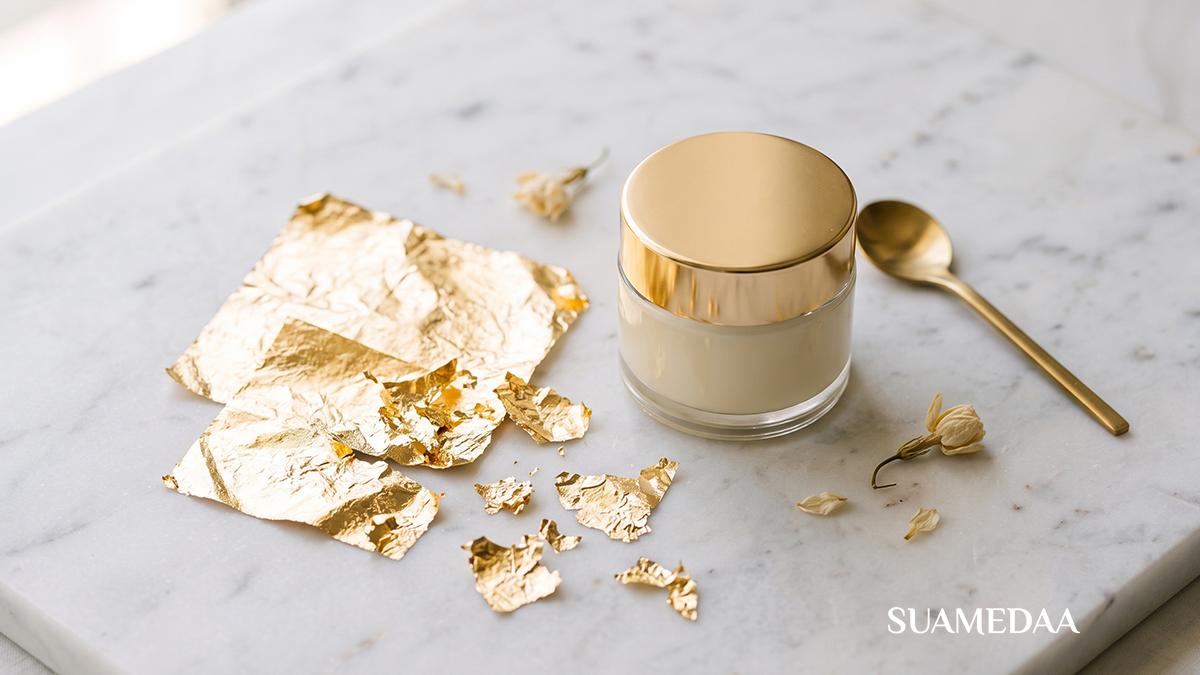
The collagen-stimulating mechanism proposed for gold skincare is related to its ability to improve microcirculation in the skin: better blood supply to the dermis delivers more oxygen and nutrients to the fibroblasts responsible for collagen synthesis, supporting their activity and potentially increasing collagen production over time. Some research and clinical observations suggest that gold-containing skincare products may enhance the penetration of other active ingredients applied alongside them, suggesting a possible carrier or permeation-enhancing function.
It is important to be honest about the evidence base: rigorous clinical trials specifically on gold in topical skincare are still limited. Dermatologists quoted by Practical Dermatology noted that the available studies support several of the claimed benefits but that the evidence base for dermatologic gold use is not yet as extensive as for ingredients like retinol or vitamin C. Gold in skincare works best as part of a well-formulated product where the other active ingredients are doing confirmed work and the gold contributes its documented anti-inflammatory and antioxidant activity alongside aesthetic luminosity.
Gold is also used in professional treatments including gold facials, which combine gold leaf application with other active ingredients and massage techniques, and in increasingly popular gold-thread facial lifting procedures, where very fine gold threads are inserted into the dermis to create a scaffolding effect that stimulates collagen production at the thread site over the following weeks and months.
Food and Drink
Gold is an approved food additive in the European Union and many other jurisdictions, designated E175. It is entirely non-reactive in the body: gold has no nutritional function and passes through the digestive system without being absorbed, metabolised, or causing any biological effect in its bulk metallic form. It is used purely for decorative and luxury purposes in food and beverage.
Edible gold leaf, beaten to extremely thin sheets, is applied to confectionery, pastries, chocolates, and other luxury food preparations, where it creates a visual impression of extraordinary opulence. Gold-dusted cocktails and champagne topped with gold leaf or gold powder have become standard offerings at luxury bars and restaurants globally. Gold flakes are added to artisan spirits, including gold-flake whisky and gold champagne, as a pure luxury statement.
The Michelin-starred fine dining sector has incorporated edible gold into plating as a signifier of ingredient cost and visual extravagance. A number of food and drink products, from artisan chocolates to luxury ice creams, use edible gold as a primary differentiating ingredient, with products in some markets priced at extraordinary premiums for the addition of gold that adds no flavour, texture, or nutritional value but communicates exceptional quality and exclusivity in a form the human eye immediately recognises and values.
Gold in Architecture and Art Conservation
Gold leaf applied to architectural surfaces has been a marker of sacred and secular significance across cultures for thousands of years. Buddhist temples across Southeast Asia, particularly in Thailand and Myanmar, are covered in gold leaf applied by devotees and craftspeople in a continuous tradition spanning centuries. Orthodox church domes and iconostases are gilded in gold leaf as an expression of divine light. Hindu temple gopuram towers display gold in concentrated form at their peaks. Medieval European cathedrals incorporated gold in altarpieces, reliquaries, and manuscript illuminations as a literal representation of divine presence on earth.
In art conservation, gold plays a critical role in the preservation of artworks containing gold leaf or gold-based pigments. Conservation scientists use X-ray fluorescence spectroscopy, in which gold-containing materials produce a distinctive gold signal, to identify the composition of historical artworks non-destructively, determining whether gold is present, in what form, and in what condition. This information guides conservation decisions about cleaning, consolidation, and stabilisation of gold elements in paintings, sculptures, and decorative arts.
The gold standard of museum-quality conservation framing includes gilded frames, where authentic gold leaf gilding on frames that match the period of the artwork they contain is considered the correct conservation choice for historical works in major museum collections. The process of applying gold leaf to a frame, known as water gilding when the traditional aqueous adhesive method is used, is one of the most highly skilled craft techniques in the conservation field.
Environmental Applications
Gold nanoparticles are finding application in environmental science and remediation in ways that were not possible before the development of controllable nanoscale synthesis techniques.
For water quality monitoring, gold nanoparticle-based sensors can detect trace concentrations of heavy metal contaminants including mercury, lead, arsenic, and cadmium in water at concentrations far below what conventional analytical chemistry can detect at equivalent speed and cost. Portable gold nanoparticle sensor arrays are being deployed for real-time monitoring of industrial discharge, agricultural runoff, drinking water supplies, and recreational water quality.
For environmental remediation, gold nanoparticles functionalised with specific ligands can selectively bind to and remove specific contaminants from water, enabling targeted remediation of contaminated water sources. Research is ongoing into the use of gold nanoparticle-based photocatalytic systems for breaking down persistent organic pollutants and pharmaceutical contaminants in wastewater.
The catalytic properties of gold nanoparticles, which were discovered unexpectedly in the 1980s when it was found that gold particles at the nanoscale are highly catalytically active despite bulk gold being chemically inert, have been applied to the catalytic conversion of carbon monoxide to carbon dioxide at room temperature, an application relevant to air quality management and the reduction of vehicle emissions. Gold-based catalysts are also used in industrial chemical synthesis for selective oxidation reactions and in the production of vinyl acetate monomer, which is a component of various industrial polymers and adhesives.
Spiritual, Cultural, and Symbolic Significance
No account of gold’s applications would be complete without acknowledging the dimension in which gold has been most consistently significant across the broadest range of human cultures: its spiritual and symbolic meaning.
Gold is the symbol of the sun in virtually every ancient cosmological system. In ancient Egypt it was the flesh of the gods, the material of which the immortal body was made, used to cover the faces of the deceased in the process of mummification to prepare them for eternal life. In Hinduism, gold is associated with Lakshmi, the goddess of prosperity, and with spiritual purity. In Christianity and the Orthodox tradition, gold signifies divine light, the presence of the sacred, and the eternal. In Islam, gold is a symbol of paradise. In indigenous cultures across West Africa, gold was the medium of chiefly and kingly power, displayed in forms of jewellery and regalia that communicated both political authority and spiritual potency.
This cultural and spiritual dimension of gold is not separate from its economic and technological dimensions. It is precisely because gold has been the medium of spiritual expression, political power, and human aspiration across every culture on earth that it has acquired and maintained the universal value that makes it the global monetary and reserve asset it remains today. The technical properties of the metal and the human meanings attached to it are inseparable in the complete account of what gold is and what it does.
Glass, Optics, and Architectural Glazing
Gold plays a specialised role in high-performance glass and glazing applications that exploits its infrared reflection properties at the nanoscale. A very thin coating of gold, applied to architectural glass by vacuum deposition or sputtering, creates a low-emissivity glass that reflects infrared radiation while remaining highly transparent to visible light. This gold-coated glazing dramatically reduces the heat transfer through windows, keeping buildings cooler in summer and warmer in winter at significantly lower energy cost than uncoated glass.

The same principle is applied in the gold-coated visors of astronaut helmets, which protect astronauts from the unfiltered solar radiation of space by reflecting infrared and UV radiation while allowing adequate visible light transmission for vision. The distinctive gold visor of a spacesuit helmet is one of the most recognisable images of the space age and represents a genuine application of gold’s optical properties in one of the most demanding environments imaginable.
In optical instruments and laser applications, gold mirrors are used to reflect infrared laser beams in systems ranging from surgical CO2 lasers, where gold-coated mirrors direct the laser beam with minimum energy loss, to the laser systems used in industrial cutting and welding, where gold mirror reflectivity at infrared wavelengths is higher than any alternative coating.
Acupuncture and Traditional Medicine
In traditional Chinese medicine and in some Japanese and Korean medical traditions, gold needles have been used in acupuncture for thousands of years. Gold acupuncture needles are valued for their biocompatibility, their resistance to corrosion in body fluids, and the traditional belief that gold’s properties interact with the body’s meridian system in specific ways. Sterilisable, durable, and non-reactive in tissue, gold needles represent an application of the metal’s physical properties to an ancient healing system.
In Ayurvedic medicine, the traditional Indian system with a history spanning thousands of years, swarna bhasma, which is gold ash prepared through a lengthy purification and calcination process, is used in specific therapeutic preparations for a range of conditions including cognitive decline, nervous system disorders, and immune dysfunction. While the evidence base for these traditional preparations in modern clinical terms is limited, the traditions themselves represent the longest continuous use of gold in human health care in recorded history.
Gold’s Role in Scientific Research
Beyond its direct applications in medicine and technology, gold plays important roles in scientific research instrumentation that underlies advances across multiple fields.
In electron microscopy, gold nanoparticles are used as fiducial markers, reference points that help calibrate the three-dimensional structure reconstruction of biological specimens including proteins, viruses, and cellular organelles. Gold’s high electron density produces a distinctive, bright signal in electron micrographs that is easily distinguished from the surrounding biological material, making it ideal as a size standard and structural reference.
In surface-enhanced Raman spectroscopy, a technique used to detect and identify molecular species at extremely low concentrations, gold nanostructures are used to amplify the Raman scattering signal of target molecules by factors of up to ten billion, enabling the detection of single molecules and making the technique applicable to trace-level chemical and biological analysis that would otherwise be impossible.
Gold is used in the preparation of biological transmission electron microscopy specimens through the technique of immunogold labelling, in which antibodies conjugated to gold nanoparticles are used to mark the location of specific proteins within cells and tissues at the nanometre scale of resolution that only electron microscopy provides.
The Record Year and the Future of Gold
The year 2025 was a record year for gold by total demand, exceeding 5,000 tonnes for the first time in the metal’s history as a tracked commodity. This record combined record central bank buying, sustained investment demand driven by geopolitical uncertainty and inflation concern, continued strong jewellery demand in India and China, and the growing technological demand from artificial intelligence, healthcare, and the green energy transition, all contributing simultaneously.
Looking forward, the applications driving gold’s technological future are all expanding. AI infrastructure will continue to drive electronics demand. Gold nanoparticle cancer therapies are entering clinical trials, with the first-in-human data presented in 2026 representing the opening of what promises to be a significant new medical application. Environmental monitoring applications are growing as water quality and pollution detection demand increases globally. And gold’s role in green energy technology, including its use in fuel cell catalysts and photovoltaic components, is expanding as the energy transition accelerates.
Gold is simultaneously the most ancient and one of the most forward-looking materials in human technological use. The same metal that lined the tombs of pharaohs is now being engineered at the nanoscale to seek out and destroy cancer cells. The same metal that backed the monetary systems of empires is now stored in central bank vaults as the ultimate reserve asset in a world of digital currency and geopolitical fragmentation. The same metal that gleams on the domes of temples and the shoulders of chiefs is now carrying the electrical signals of artificial intelligence at the speed of light through the world’s most powerful computing systems.
No other element covers this span. No other material sits simultaneously at the centre of human spiritual aspiration, economic organisation, technological innovation, and medical science. Gold is not a relic. It is, in the fullest sense of the word, elemental.