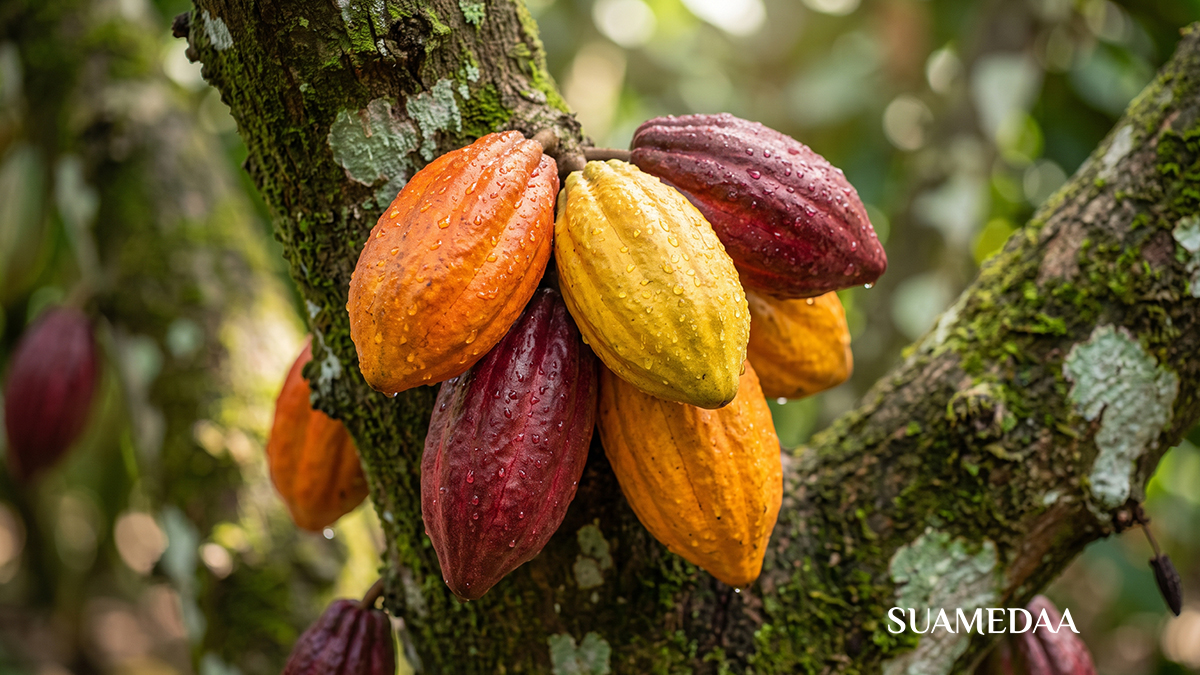
How Ghana became One of the World’s Biggest Cocoa Producers
There are commodities, and then there are commodities that remake the countries that grow them. For Ghana, cocoa is that crop. In the span of a few decades at the turn of the twentieth century, a single agricultural product transformed the Gold Coast from a colonial territory dependent on palm oil and gold into the largest cocoa-producing nation on earth. The legacy of that transformation is still visible in the roads, schools, dams, and institutions that cocoa revenue built. It is still audible in the name of the country’s central cocoa authority, whose acronym, COCOBOD, is spoken in villages and trading rooms with equal familiarity. And it is still in dispute, in conversations about farmer poverty, deforestation, child labour, and what Ghana’s relationship with its most famous crop should look like in the decades ahead.
The story of how Ghana got here begins with a man carrying seeds from an island off the coast of Central Africa, and with a set of ecological conditions so favourable that once the crop took root, its spread across the country became almost unstoppable.
Tetteh Quarshie and the Seeds That Changed Everything
In 1869, a Ghanaian blacksmith and farmer named Tetteh Quarshie returned to his home community in the Akuapim hills from Fernando Po, an island now part of Equatorial Guinea, carrying pods of the Amelonado cocoa variety. He was born in Osu in 1842, had learned the craft of blacksmithing, and had spent years working on Fernando Po where cocoa cultivation was already established under Spanish colonial management. What he brought back was not just a plant but a practical understanding of how to grow it.

European missionaries and traders had attempted cocoa cultivation along the Gold Coast as early as the 1830s. The Swiss Basel Mission had established an agricultural research station at Akropong in 1857 and spent years trying to cultivate the crop. Their efforts repeatedly failed. Insects, disease, and a fundamental misunderstanding of the plant’s requirements defeated experiment after experiment until the Mission abandoned the project in 1870. The missionaries had planted cocoa in full sun, exposing the trees to direct tropical heat without the protective canopy they require during their early years of growth.
Quarshie understood what the missionaries did not. Cocoa trees thrive under shade, particularly in their early stages, where taller trees filter sunlight and moderate the microclimate around the developing plant. He planted his seeds at Mampong in the Akuapim hills, providing the right conditions, and his seedlings prospered. Neighbours observed, propagated, and planted. The Akuapim hills, with their forested ridges and reliable rainfall, turned out to be almost ideal cocoa country, and the crop spread rapidly through the network of Ghanaian farmers who recognised its commercial potential.
Within a generation, cocoa cultivation had moved far beyond its origin point. Farmers carried seeds and knowledge westward and southward, into the Ashanti region, the Eastern and Central regions, and eventually into the vast Western Region forests that would become, and remain, Ghana’s highest-producing cocoa territory. The Basel Mission’s trading arm, recognising the opportunity it had failed to create, began purchasing and exporting Ghanaian cocoa, as did British trading companies drawn to the Gold Coast by the commodity’s growing value on European markets.
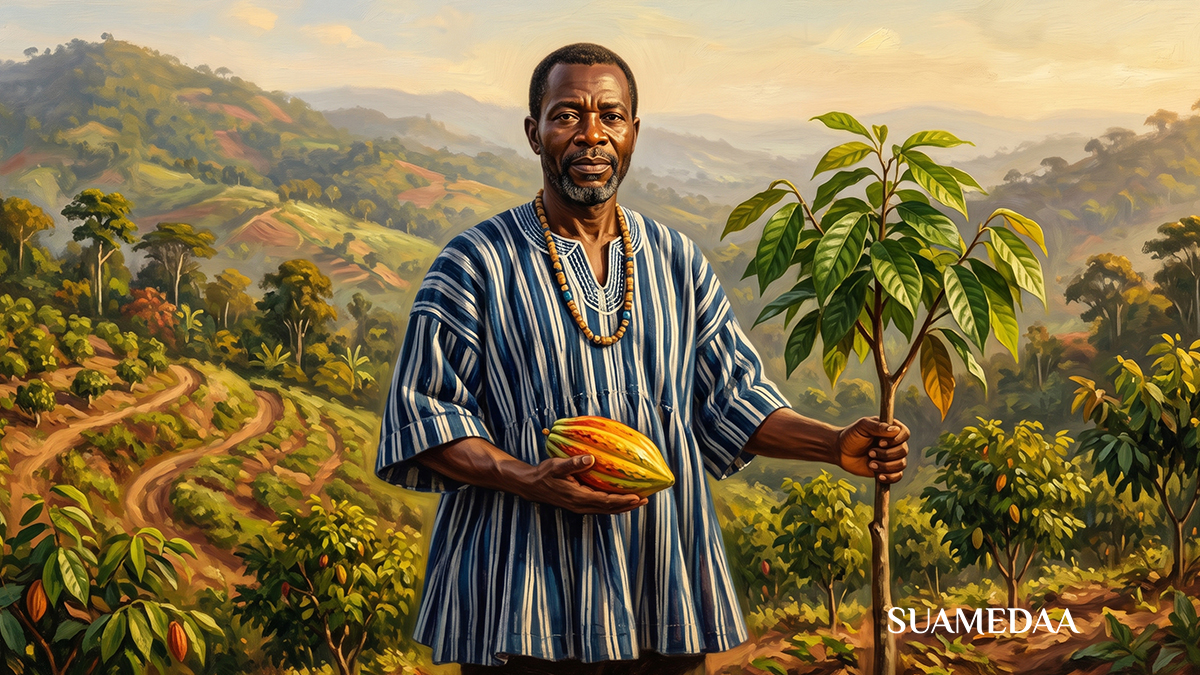
Tetteh Quarshie died in 1892, before the full scale of what he had started became apparent. He received minimal financial recognition during his lifetime: a payment of 250 pounds in 1926, awarded long after his death, was the extent of the formal compensation to his memory, despite the enormous wealth his introduction of the crop eventually generated. He is today honoured as a national hero, with memorials across Ghana and his name attached to schools and institutions in the country he transformed.
The World’s Largest Producer: The Colonial Peak
The spread of cocoa across the Gold Coast in the early decades of the twentieth century was one of the most remarkable agricultural expansions in modern history. By 1911, roughly forty years after Quarshie planted his first seeds, the Gold Coast had become the largest cocoa producer in the world. By the 1930s, the country was supplying nearly half of the world’s entire cocoa output.


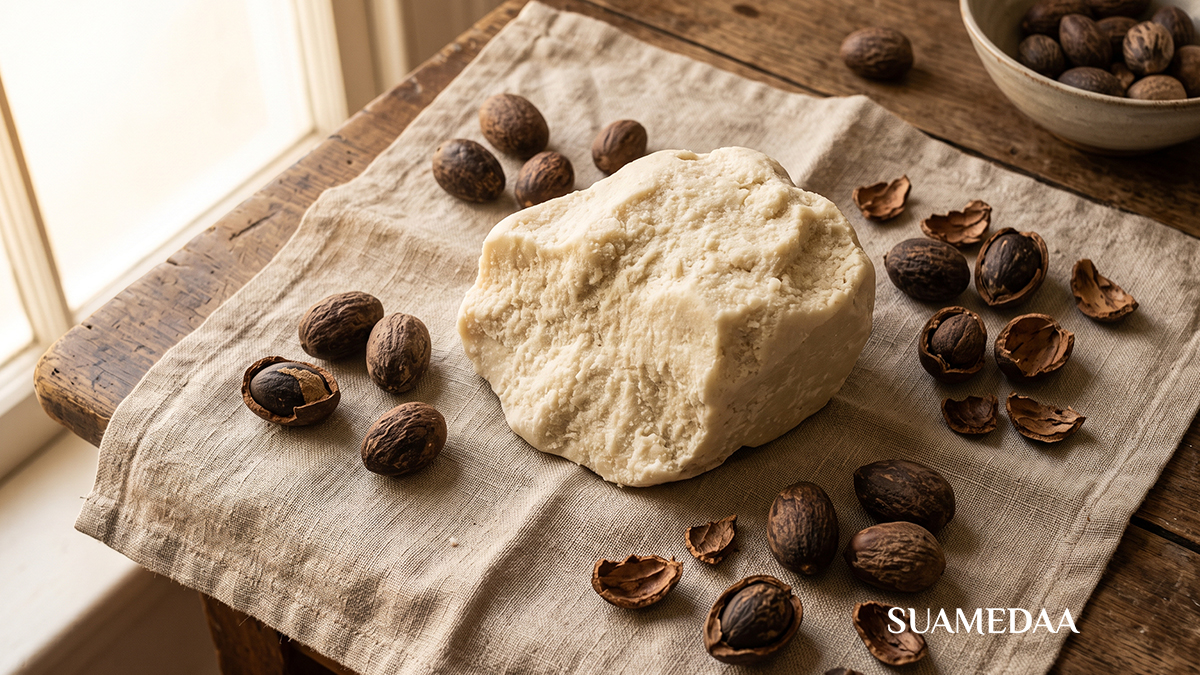
This achievement was accomplished almost entirely by smallholder farmers. Unlike the plantation agriculture that defined cocoa production in some other colonial territories, Gold Coast cocoa was grown on small family plots, typically under three hectares, by Ghanaian farmers who negotiated their own land rights, hired their own labour, and sold their harvest to a network of licensed buying agents and trading companies. The colonial administration encouraged the expansion and taxed the export revenues but was largely a secondary actor in a story driven by Ghanaian entrepreneurship and initiative.
The ecological conditions in the country’s forested zones were exceptionally well-suited to cocoa. Annual rainfall between 1,000 and 1,500 millimetres, rich forest soils, appropriate temperature ranges, and the existing practice of mixed-forest farming all aligned to make the Western, Ashanti, Eastern, and Brong-Ahafo regions among the most productive cocoa territories on earth. The crop found its home.
The commercial infrastructure built around cocoa during this period left permanent marks on the country’s geography. Ports were expanded to handle cocoa exports. Railway lines were extended inland to move harvested pods from farming communities to the coast. Market towns grew where buying agents established trading operations. The physical skeleton of modern Ghana was laid, in significant part, by the demands of the cocoa trade.
Independence and the State in the Cocoa Business
When Ghana achieved independence in 1957, becoming the first sub-Saharan African nation to do so, cocoa was the engine that would power the new country’s ambitions. Under Kwame Nkrumah, the first president, cocoa revenue was channelled into an aggressive programme of industrialisation and infrastructure development. The Akosombo Dam on the Volta River, which brought electricity to the country, was built in part with cocoa earnings. Factories, hospitals, schools, and housing projects were financed by the commodity that farmers in the Ashanti and Western regions were harvesting by hand and selling to government buying agents.
The instrument of state control over cocoa was the Ghana Cocoa Marketing Board, eventually reorganised into what is known today as COCOBOD, the Ghana Cocoa Board. Established to centralise the purchase, processing, and export of cocoa, COCOBOD operates as the single point of authority over the cocoa supply chain. It sets the producer price, the price paid to farmers for their beans, at the beginning of each season. It licences the private buying companies that operate in farming communities. It manages quality control through a grading system that has given Ghanaian cocoa a reputation for consistency that commands premium prices on the global market. And it finances the pre-financing agreements with international cocoa traders that provide Ghana with the foreign exchange it needs to fund government operations before the crop is even harvested.
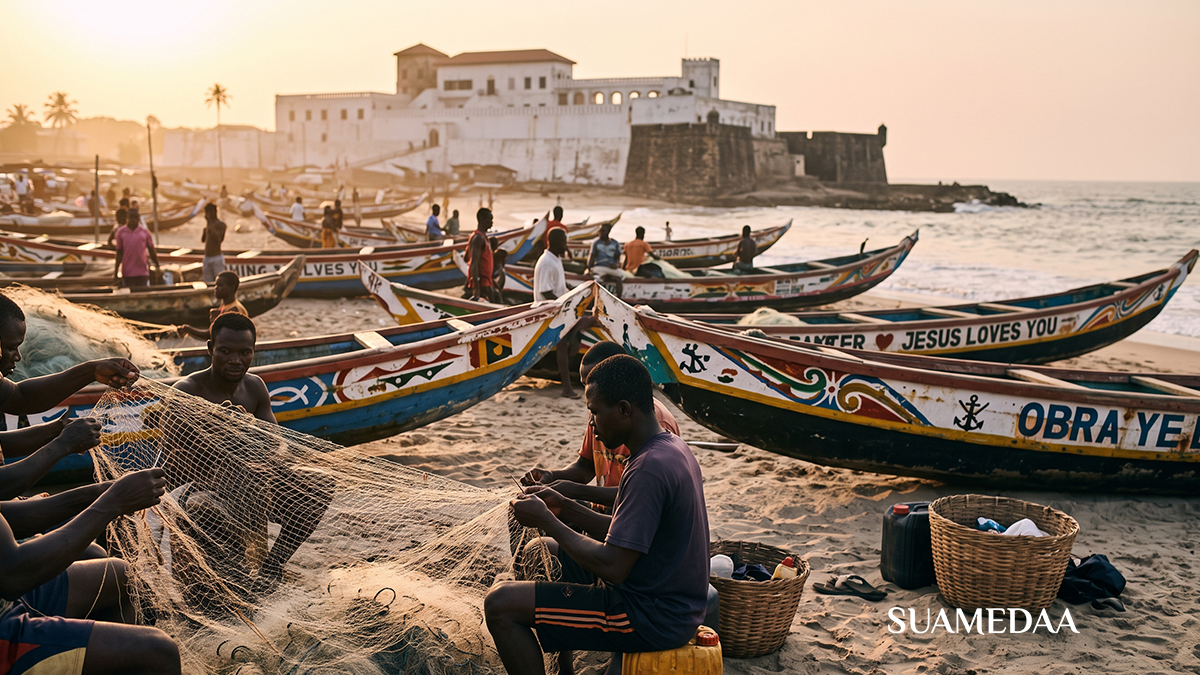


The centralised model has produced outcomes that are genuinely mixed. On one hand, it has maintained the quality standards and single-origin reputation that make Ghanaian cocoa worth more per tonne than cocoa from many competing origins. On the other hand, it has insulated farmers from the full benefit of price rises and made the system vulnerable to the inefficiencies and political interference that have periodically damaged its performance. Throughout various periods of economic difficulty, COCOBOD’s operations became entangled in the broader dysfunction of Ghana’s public institutions, and production volumes suffered.
How Ghana Grows Cocoa Today
The basic structure of cocoa farming in Ghana has changed less than might be expected over more than a century. The crop is still grown by smallholder farmers, roughly 800,000 of them across the six main producing regions: Western, Ashanti, Eastern, Central, Brong-Ahafo, and the Volta. The typical farm covers two to three hectares. The farmer, often working with family members and sometimes hired seasonal labourers, manages the trees through a cycle of planting, pruning, fertilising, and harvesting that runs to a primary main crop from October to February and a smaller mid-crop from May to August.
The harvested pods are split open on the farm, the beans and pulp extracted, and the beans placed in wooden fermentation boxes for five to seven days. Fermentation is a critical step: it initiates the chemical reactions that develop the flavour precursors that make fine-flavour cocoa distinct. After fermentation, the beans are dried on mats in the sun, reducing their moisture content to around seven percent, before being bagged and sold to licensed buying companies that transport them to COCOBOD’s processing facilities.
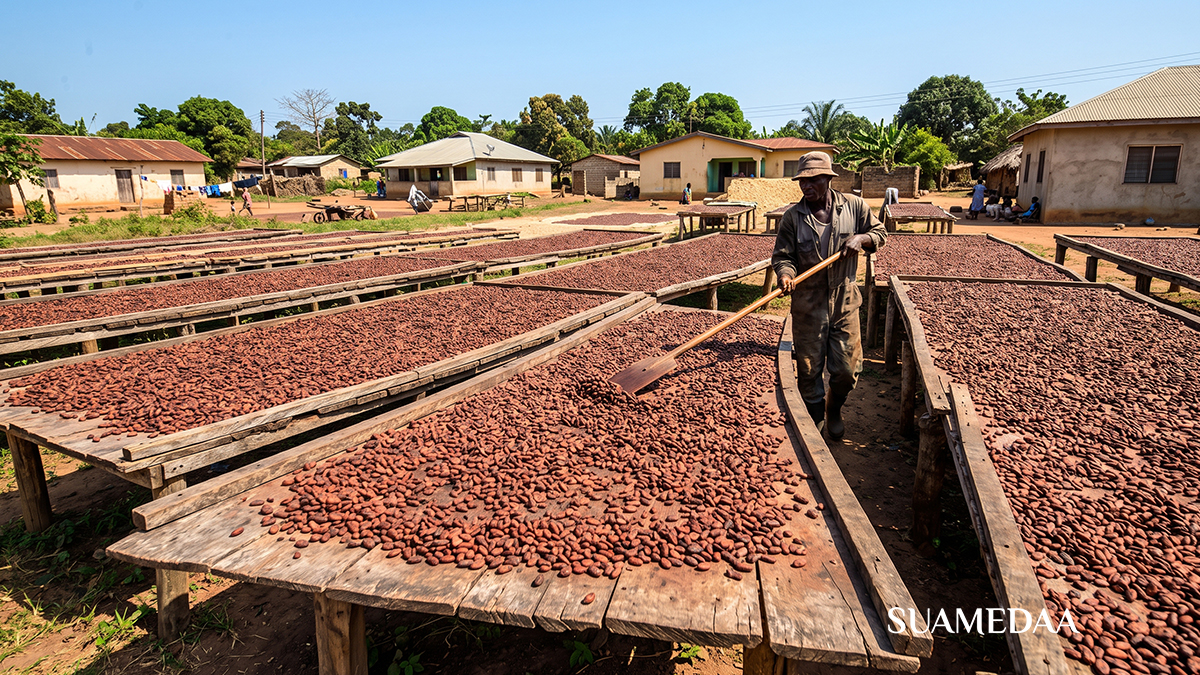
Ghana produces what the trade classifies as fine flavour cocoa: its beans are noted for their rich aroma, deep colour, and high cocoa butter content, characteristics that chocolate manufacturers pay premiums for and that have historically given Ghana a competitive edge over volume producers. The Ghanaian bean is the reference point in much of the chocolate industry’s quality conversation, and that reputation has been maintained through COCOBOD’s quality control infrastructure, which grades every lot before export.
The Ivory Coast Factor: Second, but Not Lesser
Ghana sits today in second place among the world’s cocoa producers. First place belongs to Côte d’Ivoire, which produces roughly one-third of global cocoa supply. Together, the two neighbours account for more than sixty percent of the world’s cocoa, a concentration that gives West Africa enormous structural influence over global chocolate markets but also creates systemic risk for an industry built on agricultural commodities subject to climate, disease, and political disruption.
The comparison with Côte d’Ivoire is instructive. Ghana’s neighbour to the west produces larger volumes but has historically sold its beans at lower prices, partly because of quality differences and partly because Côte d’Ivoire has operated a more liberalised and competitive buying system that drove prices down. Ghana’s managed system, for all its inefficiencies, has maintained the quality consistency that commands the premium. Which model produces better outcomes for farmers, and for the country, is a long-running debate with no simple answer.
In 2019, Ghana and Côte d’Ivoire announced joint action on price floors. The two countries established a Living Income Differential, a fixed premium of 400 US dollars per tonne charged on top of the market price for their cocoa. The policy was intended to address the chronic gap between the global price of chocolate and the incomes of the farmers producing its primary ingredient. It was a significant moment: the two largest producers acting in concert to push back against the pricing power of the multinational corporations that purchase, process, and sell cocoa as chocolate to consumers in Europe and North America.
The Problems That Growth Did Not Solve
For all that cocoa has given Ghana, it has not resolved some of the most fundamental challenges in the industry.
Farmer incomes remain structurally low. A 2015 Cocoa Barometer study found Ghanaian cocoa farmers earning the equivalent of approximately 84 US cents per day, below the World Bank’s threshold for extreme poverty. The global price of cocoa has risen dramatically since then, reaching historic highs in 2024 when supply disruptions and weather events pushed prices toward 10,000 US dollars per tonne on international markets, but the degree to which those price increases flowed through to individual Ghanaian farmers through COCOBOD’s fixed producer price system was partial. For the 2026/2027 season, COCOBOD set the producer price at GHS 2,650 per 64-kilogram bag, representing an increase intended to bring farmer returns closer to the levels that international prices would suggest, but the gap between global price and farmgate price remains a persistent structural tension.
Deforestation is a related and worsening problem. Ghana experienced the highest rate of primary rainforest loss globally in 2017 and 2018, a 60 percent increase driven in significant part by the conversion of forest land to cocoa farms. Between 1988 and 2007, more than 2.3 million hectares were cleared for agricultural use, much of it for cocoa. The pressure to expand cocoa production has historically been accommodated by clearing more forest rather than increasing yields on existing land, an approach that has costs for biodiversity, climate, and the long-term productivity of the land itself.
Illegal gold mining, known locally as galamsey, has consumed approximately 190,000 acres of cocoa farmland. The operations pollute rivers, contaminate soil, and destroy farmland at a pace that local and national authorities have struggled to control. Cocoa farming communities in the Western Region, the country’s most productive cocoa zone, have watched productive land become unusable within years of mining activity beginning nearby.
Child labour persists in cocoa farming communities. Approximately 2.1 million children across West Africa are estimated to engage in work related to cocoa harvesting, much of it hazardous. Major chocolate manufacturers have made commitments since 2001 to address this, setting targets that have consistently not been met. The structural conditions driving child labour, poverty, limited access to schools in farming communities, and the seasonal labour demands of smallholder agriculture, have proved more resistant to change than industry pledges have suggested.
Youth abandonment of farming is creating a demographic crisis in the industry. As young Ghanaians move toward urban areas and non-agricultural livelihoods, the average age of a cocoa farmer in Ghana has risen steadily. The work is physical, the income uncertain, and the social status of farming has declined relative to urban professional alternatives. The industry’s long-term labour supply is not guaranteed.
The EUDR and the Compliance Pressure
Beginning December 30, 2026, the European Union’s Deforestation Regulation comes into full force. The regulation requires that cocoa exported to the EU, Ghana’s largest market, must be verified as not having been produced on land that was deforested after December 31, 2020. This means plot-level geolocation data for every cocoa farm, satellite-verified deforestation checks against those coordinates, and filed due diligence statements submitted to EU regulatory systems.
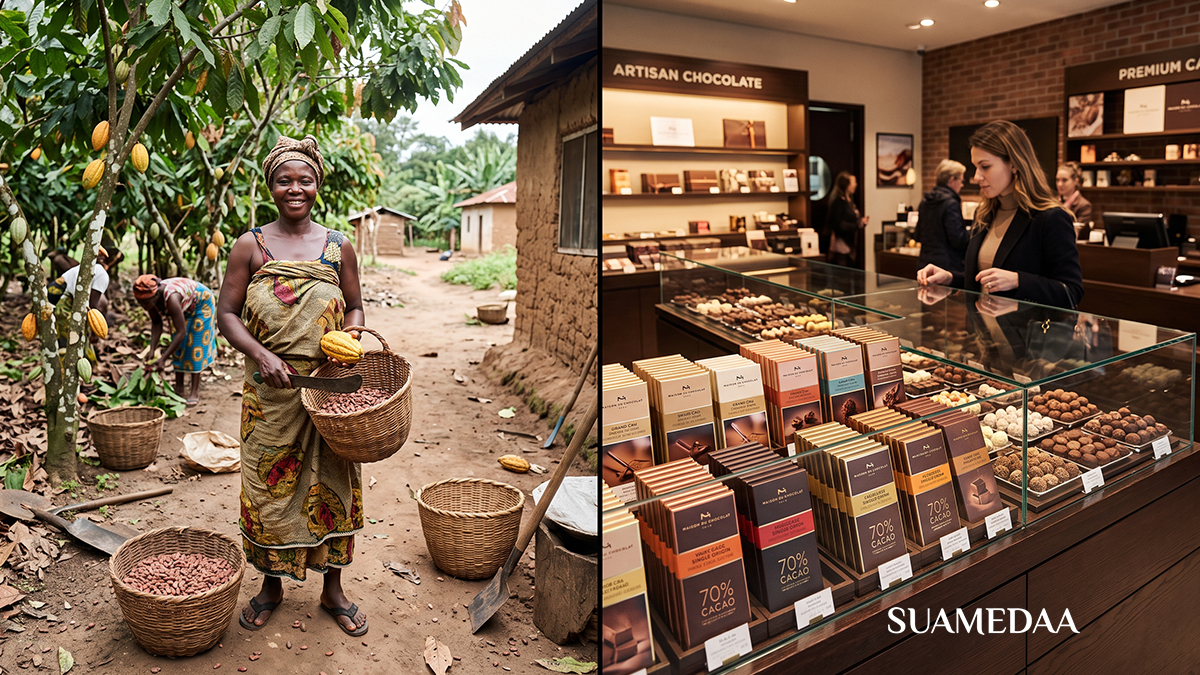
For Ghana’s 800,000 smallholder farmers, many of whose farms are undocumented, with boundaries unregistered and locations unrecorded in any digital system, this represents an enormous logistical challenge. Farmers without verifiable geolocation data face the prospect of being excluded from the supply chains of buyers who need EU market access, which means exclusion from the most valuable segment of the global cocoa market.
COCOBOD and the Ghanaian government have been working with digital traceability platforms, satellite mapping services, and cooperative organisations to accelerate the data collection required for compliance. The process is underway, but the scale is significant and the timeline is tight.
What Ghana’s Cocoa Future Looks Like
The government of Ghana and COCOBOD have articulated a direction for the industry that attempts to address both the immediate challenges and the structural questions that have accumulated over decades.
One strand is yield improvement. Ghana’s average cocoa yield per hectare is significantly below what is technically achievable with the country’s genetic material and growing conditions. Programmes distributing improved planting material, providing certified fertiliser, and training farmers in more productive agricultural practices have shown results in pilot areas. Scaling those results across 800,000 farms, many of them in remote communities with limited infrastructure, is the challenge.
A second strand is local processing. Ghana currently exports the vast majority of its cocoa as raw beans, with the value addition of processing and manufacturing happening in Europe and North America. The argument for processing more cocoa locally, producing cocoa butter, cocoa powder, and eventually chocolate within Ghana, is both economic and political: more of the value created from Ghanaian beans should stay in Ghana. Investment in processing capacity has grown, and Ghana is now one of Africa’s largest processors of cocoa, though the finished chocolate market remains dominated by companies based in countries that grow no cocoa at all.
A third strand is sustainability certification and premium access. Farms that meet the standards of certification bodies like Rainforest Alliance or Fairtrade command higher prices from buyers who sell to consumers willing to pay for assurances about how their chocolate was produced. Expanding the share of Ghanaian cocoa that is certified is a route to higher average prices for the farmers who achieve and maintain certification.
What each of these directions shares is a recognition that the model that made Ghana a cocoa giant in the twentieth century, small-scale farmers on forest-edge land, selling raw beans through a centralised marketing system, with the processing and profit happening elsewhere, is under pressure from multiple directions simultaneously and must evolve.
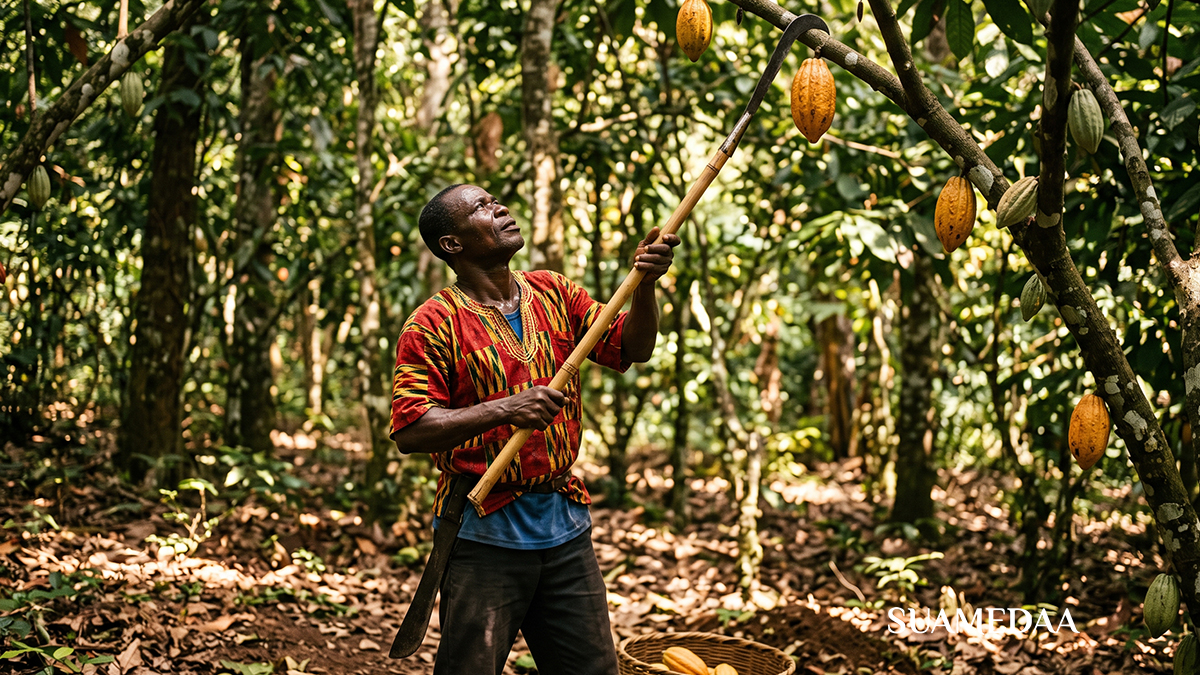
The Crop That Made a Country
Ghana’s relationship with cocoa is one of the defining economic stories of modern Africa. A single seed variety, introduced by a single man returning from a journey to an island off the Central African coast, spread across a country’s forests in the span of a generation, made the Gold Coast the largest cocoa producer on earth, funded the infrastructure of an independent nation, and remains more than 150 years later the backbone of millions of rural livelihoods and a cornerstone of the national economy.
The story is not without its contradictions: an industry that generates billions in global chocolate revenue while the farmers at its base earn some of the lowest incomes in the agricultural world; a crop that created a nation while destroying the forests that give it its growing conditions; a marketing system that has protected quality while limiting farmer agency.
But the story is also one of extraordinary human initiative, of Tetteh Quarshie planting seeds under the right shade, of Ghanaian farmers spreading a crop across a country by observation and experiment, of a nation using agricultural wealth to build schools and dams and hospitals that shaped the lives of millions. The golden bean did not arrive by accident, and it did not build what it built by accident either.
What happens next in that story, whether Ghana can deepen the value it captures from its own crop, whether it can sustain production under climate pressure, whether the farmers who grow it can earn incomes commensurate with the pleasure their beans provide to chocolate consumers on the other side of the world, is one of the most consequential questions in the country’s economic life, and it is far from resolved.