Ghana Moves to Join BRICS
On the 6th of October, 2026, Ghana’s Foreign Affairs Minister Samuel Okudzeto Ablakwa stood before cameras at a joint press briefing in Accra and disclosed something he described as news being made public for the first time. Ghana’s Cabinet, under President John Dramani Mahama, had formally approved a bid to join BRICS. The announcement came alongside a high-profile visit from India’s External Affairs Minister, Dr. Subrahmanyam Jaishankar, whose country is a founding member of the bloc and whose endorsement Ghana was openly courting. “You must be admitted,” Ablakwa said, making clear that Cabinet approval is only the first step. The bloc, now comprising eleven full members, grants membership by consensus and on no fixed timeline.
The disclosure reverberated through Ghana’s foreign policy community and beyond. A country that has historically anchored its international economic relationships in Western institutions, from the International Monetary Fund to the World Bank to bilateral ties with European trading partners, was signalling, publicly and deliberately, that it wanted to extend its reach into the world’s most prominent coalition of developing and emerging economies. Whether that signal becomes a formal membership, and what it would actually mean for ordinary Ghanaians if it did, are questions the government is now obliged to answer.
What BRICS Is and What It Has Become
BRICS began as an acronym coined by an economist at Goldman Sachs in 2001, a shorthand for the four large emerging economies, Brazil, Russia, India, and China, whose combined growth trajectories were reshaping the global economic order. The four countries formalised it as an intergovernmental forum in 2009. South Africa joined in 2010, completing the now-familiar five-letter name.


For more than a decade, BRICS operated as a talking shop more than an institution, a forum where leaders of large non-Western economies could coordinate positions and signal solidarity without committing to binding obligations. Its most concrete institutional product was the New Development Bank, established in 2015 to fund infrastructure and sustainable development projects in member and non-member countries alike, offering an alternative to the World Bank and the IMF that carries fewer of the policy conditions those institutions typically attach to their financing.
Then came the expansion. At the Johannesburg summit in 2023, BRICS formally invited six new members: Egypt, Ethiopia, Iran, Saudi Arabia, the United Arab Emirates, and Indonesia. All six joined in 2024 or 2025. At its most recent summit in New Delhi in 2026, the bloc designated ten partner countries, a new, lighter-weight category designed for nations that want alignment with BRICS without the full obligations of membership. Nigeria is among those ten partners, making Ghana’s formal membership application, if accepted, a deeper commitment than its West African neighbour has chosen to make.
In 2026, BRICS counts eleven full members and ten partners. It represents approximately 49.5 percent of the world’s population, 40 percent of global GDP, and 26 percent of global trade. It has become something considerably more substantial than the original diplomatic forum, though it remains, by design, a consensus-based body with no standing army, no common currency, and no supranational authority over its members.
Why Mahama’s Government Wants In
Ablakwa framed Ghana’s application explicitly within President Mahama’s broader economic agenda, a programme the government has branded the “New Economy,” which was designed not as crisis stabilisation but as structural transformation. The president returned to office in January 2025 having previously served as president from 2012 to 2017, and his second term has been marked by an explicit effort to reposition Ghana’s international economic relationships after the debt restructuring and IMF programme that defined the preceding administration’s final years.
The arguments for BRICS membership, as articulated by the Foreign Minister, cluster around several themes.


Diversification of partners is the most prominent. Ghana has in the past tested reliance of the proverbial Western market and relied heavily on Western markets, Western lenders, and Western-aligned institutions for trade, development finance, and economic guidance. That reliance has not always served the country well: IMF conditionality has in the most part taken undue advantage of the countries growth, debt structures that proved unsustainable, and commodity market dynamics set in financial capitals far from Accra have all shaped Ghana’s economic trajectory in ways the government regards as constraining. BRICS, in this framing, is not a replacement for those relationships but an addition to them, a set of new partners with different priorities, different financing mechanisms, and different conditions.
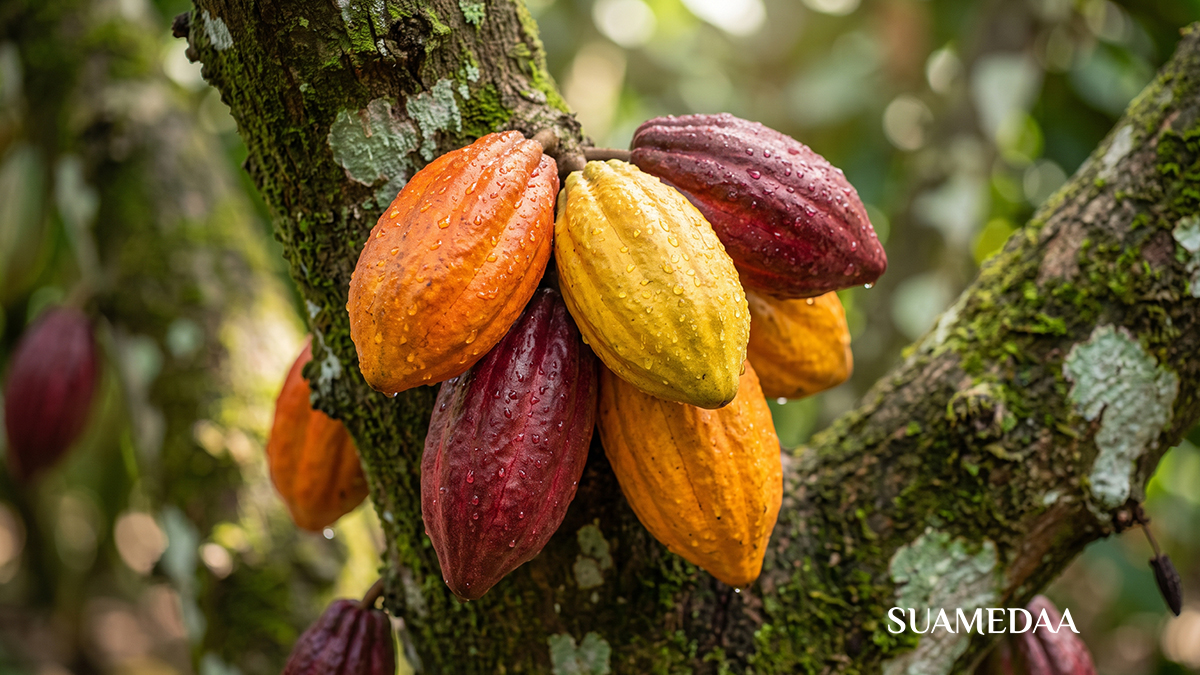
Resource sovereignty is a second theme. Ablakwa invoked the idea that Ghana should add value to its natural resources rather than exporting them raw, a long-standing aspiration of African economic policy that has moved unevenly from aspiration to reality. BRICS members, particularly China and India, are major importers of African raw materials and potentially significant partners in building the processing capacity that would allow Ghana to capture more of the value chain from cocoa, gold, bauxite, and manganese.
South-South solidarity is the third and most philosophical argument. The government’s position reflects a broader view that the international economic order, constructed around institutions and rules shaped primarily by Western powers after the Second World War, needs rebalancing. BRICS, in this reading, is a vehicle for countries in the Global South to coordinate positions, build shared institutions, and negotiate from a stronger collective standing than any single developing country could achieve alone. “We believe in a multi-polar world,” Ablakwa said at the press conference. The phrase is a precise signal to anyone fluent in the vocabulary of contemporary international relations.
India as a Bridge
The timing of the announcement, made during an Indian ministerial visit rather than in a standalone statement, was deliberate. India occupies a particular position within BRICS: it is a democratic, market-oriented economy with strong historical ties to West Africa, a large diaspora presence across the continent, and a foreign policy that has consistently sought to balance relationships with both Western partners and the Global South. It is also, by virtue of its bilateral ties with Ghana, a natural sponsor.
Ablakwa disclosed that trade between Ghana and India has grown from approximately three billion US dollars in 2024 (about GH₵44.07 billion.) to roughly seven billion dollars in 2026 (about GH₵82.46 billion), a figure that illustrates the deepening economic relationship underpinning the diplomatic alignment. During Jaishankar’s visit, the two countries signed two memoranda of understanding covering agricultural research and training, and science and technology cooperation. Wider cooperation in railways, pharmaceuticals, ICT, defence, and agriculture was outlined as a priority.

Jaishankar’s public response was carefully calibrated. He confirmed India’s sympathy for Ghana’s aspirations and described the country as an important partner. But he was precise about the limits of bilateral support for a collective decision: BRICS membership requires consensus among all existing members, and no single country can deliver it. The Indian minister’s formulation, “an issue of collective consideration,” was supportive without being a commitment.
Africa’s Growing Presence in BRICS
Ghana’s application adds to a pattern of African engagement with the bloc that has accelerated significantly in recent years. Three of BRICS’s eleven full members are African: South Africa, which has been a member since 2010 and has served as the continent’s primary interlocutor within the group; Egypt, which joined as part of the 2024 expansion; and Ethiopia, which also joined in that round and represents the Horn of Africa and the continent’s second-most populous nation.
Nigeria’s status as a partner country, rather than a full member, reflects both interest and caution: the continent’s largest economy by GDP is engaged with the bloc without committing to the full obligations of membership, a posture that allows it to observe how membership plays out for others before deepening its commitment.
Ghana, if admitted, would be the first West African nation to achieve full BRICS membership. Its membership of ECOWAS, its role in the African Union, and its reputation as a stable, democratic country with a well-established institutional framework all support the case that it brings value to the bloc as a regional bridge. BRICS leaders have publicly expressed interest in expanding African representation.
The Economics of What Membership Could Deliver
The honest answer to the question of what BRICS membership would actually deliver for Ghana is that it depends almost entirely on what Ghana does with it, and that the benefits are real but not automatic.
The New Development Bank is the most tangible institutional benefit. Membership in BRICS gives countries a path to accessing NDB financing for infrastructure projects at terms that differ from those available through the World Bank or commercial markets. Ghana has significant infrastructure needs, from energy generation to transportation to agricultural processing capacity, and NDB financing, if obtained on favourable terms, could contribute to addressing those needs.
Trade diversification is a second potential benefit. BRICS members include the world’s largest importer of commodities (China), the world’s fastest-growing major economy (India), and significant markets in Brazil, Russia, and the Gulf countries that joined in the 2024 expansion. Ghana’s cocoa, gold, bauxite, and oil all have natural markets within the bloc, and a more formalised relationship could support preferential trade arrangements over time.
The limits, however, are real. BRICS is not a trade bloc and has no common market. Membership does not automatically open BRICS countries’ markets to Ghanaian goods, does not guarantee financing from the NDB, and does not transfer technology or build processing capacity by itself. The concrete value of membership arrives through specific deals, negotiations, and investments that Ghana would need to pursue actively rather than simply receive as a consequence of belonging.
The domestic readiness question is also live. Ghana is still in the later stages of recovery from its 2022 to 2024 debt crisis, which required restructuring its external obligations and entering an IMF programme. The IMF relationship remains active. Critics of the BRICS bid have noted, pointedly, that BRICS cannot resolve the underlying structural weaknesses, weak institutions, mismanaged public resources, dependence on commodity exports, and inconsistent policy continuity across governments, that have shaped Ghana’s economic vulnerabilities. The bloc offers expanded relationships, not substitutes for domestic governance.
The Western Relations Question
Any significant shift in Ghana’s foreign economic alignment carries implications for its relationships with Western partners, and the government is clearly aware of this. Ablakwa was emphatic that BRICS membership would not replace existing partnerships. Ghana would remain a member of the Bretton Woods institutions. Its relationships with European trading partners, the United States, and UK-linked financial institutions would continue.
But context matters. The African Growth and Opportunity Act, the US trade preference programme that gives African countries duty-free access to American markets for thousands of products, was due to expire on December 31, 2026. Its renewal is contested in Washington, and Ghana, like other AGOA beneficiary countries, faces uncertainty about whether and on what terms access will continue. A formal alignment with BRICS, whose membership includes Russia and Iran, countries subject to significant Western sanctions, creates a diplomatic calculation that the government will need to manage with precision.
The China dimension is similarly complex. China is BRICS’s largest economy by GDP and its most active development finance partner in Africa. Ghana has extensive Chinese investment across its infrastructure, and its debt restructuring involved negotiations with Chinese creditors. A BRICS alignment deepens the existing China relationship, which carries both the opportunity of continued investment and the risk of debt arrangements that have attracted critical scrutiny elsewhere on the continent.
A Decision Still Being Made
Cabinet approval is a beginning, not a conclusion. Ghana has approved the submission of a formal application to BRICS, but it has not yet been submitted, has not been reviewed, and has not been approved by the existing membership. The process has no fixed timeline and no published criteria. Countries that have applied have sometimes waited years before receiving a decision.
The government has not yet publicly specified whether it is seeking full membership or the lighter-weight partner country status that Nigeria currently holds. The distinction matters: full membership carries deeper obligations and a seat at the table when bloc-wide decisions are made, while partner status offers alignment without the same level of commitment or formal rights.
Parliamentary debate on the bid has not yet occurred. Critics, including commentators who support the principle of diversifying Ghana’s international relationships, have called for more transparency about the government’s specific goals, the terms it would accept, and the analysis underpinning the decision. A move of this significance, they argue, should be subject to more than Cabinet approval and a press conference announcement.
What is clear is that the Mahama government has decided, deliberately and publicly, that Ghana’s future is better served by a wider set of international relationships than the ones it has historically relied upon. Whether BRICS is the right vehicle for that diversification, and whether Ghana is positioned to extract genuine value from membership if it is achieved, are questions that the coming months and years will begin to answer.
What It Signals Beyond Ghana
Ghana’s application is one data point in a much larger pattern. Across Africa, across South Asia, across Latin America, governments that might have been reluctant even five years ago to publicly signal distance from Western-led institutions are now making that calculation openly. The language of multipolarity, of South-South cooperation, of resource sovereignty and strategic autonomy, has moved from the margins of international discourse toward its centre.
BRICS, whatever its limitations currently are as an institution, has become the most prominent expression of that shift. Its expansion from five to eleven members, the queue of countries now seeking to join, and the explicit statements from bloc leaders that they want more African nations inside the group all point toward a coalition that is growing in weight and ambition.
Ghana’s move is a small but legible contribution to that story. A stable, democratic West of Africa nation with deep ties to both Western institutions and a rapidly expanding network of Global South relationships, deciding to formally seek a seat at the BRICS table, says something about the direction of travel in African foreign policy, and about the appetite, in Accra and far beyond it, for a world in which power is more broadly distributed than it has been for the past eight decades.