Understanding Fabric – A Designer’s Guide to Textiles and Their Uses
Every designer eventually runs into the same humbling realization: a beautiful sketch means nothing if the fabric behind it fights the design. A structured blazer collapses in the wrong drape, a flowing gown turns stiff and awkward in the wrong weight, and a print that looked crisp on paper goes muddy on the wrong weave. Understanding fabric, not just as a surface to decorate but as a material with its own physical behavior, is one of the most underrated skills separating amateur design from professional work.
Fiber Is the Starting Point
Every fabric begins with fiber, and the type of fiber used shapes nearly everything about how the finished textile behaves, long before weave structure or finishing treatments ever come into play.
Natural fibers
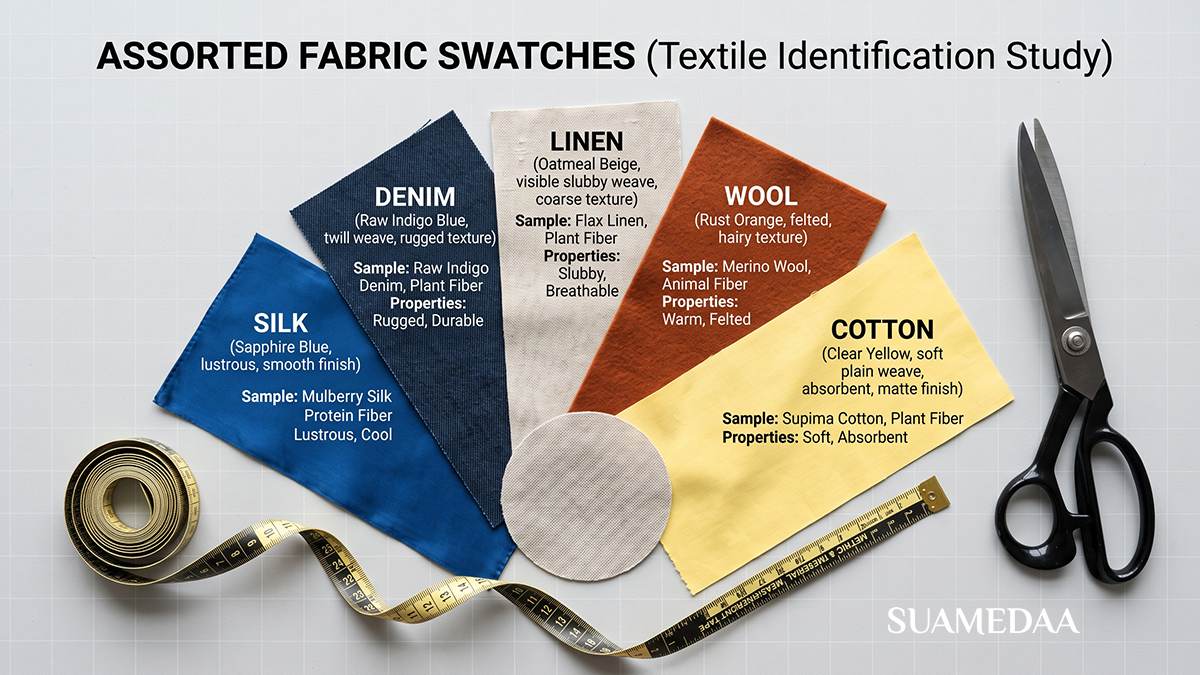
Natural fibers come from plants or animals. Cotton, the most widely used natural fiber in the world, is breathable, soft, and relatively inexpensive, though it wrinkles easily and can shrink if not treated. Linen, made from the flax plant, shares cotton’s breathability but has a crisper hand and an even greater tendency to wrinkle, a trait many designers now treat as a feature rather than a flaw. Wool, sourced from sheep and other animals, offers natural insulation, elasticity, and moisture wicking properties that make it ideal for outerwear and structured tailoring. Silk, produced from the cocoons of silkworms, delivers a smooth, lustrous surface and remarkable strength for its weight, though it demands more delicate handling and care.



Synthetic fibers
Synthetic fibers are manufactured through chemical processes rather than harvested. Polyester is durable, wrinkle resistant, and inexpensive, making it a workhorse fiber in everything from activewear to upholstery, though it lacks the breathability of natural fibers. Nylon offers exceptional strength and elasticity, which is why it dominates in hosiery, swimwear, and technical outerwear. Spandex, often blended in small percentages with other fibers, introduces stretch and recovery that natural fibers alone cannot provide.
Semi-synthetic fibers
Semi-synthetic fibers, such as rayon and modal, split the difference, made from natural cellulose but processed chemically to achieve qualities like drape and sheen that resemble silk at a fraction of the cost.
Most modern textiles blend two or more of these fibers together, combining the strengths of each. A cotton-spandex blend, for instance, gains the comfort and breathability of cotton along with the stretch and shape retention of spandex, a combination now standard in everything from t-shirts to denim.
Weave Structure Shapes Texture and Drape
Once fiber is spun into yarn, that yarn is either woven or knitted into fabric, and the structure used has an enormous effect on the final material’s texture, strength, and drape.
Plain weave
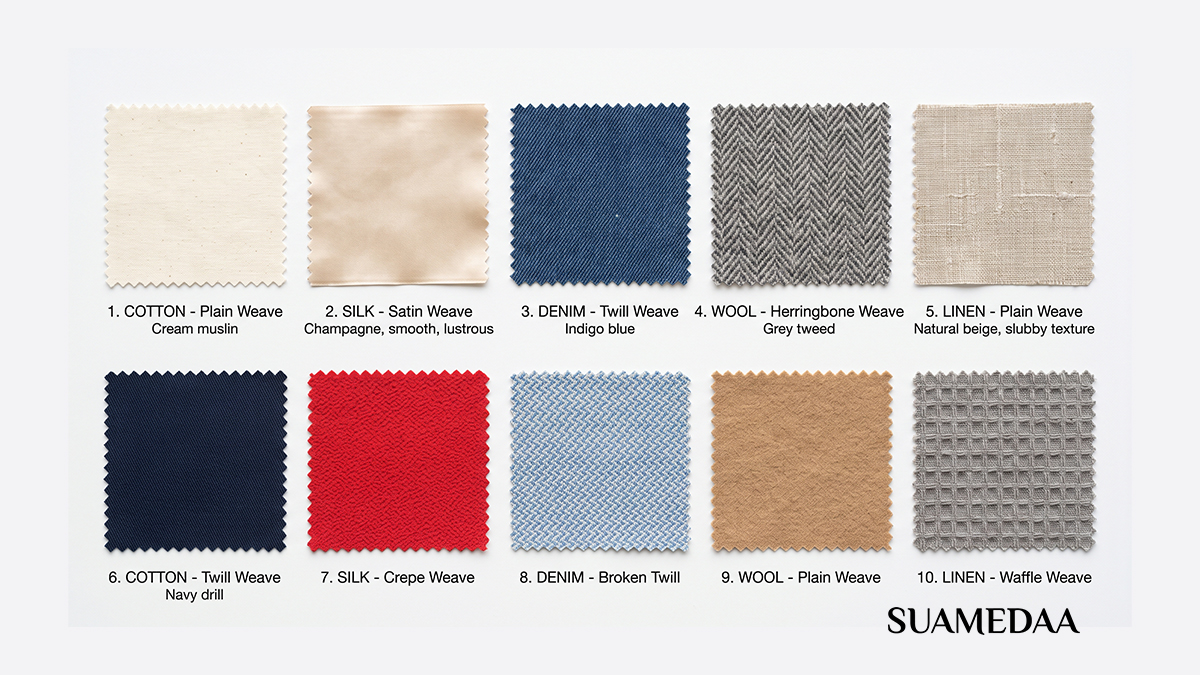
Plain weave, the simplest and most common structure, interlaces warp and weft threads in a straightforward over-under pattern, alternating with every single thread. This produces a strong, stable, relatively flat fabric that looks the same on both sides, common in everything from quilting cotton to basic shirting.

Twill weave
Twill weave offsets the interlacing pattern slightly with each row, creating the diagonal ribbing visible in denim, chino fabric, and gabardine. This offset structure makes twill fabrics more durable and better at hiding soil and wrinkles than plain weave, while also giving them a slightly heavier drape.
Satin weave
Satin weave uses long floating threads that pass over several threads before interlacing, minimizing the number of visible crossing points. This produces the smooth, lustrous surface associated with satin and sateen fabrics, though the long floats also make satin more prone to snagging and pulling than tighter weave structures.
Knit fabrics
Knit fabrics, by contrast, are constructed through interlocking loops rather than crossing threads, which is what gives knits their characteristic stretch and flexibility. Jersey, rib knit, and interlock are among the most common knit structures, and their inherent stretch makes them the default choice for t-shirts, activewear, and anything requiring close, flexible fit.
Weight and Hand: The Feel of a Fabric
Beyond fiber and structure, two more properties shape how a fabric behaves in a garment or product: weight and hand. Weight, typically measured in grams per square meter or ounces per square yard, determines how heavy and substantial a fabric feels, ranging from featherlight chiffon to heavy canvas duck. Hand refers to the more subjective, tactile quality of a fabric, whether it feels crisp, soft, slippery, or stiff against the skin, and it is often just as important as weight in determining whether a fabric is right for a given design.
A fabric’s drape, meaning how it falls and moves when hung or worn, emerges from the combination of fiber, weave, and weight together. Lightweight, loosely woven fabrics like chiffon and rayon challis drape fluidly and are prized for flowing silhouettes, while stiffer, more tightly woven fabrics like taffeta or heavy cotton canvas hold structured shapes and sharp silhouettes far better.


Matching Fabric to Purpose
Choosing the right fabric always starts with the end use, and different applications call for very different priorities.
Structured garments
For structured garments, such as tailored jackets and blazers, wool and wool blends remain the gold standard, offering natural body, resilience, and the ability to hold a pressed shape. Heavier cottons and linen-cotton blends can achieve a similar effect in warmer climates or more casual tailoring.
Flowing, draped garments
For flowing, draped garments, such as evening gowns or soft blouses, silk, rayon, and lightweight polyester crepe offer the fluid movement that structured fabrics simply cannot achieve, falling in soft folds rather than holding a rigid shape.
Activewear and performance textiles
For activewear and performance textiles, synthetic blends dominate for good reason. Polyester and nylon combined with spandex provide the stretch, moisture wicking, and quick drying performance that natural fibers alone cannot match, while specialized finishes add odor resistance or UV protection on top of the base fabric.
Upholstery and home textiles
For upholstery and home textiles, durability and abrasion resistance take priority over drape. Heavy cotton canvas, denim, and synthetic blends engineered specifically for rub resistance are common choices, often treated with additional stain resistant or flame retardant finishes depending on the application.
Interior soft goods
For interior soft goods like curtains and bedding, the priorities shift again toward drape, light filtering properties, and softness against the skin, making lighter weight cottons, linen blends, and sateen weaves common choices depending on the desired look and feel.
Finishing Treatments Change Everything
The raw woven or knitted fabric coming off a loom is rarely the finished product a designer works with. Finishing treatments can dramatically alter a fabric’s performance and appearance after construction. Mercerisation strengthens cotton fibers and gives them a subtle sheen. Sanforisation pre-shrinks fabric to prevent excessive shrinkage after the finished garment is sold. Water repellent and stain resistant coatings add functional performance to fabrics that would otherwise absorb moisture readily. Even something as simple as a garment wash or enzyme treatment can transform a stiff, boardy fabric into something soft and broken in straight off the shelf. Understanding that finishing is a separate variable from fiber and weave helps explain why two fabrics with identical raw materials can feel completely different once finished.
Sourcing and Sustainability Considerations
Fabric choice increasingly carries environmental and ethical weight alongside aesthetic and functional concerns. Natural fibers are biodegradable but often carry heavy water and pesticide footprints, particularly conventional cotton, while organic and regeneratively farmed alternatives aim to reduce that impact. Synthetic fibers avoid some agricultural concerns but are petroleum derived and shed microplastics during washing, an issue increasingly under scrutiny across the industry. Recycled polyester, made from post-consumer plastic, and innovative alternatives like Tencel, a wood pulp derived fiber produced through a closed loop process, represent growing efforts to reduce the environmental cost of textile production without sacrificing performance. For designers working at any scale, understanding a fabric’s sourcing story has become as relevant a consideration as its hand or drape.
Building a Working Fabric Vocabulary
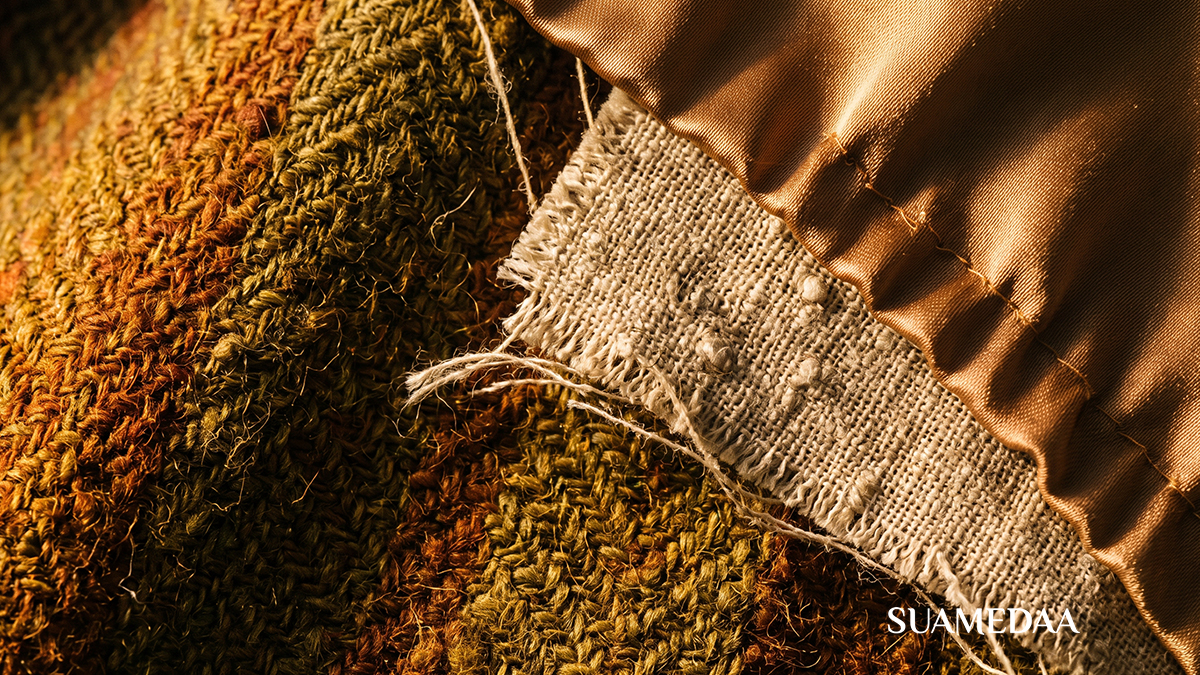
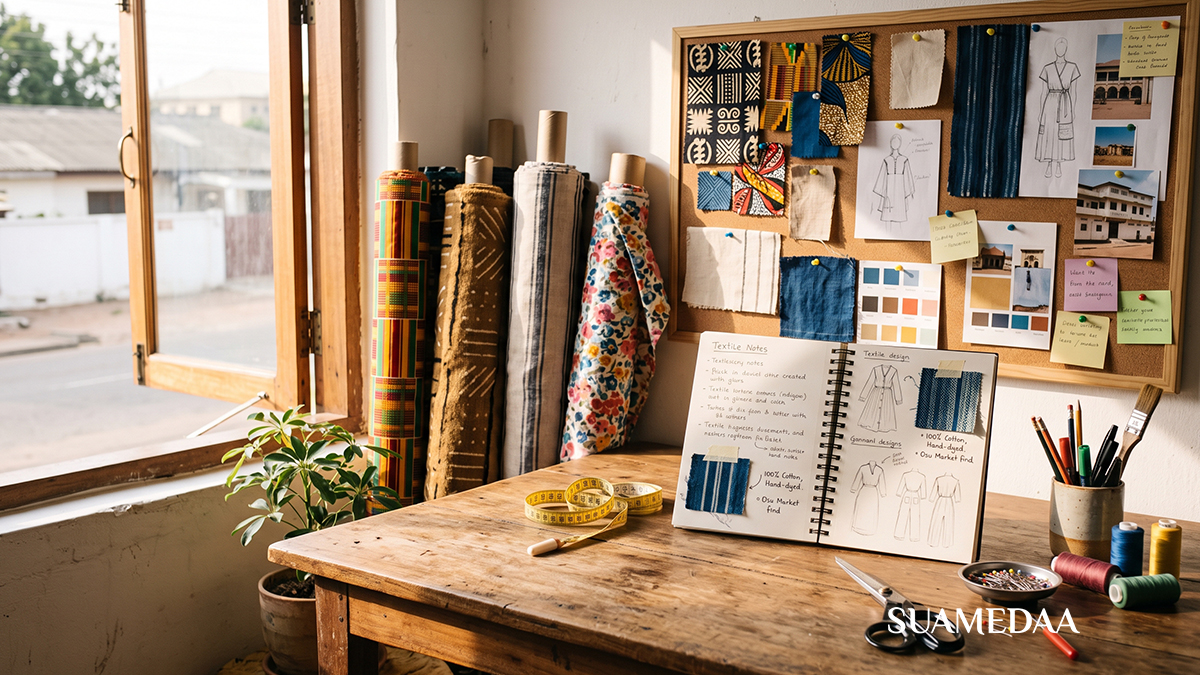
For designers early in their careers, the fastest way to build real fabric literacy is hands-on: visiting fabric markets or mills, requesting swatches before committing to yardage, and physically testing drape, stretch recovery, and wrinkle resistance rather than relying on a spec sheet alone. Photographs and technical descriptions can only communicate so much, since so much of what makes a fabric right or wrong for a project comes down to how it moves, feels, and behaves under real conditions, details that only become obvious once the material is actually in hand.
Fabric is never just a surface. It is a physical material with its own weight, structure, and behavior, and the choices made at the fiber and weave level ripple through every later stage of a design, shaping how a garment moves, how a product wears over time, and how a finished piece ultimately feels in the hand. Building real fluency in fiber types, weave structures, and finishing treatments turns fabric selection from a guessing game into a deliberate design decision, and it is often the difference between a design that merely looks good on paper and one that performs beautifully in the real world.