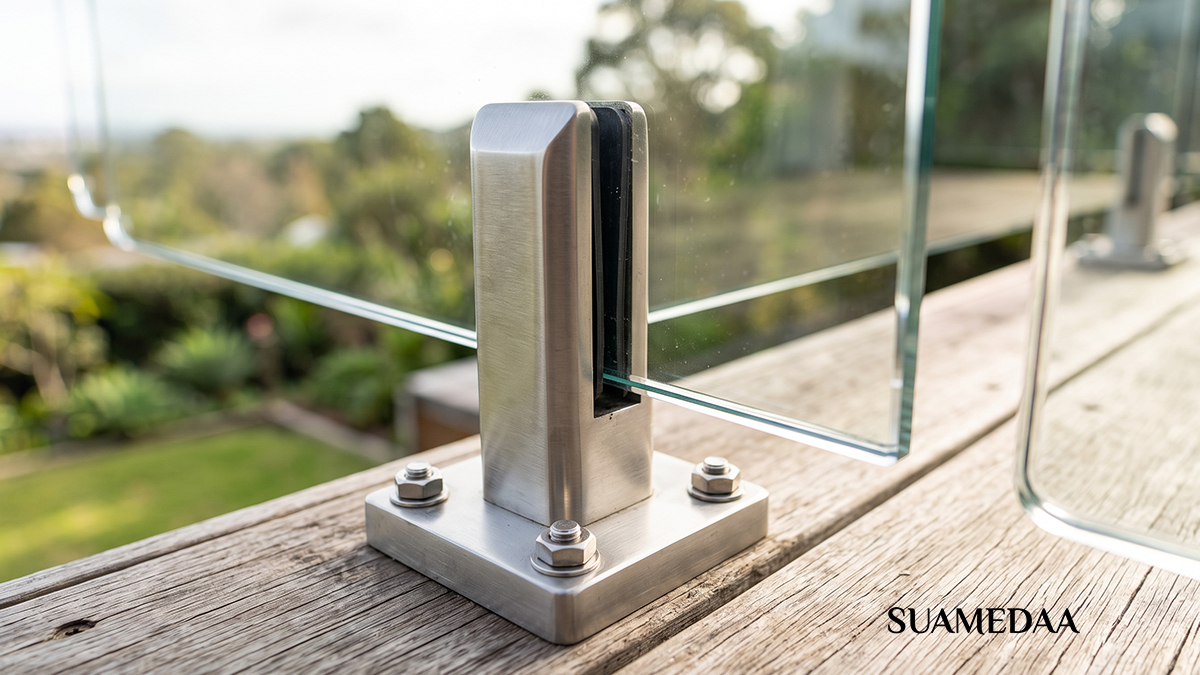
Factors to Consider When Choosing a Glass Spigot – A Detailed Buyer’s Guide
A glass spigot is a small piece of hardware with an outsized responsibility. In frameless glass balustrade systems, used on pool fences, balconies, decks, staircases, and interior partitions, the spigot is the single point of connection between a heavy glass panel and the structure it is mounted to. It has no posts, no top rail, and often no other visible support to share the load with. Every wind gust pressing against a balcony panel, every person leaning against a pool fence, and every accidental impact against a stair balustrade transmits its full force through that small cluster of metal at the base of the glass. Choosing the wrong spigot, or choosing the right spigot but the wrong grade, size, or fixing method for the specific site, is one of the most common and most expensive mistakes made in glass balustrade projects. This account works through every major factor that should be considered before selecting a glass spigot, covering material and grade, structural load capacity, glass compatibility, fixing method, environmental exposure, regulatory compliance, design and finish, and long term maintenance.
Understanding What a Glass Spigot Actually Does
Before evaluating specific factors, it helps to understand the mechanical role a spigot plays. A spigot clamps or grips the bottom edge of a glass panel, usually through a slot or jaw mechanism tightened with set screws, and transfers the load applied to the glass down into whatever it is fixed to, typically a concrete slab, a timber deck frame, or a steel sub structure. Because the glass itself provides no independent structural support beyond the spigot connection in a frameless system, the spigot must resist bending, shear, and torsional forces all at once, particularly the leverage effect created by a tall panel of glass acting like a lever arm on a comparatively small base. Getting this connection wrong does not just risk a wobbly looking railing, it risks a genuine structural and life safety failure.
Material and Grade
Why Material Choice Comes First
The material a spigot is made from determines its strength, its resistance to corrosion, and ultimately how long it will perform safely before it needs replacement. This is arguably the single most important factor to get right, because a spigot that corrodes internally can fail well before any visible external sign of a problem appears, and by the time visible rust or pitting shows up, the structural integrity of the fitting may already be compromised.



Stainless Steel Grades
The overwhelming majority of quality glass spigots are made from stainless steel, and the grade matters enormously.
Grade 304 stainless steel is a common, cost effective option with reasonable corrosion resistance, generally considered acceptable for indoor applications or dry, inland outdoor settings with no significant exposure to salt air, chlorine, or de-icing chemicals.
Grade 316, often marketed as marine grade stainless steel, contains molybdenum, which significantly improves resistance to chloride attack from salt air and pool chemicals. This is the standard recommendation for any coastal installation, any application near a swimming pool, and any location with high humidity or airborne salt exposure. The added corrosion resistance is well worth the modest additional cost relative to the consequences of premature failure.
Duplex 2205 stainless steel is a higher performance option used by some manufacturers for premium or heavy duty spigots, combining even greater corrosion resistance than 316 with higher yield strength, meaning it can withstand more force before permanently deforming. This grade is often chosen for high wind regions, exposed coastal sites, or larger and heavier glass panels where the extra strength margin is valuable.
Non Stainless Alternatives
Aluminum spigots offer a lightweight, naturally rust resistant alternative and are sometimes chosen for non marine, non structural, or budget conscious applications, though they generally cannot match the strength or long term durability of stainless steel in demanding structural roles. Brass and bronze spigots are occasionally selected for heritage style or decorative installations where a warm, traditional finish is more important than marine grade corrosion resistance, but these require more regular maintenance to prevent tarnishing and are less commonly specified for genuinely harsh environments.



Why Cheap Hardware Fails
Low grade or unspecified steel spigots, sometimes sold without a clearly stated grade at all, can begin to corrode within just a season or two in coastal or poolside conditions, and once corrosion begins internally around fixing points and set screws, the visible signs may lag well behind the actual loss of structural strength. Given that spigots are a relatively small proportion of the total cost of a glass balustrade project, the cost difference between cheap unspecified steel and certified 316 or Duplex 2205 stainless steel is rarely worth the risk of premature failure, replacement cost, or safety liability.
Structural Load Capacity
Matching Load Rating to the Application
Every spigot has a rated load capacity, generally expressed in terms of a lateral or horizontal force it can safely resist at the top edge of the glass, commonly cited in kilonewtons. This rating must be matched to the actual design load required for the application, which depends on the type of barrier, its height, its location, and the relevant building code or standard governing that use. A balustrade on a high rise balcony exposed to strong wind loads, for example, may require a significantly higher load rating than an equivalent height barrier in a sheltered, low rise, low wind setting.
Panel Size, Spacing, and Number of Spigots
The maximum safe width and height of an individual glass panel is directly tied to the load rating and spacing of the spigots supporting it. Wider panels place more leverage on each spigot, and taller panels increase the overturning moment applied to the base connection for a given lateral force. Most frameless glass balustrade designs use two spigots per panel, positioned a defined distance in from each edge, though larger or heavier panels may require additional intermediate spigots. The correct configuration should always be calculated or confirmed against the specific glass dimensions, thickness, and expected load, rather than assumed from a generic rule of thumb.
Deflection Limits
Beyond simply not breaking, a well specified spigot system should keep the glass panel’s deflection, meaning how much it flexes or moves under applied load, within an acceptable limit, both for genuine structural safety margins and for the practical reason that a visibly wobbly balustrade undermines user confidence even if it is technically still within safe limits. Quality manufacturers publish deflection data alongside load capacity figures so this can be checked at the selection stage rather than discovered after installation.
Compatibility With Glass Type and Thickness
Glass Type
Frameless glass balustrades should always use toughened, also called tempered, safety glass, frequently specified as toughened laminated glass for additional safety, since laminated construction holds broken fragments together rather than allowing a shattered panel to fall away entirely. Annealed, meaning ordinary untreated, glass should never be used in a structural balustrade application, as it breaks into large, dangerous shards rather than the small, relatively safe fragments produced by properly toughened glass. Some installations also specify heat soaked toughened glass, an additional processing step that reduces the small but real risk of spontaneous breakage caused by nickel sulfide inclusions within the glass, a consideration worth discussing with a supplier for critical or hard to access installations.



Glass Thickness
Spigots are generally designed to accommodate a specific range of glass thicknesses, commonly somewhere between 10 and 19 millimeters depending on the product line, with residential balustrades often using 10 to 12 millimeter glass and larger commercial or higher load applications moving up to 12, 15, or even higher thicknesses. The spigot’s clamping jaw or slot must be correctly sized, or in some adjustable designs, correctly configured with shims or inserts, to securely grip the specific glass thickness being used. A mismatch between spigot and glass thickness, even a small one, can result in an insecure grip, uneven pressure distribution across the glass edge, and elevated risk of stress related breakage at the clamping point.
Edge Finishing
The finish applied to the glass edge inside the spigot clamp also matters. Polished edges are often preferred over simply arrissed, meaning lightly chamfered, edges for reducing stress concentration points where the glass contacts the metal clamp, since sharp or poorly finished edges can act as a starting point for cracks under load.
Fixing Method and Substrate
Surface Mounted Versus Core Drilled Spigots
Spigots are generally installed in one of two ways. Surface mounted spigots sit on top of the finished surface, such as a concrete slab, deck, or steel structure, and are secured with bolts or chemical anchors driven into the substrate. Core drilled spigots are inserted into a hole drilled into the substrate and then grouted or chemically anchored in place, sitting partially or fully recessed below the surface. The choice between these methods depends on the substrate, the desired aesthetic, and structural engineering requirements, with core drilled fixings sometimes offering a cleaner look and different load transfer characteristics than surface mounted options.
Substrate Compatibility
The material the spigot is being fixed into fundamentally shapes what fixing hardware and installation method are appropriate. Reinforced concrete slabs are the most common and most straightforward substrate, generally fixed using chemical anchors of an appropriate diameter and embedment depth specified by a structural engineer. Timber decking or timber structural beams require different fixing hardware entirely, and the timber’s condition, species, and structural adequacy must be confirmed as capable of carrying the transferred load. Steel sub structures require appropriately rated bolted or welded connections matched to the steel’s thickness and grade. Selecting a spigot without first confirming it is compatible with, and correctly rated for, the actual substrate on site is a common and serious oversight.
Embedment Depth and Edge Distance
For anchored or core drilled fixings, the embedment depth into the substrate and the edge distance from the spigot to the nearest edge of the supporting slab or beam both have a direct bearing on load capacity. Insufficient embedment depth or inadequate edge distance can dramatically reduce the effective holding strength of an anchor, regardless of how strong the spigot and anchor bolts themselves are rated, which is why these dimensions should always be specified by a qualified structural engineer for the specific site conditions rather than assumed from a generic installation guide.
Environmental Exposure
Coastal and Marine Environments
Proximity to the coast dramatically accelerates corrosion of lower grade metals due to airborne salt. Sites within roughly a kilometer or so of open coastline, or otherwise subject to regular salt laden wind, should always specify at minimum 316 marine grade stainless steel, with Duplex 2205 or additional protective treatment considered for particularly exposed or high value installations. Corrosion resistance classifications such as those used in international corrosion zone standards can help quantify how severe a given site’s exposure actually is and guide the appropriate material specification.
Pool and Chlorine Exposure
Swimming pool environments present a similar corrosion challenge to coastal sites, since chlorine and pool chemicals attack lower grade steel in much the same way salt air does. Pool fencing spigots should be specified to at least 316 stainless steel regardless of how far inland the property is located, given the sustained chemical exposure immediately surrounding the pool area.
Wind Load and Climate Region
The local wind region, often defined by national or regional structural codes into different classifications ranging from non-cyclonic to severe cyclonic regions, directly affects the required load rating of the spigot system. A balustrade in a high wind or cyclone prone region requires a higher rated spigot and glass specification than an equivalent installation in a sheltered, low wind inland location, and this should be calculated based on the specific wind region and building height and exposure category rather than a generic assumption.
Cold Climate and De-Icing Chemical Exposure
In colder climates where de-icing salts are commonly used on decks, steps, and walkways during winter, spigots and fixing hardware face a corrosion challenge broadly similar to coastal salt exposure. Marine grade stainless steel is again the appropriate specification in these conditions, since standard grade steel can corrode noticeably faster when repeatedly exposed to de-icing chemicals over successive winters.
Regulatory Compliance and Certification
Building Codes and Structural Standards
Glass balustrade installations are governed by building codes and structural standards that vary by country and region, generally covering minimum barrier heights, maximum gap sizes between panels or between the glass and the ground, required structural load resistance, and glass specification requirements. These typically distinguish between general balustrade or balcony barrier requirements and separate, often more stringent, requirements specific to swimming pool fencing, since pool barriers are treated as a distinct life safety category in many jurisdictions due to the drowning risk to young children.
Certification and Documentation
Reputable spigot manufacturers provide test certification, such as accredited third party testing reports or engineering certification, confirming that a given spigot model has actually been tested to the load and safety standards it claims to meet. This documentation is frequently required for building approval or compliance sign off on a completed installation, and purchasing hardware without this backing can create serious downstream problems, potentially requiring expensive independent site testing after the fact, or in the worst case, requiring the installed system to be removed and replaced if it cannot be shown to comply. Mill test certificates verifying the actual material grade of the steel used are a related and important piece of documentation, confirming that the spigot is genuinely made from the grade of stainless steel it is marketed as.
Working With a Structural Engineer
Because the correct spigot specification depends on the interaction of so many site specific variables, glass type and thickness, panel dimensions, wind region, substrate type, and applicable code requirements, any structurally significant glass balustrade installation should involve a qualified structural engineer to confirm the specific spigot model, spacing, and fixing method are appropriate for that particular site, rather than relying solely on generic manufacturer literature or informal advice.
Design, Finish, and Aesthetic Considerations
Spigot Shapes and Styles
Spigots are available in a range of shapes, most commonly round, sometimes called bullet spigots, and square or rectangular profiles, each giving a somewhat different visual character to the finished balustrade, with round profiles often associated with a clean, modern, minimalist look and square profiles sometimes preferred for a more architectural or contemporary appearance. The choice here is largely aesthetic, though it should still be confirmed against the manufacturer’s published load ratings for that specific shape and size, since load capacity can vary between otherwise similar looking products.
Surface Finish
Common finish options include polished mirror finishes, brushed or satin finishes, and increasingly popular matte black or other powder coated color finishes for a more contemporary or design led appearance. Finish choice is primarily an aesthetic decision but can have minor practical implications, since some coatings add a degree of additional surface protection, while heavily polished surfaces may show fingerprints, water spots, or scratches more readily than a brushed or matte finish.
Low Profile and Visual Impact
Because one of the main appeals of a frameless glass balustrade is an unobstructed view, many buyers specifically look for a low profile spigot design that minimizes visual clutter at the base of the glass while still meeting the required structural rating. There is often a genuine trade off to weigh here, since a more compact, minimal looking spigot may have a lower load rating than a larger, more substantial fitting, so aesthetic preference should never be allowed to override the structural requirement for the specific installation.
Adjustability and Installation Practicality
Adjustable Spigots
Some modern spigot designs incorporate adjustable clamping mechanisms or shim systems that can accommodate a range of glass thicknesses within a single product, offering useful flexibility for suppliers and installers working across multiple projects with varying glass specifications, and can also help fine tune panel alignment during installation.
Ease of Installation and Alignment
Beyond raw structural performance, practical installation considerations matter as well. Spigots that allow for adjustment during installation, whether through slotted base plates, adjustable clamping jaws, or leveling shims, make it considerably easier to achieve a straight, evenly spaced, professional looking final result, particularly across a long run of multiple glass panels where small cumulative misalignments can become visually obvious.
Cost Considerations and Long Term Value
Weighing Upfront Cost Against Lifecycle Cost
While it is tempting to select spigots primarily on upfront price, the more meaningful comparison is lifecycle cost, factoring in expected service life, maintenance requirements, and the cost and disruption of eventual replacement. A higher specification spigot in an appropriate corrosion resistant grade may cost modestly more initially but can be expected to last considerably longer, particularly in demanding coastal or pool environments, than a cheaper alternative that may need replacement within just a few years.
Warranty as a Signal of Confidence
Warranty length offered by a manufacturer can be a useful, if imperfect, signal of the expected durability of a given product line, with established manufacturers of quality marine grade stainless steel spigots commonly offering substantially longer warranties than budget or unspecified alternatives, reflecting their confidence in the material and manufacturing quality behind the product.
Common Mistakes to Avoid
Several recurring mistakes are worth specifically flagging based on how frequently they appear in real world balustrade failures and remedial repair work. Choosing a standard 304 grade spigot for a coastal or poolside installation where 316 or higher is required is one of the most common and most costly errors. Failing to match the spigot’s rated load capacity and spacing to the actual panel size and site wind conditions is another frequent problem, sometimes only discovered when a completed installation fails a compliance inspection. Using annealed glass instead of properly toughened or laminated safety glass, sometimes substituted unknowingly during a lower cost supply arrangement, represents a serious safety risk rather than a mere compliance technicality. Installing spigots into an inadequate substrate, such as a soft or poorly prepared mortar bed rather than solid structural concrete, can leave the entire system loose and unreliable even if the spigot and glass themselves are correctly specified. Finally, purchasing spigots without proper certification or mill test documentation can create significant complications at building approval stage, well after the material and labor cost of the project has already been committed.
Bringing all together
Selecting a glass spigot is a decision that sits at the intersection of engineering, material science, regulatory compliance, and design, and it deserves more careful consideration than its small physical size might suggest. Material grade, matched correctly to the environmental exposure of the site, forms the foundation of a durable and safe installation, while load rating, panel size, and spacing must be calculated against the actual structural demands of the specific location rather than assumed. Compatibility with the chosen glass type and thickness, the correct fixing method for the substrate, and full compliance with applicable building codes and pool safety standards are not optional extras but core requirements for a system that will actually perform safely over its intended service life. Aesthetic factors like shape, finish, and profile matter too, but only once the structural and material fundamentals have been properly addressed. Given how much weight, both literal and figurative, rests on this small piece of hardware, working with a reputable manufacturer, insisting on proper certification, and involving a qualified structural engineer where the installation is structurally significant will always be time and money well spent.