
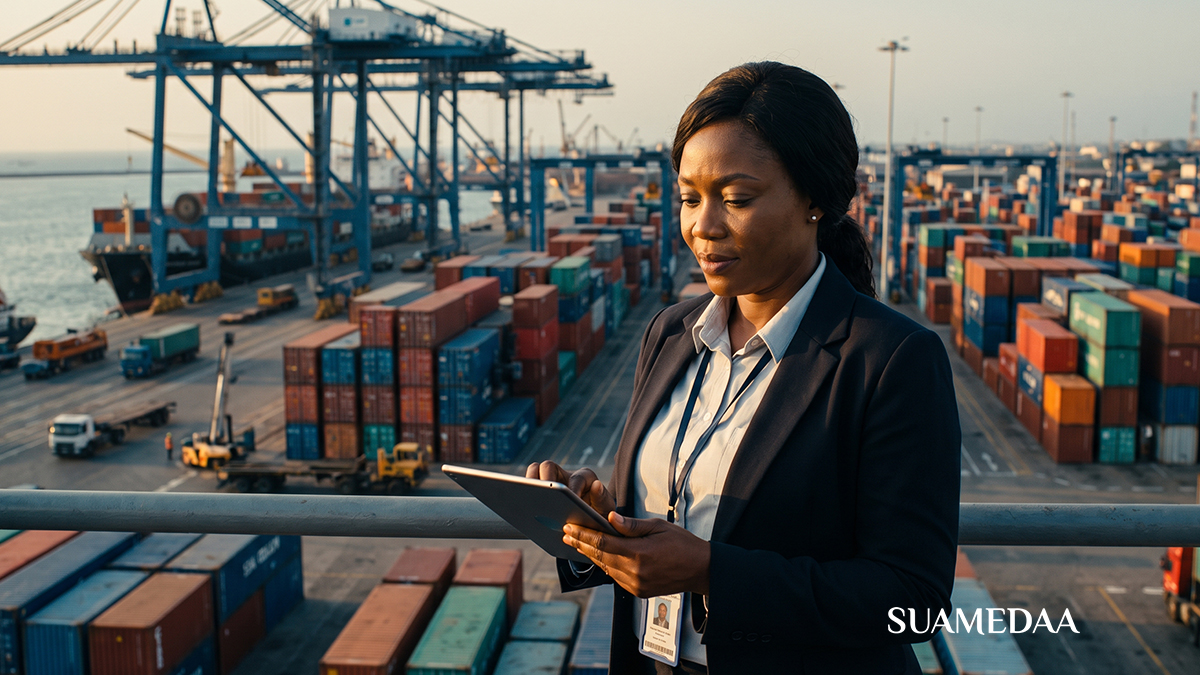
Custom House Agents – The Gatekeepers of Global Trade
Every day, millions of tonnes of goods move across the world’s borders. Clothing stitched in Bangladesh arrives in European boutiques. Electronic components forged in South Korea slot into assembly lines in Mexico. Agricultural produce harvested in West Africa reaches supermarket shelves in North America. Making this ceaseless flow of commerce possible requires more than ships, aircraft, and roads. It requires someone who understands the precise language of customs law, who knows the difference between tariff heading 8471 and 8473, and who can negotiate a disputed valuation before perishable cargo spoils on a dock.
That professional is the Custom House Agent (CHA), known in many jurisdictions as a Customs Broker or Customs Freight Agent. They are the licensed intermediaries who stand between the commercial world of importers and exporters on one side, and the sovereign authority of customs administrations on the other.
The CHA is not a mere clerk of paperwork. They are a trade compliance strategist licensed by the state to bear legal accountability for how goods enter and leave a country.
International Trade Compliance Review
From Customs Houses to Global Clearance Hubs
The term “Custom House” dates to an era when every port town maintained a government building where merchants would present their cargo for inspection, pay levied duties, and receive permission to proceed. These buildings were both administrative offices and physical checkpoints. The revenue collected through them funded governments and bankrolled empires; in the English-speaking world, the first formal Customs House on record dates to the 14th century, though the practice of taxing trade at points of entry is as old as civilization itself.
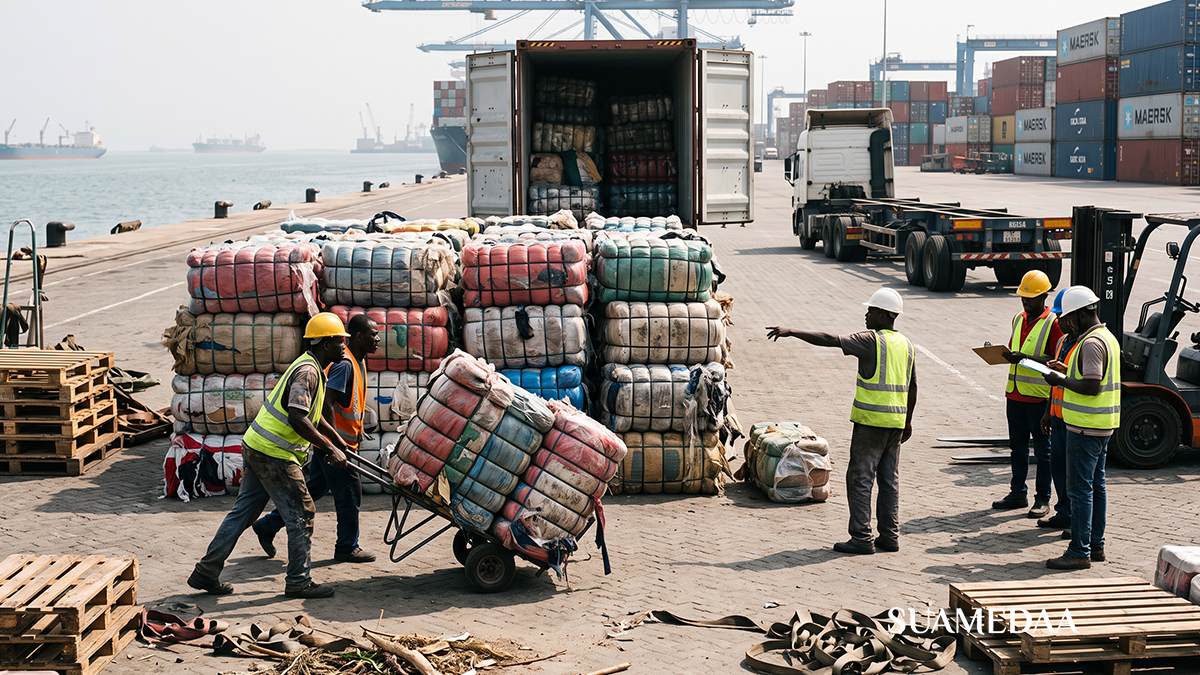

As trade volumes grew and cargo types multiplied, it became apparent that neither individual merchants nor customs officials could handle the growing complexity alone. The merchant needed someone versed in the technical specifics of customs law; the customs office needed reliable counterparties who would ensure submitted documentation was accurate. The role of the Agent emerged organically from this need, and governments began formally licensing these intermediaries to give the profession legal standing and accountability.
Today, the physical custom house is often replaced by digital portals and electronic data interchange systems, but the Custom House Agent remains the indispensable human expert in the machine.
Who Is a Custom House Agent?
A Custom House Agent is a person or firm licensed by the relevant customs authority to transact business on behalf of importers and exporters at a customs station. Their authorization covers the full spectrum of import and export activity: the entry and departure of conveyances, the clearance of goods, and the related documentation and duty payments that accompany each transaction.
The legal definition varies by jurisdiction. In India, the CHA is defined under the Customs House Agents Licensing Regulations, 2004, as a person licensed to act as agent for any business relating to the entry or departure of a conveyance or the import or export of goods at any Customs Station. In the United States, the equivalent professional is a Licensed Customs Broker, regulated by U.S. Customs and Border Protection. In Ghana and several West African nations, Customs Declaration Agents serve this function under the Ghana Revenue Authority’s licensing framework. The European Union recognizes Customs Representatives operating under the Union Customs Code.
Regardless of the title, the function is universal: the CHA bridges the private commercial interest of the trader with the public legal authority of the customs administration.
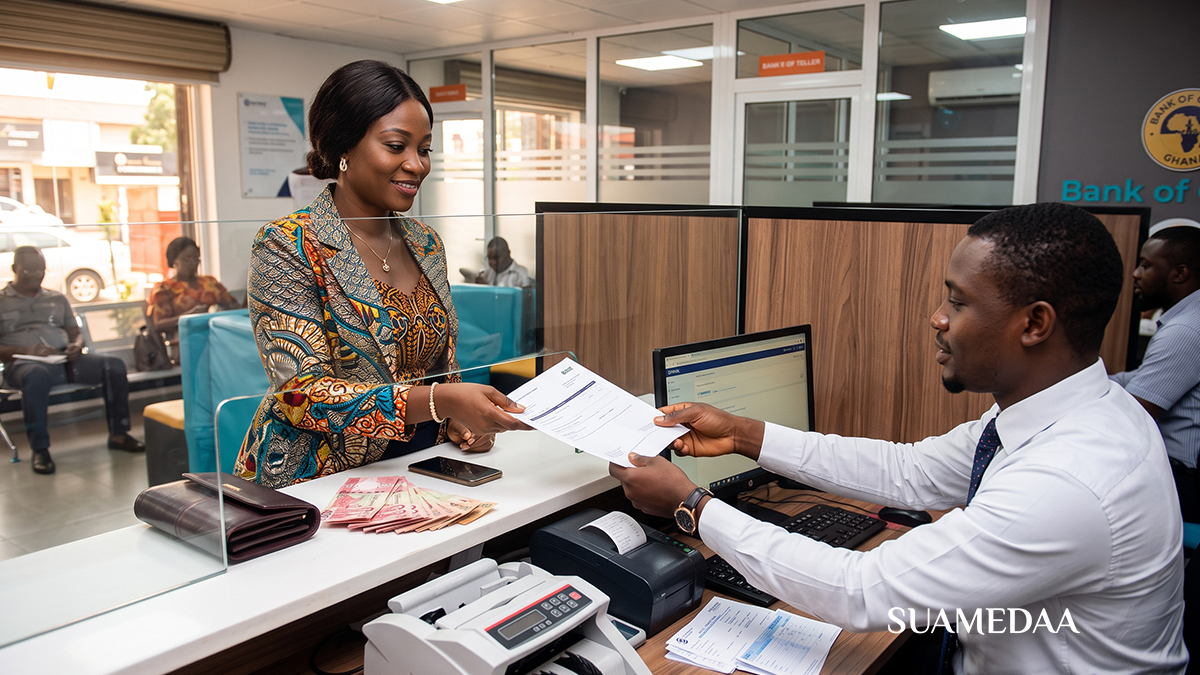

What a Custom House Agent Actually Does
The popular conception of the CHA as someone who “fills in forms” dramatically undersells the breadth of their work. Their responsibilities span legal analysis, financial calculation, logistics coordination, and regulatory advisory functions.
Tariff classification is among the most technically demanding of these tasks. Every product traded internationally must be assigned a Harmonized System (HS) code, a numeric identifier that determines the rate of duty applicable and the regulatory controls that govern it. The Harmonized System runs to thousands of headings and subheadings, and an incorrect classification can result in underpayment of duty, penalties, or cargo delays.
Customs valuation is equally complex. The dutiable value of imported goods is not always simply the price on the invoice. Royalties, assists, commissions, and the treatment of related-party transactions can all affect the customs value, and the CHA must apply the WTO Valuation Agreement correctly to arrive at a defensible figure.
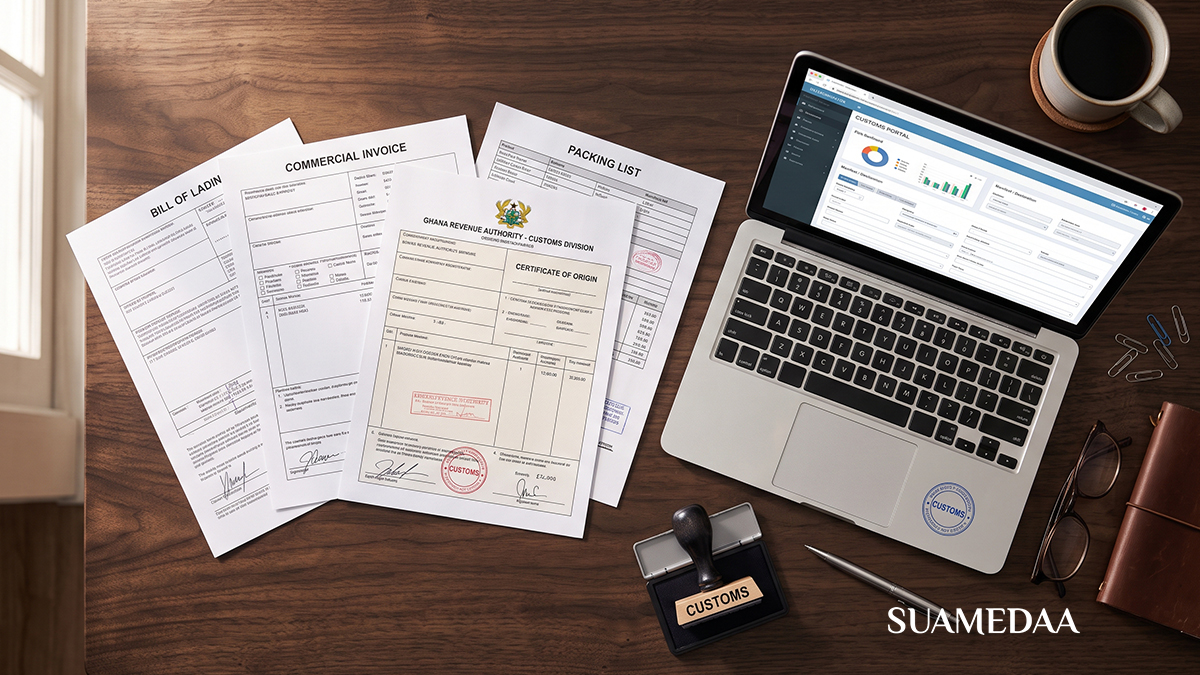
Documentation management sits at the core of every transaction. The CHA prepares, reviews, and submits the complete set of import and export documentation, including bills of entry, shipping bills, commercial invoices, packing lists, certificates of origin, and letters of credit. An error in any document can trigger an examination, a query, or an outright refusal of clearance.
Compliance advisory extends the CHA’s role well beyond the individual shipment. They advise clients on import licensing requirements, trade bans, restricted goods, phytosanitary and sanitary standards, and the provisions of bilateral and multilateral trade agreements that might reduce or waive applicable duties. A CHA working with a client importing from a country that has a preferential trade agreement with the destination country, for instance, must ensure the goods satisfy the rules of origin before claiming preferential rates.
Cargo tracking and liaison rounds out the picture. The CHA monitors shipments through ports and customs facilities, follows up with inspection agencies, manages the collection of delivery orders, and coordinates the final movement of goods to the client’s premises or warehouse.
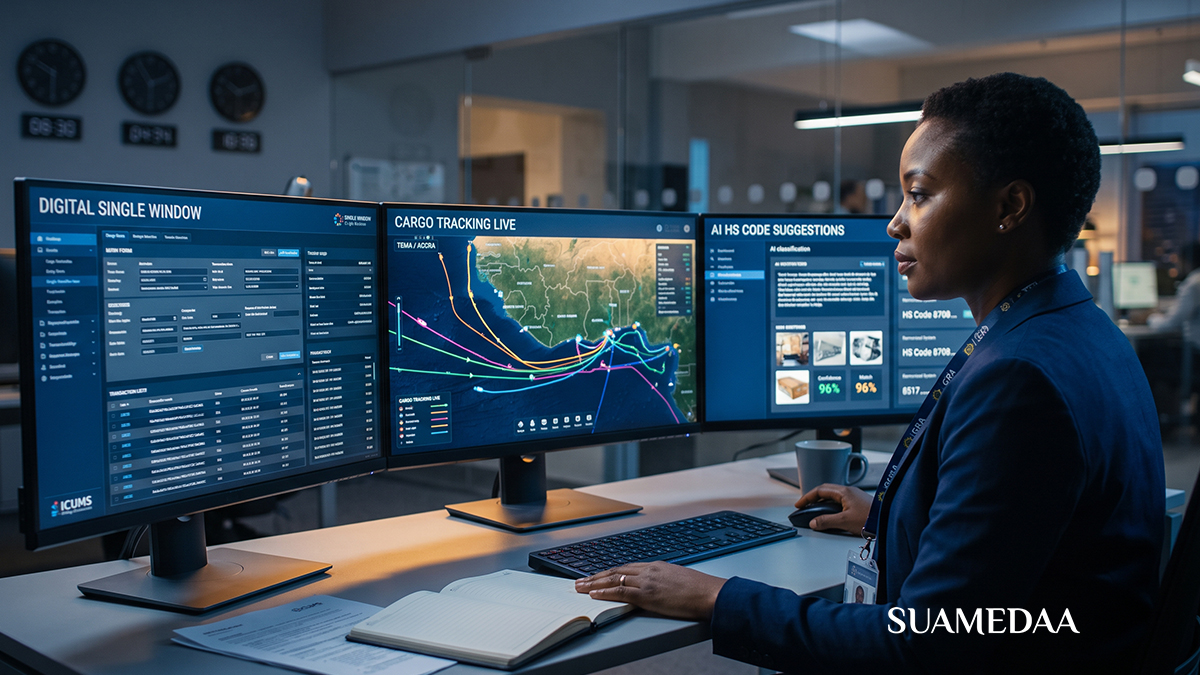
The Import Clearance Process
When a consignment arrives at a port or border point, the CHA orchestrates a choreographed sequence of activities to bring it legally into the country. The process varies in procedural detail from country to country, but follows a consistent general flow.
- Receiving instructions.
The importer engages the CHA and provides commercial documents including the invoice, packing list, bill of lading or airway bill, and any special certificates required for the goods in question. - Pre-arrival classification and valuation.
The CHA reviews the goods description, assigns the correct HS code, and computes the customs value and estimated duty liability, often before the shipment arrives to minimize port delays. - Filing the customs entry.
The CHA lodges the customs declaration electronically through the national customs portal, attaching all required supporting documents. In Ghana this occurs through the ICUMS system; in Kenya through iCMS; in many countries through ASYCUDA-based platforms. - Assessment and duty payment.
Once the declaration is assessed and approved by the customs authority, the CHA arranges payment of the computed duties and taxes on behalf of the client, often using pre-funded duty accounts held with approved banks. - Physical examination.
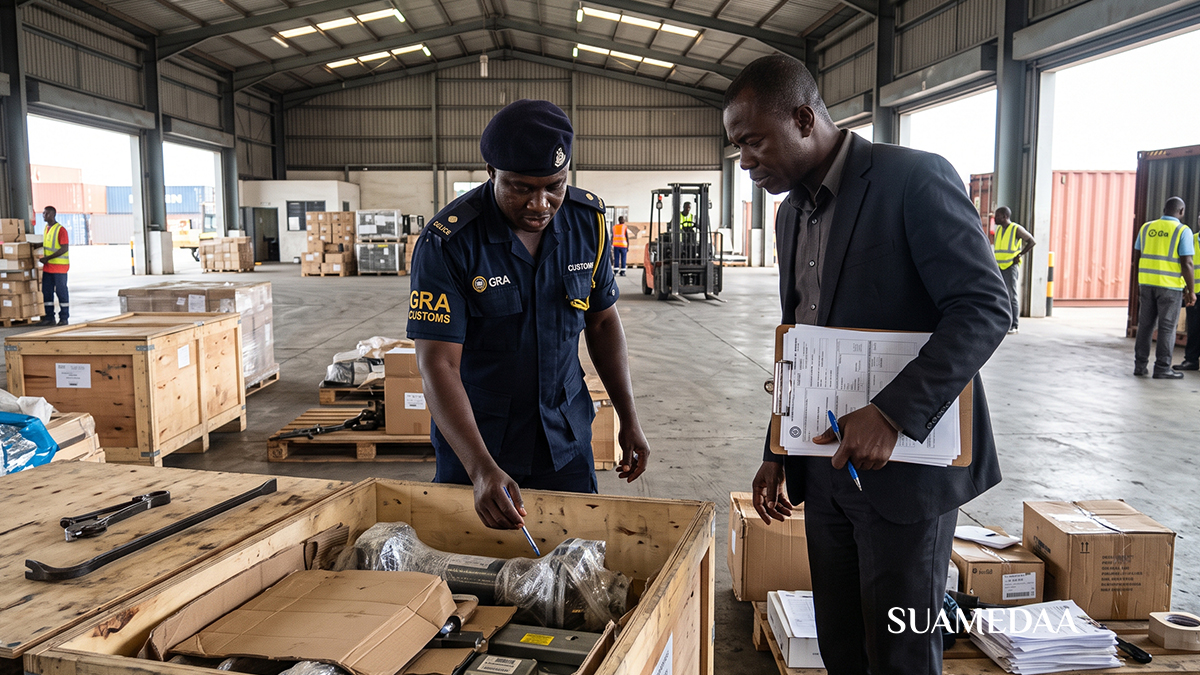
Customs authorities may select shipments for physical inspection using risk profiling systems. The CHA facilitates the examination, attending at the customs examination shed and assisting the examining officers with documentation and technical product information. - Release and delivery.
Upon clearance, the CHA obtains the release order and the delivery order from the shipping line, coordinates with the port or terminal operator, and arranges for the cargo to be collected or delivered to the client.
Key Documents in International Trade Clearance
Trade documentation is not mere bureaucracy. Each document serves a specific legal and commercial function, and the CHA must understand when each is required, verify its accuracy before submission, and identify discrepancies that could jeopardize clearance.
| Document | Purpose | Issued By |
|---|---|---|
| Bill of Lading / Air Waybill | Contract of carriage and title to goods | Carrier |
| Commercial Invoice | States the transaction value; basis for customs valuation | Exporter |
| Packing List | Details the contents, weight, and dimensions of each package | Exporter |
| Certificate of Origin | Certifies the country of manufacture; determines duty rate | Chamber of Commerce |
| Bill of Entry | The formal customs declaration; the key clearance document | Custom House Agent |
| Import / Export Permit | Required for controlled goods: pharmaceuticals, chemicals, food | Relevant ministry |
| Phytosanitary Certificate | Certifies plant-based products are free from pests and disease | Agricultural authority |
| Letter of Credit | Bank-backed payment assurance referenced in trade documentation | Importer’s bank |
Qualifications and Licensing
The CHA profession is a licensed one in virtually every country that regulates it. The justification is straightforward: the CHA is legally accountable for the accuracy of customs declarations. A false or negligent declaration can result in financial penalties, cargo seizure, or criminal prosecution. The state therefore requires assurance that anyone performing this function meets a defined standard of competence.
While specific requirements vary by country, most licensing regimes expect the following of candidates:

- A minimum educational qualification, typically a bachelor’s degree in commerce, law, or supply chain management, or a recognized diploma in customs clearance
- Minimum practical experience working within a licensed customs agency, typically one to three years under supervision
- A written and often oral examination set by the customs authority, covering tariff law, valuation principles, and customs procedures
- Maintenance of a financial security bond or bank guarantee as assurance of duty payment obligations to the state
- Ongoing continuing professional development to remain current with changes in tariff schedules, trade agreements, and customs law
- Working knowledge of the computer-based customs declaration systems in use at the relevant customs station
In many jurisdictions, a provisional licence is issued first, allowing the candidate to work under supervision while preparing for the formal examination. The full licence, once granted, is subject to renewal and can be suspended or revoked for professional misconduct, negligence, or failure to maintain the required financial standing.
Why Businesses Use Custom House Agents
It is technically possible for an importer or exporter to handle their own customs clearance when acting on their own account. In practice, the vast majority of commercial traders engage a licensed CHA. The reasons are compelling.
Complexity and risk.
Modern customs law is extraordinarily intricate. Tariff schedules run to thousands of headings and subheadings. Trade agreements create preferential rates with specific rules of origin. Valuation disputes can arise over transfer pricing, royalties, or assists. Getting it wrong attracts penalties, inspections, and a damaged compliance profile that can slow every future shipment the business makes.
Speed.
An experienced CHA knows the system, knows the procedures, and knows how to prepare documentation that moves cleanly through assessment. Delays at a port are expensive: demurrage charges accumulate by the day, just-in-time supply chains are disrupted, and perishable goods can be destroyed. The CHA’s institutional knowledge translates directly into faster clearance times.
A good CHA doesn’t just clear your goods. They protect your supply chain from regulatory risk that you probably don’t know is there.”Global Supply Chain Practitioner
Duty optimization.
A skilled CHA is not simply a form-filler but an advisor who can identify legal duty savings through accurate classification, the application of preferential trade agreements, or duty drawback schemes available under the applicable customs law. The fee paid to a CHA is often recovered many times over in legitimately reduced duty payments.
Regulatory intelligence.
Trade regulations change frequently. Sanctions regimes shift. New product bans are imposed. Tariff rates are revised in budget cycles. The CHA maintains current awareness of these changes and advises clients proactively, preventing expensive surprises at the point of clearance.
The Changing Landscape
The CHA profession is being reshaped by technology and geopolitics in equal measure. Artificial intelligence tools are automating HS code classification and duty calculation, shifting the CHA’s value toward exception handling, dispute resolution, and complex advisory work that machines cannot yet replicate. Paperless customs environments are becoming the norm globally, with electronic single windows, digital certificates of origin, and blockchain-based bills of lading replacing physical documents.
Renewed tariff disputes between major trading blocs are generating intense demand for CHA expertise, as businesses re-evaluate their sourcing and routing strategies to minimize exposure. At the same time, customs authorities are demanding richer, earlier data, with pre-arrival declarations and advance cargo information requirements expanding rapidly. Carbon border adjustment mechanisms and sustainability-linked trade rules are adding further compliance obligations that CHAs are increasingly expected to navigate.
The net effect is a profession that is growing more technically demanding even as routine tasks are automated away. The CHAs who will thrive are those who combine mastery of the underlying law with the ability to deploy and interpret the digital tools that are transforming every customs administration in the world.
The Indispensable Intermediary
Global trade does not happen automatically. It happens because trained, licensed professionals at every customs point in the world understand the rules, maintain the relationships, and take legal responsibility for keeping goods moving across borders in compliance with the law.
The Custom House Agent may not appear on the organizational charts of the companies whose goods they move, but they are embedded in the supply chains of virtually every business that trades internationally. As the regulatory environment grows more complex and the stakes of non-compliance grow higher, the professional expertise they provide becomes not a luxury but a necessity.
In a world of shifting trade alliances, digital transformation, and tightening compliance requirements, the CHA stands at the intersection of commerce and law, ensuring that the goods that make the modern world run continue to flow.