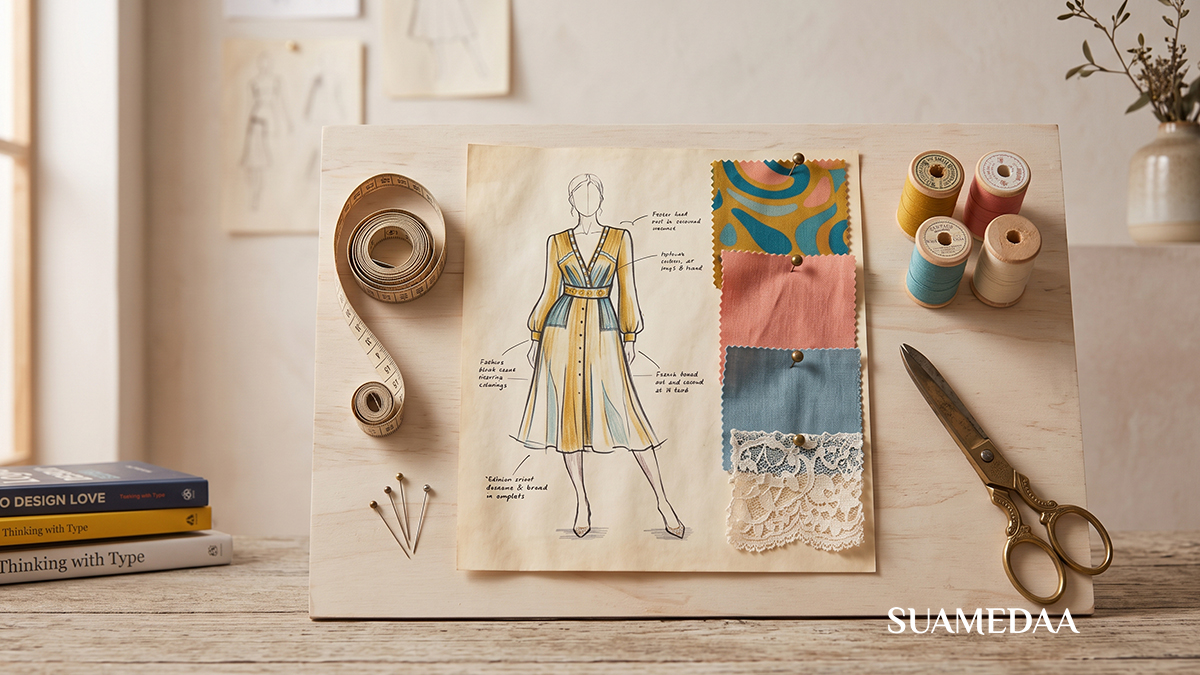
Sketch to Stitch – The Complete Fashion Design Process Explained
Every piece of clothing that has ever been worn began as something else entirely: a feeling, an image, a silhouette glimpsed on a street corner, a fabric touched in a market, a cultural memory, a colour seen at dusk. Between that originating impulse and the finished garment hanging on a rail or folded in tissue paper in a box, there is a long, precise, deeply collaborative process that most people who wear clothes never see and rarely think about.
The fashion design process is one of the most demanding creative disciplines there is, because it operates simultaneously on multiple levels: the conceptual and the technical, the artistic and the commercial, the individual and the industrial. A designer must be an ideas person and a problem solver, an aesthete and an engineer, a storyteller and a manufacturer. The sketch on the page is only the beginning. Getting from that sketch to a finished stitch requires mastery of every stage in between.
This guide explains every one of those stages in detail: what happens, why it matters, who is involved, and how each step builds on the one before it. Whether you are a student entering fashion school, an emerging designer preparing your first collection, or someone who simply wants to understand how the clothes you wear come into being, this is the complete picture.


Stage One: Research and Concept Development
No serious collection begins with drawing. It begins with research. Research is the intellectual and visual foundation from which all creative decisions flow, and the depth of research correlates directly with the coherence and originality of the final collection.
Building a Research Brief
The first question a designer must answer is: what is this collection about? Not in the superficial sense of a theme or a trend, but in the deeper sense of a genuine creative question or investigation. The strongest collections are driven by a specific obsession, a cultural observation, a personal experience, or a conceptual tension that gives the designer something real to say through the work.
A research brief might begin with a primary source: a period of history, a subculture, a geographic place, an artist’s body of work, a scientific concept, a piece of architecture, a social movement, a material tradition. The designer then expands outward from that primary source, gathering secondary references that speak to related ideas, contrasting concepts, and unexpected connections.
The goal of this phase is not to decorate a mood board with pretty images. It is to develop a genuine point of view, a specific way of seeing the primary research subject that will produce design decisions that are surprising, considered, and coherent.
Primary and Secondary Research
Primary research involves direct engagement with the source material: visiting exhibitions, photographing street scenes, interviewing craftspeople, handling historical garments in archive collections, visiting the landscapes or communities that form the collection’s conceptual center. Primary research cannot be replaced by internet browsing because it involves sensory and experiential dimensions that secondhand sources cannot transmit.


Secondary research gathers supporting visual and intellectual material: books, films, paintings, photography, documentary footage, poetry, music, architectural drawings, scientific illustrations. The designer is building a rich associative field around the central concept, looking for formal, tonal, textural, and structural qualities that can be translated into garment design decisions.
The best research is genuinely wide. It connects fashion to the broader world of ideas, culture, art, and history rather than staying within the narrow visual vocabulary of fashion itself. Designers who research only other designers produce derivative work. Designers who research widely produce original work.
The Mood Board
The mood board is the visual summary of the research phase: a curated selection of images, textures, color references, and material samples arranged to communicate the emotional and aesthetic direction of the collection. It is not a collage of things that look nice. It is a precise editorial statement about the visual DNA of the collection.
A strong mood board answers specific questions for anyone who views it: What is the color story? What are the surface qualities and textures? What is the silhouette vocabulary? What is the emotional register, dark or light, fragile or robust, intimate or monumental? What is the cultural or historical reference point?
Many designers create both a primary mood board covering the overall collection direction and secondary boards for specific design areas such as fabric development, print direction, or outerwear. Digital mood boards assembled in applications like Adobe Photoshop, Milanote, or Miro have largely replaced physical boards in many studio environments, though physical boards remain valuable for their tactile and material qualities.

Trend Research
Alongside conceptual research, most designers working within commercial fashion systems also conduct trend research: an analysis of the broader fashion landscape to understand where the industry is moving. This involves reviewing catwalk reports, subscribing to trend forecasting services such as WGSN, Trendalytics, or Peclers Paris, analysing retail and consumer data, and monitoring cultural signals in music, film, sport, and street style.
Trend research does not replace conceptual research. Its function is to ensure that a collection is in dialogue with the moment rather than isolated from it. The skill lies in integrating trend intelligence with a strong personal creative vision rather than allowing one to overwhelm the other.
Stage Two: Fabric and Material Selection
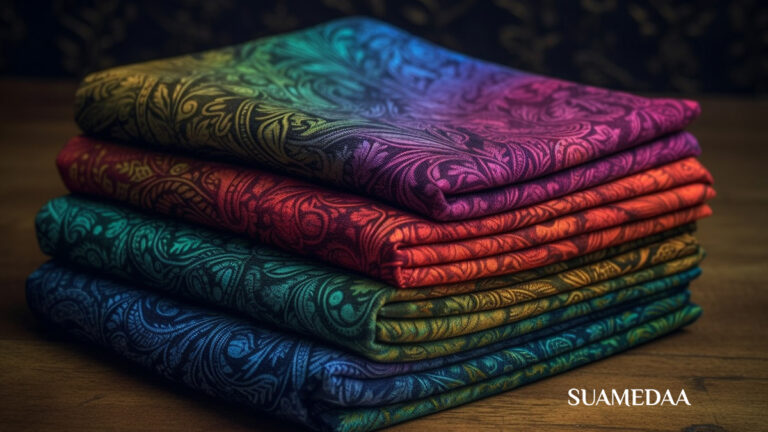
Fabric is not a background decision made after the design is complete. It is a design decision made simultaneously with and inseparably from the design itself. The right fabric does not merely suit a design: it enables it. The wrong fabric can make an excellent design look mediocre and an average design look wrong in ways that are difficult to articulate but immediately felt.
Understanding Fabric Properties
Every fabric has a set of physical properties that determine what it can do and what it cannot. A designer who does not understand these properties cannot make informed fabric decisions.
Drape describes how a fabric falls and flows when unsupported. A fabric with high drape, such as silk charmeuse, crepe, or viscose, falls smoothly and fluidly and is suited to bias-cut garments, fluid silhouettes, and draped construction. A fabric with low drape, such as a stiff cotton canvas or a structured wool, holds its shape and is suited to tailored, architectural, or structured design.
Weight affects silhouette, movement, and wearability. Heavy fabrics like heavy wool suiting or thick denim hold structure but limit movement. Lightweight fabrics like chiffon, organza, or fine jersey move freely but may require lining or layering.
Stretch determines whether a fabric can be used in fitted or body-conscious designs without restrictive seaming. Woven fabrics have minimal stretch unless cut on the bias. Knit fabrics stretch across their width and sometimes their length depending on their construction. Four-way stretch fabrics, which extend in both directions, are standard in activewear and swimwear.
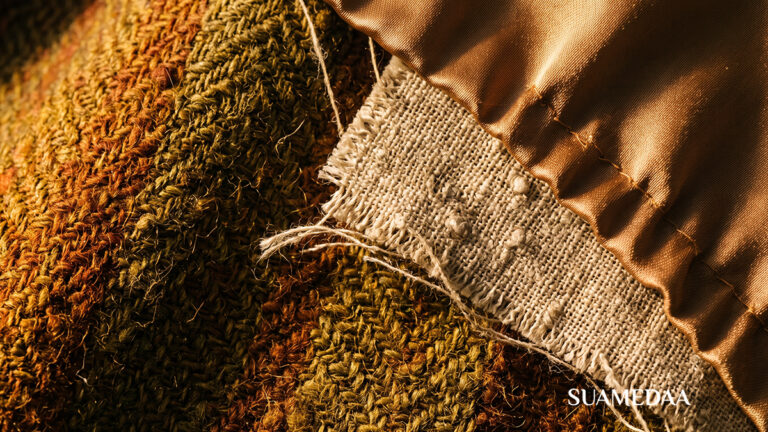
Fiber content determines how a fabric behaves in wear, in care, and in construction. Natural fibers like cotton, wool, silk, and linen have distinctive properties and care requirements. Synthetic fibers like polyester, nylon, and acrylic offer different performance characteristics. Blended fabrics combine properties of multiple fibers to balance performance and cost. Sustainable alternatives including organic cotton, Tencel, recycled polyester, and innovative bio-based fibers are increasingly central to fabric selection as environmental considerations become more prominent in design decisions.
Weave structure affects surface appearance, handle, and behavior. A plain weave produces a clean, even surface. A twill weave produces a diagonal rib and greater drape. A satin weave produces a lustrous, smooth surface with reduced abrasion resistance. A jacquard weave creates complex patterns within the fabric structure. A knit construction creates interlocking loops that produce stretch and recovery.
Visiting the Fabric Market
Professional designers source fabrics from multiple channels: fabric trade fairs such as Premiere Vision in Paris and Texworld, fabric mills and agents, specialist suppliers for technical and sustainable materials, vintage and deadstock suppliers, and local markets and merchants.
The physical experience of the fabric market is irreplaceable. Fabrics must be touched, held up to the light, twisted, draped over the hand, and assessed for their sensory and visual qualities before being selected. A fabric that photographs beautifully may handle poorly. A fabric that looks unremarkable on a swatch card may have an extraordinary drape when allowed to fall freely.
When sourcing fabrics, collect swatches meticulously, noting the supplier, the fabric composition, the width, the price per metre, and the minimum order quantity. The minimum order quantity is particularly important for small and emerging designers: many mills require minimum orders that far exceed a small production run, making them inaccessible without partnering with a larger supplier or seeking out smaller specialist merchants.
Fabric Testing
Before committing to a fabric for a collection, test it for the following: washing behaviour and shrinkage, colour fastness under washing and light exposure, how it responds to cutting and whether it frays excessively, how it behaves under the iron, and how it interacts with any interfacing or lining you plan to use with it. Fabric that has not been tested before construction begins regularly causes problems that are expensive and time-consuming to correct.
Pre-washing woven fabrics before cutting and constructing is standard practice for most natural fibers, since they shrink predictably when first laundered and a garment that has not been pre-washed will shrink after the customer first washes it.
Stage Three: Sketching and Developing the Design
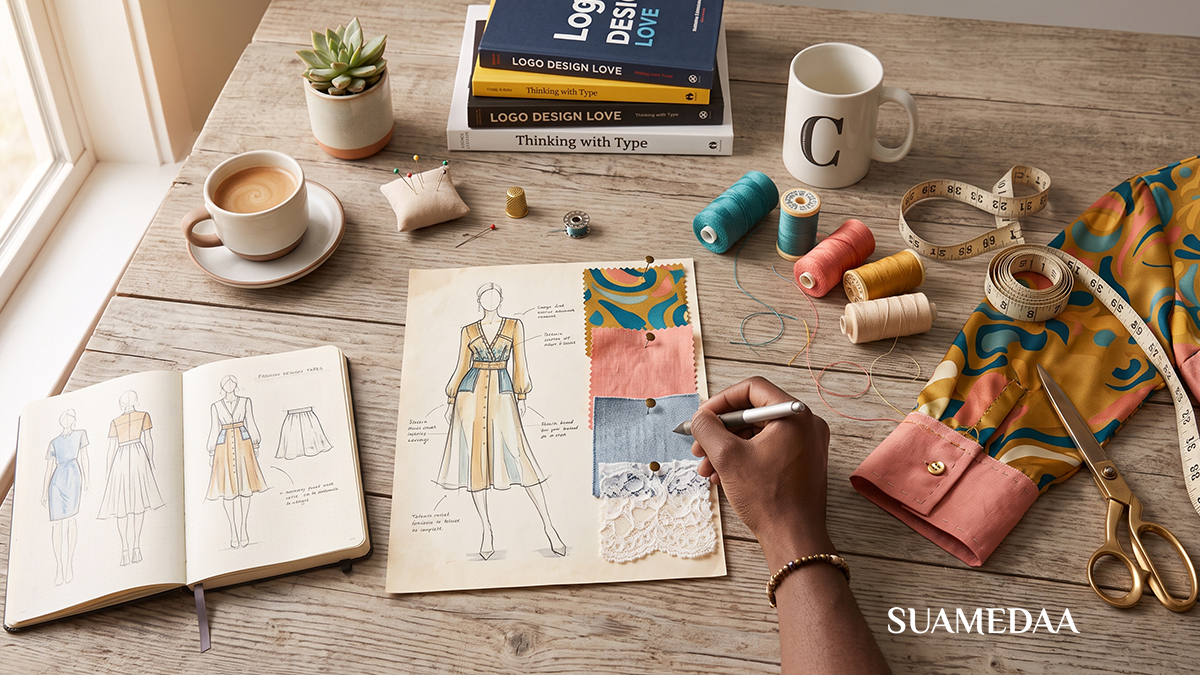
With research and fabric direction established, the designer moves into the generative phase of creating designs. This is the stage most associated with fashion design in the popular imagination, and it is genuinely central, but it is more effective and more productive when built on the foundation of the preceding stages.
Fashion Illustration vs. Working Drawings
There are two distinct types of drawing in fashion design, and understanding the difference is important.
Fashion illustration is an artistic representation of a garment on a stylised figure. It communicates mood, proportion, and aesthetic direction but is not a precise technical document. Proportions are exaggerated, elongating the figure to an eight, nine, or ten-head proportion that emphasises the silhouette and gives the illustration its distinctive elegance. Fashion illustration is primarily a communication tool for presenting creative vision to an audience of buyers, press, or clients. It is also a personal creative practice that many designers maintain throughout their careers as a form of visual thinking.
Working drawings, also called technical drawings or flats, are accurate, two-dimensional representations of a garment as it would lie flat on a table. They show both the front and back of a garment, all seam lines, pocket placements, zip positions, button spacing, collar construction, and any other structural details. They are drawn to a consistent set of proportions and conventions so that they can be read accurately by a pattern maker, a sample machinist, or a factory production team. Working drawings are the primary technical communication document in the design and production process.
Both types of drawing matter. The fashion illustration captures the creative vision. The working drawing translates that vision into actionable technical information.
Developing Design Ideas
The early sketching phase should be generative rather than selective: produce as many ideas as possible without editing them as they emerge. A page of twenty rough sketches produced quickly is more valuable than one polished drawing produced slowly, because the rapid sketching process externalises ideas without allowing the critical faculty to shut down the generative one prematurely.
Work in pencil or in a medium that allows fast, fluid mark-making. Explore silhouette variations: how would this design look as a fitted garment versus an oversized one? How would the proportions change if the waist were dropped or the hem raised? What happens to the design if you remove one element or add another?
Once a range of initial ideas has been generated, begin to evaluate and develop the strongest directions. Which ideas are most coherent with the collection’s overall concept? Which are most technically feasible within the available budget and manufacturing capability? Which feel most original and which feel derivative of work already out there in the market?
The editing process is as important as the generative process. A collection is a curated selection of ideas in dialogue with each other, not a random accumulation of everything the designer thought of during the design phase.
Developing a Collection with Internal Logic
A collection is not a group of individual garments. It is a system of related ideas that together tell a coherent visual story. Developing a collection with internal logic means thinking about how the pieces relate to each other in terms of silhouette vocabulary, fabric palette, colour story, surface treatment, and level of complexity.
A well-structured collection typically contains a range of garments that serve different functions within the narrative: opening looks that establish the collection’s aesthetic territory, mid-collection looks that develop the ideas introduced at the opening, a strong climactic look or series of looks that represent the collection at its most complete or dramatic, and closing looks that resolve the narrative with a sense of conclusion.
The ratio of commercial to conceptual pieces also requires consideration. A purely conceptual collection that is unwearable in any practical sense may make a powerful artistic statement but will not generate the commercial traction necessary to sustain a business. A purely commercial collection may sell consistently but will not build the brand identity or critical reputation that creates long-term value. Most sustainable fashion businesses find a balance between the two.
Stage Four: Pattern Making
Pattern making is the technical process of translating a two-dimensional design into the set of flat, precisely shaped pieces of fabric that, when cut and sewn together, produce a three-dimensional garment. It is simultaneously a technical discipline and an art form, and the quality of a pattern determines the quality of the finished garment more than almost any other single factor.
Flat Pattern Making
Flat pattern making begins from a set of basic block patterns, also called slopers or blocks, that represent the fundamental shapes of a garment fitted to a standard set of body measurements. Blocks are created for different garment categories: a bodice block, a sleeve block, a skirt block, a trouser block, and so on.
From these blocks, the pattern maker develops the specific shapes required for the designed garment by applying a series of standard pattern-making techniques: adding ease for comfort and movement, manipulating darts to control fit, cutting and spreading the pattern to add volume or fullness, pivoting seams to create design lines, and adding all required seam allowances, hem allowances, and notches that will guide assembly.
Flat pattern making requires a thorough understanding of how the body moves, how fabric behaves, and how the rules of pattern geometry translate into three-dimensional form. A pattern maker who understands these principles can anticipate, from a two-dimensional drawing, what will happen when the pattern pieces are sewn together and worn on a moving body.
Draping on the Stand
An alternative approach to pattern making, and one that many designers find more intuitive for complex or fluid designs, is draping, also called toiling on the stand or moulage in French terminology. In this method, the pattern maker works directly with fabric on a dress form, pinning and manipulating the material until the desired three-dimensional shape is achieved, then transferring the draped shapes to paper to create the flat pattern.
Draping is particularly well suited to bias-cut designs, draped and wrapped silhouettes, asymmetric constructions, and any design whose character is defined by the way fabric falls on the body rather than by precise geometric seaming. It is also an invaluable tool for exploring design ideas in three dimensions that are difficult to fully resolve in a two-dimensional sketch.
Many pattern makers and designers use both methods, beginning with flat pattern making for the basic structure and moving to the stand to resolve complex areas or to fine-tune the way a design falls and moves on the body.
Grading
Grading is the process of scaling a pattern up and down from the sample size to produce patterns for the full range of sizes a garment will be manufactured in. Grading is a highly technical process that requires understanding not just how dimensions scale mathematically but how the proportions of a garment change as the body it is fitted to changes in size.
Professional grading is typically handled by specialist graders using dedicated software such as Lectra Modaris, Gerber AccuMark, or Optitex. For emerging designers producing small runs, simplified grading approaches are possible, but poorly graded patterns produce garments that fit badly outside the sample size, which is a significant commercial and reputational risk.
Stage Five: Creating the Toile
A toile, called a muslin in American fashion terminology, is a test garment made in an inexpensive fabric, typically a plain cotton calico, that is used to evaluate the pattern before cutting into the final fabric. It is one of the most important and most frequently skipped steps in the fashion design process, and skipping it almost always leads to expensive problems.
Why the Toile Matters
No matter how precise the pattern making, the behaviour of a garment on a real body in motion is impossible to fully predict from flat pattern pieces alone. A toile reveals fit issues, proportion problems, construction challenges, and design details that do not work as intended, at a fraction of the cost of cutting and constructing in the final fabric.
Common issues revealed by a toile include: incorrect ease resulting in a garment that is too tight or too loose at specific points, dart placement that does not align with the wearer’s body, seam lines that pull or distort in movement, collar and neckline shapes that do not behave as sketched, and design details like pockets, plackets, and cuffs that require technical resolution before they can be constructed cleanly.
Each issue identified in the toile is corrected in the pattern before the toile is recut and reassessed. This iterative process continues until the pattern produces a garment that fits correctly, moves correctly, and looks as intended on the body.
Fitting the Toile
The toile is fitted on either a dress form calibrated to the target size or a fit model whose measurements correspond to the target size. Fitting on a live model is preferable because it reveals how the garment moves with the body, which a static dress form cannot assess.
During the fitting, the designer and pattern maker work together to identify every area where the garment does not sit, fall, or move as intended. Issues are marked directly on the toile using tailor’s chalk or pins, photographed for reference, and then translated back into corrections to the pattern.
A complex garment may require two, three, or more toile iterations before the pattern is finalised. Each iteration is an investment of time and material that pays for itself many times over in the quality and accuracy of the final garment.
Toile Fabric Choice
Calico is the standard toile fabric because it is cheap, widely available, and has a relatively neutral drape that is reasonably representative of many woven fabrics. However, for designs in particularly specific or unusual fabrics, such as heavy structured wools or very fluid silks, it can be valuable to create a second toile in a cheaper fabric with a similar drape or weight to the final fabric, to assess how the design behaves in a more representative material.
Stage Six: Sample Making
Once the pattern has been finalised through the toile process, the first full sample is cut and constructed in the actual intended fabric. This is the moment when the design moves from concept and intention to physical reality in its intended material.
Cutting
Cutting is a stage that receives less attention than it deserves. Even the best pattern and the finest fabric can be undermined by poor cutting. Fabric must be laid flat, with grain lines aligned precisely to the grain of the fabric. Pattern pieces must be placed with the grain line indicator running parallel to the selvedge. For napped fabrics such as velvet, corduroy, and brushed wool, all pieces must be cut in the same direction so that the nap runs consistently through the finished garment. For patterned fabrics, pieces must be cut so that the pattern aligns at seams.
Professional cutting studios use computer-controlled cutting machines for efficiency and precision in production runs. For sample making and small-scale production, hand cutting with sharp shears or a rotary cutter on a proper cutting table at the correct height for ergonomic working is standard practice.
Transfer all necessary markings from the pattern to the cut fabric pieces before removing the pattern: notches, dart points, pocket placement marks, and any other alignment aids that will guide accurate construction.
Construction Sequence
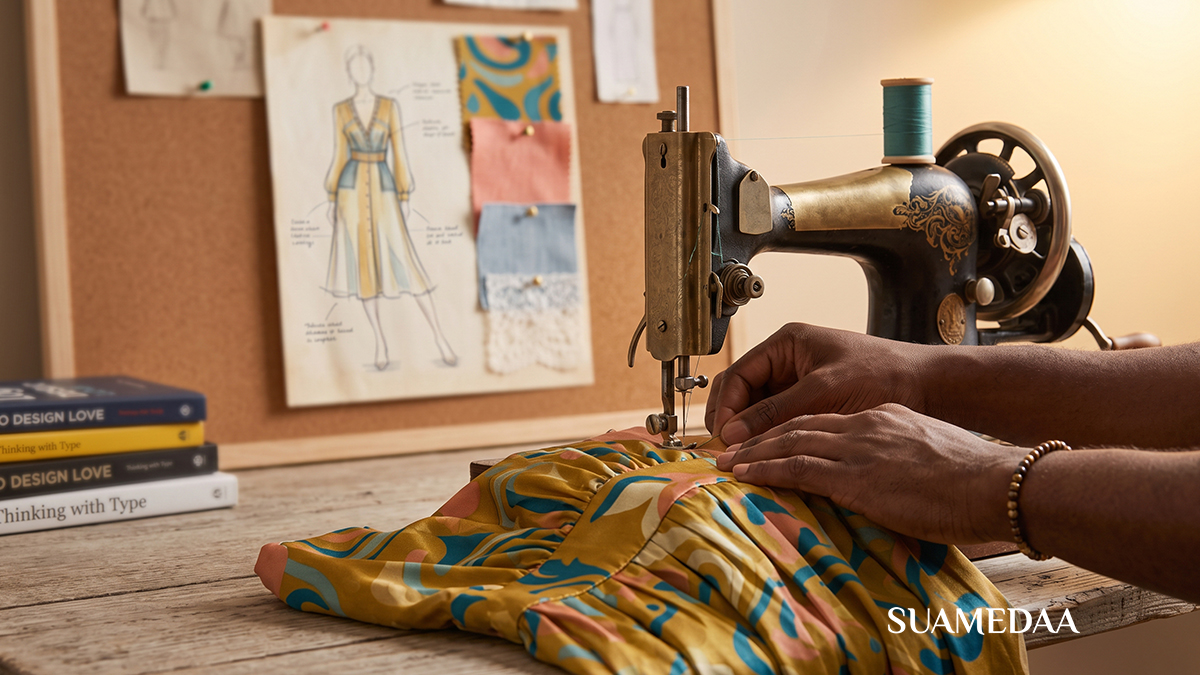
The order in which a garment is assembled matters as much as the individual construction techniques used. Constructing in the wrong sequence can make later stages impossible or needlessly difficult. A standard top-down, inside-out sequence works for many garments, but complex designs require careful pre-planning of the construction sequence before the first seam is sewn.
As a general principle: construct internal structure and interfacing applications first, then assemble the main body of the garment, then attach separate components such as collars, cuffs, and waistbands, and finally apply closures, topstitching, and finishing details. Pockets are generally inserted at the appropriate stage in the seam assembly sequence rather than applied after the fact.
Techniques and Finish Quality
The quality of construction techniques is one of the clearest differentiators between price points in fashion. At the highest level of tailoring and couture, every seam is finished by hand, every internal surface is as considered as the external one, and construction techniques invisible to the wearer are chosen for the quality of finish they produce rather than the speed at which they can be executed.
Key construction techniques every fashion designer and sample maker should understand include: flat felled seams for strength and a clean finish on the inside of a garment, French seams for enclosing raw edges on sheer and delicate fabrics, bound seams using bias-cut strips of fabric or commercial bias binding, Hong Kong seams using bias-cut strips to enclose the raw edge of a pressed open seam, and overlocked or serged seams for industrial production where speed and reasonable finish quality are both required.
Pressing is a construction technique rather than a finishing step. Every seam should be pressed as it is sewn, not left to be pressed at the end. Pressing as you go sets the seam, shapes the fabric, and makes subsequent construction steps more accurate. The iron, in the hands of a skilled tailor or sample machinist, is as important as the sewing machine.
Linings and Interlinings
Many garments require a lining, an inner layer of fabric that covers the internal construction, improves wearability against the skin, and adds structure or body to the outer fabric. The lining must be selected and constructed with the same care as the outer garment, since a poorly made lining undermines the quality of even a beautifully constructed shell.
Interfacing is a non-woven, woven, or knit material fused or stitched to specific areas of a garment to add structure, stability, and crispness. It is used in collars, cuffs, waistbands, plackets, pocket bags, and any area that needs to hold its shape. The weight and type of interfacing must be matched carefully to the outer fabric: too heavy and it stiffens the garment unpleasantly, too light and it fails to provide the support required.
Stage Seven: The Fitting and Revision Process
The first sample is rarely the final sample. A fitting on the appropriate fit model or dress form will almost always reveal refinements needed to the design, the fit, or the construction. This is not a failure of the pattern or the construction: it is a normal and necessary part of the process.
Designer Fittings
A formal designer fitting involves the designer, the pattern maker, and the sample machinist examining the first sample on the fit model together. The designer assesses whether the garment delivers on the creative vision. The pattern maker assesses fit and technical accuracy. The sample machinist assesses whether construction issues need to be addressed.
Changes agreed in the fitting are noted precisely in writing and on photographs of the fitting. Pattern corrections are made, the sample is unpicked at the relevant points, corrected, and refitted, or in some cases the relevant sections are recut from new fabric and reconstructed.
For a complex or technically demanding garment, this process may involve two or three fitting rounds before the final sample is approved. Each round requires time, fabric, and skilled labour.
Approving the Final Sample
The approved final sample, sometimes called the sealed sample, becomes the benchmark against which all subsequent production is measured. It is kept by the designer or brand as a quality reference. When the garment goes into production, whether at a small local atelier or a large overseas factory, the production team is measured against the standard set by the sealed sample.
A signed-off sealed sample includes: the approved garment construction and fit, the approved fabric and trims, all approved labels correctly placed, and the correct size label, care label, and any other labeling required for the target market.
Stage Eight: Technical Specification Packs
The technical specification pack, commonly called a tech pack, is the complete document package that communicates every technical detail of a garment to the manufacturer. It is the primary document of record for the production process, and its accuracy and completeness determine the quality and accuracy of the production output.
What a Tech Pack Contains
A complete tech pack for a single garment typically contains the following sections.
Technical drawings showing the front, back, and any required side or detail views of the garment, drawn to scale with all seam lines, construction details, hardware placements, and design features clearly indicated.
Measurement specifications listing every required measurement for every size the garment will be produced in, with the tolerance allowable above and below each measurement. Measurements include not just overall dimensions like chest, waist, and hip but construction measurements like seam widths, hem depths, pocket positions, collar heights, and sleeve lengths.
Fabric and trim specifications listing every material used in the garment, with the supplier, the fabric reference number, the color reference in both a visual swatch and a specified standard such as Pantone or a dye reference, the fiber content, and any special finishing requirements.
Construction notes explaining any specific construction technique required for the garment that a standard production team might not execute by default: the type of seam finish required, the stitch type and stitch density for each seam, any specific pressing requirements, the order of construction if it deviates from standard practice, and any specialist operations such as hand stitching, smocking, pleating, or embellishment application.
Label placement diagram showing precisely where each label is to be attached in the finished garment, with dimensions from the nearest seam or edge.
Fit comments and approval history documenting the fitting process and any changes made between sample rounds, giving the production team context for specific construction decisions.
A well-prepared tech pack reduces sampling errors, reduces the number of correction rounds required, and produces production garments that more closely match the approved sealed sample. Time invested in a thorough tech pack saves significantly more time in the sampling and production process.
Stage Nine: Production
With samples approved and tech packs complete, the garment enters production: the process of manufacturing the garment at the required quantity for sale. Production is a world of its own and the decisions made at this stage have profound implications for quality, cost, lead time, and ethical and environmental impact.
Choosing a Manufacturer
The choice of manufacturer depends on multiple factors: the type of garment and the specialist skills it requires, the quantity being produced, the designer’s quality expectations and budget, the geographic location and the implications for lead time and sustainability, and the ethical standards of the production facility.
For small and emerging designers producing limited quantities, local or regional manufacturers offer shorter minimum order quantities, easier communication, faster sampling cycles, the ability to visit and inspect production, and the ability to build a personal relationship with the production team. The per-unit cost is typically higher than overseas alternatives, but the reduced minimum quantities and improved quality control often make it the more economically sound choice for small runs.
For larger production quantities, overseas manufacturing in specialist regions such as Portugal, Italy, Turkey, India, Bangladesh, and Vietnam offers lower per-unit costs but requires longer lead times, more detailed specification documentation, rigorous quality control procedures, and careful due diligence on the ethical and labour standards of the facility.
Ethical sourcing and supply chain transparency are increasingly important considerations in manufacturer selection, driven by both regulatory requirements in key markets and growing consumer expectations. Understanding the working conditions, wage practices, and environmental compliance of any manufacturer you work with is a professional and moral responsibility, not an optional extra.
Production Sampling
Even with an approved sealed sample and a complete tech pack, most responsible production processes include at least one round of production sampling: a small number of garments produced at the factory in the production setup, using production machines and production workers, before the full run is committed. Production conditions differ from sample room conditions, and a production sample often reveals issues that did not appear in the sample room.
Review production samples against the sealed sample meticulously, checking measurements against the tech pack specification, assessing fabric quality against the approved swatch, checking construction quality against the sealed sample standard, and confirming label placement against the spec.
Sign off production samples in writing before authorising the production run.
Quality Control
Quality control in production involves checking finished garments against the agreed specification at multiple points in the production process: inline checks during production, end-of-line checks before packing, and pre-shipment inspections before the goods leave the factory. The extent of quality control you can implement depends on your geographic proximity to the factory and your resources, but some level of QC is non-negotiable for any production that will be sold to customers.
Common quality issues in production include: measurement deviations outside the agreed tolerance, inconsistent stitching quality, fabric defects, incorrect label placement, colour variations between fabric lots, and construction shortfalls where specified techniques have been replaced with faster but lower-quality alternatives. Catching these issues before goods are shipped and sold protects your brand reputation and avoids the cost and complexity of returns, refunds, and reputational damage.
Stage Ten: Finishing, Presentation, and Sale
The final stage of the design process covers everything that happens to the garment between leaving the factory and reaching the customer, and the decisions made at this stage have a significant impact on how the collection is perceived and how well it sells.
Finishing and Pressing
Garments arriving from production typically require finishing before they are ready for sale: pressing to remove transit creases and ensure that all construction lines fall as intended, trimming of any loose threads, spot-cleaning of any marks acquired in production or transit, and any final hand-finishing details not applied in production.
Quality finishing is an investment that produces a significant visual return. A beautifully designed and constructed garment presented unironed with loose threads and a limp collar reads as poorly made regardless of its actual quality. The presentation of the garment at point of sale is part of the product.
Labels and Packaging
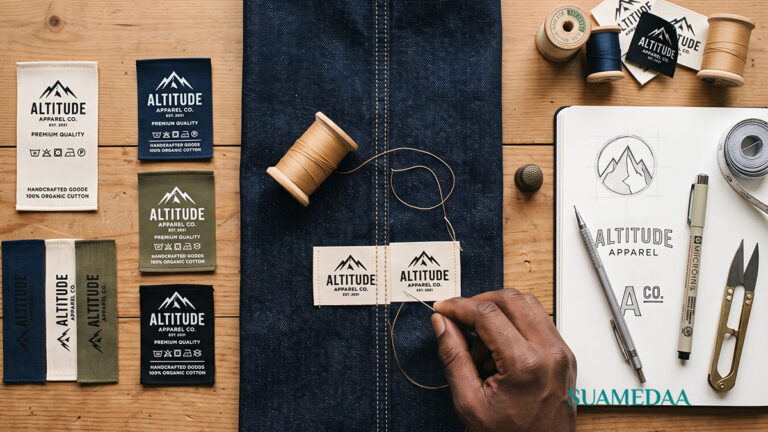
Applying the correct labeling to finished garments before sale is both a legal requirement and a brand communication opportunity. Care labels and fiber content labels are legally mandated in most markets and must be accurate. Brand labels, size labels, and hang tags communicate brand identity and position.
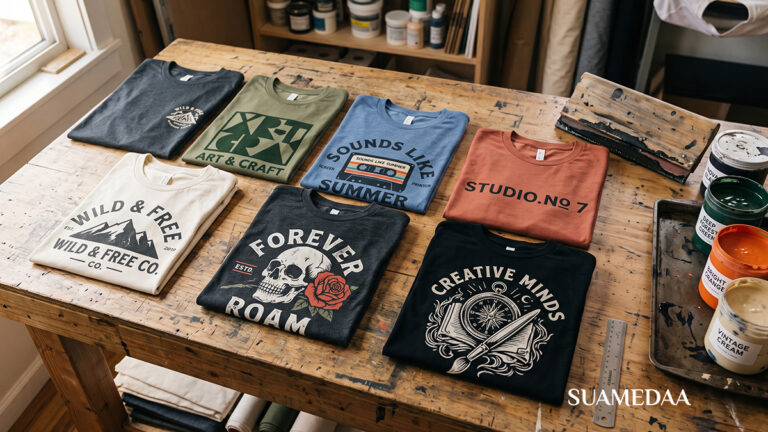
Packaging, from the tissue paper inside a folded garment to the bag or box it is sold or shipped in, is part of the customer experience and part of the brand. At every price point, packaging should be considered rather than incidental. For sustainable brands, packaging choices, such as recycled tissue, biodegradable mailers, and minimal plastic use, are an extension of the brand’s values and an important communication to conscious consumers.
Presentation: Lookbooks and Campaigns
Before the collection reaches customers, it needs to be presented visually: through a lookbook, a campaign, editorial photography, or a combination of these. The visual presentation translates the collection from garments on a rail into a world, an atmosphere, a story that communicates the collection’s identity to buyers, press, and consumers.
A strong lookbook requires: a casting of models appropriate to the brand’s identity and target customer, a location or set that reinforces the collection’s concept, a styling approach that presents the garments in the most compelling possible way, a photography direction that captures the collection’s light, mood, and movement, and a design and layout that presents the images with the graphic sensibility of the brand.
The lookbook is the primary sales tool for wholesale buyers and the primary content asset for digital marketing. Its quality is a direct representation of the collection’s value and the brand’s seriousness.
Selling the Collection
A collection can be sold through multiple channels: direct to consumer through the brand’s own website and retail space, wholesale through multi-brand retailers and boutiques, through digital wholesale platforms such as Joor or Faire, through trade shows and market weeks such as Pure London, Tranoi, Capsule, or Coterie, or through pop-up retail experiences.
Each channel has different margin implications, different relationship requirements, and different suitability depending on the brand’s stage of development and target market. Direct to consumer offers the highest margin but requires the brand to build and maintain its own customer acquisition and retention infrastructure. Wholesale offers access to established retail audiences but requires managing buyer relationships, wholesale pricing, minimum order quantities, and delivery schedules.
Understanding the economics of each channel and making deliberate decisions about which to prioritise at which stage of the brand’s development is one of the most important business decisions a fashion designer makes.
The Cycle Begins Again
The moment a collection enters production, the next one is already beginning. The research phase for the following season starts while the current collection is being sampled. The design phase overlaps with the production of the previous collection. At any given moment, a working fashion brand is simultaneously at multiple stages of multiple collections in various seasons.
This overlapping, cyclical rhythm is one of the most demanding aspects of working in fashion. It requires not just creative and technical skill but extraordinary organisational capacity, the ability to shift mental gear between the conceptual freedom of the research phase and the precise discipline of the fitting room and the production floor, sometimes within the same afternoon.
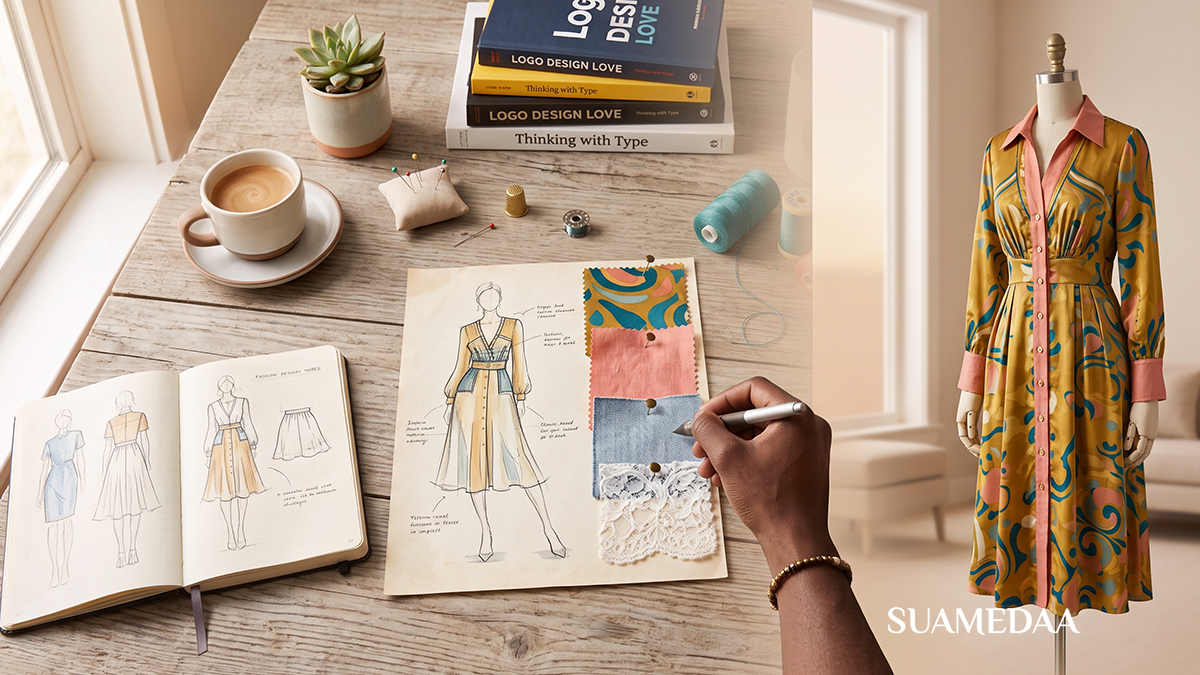
Understanding the complete process from sketch to stitch is not just an academic exercise. It is the foundation of competent, confident practice. Every stage connects to every other. Research informs fabric selection. Fabric selection shapes design possibility. Design shapes the pattern. The pattern shapes the toile. The toile refines the pattern. The refined pattern guides the sample. The sample informs the tech pack. The tech pack drives production. Production quality determines what the customer receives. And the customer’s response, their wear, their photographs, their word of mouth, their return visits to the brand, feeds back into the research that starts the next collection.
That is the complete circuit. From the first image pinned to a research board to the last stitch sewn in a production run, every decision connects. Understanding where each decision sits within that circuit, what it enables and what it depends on, is what it means to be a fashion designer who genuinely knows their craft.