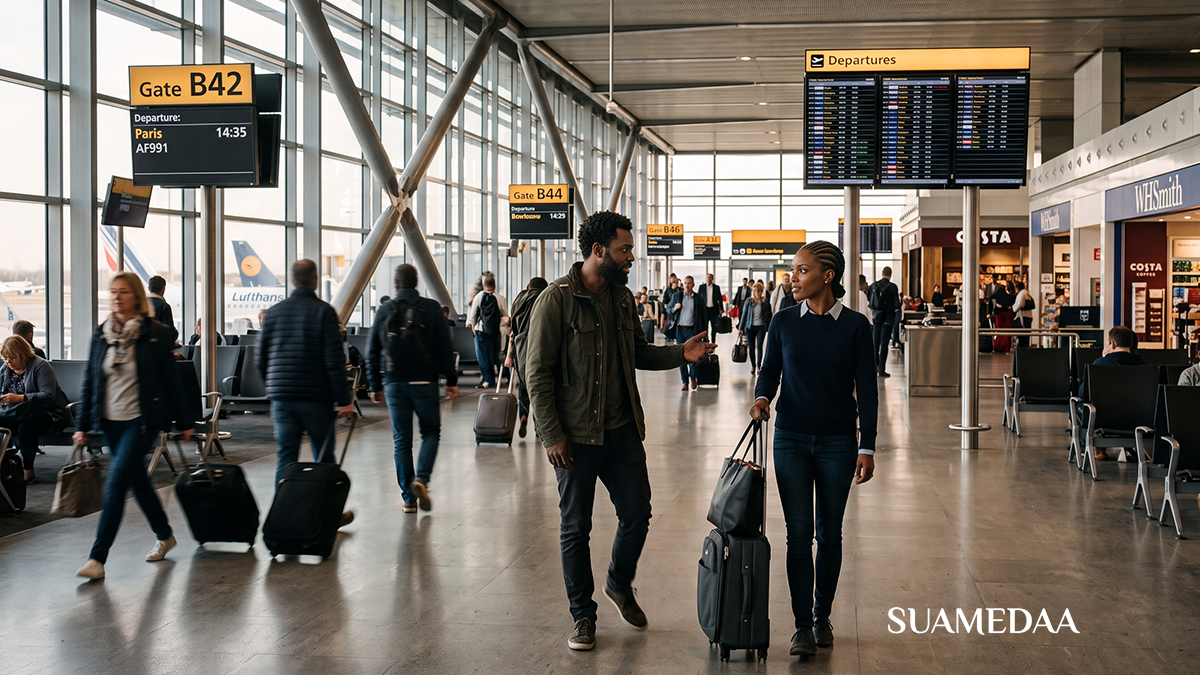
Requests by Strangers and Friendly Faces at the Airport – What You Should Do
Airports are strange social spaces. Thousands of people pass through them every day, many exhausted, many alone, many far from home and slightly disoriented by unfamiliar signage and languages. That mix of vulnerability and constant human traffic makes airports a place where strangers approach travelers more often than almost anywhere else in daily life, sometimes with entirely innocent intentions, and sometimes not. Learning to tell the difference, and knowing exactly how to respond in the moment, is one of the most underrated travel skills a person can develop.
Why Airports Attract This Kind of Interaction
Airports combine several conditions that make them fertile ground for both genuine kindness and deliberate exploitation. Travelers are often tired, jet-lagged, and cognitively a little slower than usual, which lowers normal defenses. People are frequently alone or separated from their usual support network of family and friends. There is a built-in reason for strangers to talk to each other, since asking for directions, help with luggage, or a moment of someone’s time doesn’t seem out of place the way it might on a quiet street. And crucially, once someone passes through security, there is a false sense of safety, since many travelers assume that anyone on the other side of the checkpoint has already been vetted in some way, which is not true. Security screening checks for weapons and prohibited items, not intentions.
The Most Common Requests You’ll Encounter
“Can you watch my bag for a moment?”

This is one of the most frequent requests at airports, often from someone who genuinely needs to use the restroom or grab food and doesn’t want to lose their spot in a line or seating area. On its face, it seems like basic human courtesy. The problem is twofold. First, most airports and airlines explicitly warn against watching unattended bags for strangers, since an item left with you and later found to contain something illegal or dangerous can implicate you, regardless of your innocence. Second, this exact request has historically been used as a low effort setup to leave contraband with an unwitting stranger who then carries it through security or onto a flight without knowing what they’re holding.
“Can you carry this through security or onto the plane for me? My bag is overweight” or “I’m not checked in yet.”
This is a more direct version of the same underlying risk, and it deserves the clearest possible answer: never agree to carry, hold, or check in a bag or package for someone you don’t know, under any circumstances, no matter how sympathetic the story. This applies even if the person seems well dressed, speaks your language fluently, claims to be traveling with children, or presents any other marker that might make you lower your guard. Every major aviation security agency in the world repeats a version of the same warning for exactly this reason.
“Can I borrow your phone to call my family, I lost mine” or “Can I borrow money, I’m stranded.”
These requests often come from people who appear distressed, sometimes convincingly so, describing a missed connection, a stolen wallet, or a family emergency. Some of these situations are genuinely real, and plenty of stranded travelers have been legitimately helped by kind strangers. However, this is also a well documented pattern used by con artists working airports specifically because a sympathetic, time pressured traveler is an easy target. If you want to help, the safer path is almost always to direct the person to airport staff, information desks, or airline representatives, who are equipped to verify a genuine emergency and provide real assistance, rather than handing over your own phone or cash directly.


“You dropped this” or a staged distraction involving spilled items, bumping into you, or a sudden commotion nearby.
This is a classic pickpocketing and distraction technique, not unique to airports but especially effective there because travelers are often juggling passports, boarding passes, phones, and luggage all at once. The goal is to get your attention diverted, even briefly, while a second person accesses your bag, pocket, or unattended belongings. If someone drops something near you, causes a scene, or aggressively insists you’ve dropped an item you don’t recognize, keep both hands on your valuables and stay alert to who else is nearby before engaging.
Unsolicited “help” with luggage carts, check-in kiosks, or currency exchange.
In many airports, particularly ones with heavy international arrivals, people posing as helpful porters, airport staff, or fellow travelers will offer unsolicited assistance with luggage trolleys, self-service kiosks, or exchanging currency, then demand payment afterward, sometimes an aggressive or inflated amount, or in currency exchange scams, simply shortchange you during the transaction itself. Legitimate airport staff typically wear clearly visible, official identification and uniforms specific to that airport or airline, and they do not solicit tips aggressively for unsolicited help.
Romantic or overly friendly strangers striking up conversation, especially with solo travelers.



Not every friendly conversation at an airport is a setup, and plenty of genuine connections, friendships, and even relationships have started with a simple chat at a gate. That said, a specific pattern worth knowing about involves someone, often unusually charming or attentive, engaging a solo traveler in extended conversation with the goal of building quick trust, sometimes leading toward requests for money, personal information, or an invitation to “help” the person with a bag or errand later in the interaction. If a conversation with a stranger starts moving quickly toward any request involving your belongings, money, documents, or travel plans, that shift itself is worth noticing.
Why the “Just Being Nice” Instinct Can Work Against You
Most people are raised to be polite, especially to someone who seems friendly, upset, or in need. Scammers and, in rarer but more serious cases, traffickers and smugglers, count on exactly that instinct. The discomfort of saying no to a stranger who seems nice or distressed is real, but it is a much smaller cost than the potential consequences of agreeing to hold a bag that turns out to contain something illegal, or of being separated from your own belongings during a staged distraction. It helps to mentally reframe firm boundaries with strangers not as rudeness, but as a completely normal and expected part of modern travel, one that experienced travelers and airport security professionals alike consider basic common sense rather than paranoia.
What You Should Actually Do
Never accept a bag, package, or item from someone you don’t know, for any reason, at any point in the airport.
This includes before security, at the gate, and even from someone who claims to be a fellow passenger on your same flight. If someone becomes insistent or tries to guilt you into it, politely but firmly decline and, if they persist, alert nearby airport security or airline staff.
Never watch a stranger’s unattended bag.
If someone asks, the appropriate and safe response is to suggest they take their bag with them or ask airport staff to watch it, rather than agreeing yourself. If you notice a genuinely unattended bag with no owner nearby, the correct action is to report it to security or staff immediately rather than touching it yourself.
Route requests for help toward official channels rather than handling them personally.
If a stranger says they need a phone, money, or urgent help, the safest response is to walk with them to an airline counter, information desk, or airport security point, rather than providing direct assistance yourself. This protects you from scams while still ensuring a genuinely stranded traveler gets real help.
Keep your hands on your valuables during any commotion, bump, or distraction.
If something unexpected happens near you, a spill, a dropped item, a loud argument, a sudden crowd, your first instinct should be to secure your passport, wallet, and phone, not to fully turn your attention toward the disturbance.
Verify identification before accepting help from anyone claiming to be airport or airline staff.
Legitimate staff have visible, official badges specific to that facility. If someone in plain clothes or a generic uniform offers unsolicited help and then asks for payment, you are almost certainly dealing with an unofficial and often predatory arrangement.
Trust a shift in conversation more than the conversation itself.
A friendly stranger is not inherently a threat, but if a conversation moves quickly toward requests involving money, documents, or your luggage, slow down and treat that specific request with real scrutiny, regardless of how the conversation started.
When in doubt, involve a uniformed officer or airport information desk.
Airports are among the most heavily staffed and monitored public spaces that exist, and involving official personnel costs you almost nothing while providing a real check on any situation that feels off. You are never overreacting by asking staff to verify a stranger’s claim or situation.
If someone is aggressive, follows you, or won’t accept a polite decline, escalate immediately.
Head toward a staffed desk, a police or security presence, or a crowded, well lit area, and inform staff directly that someone is not respecting a boundary you’ve set.
A Note on Trafficking and Smuggling Risks Specifically
Beyond scams aimed at your money or belongings, airports are unfortunately also a point of contact for more serious criminal activity, including drug smuggling and human trafficking. Unwitting couriers, people who agree to carry a bag, deliver a package, or “help” someone in exchange for a small favor or payment without knowing the actual contents or purpose, have ended up facing serious criminal charges in countries around the world, sometimes for offenses carrying years of imprisonment, entirely because they didn’t realize what they were actually agreeing to carry. This is precisely why the advice to never handle unknown items for strangers is treated as an absolute rule by security professionals rather than a situational judgment call. No story, however sympathetic, justifies the risk.
The Balance Between Caution and Basic Kindness
None of this means treating every stranger at an airport with suspicion or refusing all human connection while traveling. Genuine kindness, offering directions, a smile, a translated phrase, or simple conversation, remains one of the better parts of travel, and most people you encounter in an airport have no ill intent whatsoever. The distinction that matters is between kindness that costs you nothing tangible, like a conversation or a pointing finger toward a gate, and requests that involve your belongings, your body, your money, or your direct physical assistance with someone else’s possessions. The first category is safe to extend freely. The second deserves a polite, firm no, redirected toward official staff, every single time.
Airports will always be places where strangers cross paths briefly and sometimes ask each other for help, and the vast majority of those interactions are exactly what they appear to be. But the specific mix of fatigue, urgency, and constant foot traffic that defines airport life also makes them an environment where a small number of bad actors reliably operate, counting on ordinary politeness to lower a traveler’s guard. Knowing the handful of requests that should always be declined, and having official staff and security as your default answer for anything uncertain, turns a moment of potential vulnerability into something you can navigate calmly and confidently, without becoming either an easy target or an unwitting participant in someone else’s scheme.