Train Travel in Africa – Where the Rails Still Take You
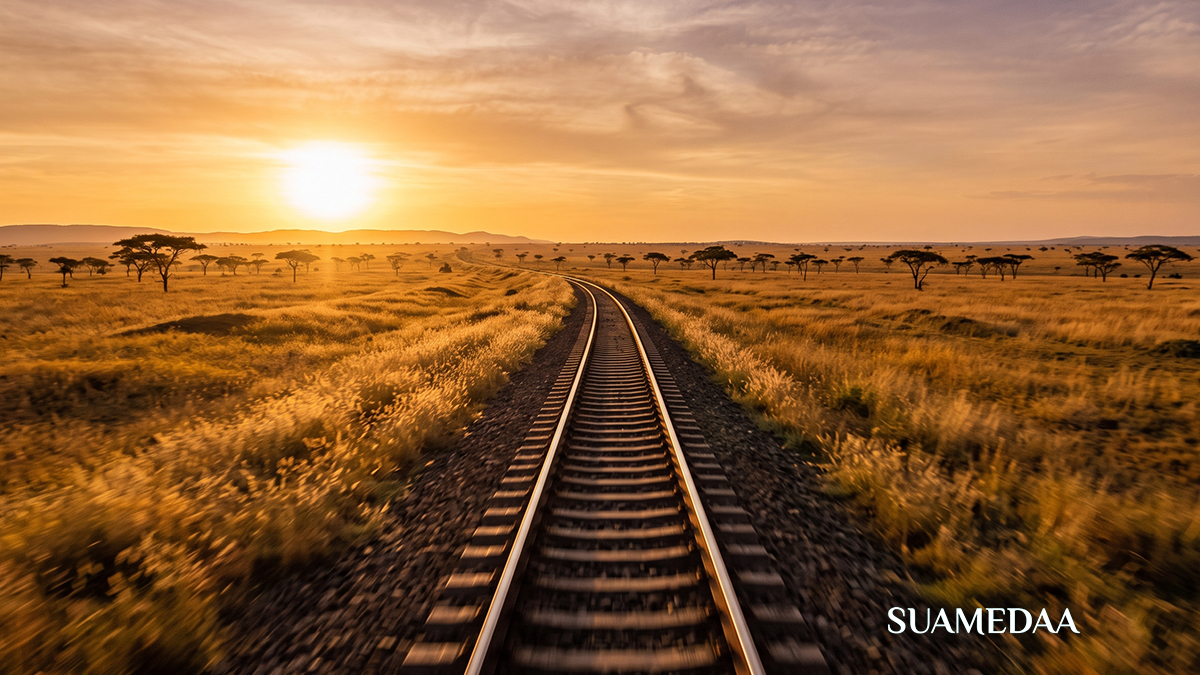
There is a particular quality to watching Africa pass from a train window that no other form of travel replicates. The aircraft delivers you above it, the bus rushes you through it, and the hire car places you inside it but always at a remove, separated by glass and the obligations of navigation. A train gives you something different: a moving seat in the landscape, time to think, time to look, time to let the continent unspool at a pace that allows comprehension.
Rail travel in Africa is not a simple story. Parts of it are thrilling, modern, and growing quickly. Parts of it are historical, slow, and magnificent in a way that more efficient transport can never be. Parts of it are suspended, deteriorating, or fighting for survival against decades of underinvestment. The continent’s railways are, in this sense, a mirror of Africa itself: vast, varied, uneven, and impossible to generalise.
What follows is an account of where the rails still take you, from the high-speed line cutting through Morocco’s imperial cities to the overnight sleeper grinding toward a lake on the western edge of Tanzania, and everything in between.


Morocco: Africa’s Fastest Train
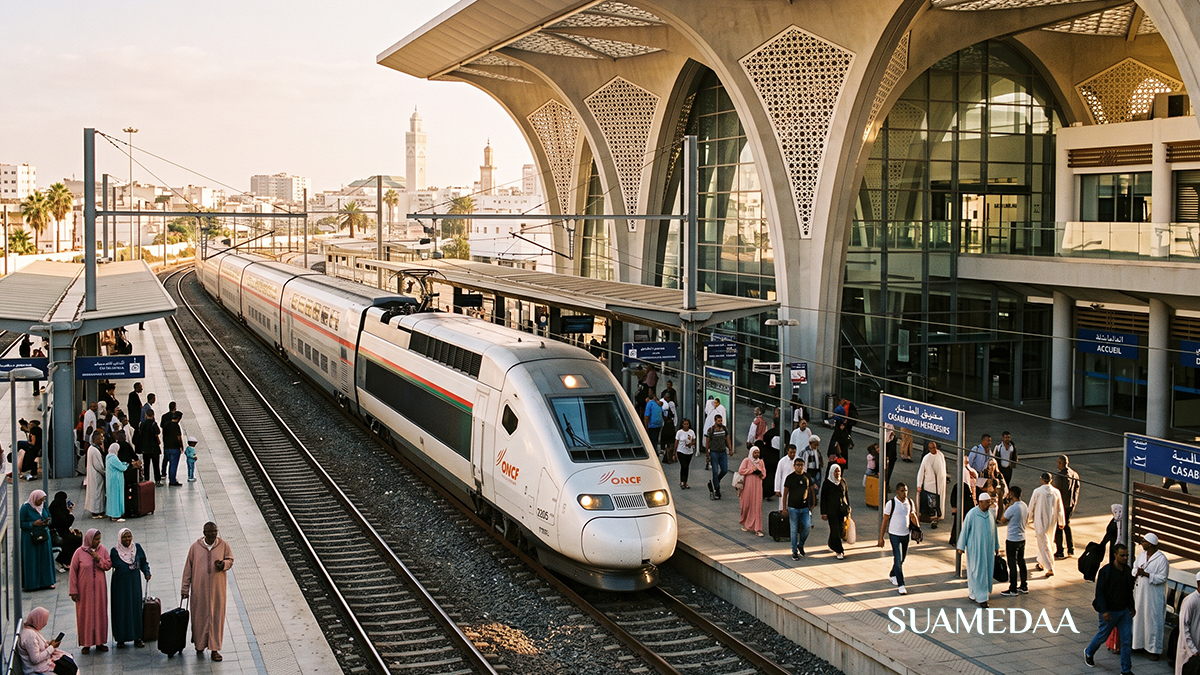
The starting point for any discussion of African rail travel has to be Morocco, because Morocco operates the fastest train on the continent, and one of the fastest in the world.
The Al Boraq, which entered service in November 2018, runs on a purpose-built high-speed line between Tangier and Casablanca, calling at Kenitra and Rabat. The trains are double-deck TGV-derived Alstom units, physically identical to the equipment running on France’s high-speed network, and they reach a top operating speed of 300 kilometres per hour. Tangier to Casablanca in two hours and ten minutes. Tangier to Rabat in one hour and twenty minutes. For a journey that previously took four hours by the best available rail service, the compression is significant.
The Al Boraq operates at roughly hourly frequency throughout the day in both directions, making it a practical everyday transport option and not just a showpiece. Fares are competitive by any measure: second class on the high-speed service from Tangier to Casablanca costs between 99 and 224 dirhams depending on how far in advance you book, which is roughly ten to twenty euros. First class adds a modest premium for wider seats and additional space.
Beyond the high-speed corridor, Morocco’s national rail operator ONCF runs a well-maintained conventional network that reaches the country’s major cities and historic sites. The Fes to Marrakech journey, taken on a connecting service through Rabat and Casablanca, allows a single rail journey that passes through four of Morocco’s five imperial cities. Trains are air-conditioned, punctual by the standards of the region, and staffed with refreshment services on longer routes.
For travellers unwilling to fly between Morocco’s cities, the night train between Tangier and Marrakech is one of the practical pleasures of the network. Departing late at night, it arrives in Marrakech early the following morning, offering four-berth couchettes that allow sleep while the country scrolls past in darkness. A second-class couchette costs around 375 dirhams, considerably less than a hotel night in either city.


Morocco’s network is also the northern gateway to a rail journey that has, for decades, excited the imagination of travellers: the theoretical possibility of taking a train from the Mediterranean coast all the way south into sub-Saharan Africa. It remains theoretical. The railway never crosses the Sahara. But from the northern coast of Morocco, what exists of African rail travel begins.
Kenya: The New Standard
When the Madaraka Express opened in June 2017 on Kenya’s new standard gauge railway, it did something that rail travel in East Africa had not achieved in living memory: it ran on time, it was clean, it was air-conditioned, and it was fast.
The Nairobi to Mombasa journey on the Madaraka Express takes approximately four hours and thirty minutes in the passenger service, covering 609 kilometres at speeds of up to 120 kilometres per hour. On the old metre-gauge line that it replaced, the same journey took between twelve and sixteen hours and often considerably longer. The transformation is one of the more striking infrastructure upgrades in the region in recent decades.
The railway was built by Chinese state contractor China Road and Bridge Corporation and financed primarily by the Export-Import Bank of China, with the Kenyan government repaying the loan over the course of decades. This financing model has attracted controversy and scrutiny, with economists and commentators debating the terms and the long-term debt obligations it creates. The train, however, runs.
Two service classes are available on the Madaraka Express. Economy class offers air-conditioned coaches with assigned seating. First class provides wider, more comfortable seats, enhanced service, and a marginally quieter environment. Fares are accessible: economy class from Nairobi to Mombasa runs at approximately 1,000 Kenyan shillings, which is less than eight US dollars at current exchange rates. First class costs roughly three times that amount. Kenya Railways added additional services through 2025 to meet growing demand during peak travel periods.


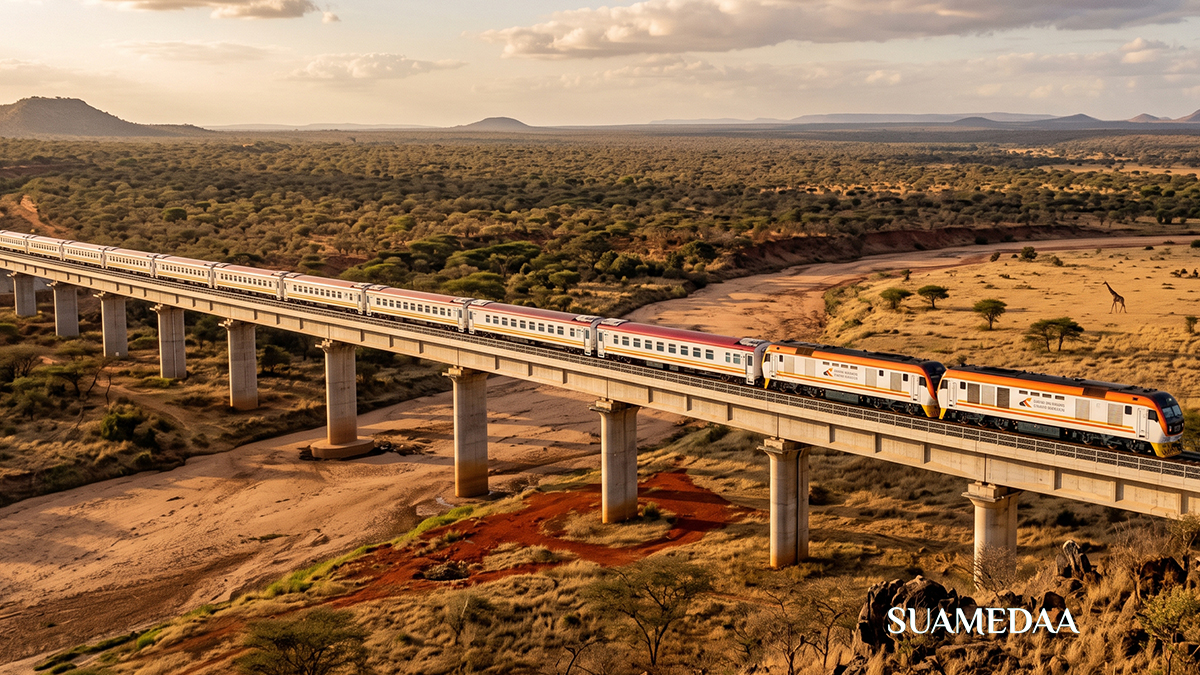
The journey itself passes through terrain of considerable beauty. Leaving Nairobi, the train crosses the eastern edge of the Rift Valley before descending through savannah into the coastal hinterland of Mombasa. The Tsavo ecosystem, one of Kenya’s great wildlife areas, flanks the route for much of its central section, and elephant and giraffe are regularly sighted from the train windows.
The railway also runs a second passenger service from Nairobi to Naivasha, the 120-kilometre section opened in October 2019, which connects the capital to the southern Rift Valley lake region. Extended passenger services to Kisumu on Lake Victoria and eventually to Uganda’s border at Malaba are planned as the network grows.
Tanzania: Two Distinct Railway Worlds
Tanzania presents rail travel in two very different registers: the historic metre-gauge Central Line that has been running since the German colonial period, and the new standard gauge railway that is being constructed in stages and has already opened its first passenger section.
The Central Line: Forty Hours to Lake Tanganyika
The Central Line runs 1,254 kilometres from Dar es Salaam on the Indian Ocean coast to Kigoma on the shores of Lake Tanganyika, passing through Dodoma, Tanzania’s capital, and the rail junction town of Tabora. A branch line diverges at Tabora to reach Mwanza on Lake Victoria, another 378 kilometres to the north. These are among the most consequential rail routes in Africa historically, and they remain among the most evocative to travel today.
The journey from Dar es Salaam to Kigoma takes approximately 40 hours according to the published timetable, and somewhat longer in practice. This is not a complaint but a description: the Central Line is a slow train through one of Africa’s great landscapes, and the forty hours serve a purpose that no faster alternative would serve as well. The miombo woodland that covers most of central Tanzania, vast and relatively undisturbed, is rarely accessible by road. The train is one of the few ways to move through it at human scale, stopping at small stations where passengers board with baskets and bags, where local traders walk the platform selling food through open windows, where the station buildings carry the particular architecture of colonial East Africa.
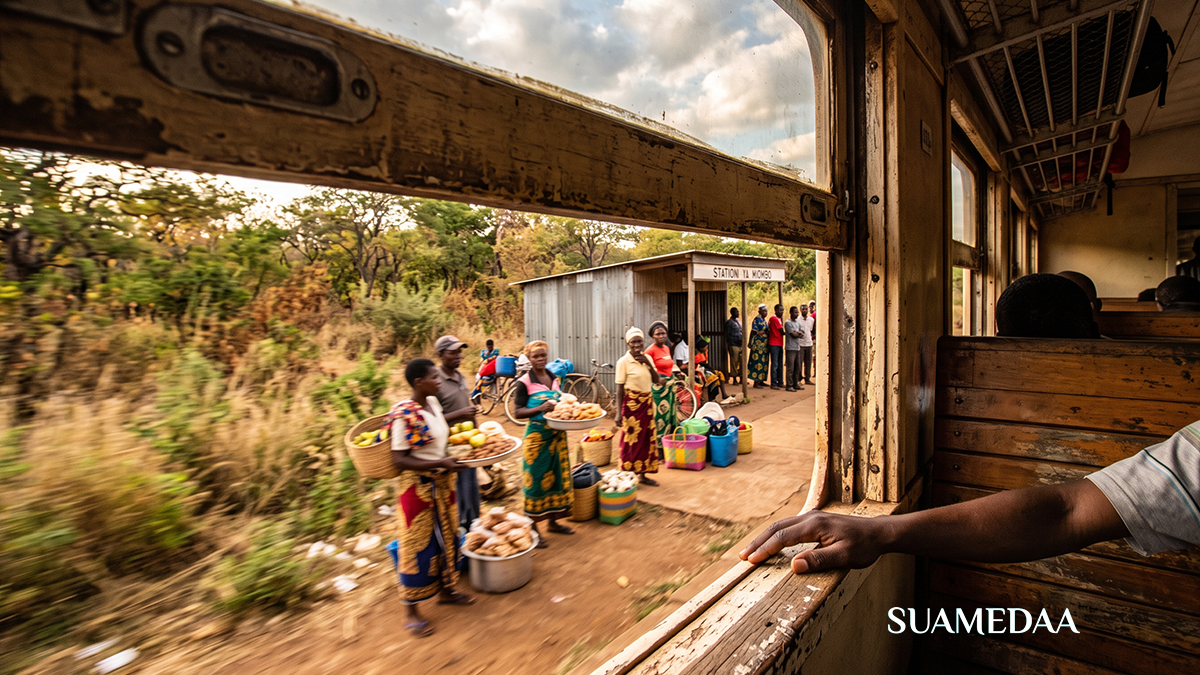
Three classes of travel are available. First class offers sleeping car compartments. Second class includes couchette berths. Third class provides bench seating in open coaches. The train carries freight as well as passengers, and it serves a practical transport function for communities along the route that depend on the railway for access to markets and services.
Tanzania Railways Corporation also launched the first passenger service on the new standard gauge railway in 2024, connecting Dar es Salaam and Dodoma. This modern service is a harbinger of what the full network will eventually become, though the transition from the colonial-era infrastructure to the new line is gradual and the full ambitions of the SGR project remain years from completion.
The TAZARA Line: China’s Cold War Railway
The TAZARA, the Tanzania Zambia Railway, occupies a specific and extraordinary place in African history. Constructed between 1970 and 1975 with Chinese financing and built by Chinese workers in numbers that peaked at around 50,000 on the ground simultaneously, it was one of the largest infrastructure projects ever undertaken on the continent, and one of the most politically freighted.
The project emerged from the Cold War politics of southern Africa. Zambia, landlocked and heavily dependent on copper exports for revenue, had its existing rail links running through Rhodesia and South Africa, both then under white minority government. When Zambia needed an alternative route to the sea, China offered to finance and build the line. The deal was as much about geopolitics as transport: China demonstrating its commitment to African liberation movements, Zambia and Tanzania asserting independence from the mineral economies of the south.
The completed line stretches 1,860 kilometres from Dar es Salaam to Kapiri Mposhi in Zambia’s central province, making it one of the longest railways ever built in a single construction phase anywhere in the world. It crosses terrain that colonial-era engineers had declared unviable: mountain ranges, seasonal rivers, the great escarpment between the Tanzanian plateau and the Zambian copperbelt.
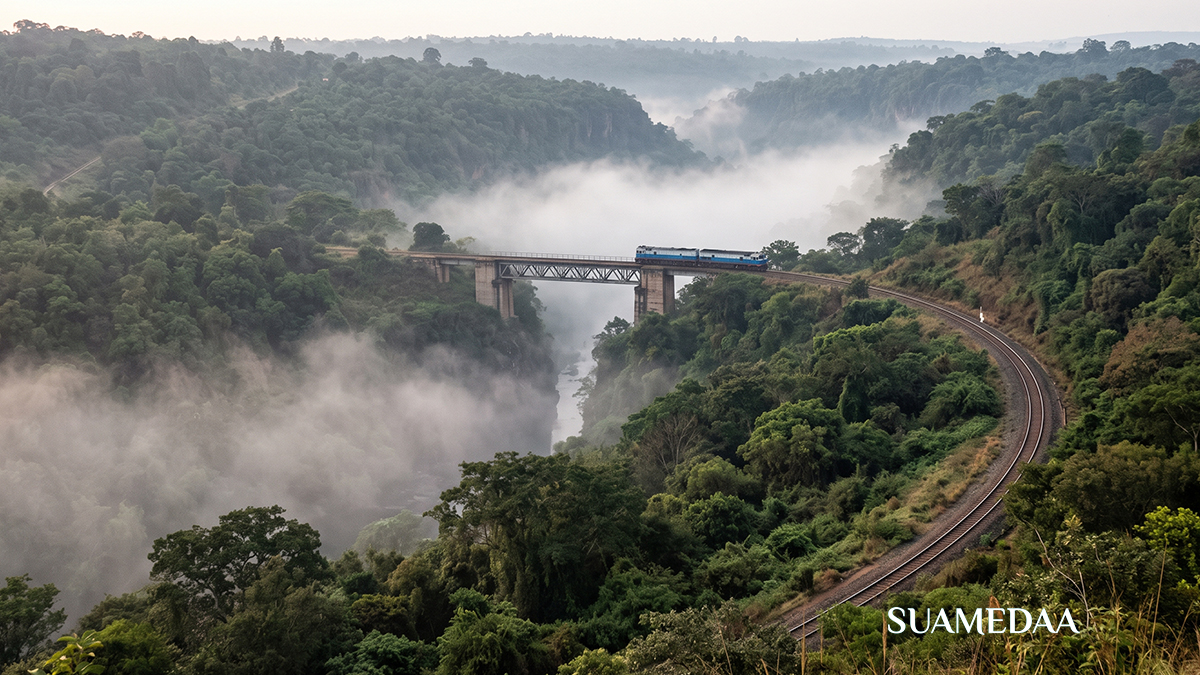
The TAZARA is now in a difficult state. Freight traffic bottomed out at less than 2 percent of design capacity during the worst years of the 2010s. Services have been periodically suspended when maintenance budgets ran out. As of early 2026, the railway has resumed weekly passenger service in each direction between Dar es Salaam and Kapiri Mposhi, operating one train per week after an 18-week suspension. A $1.4 billion modernisation agreement signed in September 2025 between the TAZARA authority and China’s CCECC aims to upgrade track infrastructure and acquire new rolling stock through a public-private partnership, offering the most concrete prospect of sustained recovery in decades.
To ride the TAZARA today is to travel through living history. The journey is slow, the infrastructure is showing its age, and the comforts are basic. But the route passes through landscapes of great beauty, through territory that was impenetrable to most travellers before the railway was cut through it, and through a social ecosystem of communities that have organised their lives around a line that geopolitics built.
Ethiopia and Djibouti: The Railway That China Made
The Addis Ababa to Djibouti railway, completed in 2018, is in some ways the successor to the TAZARA model and in others its opposite. Where the TAZARA was built over five years in exceptionally challenging terrain by tens of thousands of workers, the Addis Ababa to Djibouti line was constructed quickly, using modern engineering, and designed for speeds up to 120 kilometres per hour for passengers and 80 kilometres per hour for freight.
The line runs 759 kilometres in total, with 666 kilometres in Ethiopia and 93 kilometres in Djibouti. It connects landlocked Ethiopia, which relies on Djibouti for more than 95 percent of its international trade, to the port facilities at Doraleh. Electrified at 25 kilovolts and equipped with 21 stations, it has 15 stations open for passengers and passes over 68 viaducts and bridges built to accommodate the complex topography of the Ethiopian highlands and the Afar Depression.
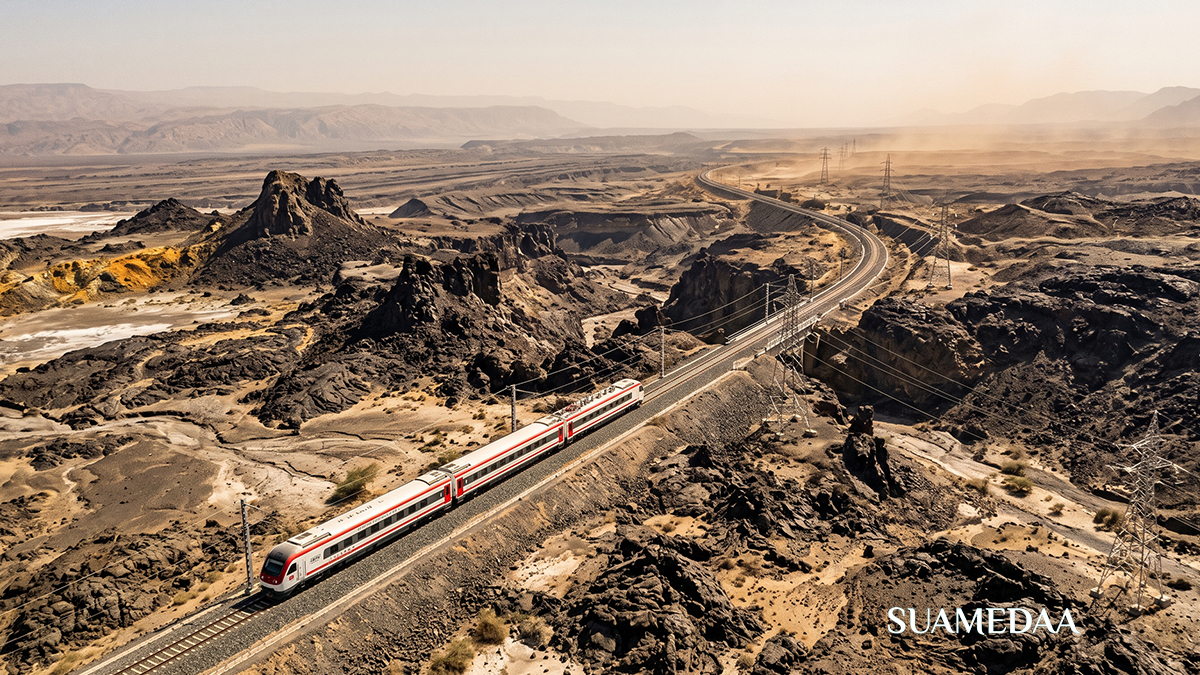
The railway reduces cargo transit times from three days by road to twelve hours by train. For Ethiopia’s trade, this compression is economically significant. Passenger services also operate, though ridership and freight volumes have lagged considerably below the line’s designed capacity since opening. Local management took over from Chinese operators in 2024, and the ongoing work of building operational capability within the local rail authority is one of the central challenges the line faces.
The physical journey from Addis Ababa to Djibouti City is one of the more dramatic available anywhere on the African rail network: the railway descends from the Ethiopian highlands, some of the coolest and most fertile terrain on the continent, down through the volcanic landscapes of the Afar region, across one of the hottest and most geologically active surfaces on earth, before arriving at the Red Sea coast. The temperature differential between departure and arrival can exceed 30 degrees Celsius.
Nigeria: The Lagos to Ibadan Corridor
Nigeria’s contribution to the new generation of African rail infrastructure is the Lagos to Ibadan standard gauge corridor, a $1.6 billion project that opened for passenger services in 2020 and connects two of the most populous cities in West Africa.
Lagos, the commercial capital of Nigeria and one of the largest cities in the world by population, and Ibadan, the sprawling Yoruba capital of Oyo State, are separated by approximately 127 kilometres. On the road, this journey has historically taken between two and four hours depending on traffic, which on the Lagos-Ibadan expressway can extend considerably beyond that estimate. The train covers the distance in around two and a half hours in a fully air-conditioned, assigned-seating environment that represents a genuinely different quality of travel from the road.
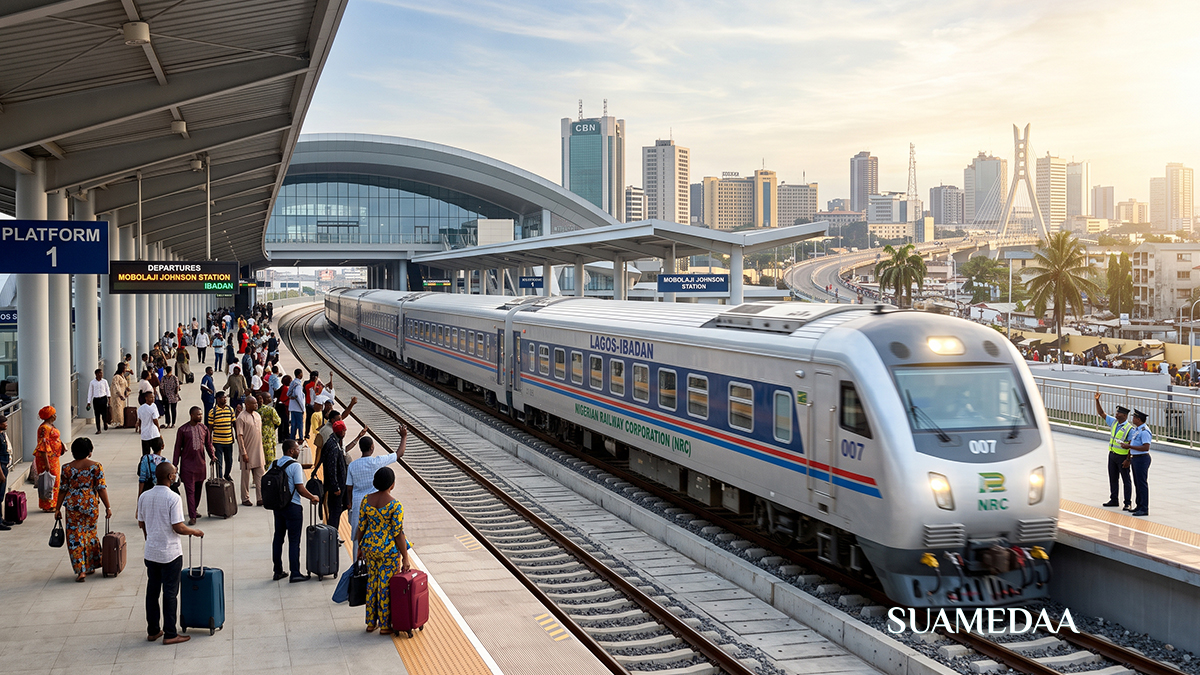
The service operates in economy and first class, with economy fares accessible to a broad cross-section of Nigerian travellers. Stations at both ends, including the Lagos Mobolaji Johnson Station, were constructed as modern transport hubs designed to anchor future network expansion. The ambitions of Nigeria’s railway development plans extend far beyond this initial corridor: a network of standard gauge lines linking Lagos, Abuja, Port Harcourt, Kano, and other major cities has been in various stages of planning, financing negotiation, and construction for years.
The Lagos-Ibadan line also carries freight, and the combination of passenger and freight operations on new standard gauge infrastructure represents a template for what Nigerian rail advocates hope will become a genuinely national network.
Zimbabwe: Riding British Steel to the Falls
Zimbabwe’s National Railways occupies a very different position in the African rail story. The infrastructure it operates was largely built during the colonial and Rhodesian periods, with rolling stock that dates in significant cases to the 1950s. British-built coaches, now many decades old, carry passengers on routes through terrain that the original railway builders had to work hard to reach.
The most celebrated passenger service in Zimbabwe is the overnight train between Bulawayo and Victoria Falls. The journey covers approximately 440 kilometres of western Zimbabwe, running through Hwange, home to one of the largest elephant populations in southern Africa, and arriving at the falls town. National Railways of Zimbabwe reintroduced this service in October 2025 on a twice-weekly schedule, operating alongside a newly restored Harare to Mutare service.
The experience is not luxurious by any modern standard. First class provides two-berth sleeper compartments with bedding available for a small supplement. Economy class offers seats in open coaches. There is no catering available on the train. Delays are common: the infrastructure is ageing, and the published timetable is more aspirational than contractual on some sections. The overnight train from Bulawayo is scheduled to arrive at Victoria Falls in the morning but has been known to arrive in the early afternoon.
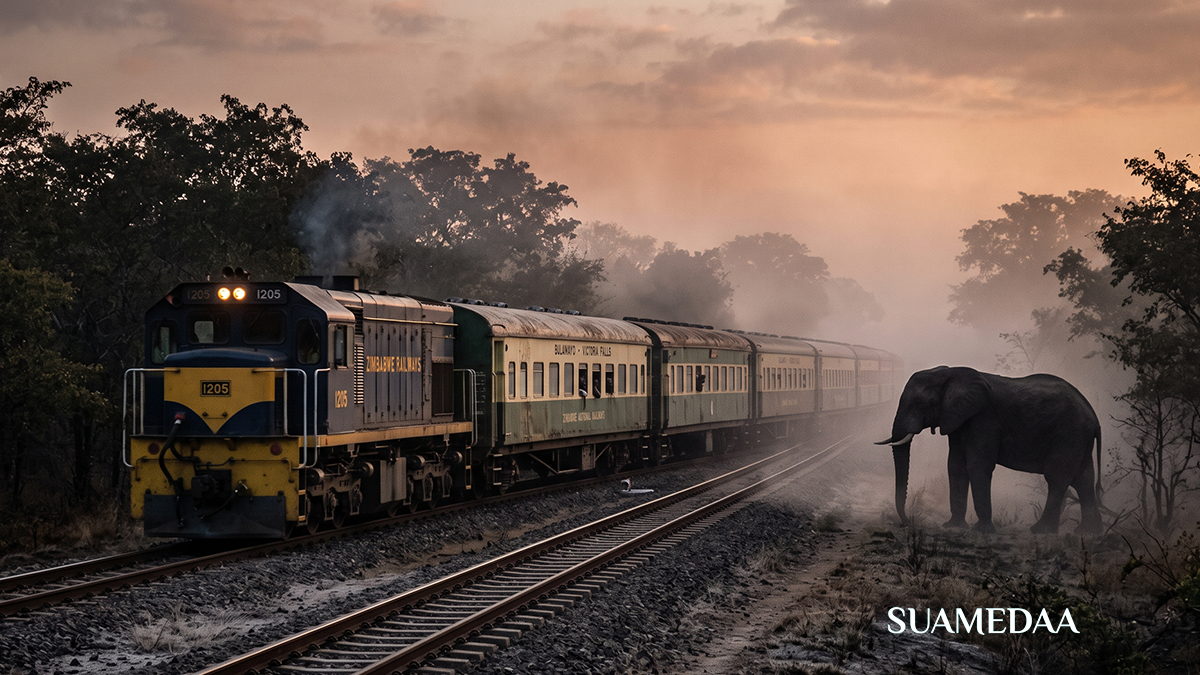
What the journey offers in exchange is significant. Hwange District passes outside the window in the hours before dawn. Elephant and buffalo are visible from the train in this section, moving in the early morning light through mopane woodland that covers enormous swaths of the landscape. The fare for a first class sleeper berth is eighteen US dollars. The experience, for a traveller with time and patience, is not easily replicated.
For rail history enthusiasts, the Bulawayo Railway Museum preserves an extraordinary collection of steam locomotives and rolling stock, including Garratt articulated steam engines that once hauled freight through this same terrain, and offers a perspective on what the railway system once was at its height.
South Africa: Luxury on Rails and a Struggling Mainstream
South Africa presents the most complex and contradictory picture of any country on the continent when it comes to rail. It hosts two of the finest luxury trains in the world. Its mainstream long-distance passenger network has largely collapsed.
The Blue Train
The Blue Train is, by design and by reputation, one of the definitive expressions of luxury rail travel anywhere on earth. It operates between Cape Town and Pretoria on a roughly 1,600-kilometre journey that unfolds over two days, and it does so with a commitment to elegance that has made it a bucket-list item for serious train travellers globally.
The train carries a maximum of 80 passengers in two suite categories. De Luxe suites measure approximately ten square metres and include a double or twin bed and a shower. Luxury suites extend to around thirteen square metres and offer a full bathtub alongside the shower, additional space, and a marginally wider window. Both categories include butler service throughout the journey, climate control, and en-suite bathrooms finished in marble. Public spaces on the train include a lounge car and an observation car, both panelled in warm wood with large windows.
Dining on the Blue Train is a considered affair. Menus are built around South African ingredients and seasonal produce, served in formal multi-course settings for dinner and more relaxed formats for breakfast and lunch. South African wines, carefully selected to complement the menus, are included in the fare along with all meals and most beverages. The formality of the dining car, with its white linen and silver service, is part of what the Blue Train sells: a version of train travel as it existed in the era of the great transcontinental railways, preserved and maintained in working form.
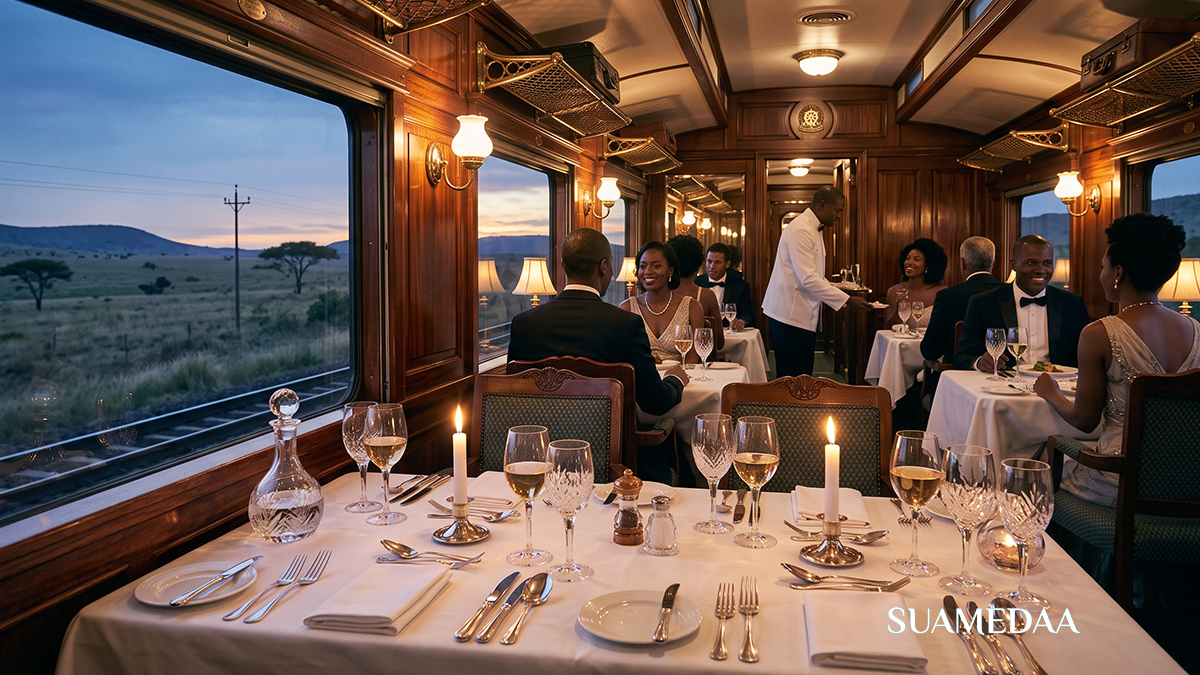
The 2026 pricing for the Blue Train reflects what this experience costs to provide and to experience: Luxury Suites run from approximately ZAR 51,905 to ZAR 63,420 per person for the two-night journey, depending on season. De Luxe Suites start at around ZAR 40,865. At current exchange rates, this places the Blue Train firmly in the upper tier of international luxury travel. The train was suspended during the pandemic and resumed operations in 2022; it remains one of the genuinely active luxury rail experiences in Africa.
Rovos Rail: Slower, More Ambitious
If the Blue Train represents luxury rail in its most refined point-to-point form, Rovos Rail represents a different and arguably more romantic proposition: extended rail journeys through southern and eastern Africa aboard lovingly restored antique rolling stock, in trains that carry a maximum of 72 passengers and explicitly position themselves as the most luxurious rail experience in the world.
The Rovos Rail trains run on diesel and electric traction but pull restored vintage coaches whose interiors have been refitted to an extraordinary standard of wood panelling, brass fittings, and period furniture while containing bathrooms and climate control that meet contemporary comfort expectations. The journey experience emphasises slowness as a virtue: Rovos itineraries run from 48 hours to fifteen nights, and the longer journeys are among the most ambitious rail travel available anywhere.
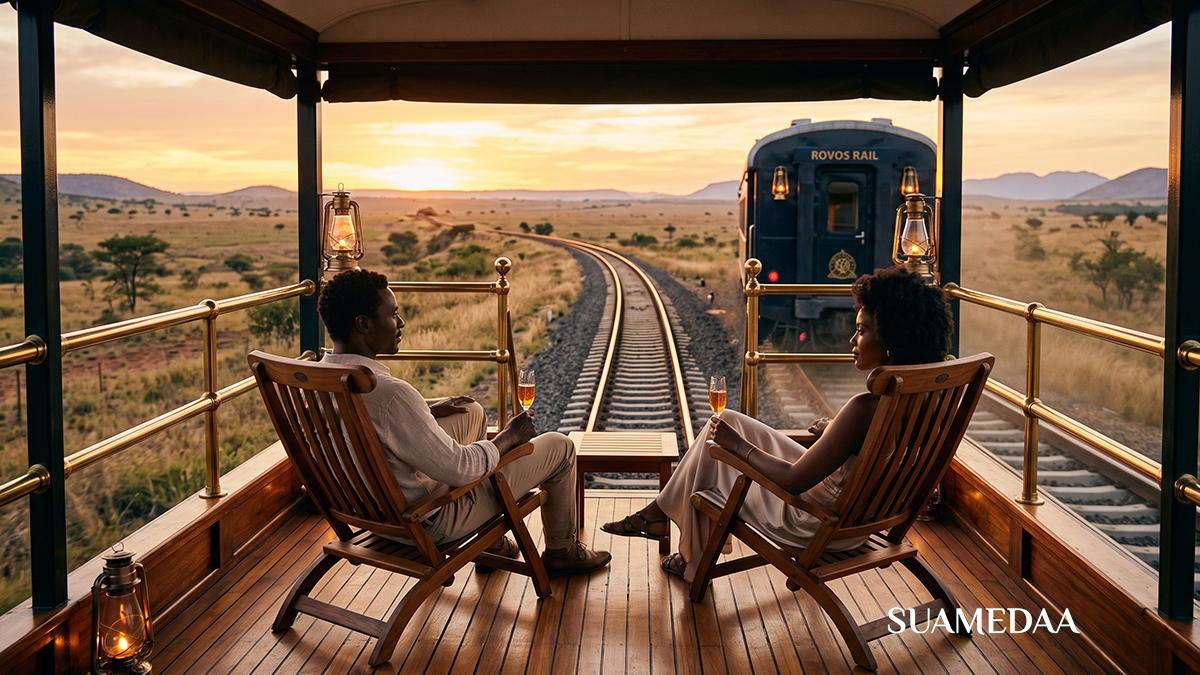
Routes operated by Rovos include the signature Cape Town to Dar es Salaam journey, which covers the full length of eastern and southern Africa by rail. The train travels through South Africa, Zimbabwe, Zambia, and Tanzania on a multi-night journey that constitutes one of the great overland travel experiences on the planet. Other routes reach Kruger National Park, Victoria Falls, Swakopmund on the Namibian coast, and various combinations of these destinations. Rovos also operates periodic specials including a Cairo to Cape Town journey on sections that the physical network actually permits, acknowledging honestly that the full north-to-south railway dream remains a dream.
The Mainstream Gap
Away from these luxury experiences, the picture for South Africa’s ordinary rail traveller is significantly less encouraging. The Shosholoza Meyl long-distance train service, which once connected Cape Town and Johannesburg, Johannesburg and Durban, and other major routes in 26-hour overnight journeys with sleeper compartments and restaurant cars, has been suspended since 2024. The network suffered devastating vandalism, cable theft, and infrastructure deterioration during and after the pandemic period, and the funding and political will required to restore it have not materialised in any sustained way.
The Gautrain, Johannesburg’s modern electric rapid rail system linking the city centre, Sandton, Pretoria, and OR Tambo International Airport, operates as a bright exception: a clean, fast, and reliable urban rail service that demonstrates what is possible when infrastructure investment and maintenance are sustained. For travellers navigating Johannesburg and Pretoria, the Gautrain is the practical and safe way to move between these points without road traffic.
The View from the Rails
The railways of Africa are a study in contrast and possibility. The Al Boraq streaks between Tangier and Casablanca in two hours with French engineering and reliable punctuality. The TAZARA grinds toward Kapiri Mposhi once a week, carrying the weight of its Cold War history and the hope of its 2025 modernisation agreement. The Madaraka Express delivers Kenyan commuters and tourists between Nairobi and Mombasa in the time it takes to watch two films. The overnight Bulawayo to Victoria Falls train arrives when it arrives, with elephants visible in the dark outside Hwange.
None of these experiences is better or worse than the others in any absolute sense. They are different things, answering different needs and offering different kinds of value to the travellers who choose them. What they share is the quality that rail travel carries in all its forms: the particular relationship with a landscape that only the train provides, the rhythm of the journey itself as an experience worth having, and the view from the window as the continent passes.
Africa’s railways were built for many reasons: colonial extraction, Cold War politics, national development ambitions, and the timeless logic that moving people and goods efficiently between places is the foundation of economic life. That foundation remains, however unevenly maintained. And the trains that still run on it carry something that transcends their timetables and their fares: the irreducible experience of the journey itself.