The Cedi Gets a New Face -All about Ghana’s Heritage Series Banknotes
On the 12th of November 2026, President John Dramani Mahama stood before assembled guests at the Bank of Ghana’s head office in Accra and unveiled something Ghana’s currency had not seen in over two decades: a complete redesign of its banknotes. The Ghana Cedi Heritage Series, as the new collection has been named, will enter circulation on the 1st of December 2026, and when it does, the money in Ghanaian wallets and tills and market bags will begin to look quite different from anything that has come before.
The launch was not simply a printing exercise. What the Bank of Ghana introduced that day was a decision about identity: about whose faces belong on the currency of a modern African republic, about what values a nation chooses to signal through the most widely handled piece of its material culture, and about how the state equips itself to protect that culture against the growing sophistication of forgery. Understanding what has changed, why it was changed, and what it means in practical terms for the ordinary Ghanaian is worth taking the time to do properly.
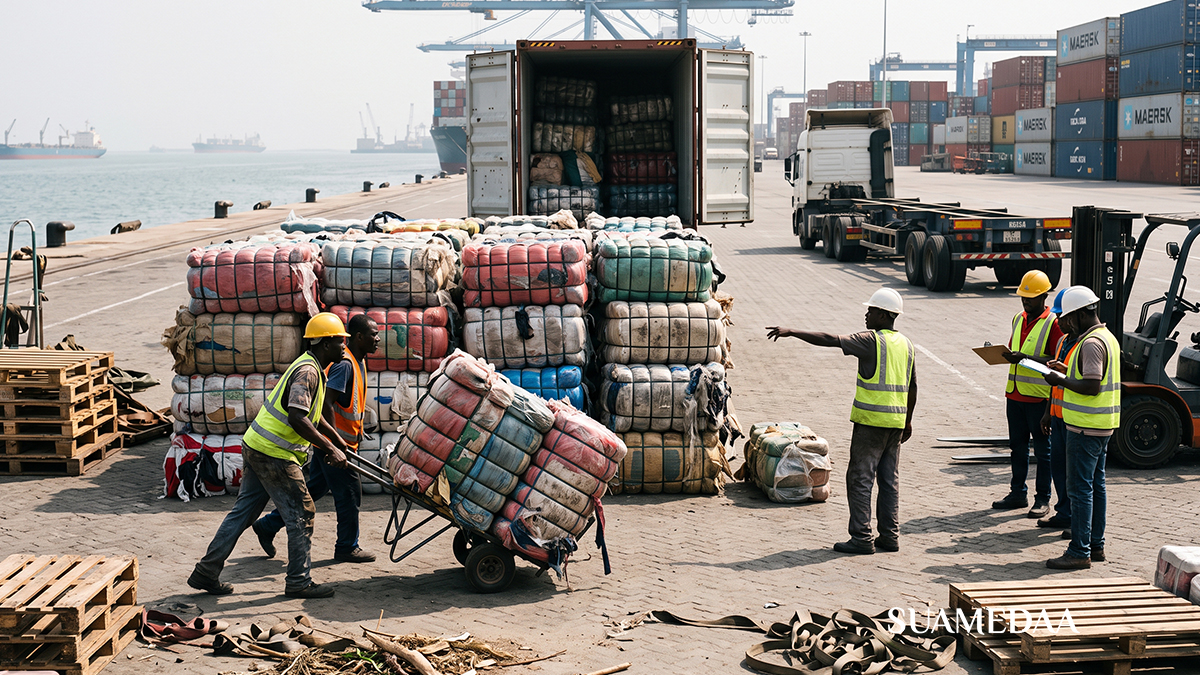
The money in Ghanaian wallets and tills and market bags will soon look quite different from anything that has come before.
Currency
The Existing Notes and Why They Needed Updating
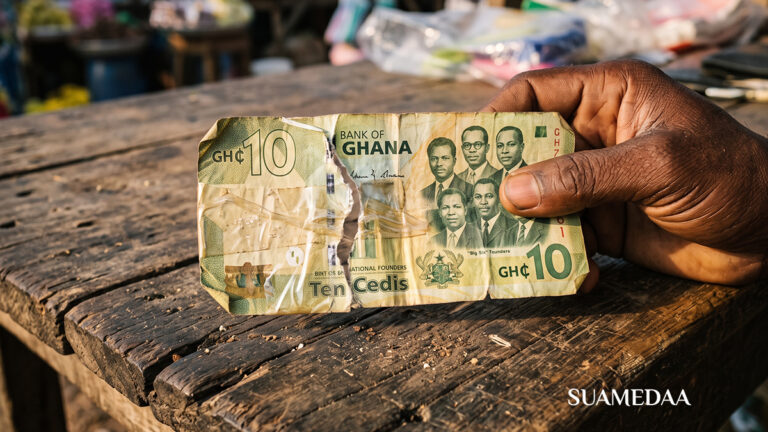
The cedi notes currently in circulation have carried broadly the same design since the second series was introduced. The most recognisable feature has been the collective portrait of the Big Six, the six founding leaders who were arrested by British colonial authorities in 1948 and whose imprisonment became a turning point in Ghana’s journey to independence: Kwame Nkrumah, J.B. Danquah, William Ofori Atta, Ebenezer Ako-Adjei, Emmanuel Obetsebi-Lamptey, and Edward Akufo-Addo. For many Ghanaians, those six faces grouped together on the note are simply what cedi looks like. They have been there long enough to feel permanent.


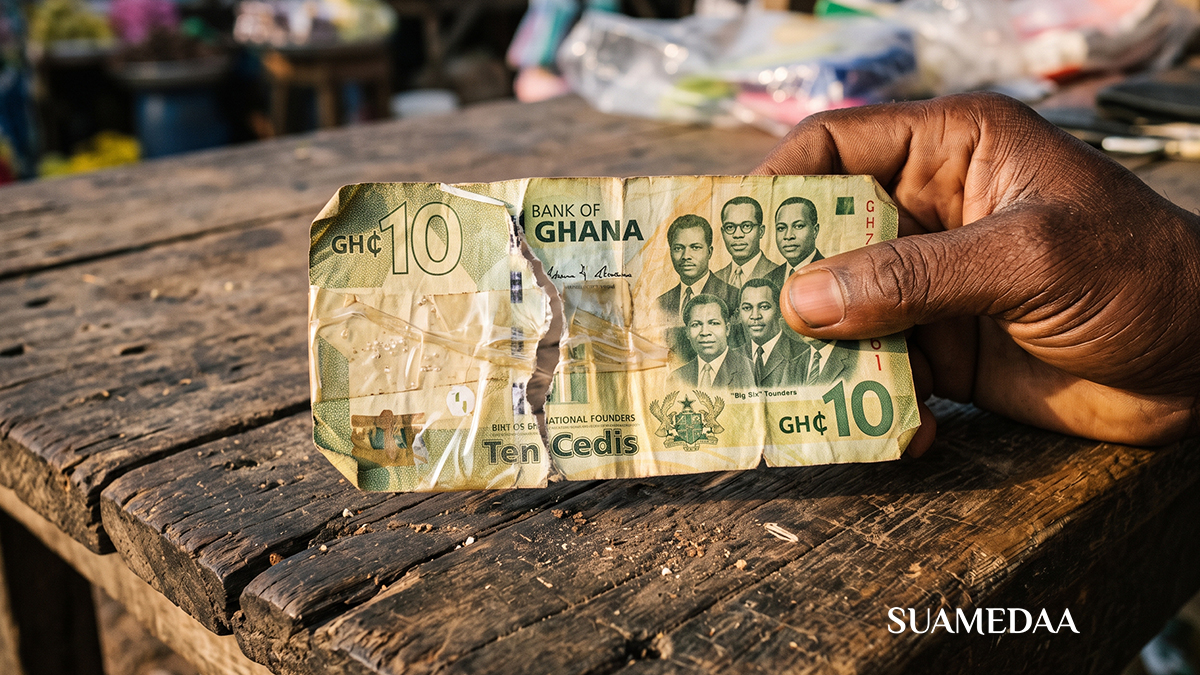
But permanence was never the intention. Currency designs age, in security terms, long before they age aesthetically. The longer a design remains unchanged, the more time counterfeiters have to study, refine, and replicate it. The more familiar a note becomes to the public, the less carefully the public tends to scrutinise it. A well-worn ten-cedi note passed across a chop bar counter gets a glance, not an inspection. That casual familiarity is exactly the environment in which sophisticated forgeries circulate most comfortably.
Beyond security, the Bank of Ghana has also cited practical durability and usability concerns. Notes in a tropical economy absorb moisture, fold repeatedly, pass through hundreds of hands, and survive conditions that test the limits of their physical materials. Shorter-lived notes must be replaced more frequently, which is a cost that falls on the central bank and, ultimately, on the public. Modern banknote materials and manufacturing methods have advanced considerably since the existing notes were last significantly redesigned, and Ghana was overdue to benefit from those advances.
The Bank of Ghana’s Governor, Dr Johnson Pandit Asiama, confirmed at the launch that the existing notes will remain legal tender. There is no deadline by which Ghanaians must surrender their old currency. The two series will circulate simultaneously, and commercial banks will gradually withdraw the old notes from circulation as they come in through deposits and routine banking transactions. The transition is designed to be invisible to most people most of the time. You will not wake up one morning to find your old notes are worthless. The changeover will simply happen, note by note, over months and years, until the Heritage Series is all that remains in active circulation.
What Makes a Banknote Secure
Before examining who appears on each denomination, it is worth understanding what the Bank of Ghana means by enhanced security features, because this is not marketing language. It refers to a set of specific physical properties that make a note measurably harder to reproduce on equipment available to criminals.
Modern high-security banknotes incorporate multiple layers of protection designed to defeat different categories of counterfeiting attack. Colour-shifting ink changes its apparent shade depending on the angle at which it is viewed, a property that printing equipment cannot replicate with standard inks. Watermarks, visible when the note is held up to light, are embedded in the paper itself during manufacturing, not printed on the surface, which means they cannot be scanned and reproduced digitally. Security threads, metallic or plastic strips woven through the paper, may carry microprinting or holographic elements. Raised print, produced through a specialised technique called intaglio printing, gives certain parts of a genuine note a texture you can feel with your fingertip, whereas a photocopied or inkjet-printed forgery will feel flat.



For the Heritage Series, the Bank of Ghana has also highlighted features specifically designed for the visually impaired: tactile elements that allow people who cannot read the numerals to distinguish denominations by touch. This inclusion represents a meaningful step toward accessible design in Ghanaian public infrastructure, and it reflects the kind of thinking that characterises modern currency design at its best.
Alongside the notes themselves, the Bank of Ghana is developing a Cedi App, a mobile application that will help the public learn to identify and verify the new notes, including features oriented toward users with visual impairments. The Bank is also launching a nationwide public education campaign in major Ghanaian languages, recognising that a security feature nobody knows to look for provides no protection at all.
Eight Faces, Eight Stories
The most significant departure from the existing series is the replacement of the collective Big Six portrait. The Heritage Series retains eight denominations, from one cedi to two hundred cedis, and each now carries the portrait of an individual Ghanaian selected for their contribution to the nation. Five of the Big Six do not appear on the new notes. Dr Kwame Nkrumah is the only member of the founding group retained, and he occupies the highest denomination.
The choices made by the Bank of Ghana tell their own story about which aspects of Ghanaian history and identity the government wishes to emphasise in this moment. Looking at each denomination in turn reveals a deliberate and in some respects surprising narrative.
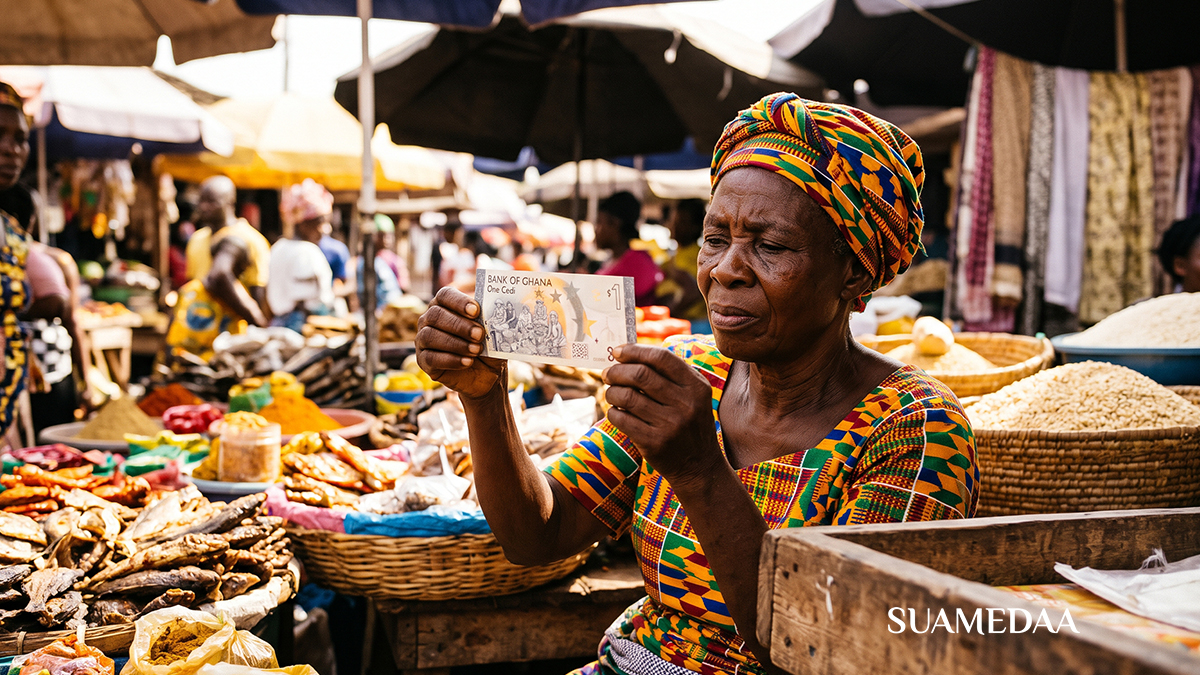
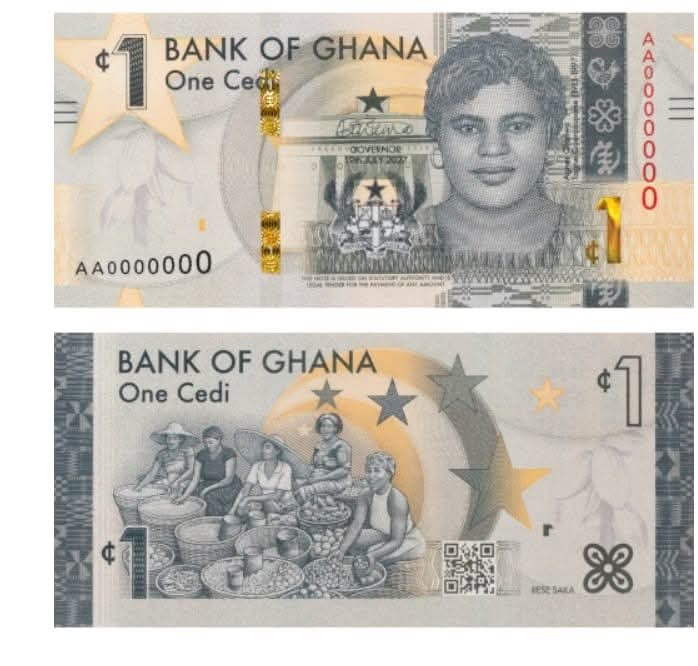
The one-cedi note carries the image of Agnes Oforiwa Tagoe-Quarcoopome, a Makola Market trader who became the first woman at Makola to open a bank account, doing so with what was then Standard Bank of West Africa. The choice of a market woman for the smallest denomination is not an accident of hierarchy. It is a pointed statement. The majority of Ghana’s daily commerce flows through the hands of women, through the markets and the roadside stalls and the mobile money transactions of an economy that runs on informal trade. Placing a market trader on the one-cedi note is an act of recognition for a category of Ghanaian whose economic labour has historically been both indispensable and undervalued. It also signals that financial inclusion, the expansion of banking and financial services to Ghanaians who have traditionally operated outside the formal system, is a value this series wishes to associate with the cedi.

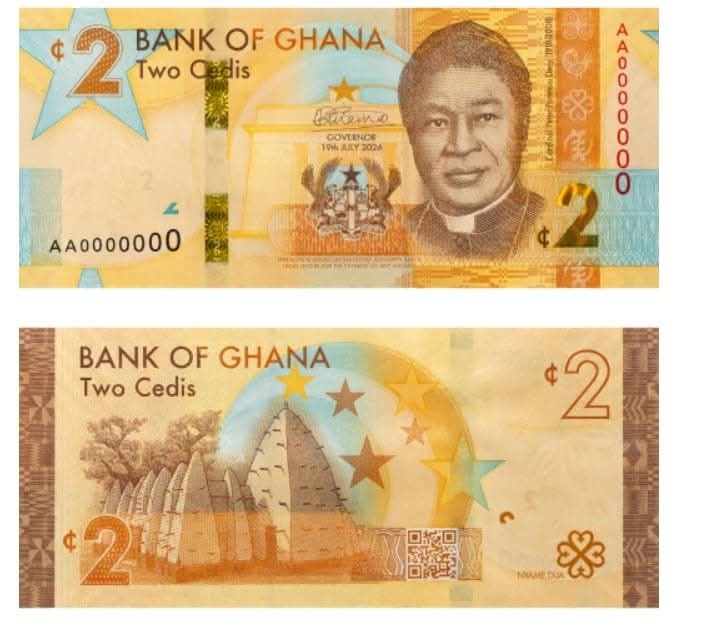
The two-cedi note honours Cardinal Peter Porekuu Dery, a Catholic leader from the Upper West Region whose work encompassed education and social services over a career that spanned decades in an area of Ghana that has often felt distant from the centres of national power. His presence on the two-cedi note extends the series’ acknowledgement of Ghana’s northern heritage, a region whose contributions to the national story are sometimes subsumed by the dominant narrative of the south.
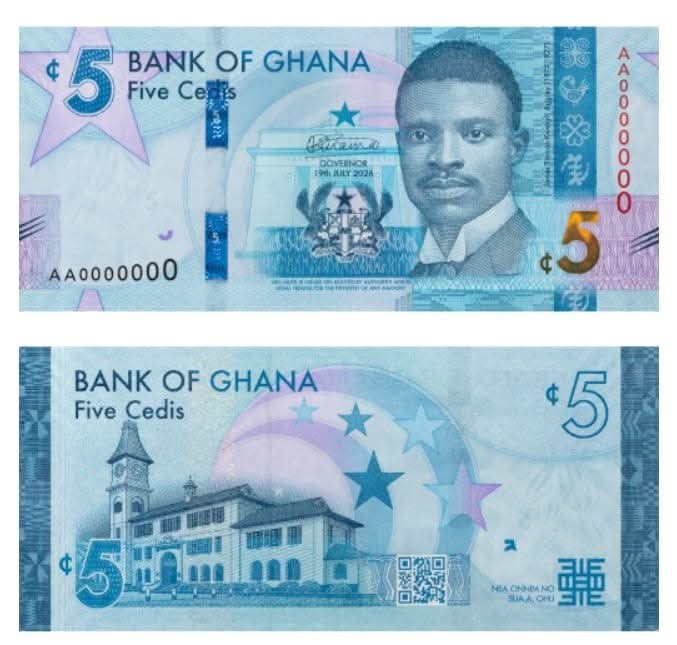
The five-cedi note depicts James Emmanuel Kwegyir-Aggrey, the educationist most closely associated with Achimota School and with a philosophy that made education the foundational argument for African advancement. Aggrey’s legacy is intellectual and institutional: his belief that Africa’s liberation would come through the cultivation of its own minds rather than through dependence on others became embedded in the values of one of Ghana’s most storied secondary schools. Placing him on the five-cedi note is a statement about what Ghana holds to be the basis of development.
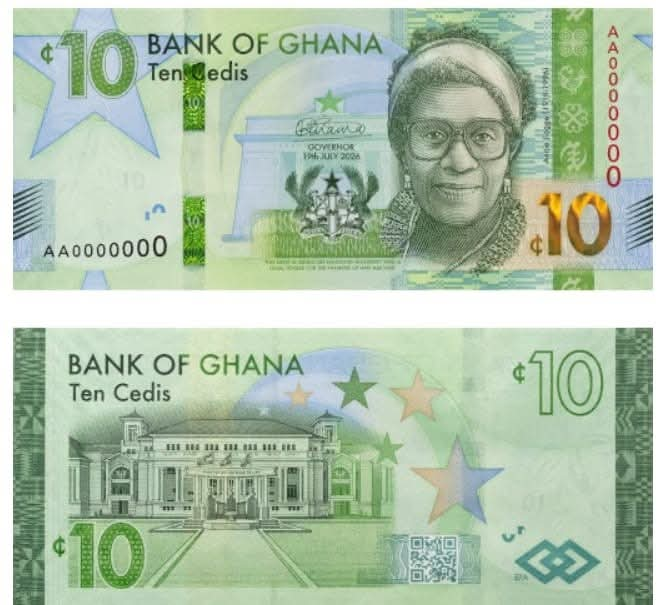
The ten-cedi note carries Justice Annie Jiagge, described as the first woman in Ghana and in the Commonwealth to have attained the rank of judge, and a persistent advocate for women’s rights and gender equality in an era when such advocacy required considerable personal courage. Justice Jiagge’s inclusion on the ten-cedi note places legal justice and gender equality at the centre of what the Heritage Series says about Ghana’s values.
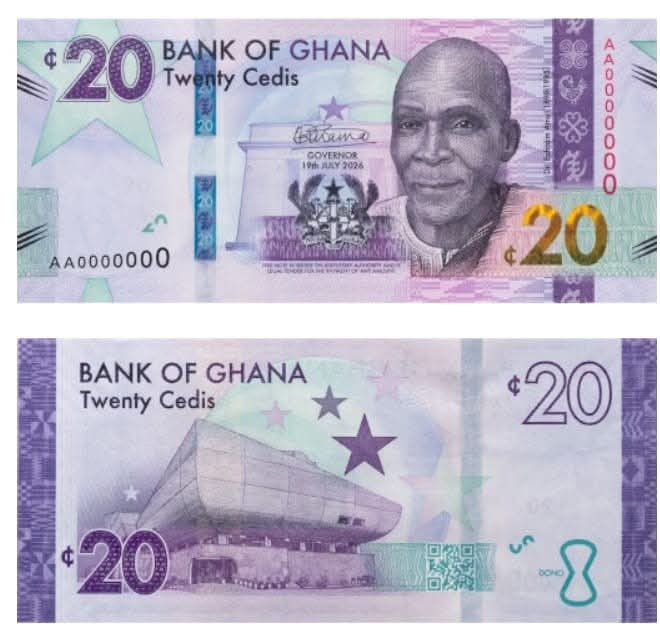
The twenty-cedi note features Dr Ephraim Amu, composer, musicologist, and a figure central to the preservation and elevation of indigenous Ghanaian culture. Amu’s compositions drew on traditional musical forms and language in an era when colonial education tended to treat indigenous expression as inferior to European cultural modes. He was famously asked by colonial-era mission authorities not to teach in traditional dress, refused, and continued anyway. His defiance was cultural, not merely personal. Placing him on the twenty-cedi note is an acknowledgement that the survival of Ghanaian identity through colonial pressure was an act of active, deliberate resistance.
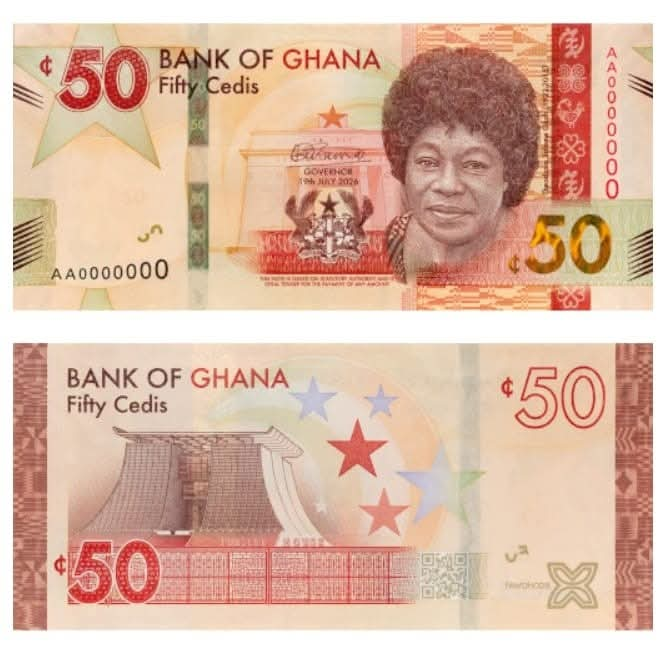
The fifty-cedi note honours Theodosia Salome Okoh, the designer of the Ghanaian national flag. The black star at the centre of the flag, the red of the blood shed for independence, the gold of Ghana’s mineral wealth, the green of its natural resources: Okoh translated a nation’s aspirations into a design that every Ghanaian child learns to draw before they learn to read. The flag is one of the most recognised in Africa. Its designer, until this series, was not.
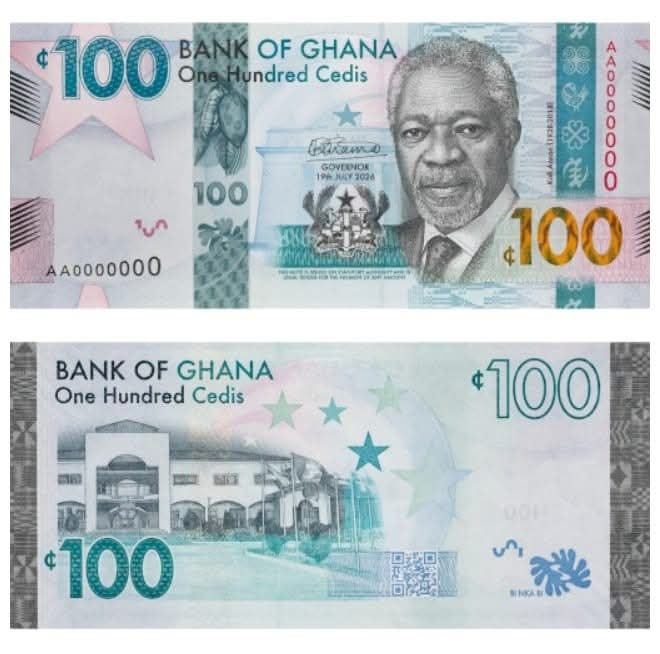
The hundred-cedi note carries the image of Kofi Annan, former Secretary-General of the United Nations from 1997 to 2006 and co-recipient of the Nobel Peace Prize in 2001. Annan’s inclusion represents Ghana’s pride in its global reach: the idea that a Ghanaian could hold one of the most demanding offices in the world and discharge it with distinction. It also carries a certain cosmopolitan confidence: the cedi, the domestic currency, bearing the face of a man whose career was entirely international, signals that Ghana does not see these as contradictory things.
The two-hundred-cedi note, the highest denomination in the series, retains Dr Kwame Nkrumah, Ghana’s first President and the architect of independence, and the only member of the original Big Six to survive the transition to the new series. His retention on the highest-value note is both historically consistent and symbolically appropriate. Whatever disagreements historians and politicians may have about Nkrumah’s legacy in government, there is no serious argument that any other figure occupies the same foundational position in the story of Ghanaian nationhood.
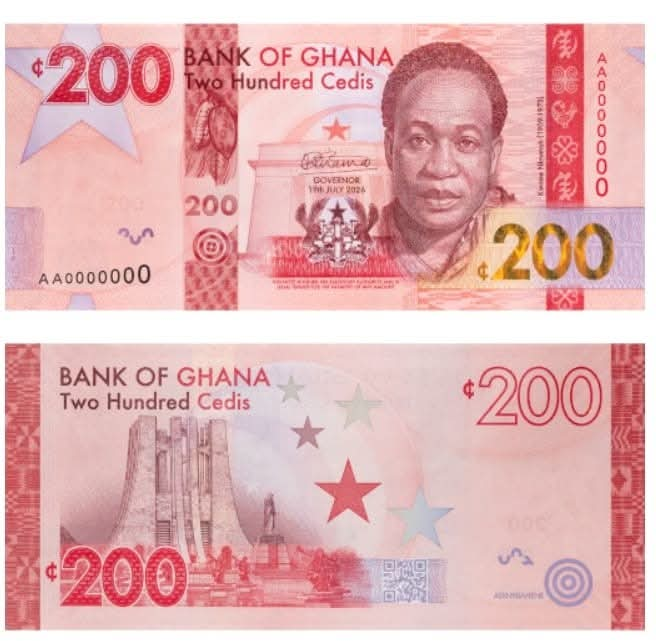
Five of the Big Six do not appear on the new notes. Their removal does not erase them from history. Really was there anything like “Big Six” to begin with?
Currency
The Question of the Missing Five
It would be dishonest to write about the Heritage Series without addressing the question that the redesign inevitably raises: what does it mean that five of the Big Six have been removed from Ghana’s currency?
The Bank of Ghana has been careful to frame this as an expansion rather than an erasure. The Heritage Series, the argument goes, creates space to honour a broader range of Ghanaians across different regions, genders, professions, and historical periods. The Big Six were always a compression, six names standing in for the contributions of thousands, and the compression came with its own historical politics, foregrounding one reading of independence over others. The new series attempts a different compression, one that includes a market woman alongside a diplomat, a musicologist alongside a judge.
The Minority in Parliament has raised concerns about the redesign, noting that Parliament was not adequately briefed on the process and questioning the transparency of the decision-making. These are legitimate procedural concerns in a democracy, and they are separate from the question of whether the design choices themselves are defensible. Currency design is not, in any country, a matter put to a public vote. But the rationale for major decisions of national symbolic significance is rightly subject to public scrutiny, and the Bank of Ghana’s communication around the Heritage Series, while clear on what has been chosen, has been less forthcoming about the process by which it was decided.
What can be said plainly is this: the removal of Danquah, Ako-Adjei, Ofori Atta, Obetsebi-Lamptey, and Edward Akufo-Addo from the currency is a political act, whether or not it is intended as one. Currency is statecraft. The faces a government puts on its money are a statement about whose memory it curates and whose contributions it wishes the population to handle daily. The Big Six shared an arrest, a cell, and a chapter in the independence narrative. That they no longer share the cedi note is a decision that deserves honest acknowledgement of what it represents, alongside honest acknowledgement of what the new faces represent too.
The New Currency Act and What It Means
Alongside the Heritage Series, the Bank of Ghana is working toward a new Currency Act to replace the Currency Act of 1964 (Act 242), legislation that has governed Ghanaian currency management for over six decades. The proposed new law is not simply an administrative update. It represents a rethinking of the legal framework within which the cedi is protected.
The 1964 Act, drafted in the early years of Ghanaian independence, was not designed with twenty-first century counterfeiting technology in mind. It did not anticipate desktop inkjet printers capable of reproducing colour banknotes, or digital scanning equipment precise enough to replicate fine security printing, or online markets where counterfeiting equipment and techniques are exchanged. The proposed new Currency Act will substantially increase the penalties for counterfeiting, create clearer procedures for how counterfeit notes are identified, withdrawn, and handled, and strengthen the legal provisions against the mutilation, defacement, and deliberate abuse of legal tender.
The Bank of Ghana is also introducing an in-house Enterprise Currency Operations Management Software, known as ECOMS, which will improve the coordination of currency flows between the central bank and Ghana’s commercial banks. New Cash Centres are being established at the Bank’s regional offices in Ho and Tamale, expanding the Bank’s operational reach beyond Accra and the southern banking centres. These are operational investments that will not make headlines but that matter considerably for the efficiency and equity of how currency reaches Ghanaians across the country.
What You Should Do
For most Ghanaians, the practical implications of the Heritage Series are straightforward: nothing urgent is required of you. Your existing cedi notes remain legal tender. You do not need to exchange them, return them, or do anything other than continue using them as you always have. When a new note comes your way in change, examine it. Notice its features. Hold it to the light. The Bank of Ghana’s nationwide education campaign will explain what to look for, and the Cedi App, once available, will walk you through the security features denomination by denomination.
If you are running a business, particularly one that handles cash in volume, it is worth ensuring that your staff understand what the Heritage Series notes look like and how to distinguish a genuine note from a forgery. The period immediately following the introduction of a new note design is precisely the period in which counterfeiters attempt to exploit the unfamiliarity of the public. Training your staff to scrutinise the new notes carefully in the first weeks of circulation is straightforward risk management.
For those with an interest in the notes as cultural artefacts, the Heritage Series represents a moment worth documenting. First-print editions of significant redesigns occasionally attract collector interest over time, and each denomination of the Heritage Series carries a name and a story that most Ghanaians will not have encountered before. The notes are, in this sense, an education in themselves, eight compact biographies of people whose contributions built the country whose currency you are holding.
A Currency That Knows What It Stands For
Currency is never only money. It is argument. It is memory. It is the state’s answer, revisited every few decades, to the question of who we are and what we have come from. Ghana’s Heritage Series is a more expansive answer to that question than the country has previously attempted on its banknotes, reaching into markets and cathedral halls and courtrooms and music schools and the corridors of the United Nations to assemble a portrait of a nation that is not defined by one foundational moment alone.
The notes will circulate from December 1st. They will pass between hands in markets across the country, in Accra and in Bolgatanga, in Kumasi and in Takoradi, in petrol stations and chop bars and banking halls and funeral grounds. They will be handled by people who know exactly who Annie Jiagge was, and by people who will read the name on the note for the first time and find themselves curious. That curiosity, that moment of wondering who this person was and what they did, is part of what a well-designed currency can do that no other object in ordinary life quite manages. Ghana has put eight stories in everyone’s pocket. The rest is up to us.