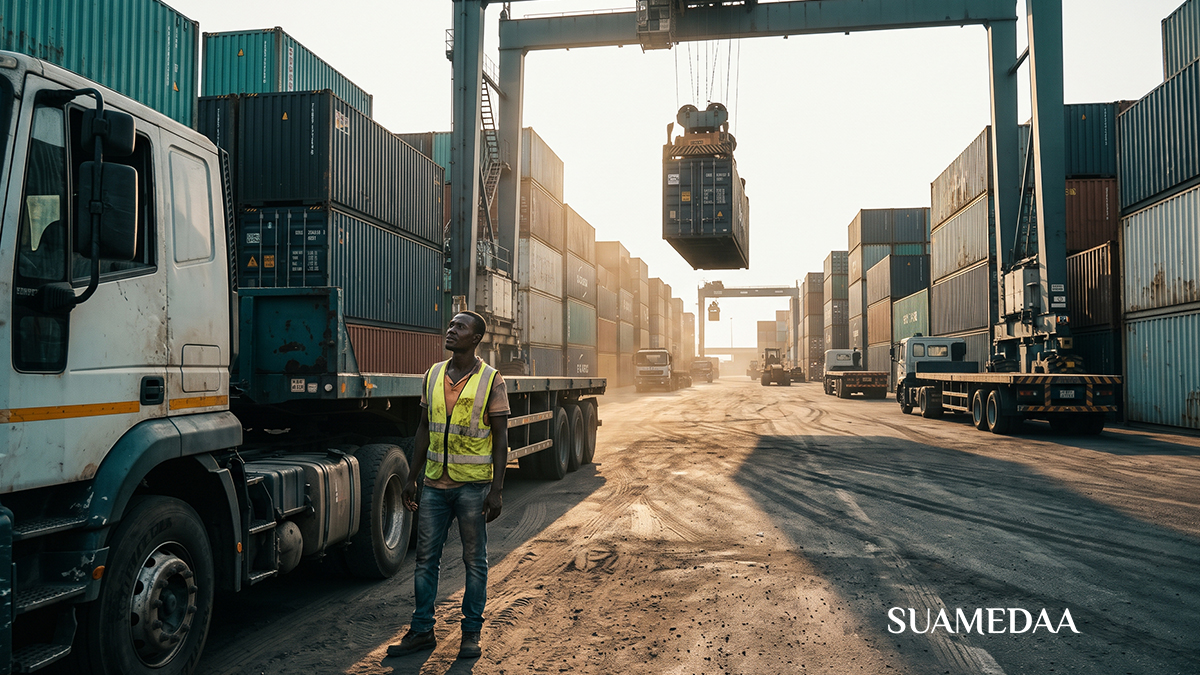
Cleared But Not Free: How Ghana Is Breaking the Bottleneck at Tema Port
There is a particular frustration that every importer who has worked through Ghana’s port clearance process knows well. You have done everything correctly. You engaged your customs house agent. The documentation was filed on time. The Harmonized System code was right. The duties were calculated, presented, and paid to the Ghana Revenue Authority. The customs officer confirmed clearance. By every measure that matters to the state, your cargo is yours.
And then you wait.
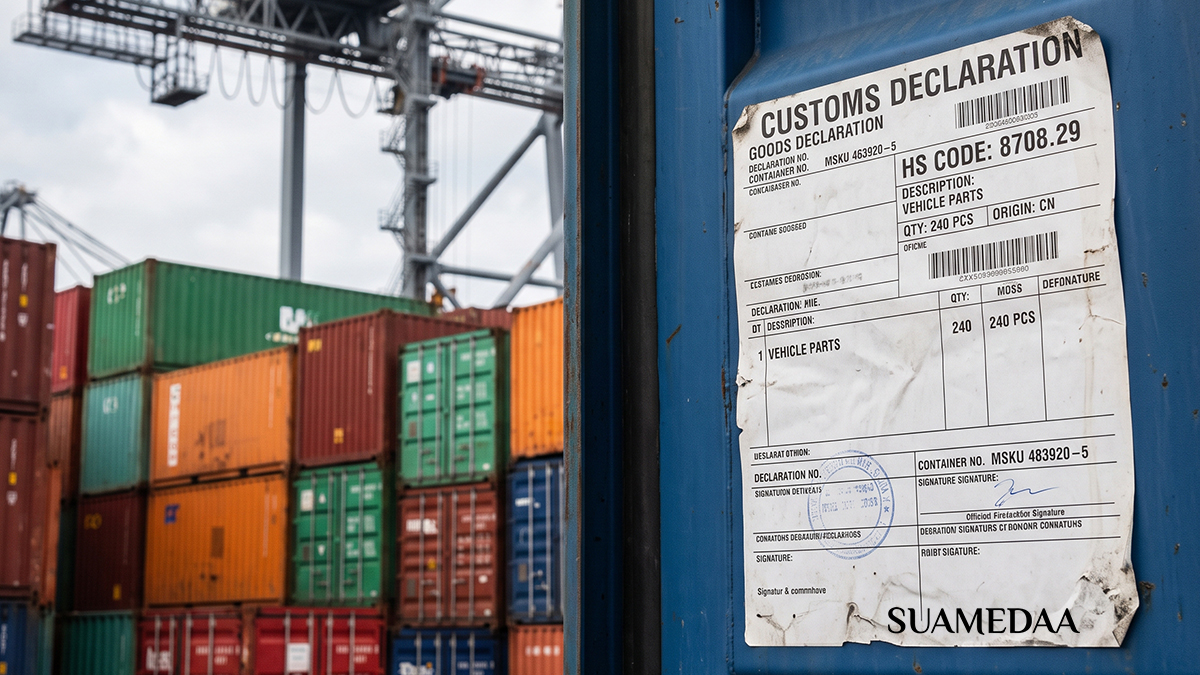
You wait because, even after customs has released the goods, the terminal operator will not physically hand them over until the shipping line, the company whose vessel carried the container to Tema, has issued its own separate authorisation. That release document, known in the trade as a shipping line delivery order or gate pass, is a commercial instrument: the line’s confirmation that whatever the importer owes it, in freight charges, documentation fees, and other levies, has been settled or is otherwise accounted for. Until that document is produced, the customs-cleared container sits in the yard, occupying space and accumulating costs, while the importer makes calls, sends emails, and hopes the line’s local agent is not too backlogged to respond.

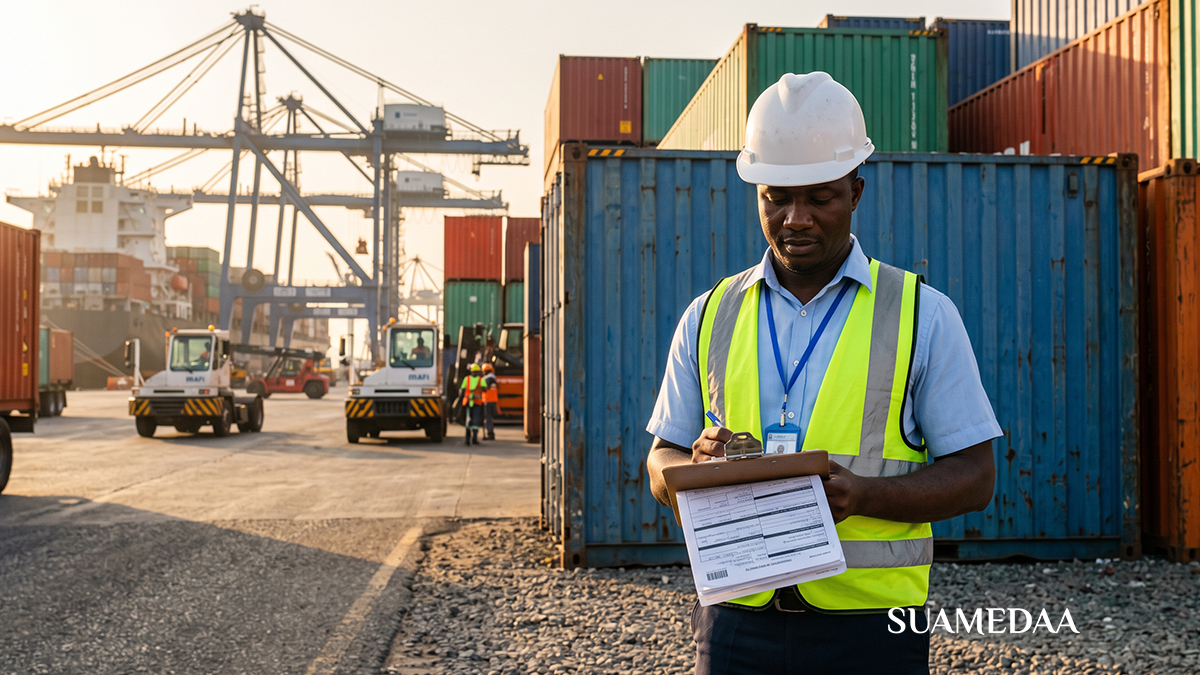
The wait can stretch to four or five days. During those days, demurrage charges accumulate. Terminal storage fees climb. And somewhere at Tema Port, behind that container and thousands of others in the same position, another vessel is arriving with more cargo that needs to fit somewhere.
On the 20th of November 2026, the Government of Ghana announced that this arrangement is changing.
The Directive and What It Says
Victor Kofi Baidoo, Head of the Revenue Assurance Department at the Ministry of Finance, addressed members of the Ghana Institute of Freight Forwarders in Tema on November 20th and confirmed that government had issued a directive to both the Customs Division of the Ghana Revenue Authority and the terminal operators at Tema Port. The instruction is straightforward: shipping line release procedures are to be separated from customs clearance. An importer who has completed customs requirements and paid applicable duties may now take delivery of their cargo. Any outstanding commercial matters between the importer and the shipping line are to be handled separately, as a bilateral arrangement, and are not to be used as a gate to block the physical movement of cleared cargo.
This is a significant structural intervention. It does not eliminate the shipping line’s right to recover what it is owed. It relocates the enforcement of that recovery outside the customs clearance pipeline, so that a commercial dispute between an importer and a shipping line no longer has the effect of holding cleared cargo hostage in a congested port yard.
The directive was issued in the context of what the Ministry of Finance and the Ministry of Transport have both acknowledged is a port congestion situation of considerable severity. Transport Minister Joseph Bukari Nikpe described the scale of the problem in September 2026, noting that container volumes at Tema had nearly doubled, a surge he said was unprecedented in two decades. Incoming shipments were arriving faster than cleared cargo was leaving. The yard was filling. Ships were being delayed. And the costs of that delay were landing, as they always do, on importers, on traders, and ultimately on the consumers who buy what those importers bring in.


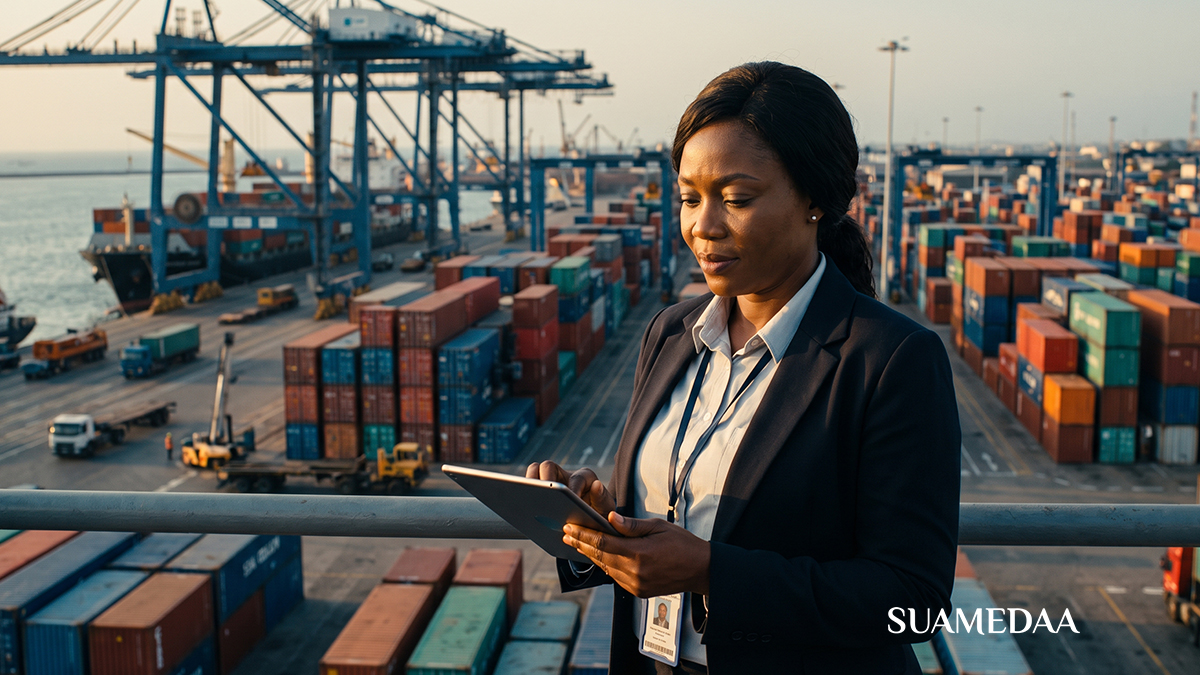
“An importer who has completed customs requirements and paid applicable duties may now take delivery of their cargo. Any outstanding matters with the shipping line are to be handled separately.”
Understanding the Problem That Was Created
To appreciate why this directive matters, it helps to understand precisely how the dual-release system created a structural inefficiency at the port, and why it persisted for as long as it did.
The customs clearance process and the shipping line release process are, in legal and commercial terms, completely distinct things. Customs clearance is a function of the state: the Ghana Revenue Authority’s confirmation that the importer has met their obligations under the Customs Act, that duties and taxes have been paid, and that the goods are permitted to enter the country. It is a sovereign act with a sovereign purpose, which is the collection of public revenue and the enforcement of import regulations.
The shipping line release is a commercial matter: the carrier’s confirmation that the freight and associated charges for which it has contracted with the importer or the shipper have been settled. The shipping line carried the goods. It is entitled to its money. The delivery order is its instrument for ensuring it receives that money before it surrenders control of the cargo.
Both of these things are legitimate. The problem arose from their sequencing. In practice, the port’s operational systems treated the shipping line’s delivery order as a prerequisite for cargo movement, meaning that the commercial entitlement of a private company to collect its freight charges had become embedded in a public infrastructure process in a way that allowed it to hold up cargo even after the state had declared that cargo fit to move.
This meant that any delay on the shipping line’s side, whether caused by slow internal processing, documentation backlogs, billing disputes, or simple administrative inattention, translated directly into congestion at the terminal. The container stayed in the yard. The space it occupied was unavailable for the next container coming off the next vessel. Demurrage mounted. And the terminal operator, whose revenue model is built on throughput rather than storage, watched its yard fill with containers it could not move.

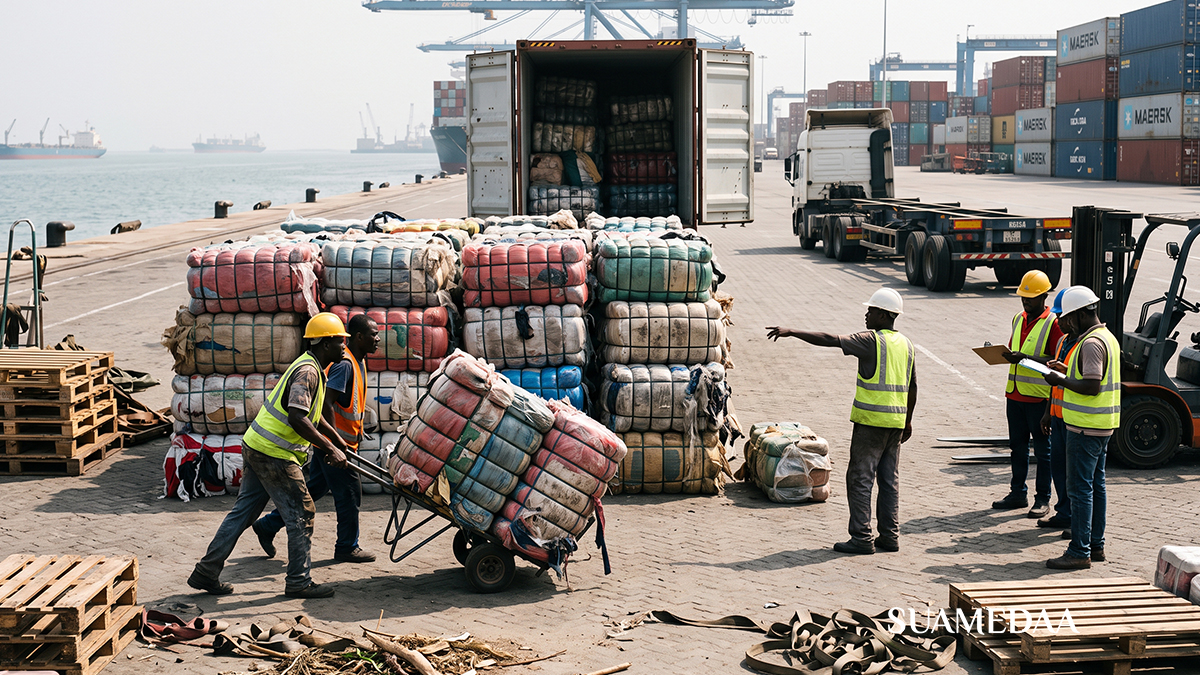

The Ghana Institute of Freight Forwarders has pushed for this separation for some time. Johnny Mantey, a prominent member of the Institute who was present at the November 20th briefing, welcomed the directive, calling it a significant step in the right direction and noting that the trade had long argued that shipping line commercial matters should not be allowed to interrupt the port’s operational flow. His endorsement carries credibility because freight forwarders sit in the middle of this process every day. They are the ones making the calls to shipping agents, chasing delivery orders, and explaining to impatient clients why their cleared cargo is still sitting at Tema when the duty receipt is already in hand.
The Congestion Context: How Serious It Has Become
The directive did not emerge in isolation. It is part of a broader government response to a port congestion situation that has been building through 2026 and that has attracted sustained attention from industry groups, trading associations, and government ministries.
The doubling of container volumes that Transport Minister Nikpe described in September was driven primarily by an import surge, with inbound shipments rising sharply while export and transit cargo volumes remained comparatively flat. This imbalance matters because it determines the direction of pressure in the system. When imports far exceed exports and transit, the natural corrective mechanism, which is empty containers being loaded with outbound cargo and returned to circulation, does not function. Empty containers accumulate at the terminal, waiting to be returned to the shipping lines. Those empty containers occupy space. And in a port yard where space is already stressed by the volume of arriving full containers, the addition of large numbers of unreturned empties creates a compounding problem.
The Ghana Union of Traders’ Associations raised the alarm formally in August 2026, petitioning the Ghana Ports and Harbours Authority to act. The Trailer and Cargo Truck Union lodged its own petition after members were obstructed from operating inside the port precinct. These are not minor sectoral concerns. The truck union’s members are the final link in the cargo evacuation chain. If their access is impeded, cleared cargo cannot leave the terminal, regardless of what has been resolved between importers, customs, and shipping lines.
The government’s response has operated on several tracks simultaneously. Additional berths were announced for vessels carrying clinker, a bulk cement ingredient that arrives in large volumes and has been adding to port pressure. The Ghana Ports and Harbours Authority was instructed to compile lists of containers that have overstayed the allowable period, with those remaining beyond six months to be confiscated, gazetted, and auctioned under GRA authority. Meridian Port Services and GPHA have been given directions to expand facilities and build additional handling capacity. And two additional cranes were ordered on an urgent basis to lift cargo handling rates at a time when the volume of incoming shipments was outpacing the port’s ability to process them.
The decoupling of shipping line releases from customs clearance fits within this broader response as a targeted intervention at one of the specific choke points that converted volume pressure into floor-level congestion.
“Empty containers accumulate at the terminal, waiting to be returned to shipping lines. Those containers occupy space. And in a port yard already stressed by arriving full containers, the addition of large numbers of unreturned empties creates a compounding problem.”
What Changes for Importers
For importers and their agents, the change is operationally meaningful from the moment it is applied. The sequence that has previously governed cargo pickup at Tema required the importer to have both their customs release, obtained from GRA after duty payment, and their shipping line delivery order, obtained separately from the line’s local agent, before the terminal would process their gate pass. Both documents had to be in hand simultaneously. Neither one alone was sufficient.
Under the new arrangement, the customs release is the operative document. Once GRA confirms that duties have been paid and customs requirements are satisfied, the terminal operator processes the gate pass on that basis. The importer can proceed to take delivery. If there is a remaining balance owed to the shipping line, that is a separate matter to be resolved between those two commercial parties, outside the terminal gate.
This changes the leverage position in a way that matters. Currently, a shipping line that is slow to process its delivery order, for whatever internal reason, holds effective control over the importer’s ability to retrieve cleared cargo, even though the state has fully released it. Under the new system, that leverage is removed from the terminal gate and placed back in its proper commercial context. The shipping line may still pursue what it is owed. It may refuse to extend credit to that importer in future. It may take the matter to its own dispute resolution processes. What it cannot do, under the new directive, is sit between an importer and cargo that the state has cleared.
The practical implication for the port yard is straightforward: cleared containers should move faster. If the average gap between customs release and cargo pickup shrinks from several days to the time it takes to arrange transport, the cumulative effect on terminal occupancy is significant. Each container that exits the yard sooner is a space freed earlier for the next arrival. Throughput improves. Congestion moderates. And the downstream costs, the demurrage that builds per day while cleared cargo waits, begin to fall.
What Remains to Be Resolved
The directive is a necessary intervention, but it is not a complete solution, and it is worth being precise about the challenges that remain.
The question of empty containers is one that the new arrangement does not directly address. Johnny Mantey specifically raised this concern at the November 20th briefing. The growing stock of empty containers awaiting return to shipping lines is occupying significant storage space at Tema, and that space is not freed by decoupling customs clearance from the delivery order. That problem requires the shipping lines themselves to accelerate the collection and removal of their empties, which in turn requires the lines to make additional port calls or arrange alternative logistics for the purpose. Mantey called for the shipping lines to be brought into direct talks, noting that the conversations held so far have been with government and freight forwarders but have not formally included the shipping lines as participants.
This matters because the shipping lines are, in a sense, the other side of this arrangement. The government has changed the rules under which the terminal operates, but the shipping lines are private commercial entities operating under international maritime agreements. Their cooperation is commercially and practically necessary for the full picture of congestion relief. A shipping line that disagrees with the new arrangement or that processes its commercial documents slowly can still affect the port’s functioning, even if it no longer holds a veto over cargo delivery at the gate.
There is also the matter of the container administrative fee cap. Importers have for some time complained that shipping lines charge fees above the cap that is supposed to govern what they may levy. The cap, as reported, stands at GH¢720. Importers have sought sanctions against lines that exceed this cap or ignore it, and that call for enforcement remains unresolved. Decoupling the delivery order from customs clearance addresses the sequencing problem. It does not automatically address the question of what shipping lines charge, or how those charges are regulated and enforced.
The implementation of the directive itself will also require careful monitoring. The directive has been issued and confirmed at a Ministry of Finance stakeholder meeting. Its application by GRA Customs and by the terminal operators, in their day-to-day procedures, will determine whether the change is felt on the ground or remains a policy statement that struggles to translate into practice. The freight forwarding community and the Ghana Institute of Freight Forwarders are well-positioned to monitor this, and their continued engagement with government and the terminal operators through the coming months will be an important check on implementation.
Why It Matters Beyond Tema
Port efficiency is not a niche concern for shipping professionals. It is an infrastructure question with direct implications for the cost of goods in Ghana, for Ghana’s attractiveness as a regional trade hub, and for the competitiveness of Ghanaian businesses that rely on imported inputs.
When cargo sits at the port longer than it should, somebody pays for the delay. Sometimes it is the importer directly, through demurrage charges that stack up daily. Sometimes it is absorbed into the cost of goods, passed on to wholesalers, retailers, and consumers. Sometimes it is felt as a delay in production, when a manufacturer waiting for raw materials or machinery cannot start the next run until the port clears. And sometimes it is felt as a reputational cost for Ghana as a trade destination, as companies that move goods through West Africa compare the efficiency of Tema against competitor ports in Abidjan, Lomé, and Dakar and make routing decisions accordingly.
Ghana has invested significantly in port infrastructure, including the development of Meridian Port Services as a modern container terminal and the ongoing expansion of GPHA’s own facilities. That infrastructure investment is not maximally productive if the operational and administrative systems layered on top of it create bottlenecks that cancel out the physical capacity gains. The separation of shipping line releases from customs clearance is an administrative intervention that costs nothing to implement in infrastructure terms. Its value lies precisely in removing a procedural friction that has been absorbing the gains from physical investment for years.
President John Mahama’s directive to ministers, issued two days before the November 20th stakeholder meeting, to clear port delays as a government priority, signals that the administration understands the economic stakes. Ports are where supply chains begin and where their failures are most visible. When Tema is congested, the effects ripple outward through the economy in ways that are diffuse but real. When Tema flows freely, the gains do the same.
The government’s decision to decouple shipping line releases from customs clearance is, in itself, a relatively modest intervention. It does not build a new berth. It does not add a crane. It does not reroute a road. What it does is remove a procedural rule that has allowed a commercial sequencing problem to hold up a public infrastructure function. That kind of targeted, specific intervention, identified through direct engagement with industry practitioners, is precisely the kind of policy work that improves a port without waiting for the next construction cycle to complete.
Whether it is enough, alongside the broader measures being implemented, to materially reduce congestion at Tema in the near term will depend on how quickly GRA and the terminal operators apply it in practice, how cooperatively the shipping lines engage with the resulting changes to their processes, and whether the deeper structural issues, the volume surge, the empty container backlog, the road access constraints, are addressed with equivalent urgency.
The freight forwarding community at Tema has welcomed the directive. That welcome is informed and experienced. It is not unconditional. And the conditions they are watching for, the lines participating in talks, the empties being removed, the implementation being consistent and not merely aspirational, are the same conditions that will determine whether this directive becomes a turning point or a footnote.