Chop Bar to Fine Dining – A Food Lover’s Guide to Accra
Accra feeds itself with an intensity that takes first-time visitors by surprise. The city wakes up to the smell of waakye wrapped in millet leaves, moves through the day in a rhythm punctuated by the scent of charcoal and grilled fish, and winds down at night to the kelewele seller’s deft movements at an open flame on the edge of a busy road. Food in Accra is not incidental to daily life. It is woven into the texture of how the city operates, how people gather, and how strangers become less strange.
In the decades since Accra began drawing international attention as a destination, its food scene has evolved in ways that would have been difficult to predict even ten years ago. The chop bar, that foundational institution of Ghanaian eating culture, remains entirely intact and entirely essential. But alongside it, a generation of chefs and restaurateurs has built something that bears examination on its own terms: a dining scene that ranges from precise Japanese omakase to pan-African cooking that uses the continent’s ingredients as a creative vocabulary, and from Italian wood-fired ovens to Chinese kitchens that have served Accra’s diaspora community for generations.
This is a guide to eating in Accra with genuine curiosity and no snobbery in either direction. The chop bar and the fine dining table are both honest expressions of what this city is, and both deserve their place in a serious food itinerary.



Start Here: Understanding the Food
Before getting into where to eat, it helps to understand what you are eating. Ghanaian food is built around a set of core components that appear across the spectrum from street corner to restaurant table, and knowing what they are transforms the experience of encountering them.
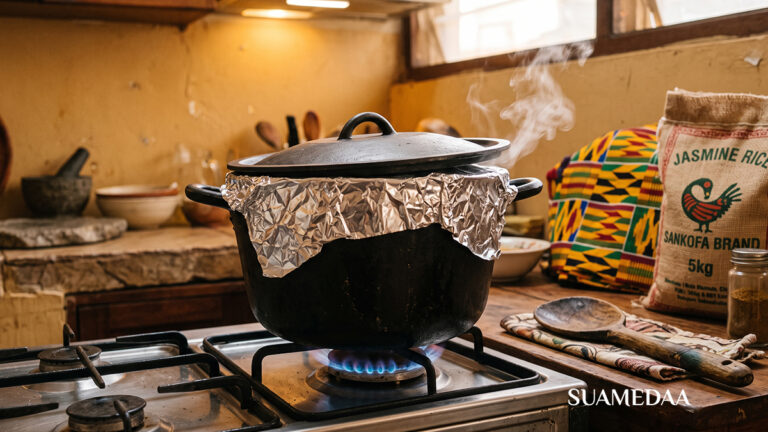
The foundation of most Ghanaian meals is what is collectively called the swallow: a starchy, smooth base that is eaten by hand, pinched into a small ball, indented with the thumb, and used to scoop soup or stew. Fufu, the most famous of these, is made from pounded cassava and plantain beaten together until the mixture achieves a smooth, elastic consistency. Banku is a fermented version of a corn and cassava dough, cooked into a smooth mass with a mild sourness that comes from the fermentation. Omotuo, or rice balls, are cooked rice pressed together into smooth spheres. Tuo Zaafi, common in northern Ghana, is a corn-based swallow softer and lighter than the others.
These bases are paired with soups that are, in many cases, the real culinary achievement. Light soup is a tomato-based broth with aromatics and chilli, light in body but rich with flavour, typically served with fish, chicken, or goat. Groundnut soup, made from ground peanuts cooked down with tomato and palm oil, is heavier and more complex, a soup that fills the bowl with warmth and depth. Palm nut soup is made from the flesh of the palm fruit, rich and slightly earthy, with an orange-red colour that saturates everything it touches. Okra stew brings a different texture, the characteristic viscousness of the vegetable creating a soup that clings to the swallow and carries its accompanying seafood in a smooth, cohesive medium.
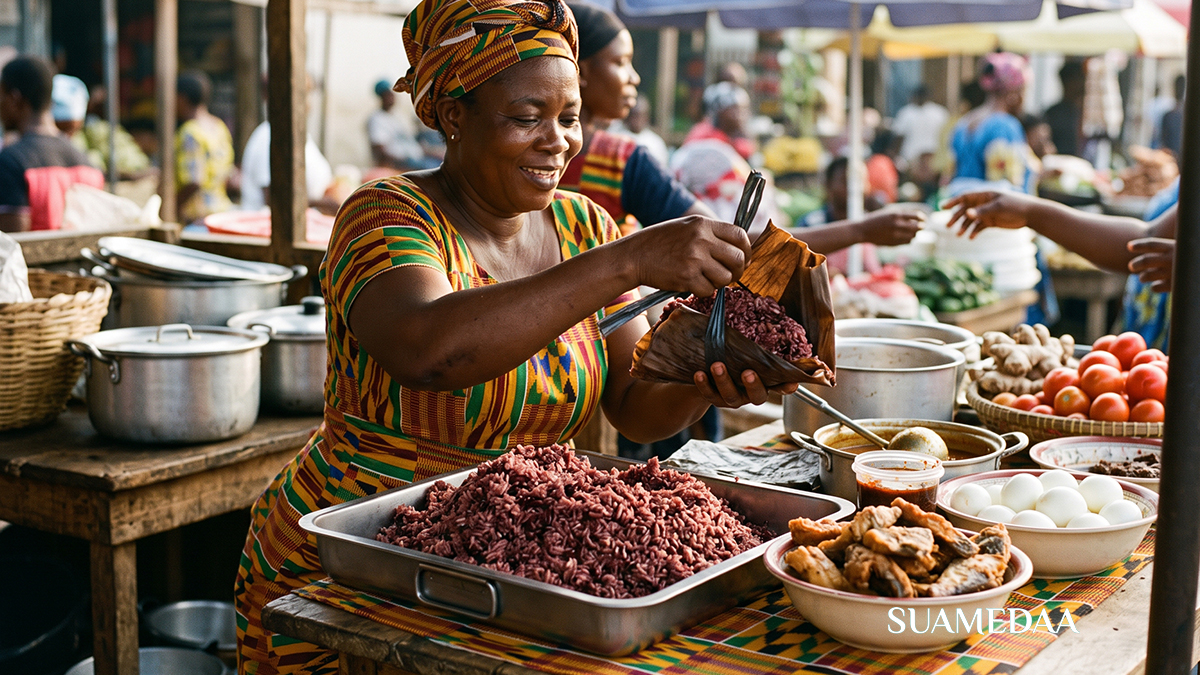
Separate from the swallow-and-soup combination are dishes that constitute their own complete meal. Jollof rice, the one-pot preparation of rice cooked in seasoned tomato base, is as debated in Ghana as anywhere in West Africa and as delicious as anywhere in West Africa. Waakye, rice and beans cooked together with millet leaves that impart a deep reddish-purple colour, is served at breakfast and lunch with a customisable array of toppings: fried fish, boiled eggs, avocado, fried plantain, gari, and spaghetti in a combination that seems improbable until you try it. Red red, black-eyed peas slow-cooked in palm oil with tomatoes and spices, is one of the city’s most satisfying dishes, the beans absorbing the oil until they are intensely flavoured, served alongside fried ripe plantain that caramelises at the edges.
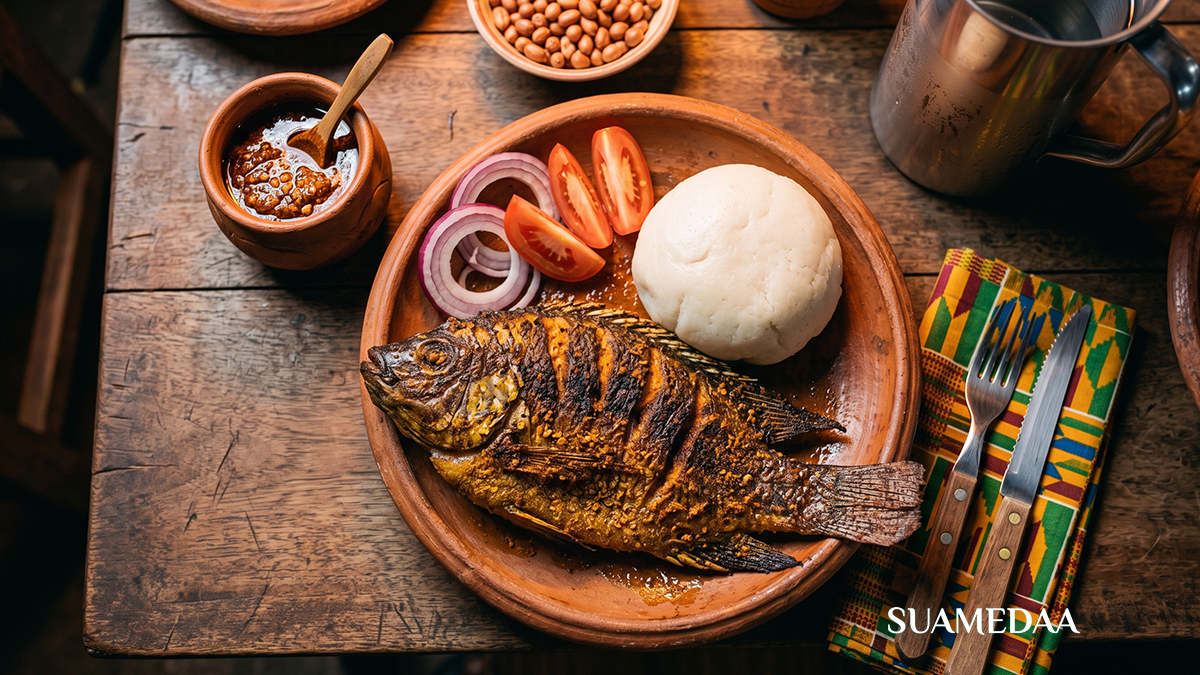
Protein is wherever you find it. Tilapia, the freshwater fish raised in rivers and dams across Ghana, is grilled or fried and served whole with pepper sauce and a wedge of onion. Grilled chicken marinated with local spices appears at every level of the food chain. Goat appears in soups and stews throughout the city, contributing a depth of flavour to the broth around it. At the street level, kyinkyinga, the Ghanaian beef or chicken skewer coated in suya spice and charred over an open flame, is one of the city’s best nocturnal pleasures.



The Chop Bar: Where Accra Actually Eats
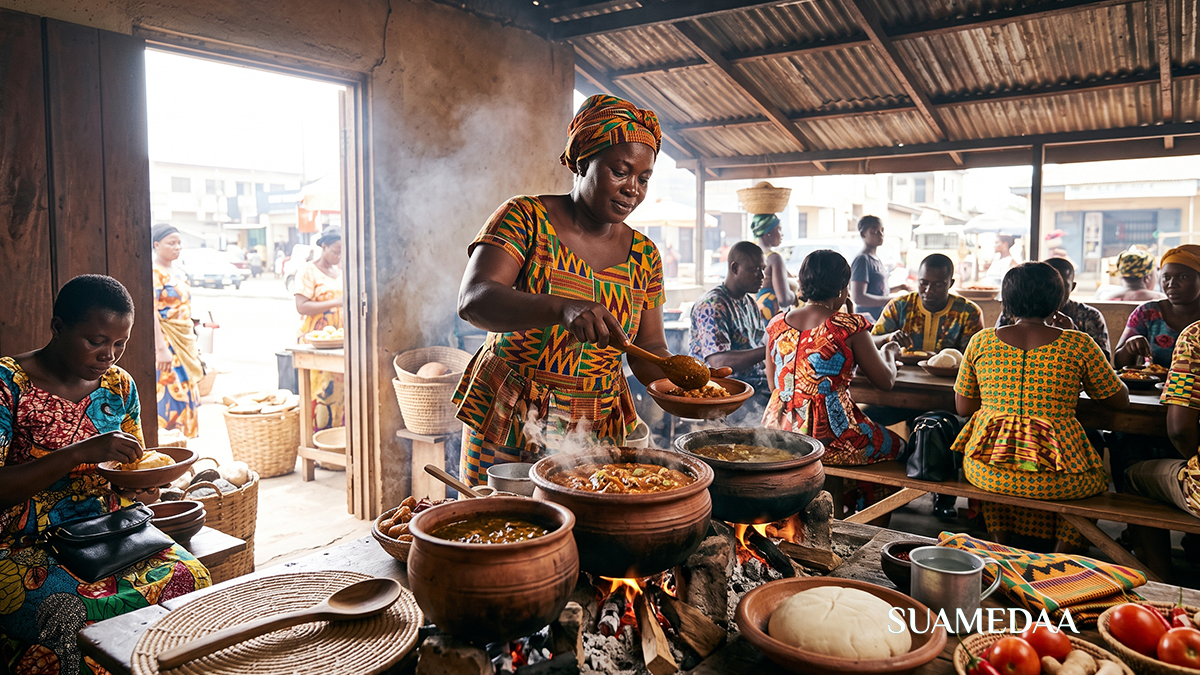
A chop bar is not a quaint cultural artefact for tourists to observe. It is the institution around which a significant proportion of Accra’s working population organises its midday meal, and approaching it as anything other than a functioning, serious establishment for real food is to misunderstand it entirely.
The term comes from West African Pidgin, where chop simply means food. A chop bar is typically a neighbourhood establishment, often partially open to the outside air, with large pots of soup and stew on a fire or stove, and the day’s dishes visible for selection. The ordering logic is straightforward: choose your swallow, choose your soup, choose your protein. Prices are denominated in Ghana cedis and are accessible by any standard. The food is cooked fresh, changes daily, and runs out when it runs out. Most chop bars open between six in the morning and eight, and close by early afternoon when the pots are empty. Arriving late is a reliable way to find that the dish you wanted has already been served to someone who got there first.
Eating at a chop bar requires a certain posture: you eat with your right hand, you share a table with strangers, and you are expected to eat with focus rather than ceremony. This is not a place for extended conversation over the meal. The food demands attention.
The waakye seller deserves specific mention because waakye is frequently the best breakfast available in Accra and the waakye specialist is a distinct figure in the city’s food landscape. Auntie Muni’s in Nima is among the most celebrated of these specialists, drawing a cross-section of Accra for a dish that, in the right hands, achieves a completeness that more elaborate cooking rarely matches. The combination of perfectly cooked rice and beans, the dark colour from the millet leaves, the fried fish, the boiled egg, the spaghetti sitting in a small heap alongside everything else: it is one of those meals that makes more sense with each component than it would without any one of them.
At Makola Market, the central market that has been the commercial heartbeat of Accra for generations, the stalls selling banku and tilapia represent a particular intensity of the chop bar experience. The fish is grilled to order on charcoal, the pepper sauce is made fresh, and eating here is inseparable from the sensory environment of one of West Africa’s great markets.


The concept of the modern chop bar has also produced at least one significant institutional expression. The Chop Bar, with locations including the A&C Mall, represents a cleaner, more structured version of the traditional chop bar experience, serving waakye, banku, fufu, and the full Ghanaian canon in a setting that is accessible to visitors who find the spontaneity of a roadside stall slightly daunting on a first encounter. The food is the same; the friction is lower.
Street Food After Dark
Accra’s street food is not primarily a daytime phenomenon. As the city cools in the evening and the roads come alive with the particular energy of Accra after sunset, the street food vendors who define the city’s nocturnal food culture take their positions.
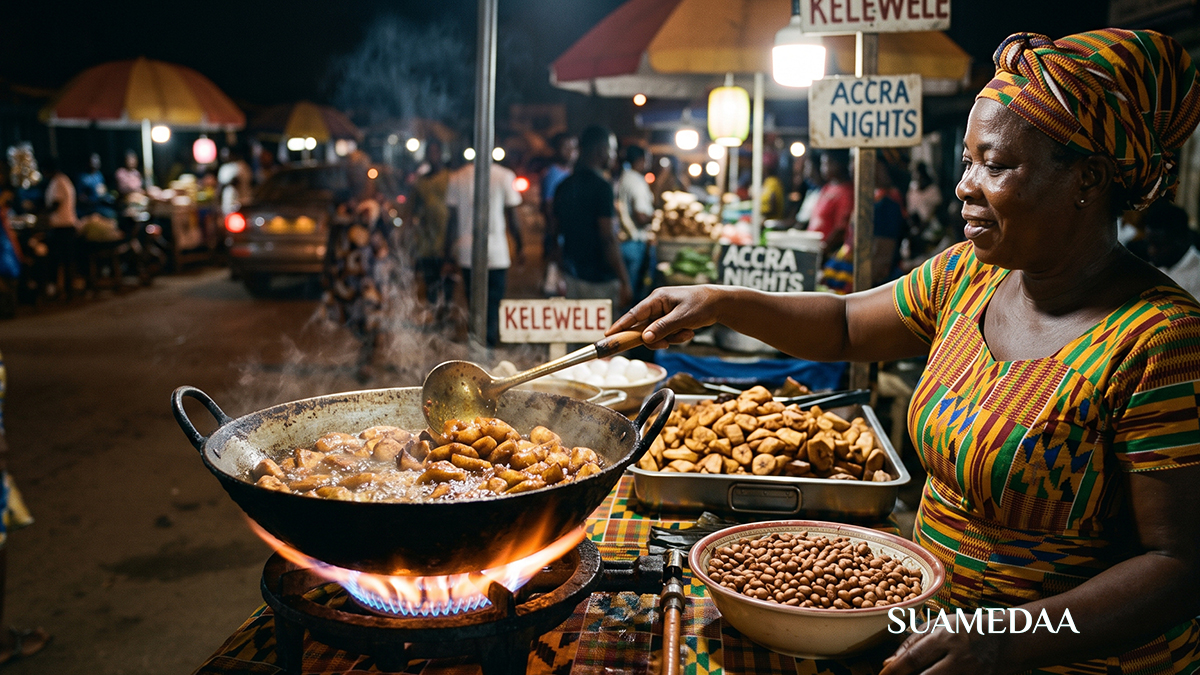
Kelewele is the presiding deity of this evening economy. Ripe plantain, cut into chunks or diagonal slices, marinated in ginger, garlic, and chilli, and deep-fried until the exterior caramelises and the interior softens into a yielding sweetness, is sold from roadside kiosks throughout Osu, Labadi, and the residential neighbourhoods of Greater Accra. The combination of kelewele with roasted groundnuts, served in a twist of newspaper or a small plastic bag, is a snack that seems perfectly calibrated to the time and place of its consumption. It costs very little and delivers a great deal.
Kyinkyinga, those grilled skewers coated in a mixture that incorporates ground peanuts, dried chilli, and various spices, is the street food for the evening crowd. The skewers cook over charcoal at corners and junctions throughout the city, the smoke and the smell serving as a navigational beacon visible and detectable from some distance. The meat is usually beef or chicken, sometimes offal, and the suya coating absorbs the smoke of the grill in a way that distinguishes it from any indoors preparation.
Bofrot, the Ghanaian fried dough ball, is the morning street food that carries people through the early hours. Slightly crisp on the outside, soft and yielding within, sold from head-carried baskets by vendors who move through the streets before full daylight, bofrot is the kind of food that works entirely in its context and loses something in any other.
Kenkey, the fermented corn dough steamed inside corn husks or plantain leaves, is fundamentally different from banku despite sharing cassava as a common ingredient. The fermentation gives kenkey a more pronounced sourness and a denser, more compact texture. It is typically paired with fried fish and shito, the black pepper sauce made with dried fish, prawns, and a mixture of spices cooked down in palm oil until the moisture evaporates and the mixture becomes an intense, shelf-stable condiment that appears as a flavour base throughout the Ghanaian table. A properly made shito is worth seeking out on its own.
The Neighbourhood Guide: Where to Eat and Why
Osu: The Food Capital
Osu, the strip along Oxford Street and its surrounding streets, is Accra’s most concentrated eating district. It is where the city’s dining scene has historically located its international restaurants, its upscale bars, its casual Ghanaian kitchens, and the food establishments that serve the blend of residents, expatriates, and visitors who make up the area’s foot traffic.
Buka is the restaurant that most serious visitors to Accra are pointed toward for an introduction to Ghanaian cuisine at a comfortable remove from the pure chop bar experience. The tree-house-like upstairs seating is distinctive, the cultural décor creates a considered environment, and the food, fufu with light soup, banku with grilled tilapia, okra stew, groundnut soup with chicken, is prepared with the seriousness that the dishes deserve. Buka has become a standard reference point partly because it delivers on its promises consistently, which in any city’s restaurant scene is its own form of achievement.
Homemade By Gene offers a different register entirely: a no-fuss takeout spot with a daily-changing menu that rotates through the kind of dishes a talented home cook would rotate through across the week. The gari foto, a cassava dish that rarely gets the attention it deserves from food writers, is one of the best versions available in the city. The street-style meat pies are worth seeking out.
Le Petit Oiseau, in its position as one of Accra’s most considered dining destinations, has earned its reputation through a kitchen that takes modern West African cooking seriously without self-congratulation. Pan-seared grouper from the Gulf of Guinea, goat kebabs in brown stew, a natural wine list chosen with real thought: this is a restaurant that belongs in any serious account of what is happening in West African cooking at its most ambitious. The French influence in the technique does not overwhelm the Ghanaian character of the ingredients.
Pomona brings Neapolitan pizza to Osu with genuine fidelity to the form, the dough properly rested, the tomatoes properly sourced, the wood-fired oven producing crusts with the char and chew that the style demands. Its sister bar, SOL, provides a poolside cocktail option in the same compound. For an evening that does not want to be complicated by questions of what to eat, Pomona simplifies things considerably.
Chilli Ji represents a different strand of Osu’s international diversity: an Indo-Chinese restaurant with South Indian spices applied to Chinese cooking forms, producing dishes that reflect the culinary world its kitchen comes from rather than approximating a generic notion of either cuisine. The podi ghee masala dosa and the Chettinad curry are the dishes that regulars return for.
East Legon: Where Accra Goes for a Big Night Out
East Legon has developed into the city’s destination for the kind of evening that involves good food, strong cocktails, and staying out later than originally planned.
Chez Amis Bar and Grill brings Ivorian cooking to the East Legon dining scene with a focus on tilapia that has made it a reference point for grilled fish in the city. The tilapia at Chez Amis is seasoned to the bone, the flavour reaching into the flesh rather than sitting on the surface, and it is served with fried onions and three pepper sauce variations that approach the fish from different directions.
Kanda and Airport Residential Area: Neighbourhood Depth
Away from the well-documented strips of Osu and East Legon, the Kanda and Airport Residential Area neighbourhoods contain restaurants that reward the effort of leaving the tourist circuit.
Bella Afrik on Liberation Road in Kanda combines an Italian menu, specifically wood-fired thin-crust pizza with a satisfyingly chewy texture and proper carbonara, with an interior environment that manages rustic and luxurious simultaneously. Locally made wicker lampshades, artwork from Ghanaian artists, and live music in the evenings, particularly the legendary Sunday night sessions, make this a restaurant where the experience extends beyond what is on the plate. The kitchen takes the food seriously enough that the atmosphere does not become a substitute for it.
Azmera brings a buffet format to the task of presenting traditional Ghanaian cooking alongside Ethiopian influences, the combination reflecting the city’s broader African character. Multiple stews, fufu, waakye, tatale (the pan-fried plantain fritters that are a slightly different proposition from kelewele), and a weekend highlife band make Azmera a destination for a long, leisurely meal that does not hurry toward any particular conclusion.
Big Joseph T, in the Airport Residential Area, is the sports-focused chop bar for the neighbourhood, serving jollof rice and fried plantain in the company of football on screens and cold beer from the refrigerator. It is what it is: very good at being what it is, and unpretentious about it.
Santoku, also in the Airport Residential Area on North Airport Road, represents the upper end of Accra’s dining register entirely. A Japanese restaurant developed with input from Nobu-trained chefs, it serves assorted shellfish sashimi and hosomaki sushi in a refined environment that operates at a premium price point. Advance booking is advisable. The restaurant serves a clientele that includes diplomats and the senior international community, and it operates accordingly.
South La and the Beachfront: Where the Ocean Meets the Plate
The beachfront strip at South La has produced two of Accra’s most distinctive dining experiences, and they share a common address on the Accra coastline without sharing very much else.
Sandbox Beach Club is what happens when a terracotta-walled resort aesthetic arrives on a West African beach and decides to stay. The infinity pool, the direct beach access, the cocktail list that is more elaborate and more reasonable in price than the setting suggests: Sandbox has established itself as a place for an evening that begins with a sundowner and develops at its own pace. The food, fish tacos and seafood rice among the signatures, punches above the average for a beach club setting, and the view of the Atlantic at sunset is an argument for lingering.
Makosa, at the Sandbox Beach Club complex on Fourth Otswe Street, takes a more deliberate approach to cooking. The pan-African menu ranges across the continent: North African eggplant tagine, Nigerian-inspired yaji lamb with moi moi, and dishes that use the breadth of African culinary tradition as a creative vocabulary. This is cooking that takes a position about what African food is capable of, and it is worth attention from anyone who wants to understand what the more ambitious end of the Accra dining scene is attempting.
Cantonments and Labone: The Quiet Premium
The Cantonments and Labone neighbourhoods, quieter and more residential than Osu, have developed a cluster of restaurants and cafes that serve the professional and diplomatic community that populates these streets.
Bistro 22 in Cantonments occupies the fusion territory between the Ghanaian kitchen and international cooking forms. Grilled tilapia with European vegetable preparations, and jollof-risotto, a hybrid that sounds improbable and tastes better than it sounds, represent an approach to Ghanaian ingredients that looks outward and inward simultaneously.
Jamestown Coffee in Osu, though not strictly in the Cantonments district, serves a city that often needs somewhere quiet to work before the lunch crowd arrives. High ceilings, locally sourced Ghanaian coffee, and all-day food that includes breakfast and grilled dinners give the space a range that carries it through the full day.
The Market Table: Makola and Beyond
To eat seriously in Accra is eventually to reckon with Makola Market, the central market that has operated in one form or another since the colonial period. Makola is not primarily a food destination in the restaurant sense, but the food available within and around it constitutes a culinary education in Ghanaian ingredients and preparation.
The pepper sellers, the plantain sellers, the women selling smoked fish from large enamel bowls, the stalls where fresh spices are ground to order: this is where the city’s restaurant kitchens source their ingredients and where, if you follow the right path through the market, you encounter the building blocks of Ghanaian cuisine in their most direct form.
Food tours operating from Accra use Makola as their primary classroom. A guided tour through the market followed by a lunch incorporating what has been seen and tasted is one of the most direct ways to connect the finished dish on a restaurant table with the ingredient chain that produces it.
The Accra Coffee Moment
Accra has, in the past decade, developed a coffee culture that reflects both the country’s status as a cocoa producer and a broader shift in how the city’s professional class approaches the middle of the morning.
Ghana is not primarily a coffee-growing country, but Ghanaian coffee from the Volta Region and elsewhere exists in small but growing quantities, and the city’s better cafes have begun to champion it with the same intentionality that a Nairobi or Addis Ababa cafe might bring to local beans. The best of these cafes combine specialty coffee with food that extends from breakfast through lunch, and they have become a third space in a city that has historically had fewer of them than its energy and creativity warrant.
A Note on the Expanding Table
What is happening in Accra’s food scene in 2026 goes beyond the accumulation of new restaurants. It reflects a wider conversation about what Ghanaian food is, what it can be when taken seriously as a culinary tradition, and what it means to be a food culture at the intersection of tradition and ambition.
The best chop bars in the city have not changed their essential proposition: fresh food, honest pricing, a transaction that is entirely about sustenance and community. The most ambitious new restaurants are asking a different question: what happens when you apply the full resources of a thoughtful kitchen to the ingredients and techniques that West African cooking has developed over centuries?
Both questions are worth engaging with. Accra is one of those rare cities where they can be engaged with on the same day, sometimes on the same street, always within a short distance of each other. A bowl of waakye from a market stall at breakfast, kelewele from a night vendor after midnight, and in between, a dinner that takes the ingredients connecting those two meals and considers them with the full attention of a kitchen that knows what they are. That range, from the chop bar to the fine dining table and back again, is what makes eating in Accra not just pleasurable but genuinely interesting. A revolving eco herbal therapy.