Packing for Africa – One List for Savanna, City, and Coast
Africa is not a destination. It is a continent of 54 countries, spanning desert and rainforest, savanna and coastline, ancient cities and gleaming financial districts, rural villages and rooftop bars. When someone says they are “packing for Africa,” what they mean is almost always something far more specific: a safari in the Masai Mara, a week in Lagos for business, a beach holiday in Zanzibar, a city break in Cape Town, a road trip through Namibia, or some combination of all of the above stitched into one multi-destination trip.
That specificity matters enormously when it comes to what you pack, because the requirements of each environment are genuinely different. What you need in the bush in Tanzania is not what you need on the streets of Accra. What protects you from mosquitoes in the Congo does not necessarily help you in a Cape Town winter. And what impresses at a rooftop restaurant in Nairobi is a world away from what you need wading through a waterhole on foot safari.
This guide solves that problem with a single master list organized by environment, built so that you can assemble exactly the right kit whether your trip takes you to one of these settings or all three. Pack for your actual itinerary, not for a generic idea of a continent.


The Universal Foundation: What Goes on Every Africa Trip
Before breaking down by environment, here are the items that earn their place in every bag regardless of where on the continent you are headed. These are non-negotiables.
Documents and Admin
Carry physical and digital copies of everything important. Your passport should have at least six months of validity beyond your return date, a rule enforced strictly at many African borders. Store a color scan of your passport, your visa approval letters, your travel insurance policy, your yellow fever vaccination certificate (required for entry to many African countries and for re-entry to several non-African countries after visiting the continent), and your emergency contacts in a cloud service you can access from any phone.
A small, flat document organizer kept in your carry-on is useful for keeping physical copies of all of the above accessible without digging through your entire bag at an immigration counter.
Health and Medication
Antimalarials. Malaria is present in large parts of sub-Saharan Africa, and prophylaxis is strongly recommended for most destinations below the Sahara. The three most commonly prescribed options are atovaquone-proguanil (Malarone), doxycycline, and mefloquine. Which one is right for you depends on your destination, trip length, and medical history. See a travel health clinic or GP at least four to six weeks before departure, since some regimens need to begin before you arrive.
Mosquito repellent. DEET at 30 to 50 percent concentration remains the most effective repellent for African mosquitoes, particularly those that carry malaria. Picaridin-based repellents are a good DEET-free alternative for those with sensitive skin. Carry enough for your trip since reliable formulations can be hard to find in smaller towns.

Water purification. In cities and established hotels, tap water is generally not safe to drink without treatment. Carry water purification tablets or a compact UV water pen such as a SteriPen as a backup, particularly if any part of your itinerary involves rural areas, camping, or travel where bottled water may not be consistently available.
A comprehensive travel health kit. This should include: ibuprofen and paracetamol, antihistamines, an oral rehydration solution, antidiarrheal tablets such as loperamide, a broad-spectrum antibiotic such as azithromycin or ciprofloxacin if your doctor will prescribe one for travel, antiseptic wipes and cream, plasters and blister patches, a digital thermometer, and any personal prescription medication in sufficient supply plus a small extra quantity in case of delays.
Sunscreen. SPF 50 minimum. The equatorial sun across much of Africa is significantly more intense than most visitors are accustomed to, even when cloud cover makes it feel moderate. Carry more than you think you need, since quality sunscreen is expensive and inconsistently available outside major cities.
Electronics
A universal travel adaptor is essential. Africa uses a mixture of plug types: Type G (three rectangular pins, used in Ghana, Nigeria, Sierra Leone, and several East African countries), Type C (two round pins, widely used across Francophone West Africa and parts of North Africa), Type D (three large round pins, used in India and some East African countries), and Type M (three large round pins, used in South Africa). If your trip crosses multiple countries, a multi-plug universal adaptor covers you everywhere.
A power bank with a high capacity (at least 20,000 mAh) is worth its weight. Power outages are common in many parts of the continent, and keeping your phone, camera, and other devices charged is not something you want to leave entirely to grid reliability.


A compact plug-in surge protector is a worthwhile addition for longer trips, particularly if you are carrying expensive electronics. Power surges during and after outages are a real risk in many African cities.
Download offline maps for every city and region you are visiting through Google Maps or Maps.me before you depart. Mobile data in rural areas is often slow or absent, and having offline navigation removes dependence on connectivity at the moments you most need directions.
Money and Connectivity
Cash remains king in large parts of Africa, even in countries with growing mobile money infrastructure. Carry US dollars or euros in small denominations alongside whatever local currency you are using, since dollars and euros are accepted as emergency currency in most African countries and are the easiest foreign exchange. ATMs in major cities generally work reliably, but carry enough cash to cover at least three days of expenses in case of machine downtime or network outages.
A travel debit card with low or no foreign transaction fees, such as Wise or Revolut, is worth setting up before you travel if you do not already have one. The exchange rates are typically far better than airport currency exchange counters or hotel front desks.
Regarding connectivity, an international SIM card purchased at your destination’s main airport is often the cheapest and most reliable way to get data. MTN, Vodafone/Telecel, Airtel, and Safaricom are among the largest carriers across sub-Saharan Africa. Alternatively, an eSIM activated before departure through services like Airalo or Holafly can give you data coverage across multiple African countries without needing a physical SIM.
Bag Strategy
The carry-on-only approach works well for city trips to Africa but struggles on multi-environment itineraries where you need gear for the bush, the beach, and a business dinner. For most trips that span more than one environment, the most practical approach is a medium-sized checked bag of 20 to 25 kilograms combined with a well-organized carry-on or daypack.
Avoid hard-shell luggage if any part of your itinerary involves small prop planes, safari vehicles, or overland travel, since rigid suitcases do not compress well into the luggage holds of small aircraft or the roof racks of Land Cruisers. A soft-sided duffel or a structured backpack is far more versatile.
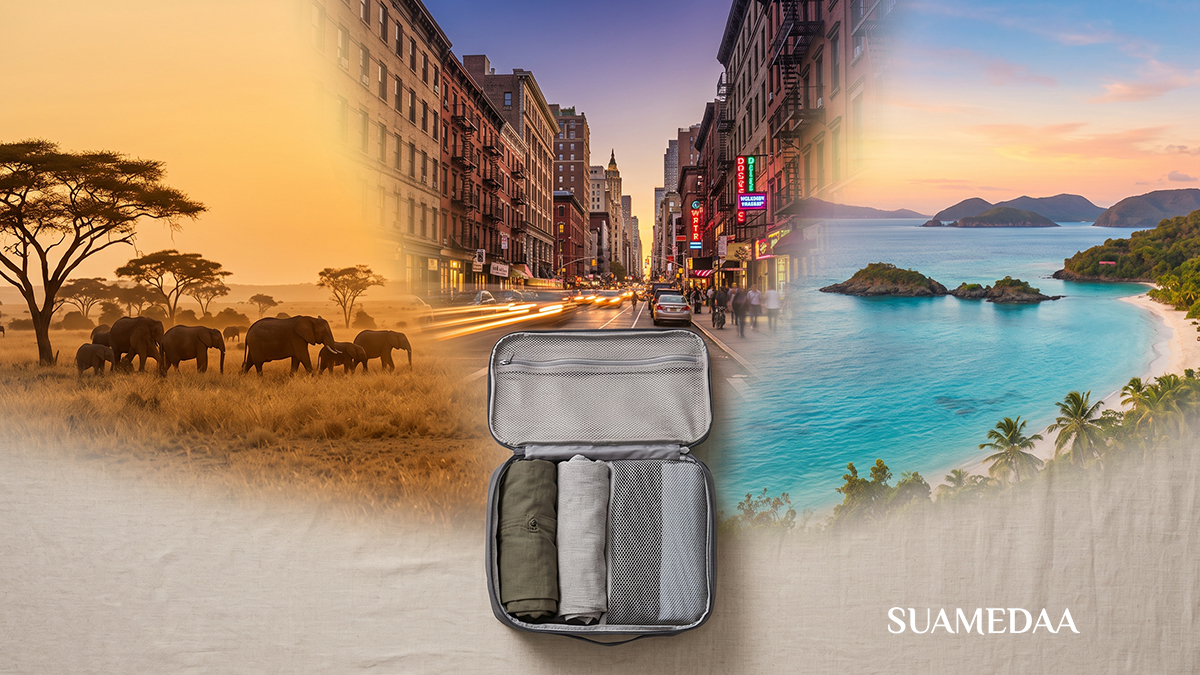
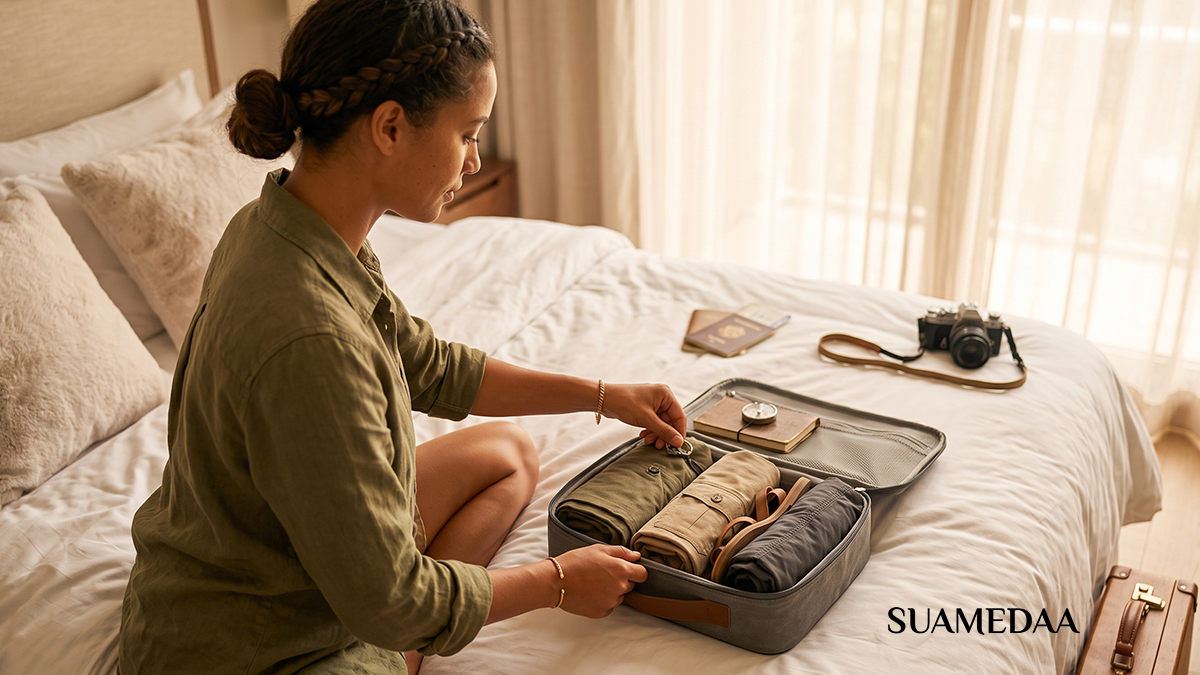
Packing cubes are not optional on a multi-environment Africa trip. They are the difference between a bag that takes you three minutes to repack in a Nairobi hotel and one that takes twenty. Use them to separate environments: one cube for safari wear, one for city clothes, one for beach items.
A small daypack or cross-body bag is essential for day-to-day movement in cities. Keep it slim and unpretentious. Flashy bags attract unnecessary attention in busy urban environments. A pacsafe-style anti-theft bag with slash-resistant straps is worth considering in high foot-traffic areas.
Packing for the Savanna and Safari
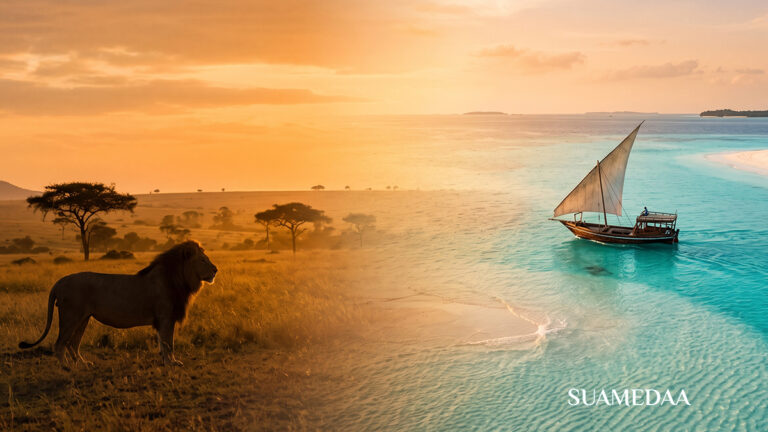
This section covers any destination involving game reserves, national parks, bush camps, walking safaris, or extended time in rural African landscapes. This includes destinations such as the Masai Mara and Amboseli in Kenya, the Serengeti and Ngorongoro in Tanzania, Kruger and the surrounding private reserves in South Africa, Chobe and Okavango in Botswana, Murchison Falls in Uganda, and similar environments elsewhere on the continent.
Clothing for Safari
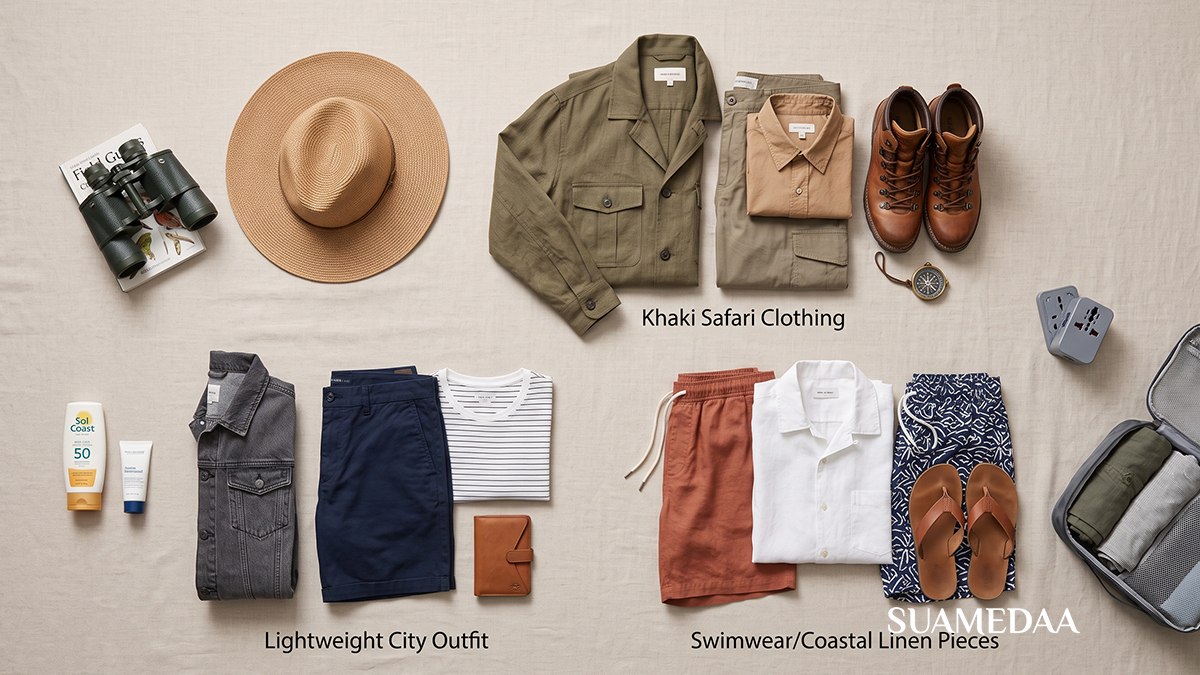
The single most important rule for safari clothing is color. Animals in the bush are acutely sensitive to movement and color. Bright colors, white, and black are either too visible to wildlife or, in the case of black, known to attract tsetse flies in certain regions. The palette you want is the bush itself: khaki, olive green, sand, stone, brown, and tan. These colors blend into the landscape and do not disrupt the experience for you or for wildlife.
Pack the following:
Lightweight long-sleeved shirts in neutral tones, at least three. Long sleeves protect against sun exposure and insects during morning and evening game drives when mosquito activity peaks. Look for shirts in quick-dry, breathable fabrics since you will likely be wearing them repeatedly between washes at remote camps.
Convertible trousers that zip off to shorts, two to three pairs. Temperatures in the savanna vary considerably between early morning game drives, midday downtime, and evening hours. Convertible trousers give you flexibility without packing two separate items. Avoid jeans entirely: they are heavy, take forever to dry, and are uncomfortably hot in the African sun.
A lightweight fleece or insulated mid-layer. Early morning game drives in East and Southern Africa can be significantly colder than visitors expect, particularly between June and August. Temperatures in the Masai Mara and the Serengeti at 6am can drop to single digits Celsius. A packable fleece or light down jacket that compresses into your daypack is essential.
A windproof and waterproof outer layer. Even in dry season destinations, afternoon rain showers are not uncommon, and the wind on open safari vehicles can make a rain shell invaluable. Look for something packable that fits in the bottom of your daypack.
Comfortable walking shoes with ankle support. For walking safaris, ankle support matters. A lightweight hiking boot or trail shoe is better than a tennis shoe or sandal for walking on uneven terrain in the bush. Break them in before your trip.
Sandals or flip-flops for camp. Most bush camps and lodges have a clear walking path between tents, dining areas, and common spaces, and sandals serve well for camp movement during downtime.
A wide-brimmed hat. A good hat protects your face, ears, and neck from direct sun during game drives where you may be exposed for four to six hours with no shade. Baseball caps leave the ears and neck unprotected. A wide brim covering all angles is significantly better.
Buff or neck gaiter. On open safari vehicles, dust is a constant companion. A buff worn around the neck and pulled up over the nose and mouth when the vehicle moves makes a substantial difference to comfort on long drives through dry landscapes.
Lightweight merino wool underlayers. Merino wool regulates body temperature better than synthetic fabrics in environments that go from cold pre-dawn to hot midday sun. It is also naturally odor-resistant, which matters when access to laundry is limited.
Safari-Specific Gear
Binoculars. This is the single most impactful piece of gear you can bring on a safari. The difference between watching a lion at 300 meters through binoculars and watching it with the naked eye is the difference between an extraordinary experience and a frustrating one. A compact pair with 8x or 10x magnification is sufficient. Zeiss, Nikon, and Swarovski make excellent safari binoculars, but mid-range options from Celestron or Vortex are far more affordable and still excellent.
Camera equipment. A telephoto lens of at least 300mm is strongly recommended for wildlife photography, since the rule at most game reserves prohibits approaching close enough for a standard lens to fill the frame. A 70-300mm zoom lens covers a wide range of situations. A monopod or beanbag for stabilization is worth packing since tripods are impractical in a moving vehicle.
Dust bags and covers. Dust is hard on camera equipment. Carry a camera cover or a simple drawstring cloth bag to protect your camera during dry, dusty game drives.
Insect repellent specific to the time of day. DEET-based repellent is essential for dawn and dusk, the peak hours for the Anopheles mosquito that transmits malaria. Apply it before going out and reapply after any sweating.
A headlamp with red-light mode. Camp paths are not always lit, and walking between your tent and the communal area in the dark in an unfenced bush camp requires a light that does not attract insects the way white light does. Red-light mode on a headlamp is ideal. Petzl and Black Diamond make reliable, compact options.
A dry bag or waterproof pouch. For protecting electronics during river crossings, boat safaris on the Chobe or the Nile, or unexpected afternoon rain.
Packing for African Cities
This section covers urban destinations: Accra, Lagos, Nairobi, Cape Town, Johannesburg, Dakar, Abidjan, Kigali, Kampala, Dar es Salaam, Addis Ababa, Casablanca, and similar cities across the continent. African cities are diverse, cosmopolitan, and increasingly fashion-conscious. The days of treating “Africa” as a place where anything goes sartorially are long gone. Dressing with consideration signals respect and helps you blend in rather than broadcasting tourist status.
Clothing for City Travel
Smart casual tops. Two to three collared shirts or blouses that can be dressed up or down depending on your plans. Linen and cotton breathe well in hot urban climates. In cities like Nairobi or Johannesburg where evenings can be cool, a lightweight knit or smart-casual jacket extends your options.
One versatile dress or one pair of tailored trousers. For business meetings, nicer restaurants, or evening events, a single more polished outfit that packs flat is sufficient for most trips. African cities have vibrant fashion scenes, and being noticeably underdressed at a good restaurant or a professional meeting is easy to avoid.
Casual trousers or chinos. Two pairs of well-fitting casual trousers in neutral tones work across a wide range of city situations from daytime exploring to evening dining.
Comfortable walking shoes. African cities often involve more walking than visitors expect, across unpaved sidewalks, markets, and uneven terrain. Comfortable shoes with good support that still look presentable are worth prioritizing over either fashion sneakers or hiking boots.
One pair of dressier shoes. For anything formal or evening. Loafers or low-heeled sandals work well and take up minimal space.
Lightweight rain jacket. Urban tropical rain comes fast and heavy, particularly in West African cities during the rainy season. A packable rain jacket folds into a jacket pocket and saves you from a complete soaking.
A modest cover-up or lightweight scarf. Useful for visiting mosques, churches, and traditional markets where modest dress is expected, and for women navigating male attention in certain city environments. A large lightweight scarf serves double duty as a wrap and as protection against aggressive air conditioning in offices and restaurants.
City-Specific Considerations
Security awareness matters in most African cities as it does in major cities anywhere in the world. Avoid wearing expensive jewelry or watches in busy markets or on public transport. Keep your phone in your front pocket or inside a zipped bag when walking in crowded areas. Use hotel safes for passports and excess cash.
Ride-hailing apps including Uber, Bolt, and Yango operate in most major African cities and are considerably safer than hailing an unmarked taxi from the street. Download the apps before you arrive and set up payment.
In cities located in predominantly Muslim regions or countries, dress conservatively as a matter of respect. This is particularly relevant for travel in Northern Nigeria, northern Ghana, Senegal, Dakar, and North African cities like Casablanca and Cairo. Covered shoulders and knees for both men and women is a reasonable default.
Packing for the African Coast and Islands
This section covers beach and island destinations: Zanzibar, Diani and Watamu in Kenya, Cape Verde, the Seychelles, the beaches of Mozambique, Saly and the Petite Cote in Senegal, the coasts of Ghana and Togo, Nosy Be in Madagascar, and similar coastal environments.
Clothing for the Coast
Lightweight, quick-dry swimwear, two pieces minimum. On a beach or island trip with daily swimming and snorkeling, one piece of swimwear never fully dries between uses. Two ensures you are never putting on damp swimwear.
Rashguard or UV-protective swim shirt. Extended time in the water on equatorial coasts means serious UV exposure. A rashguard protects your back, shoulders, and arms without requiring repeated sunscreen reapplication over wet skin.
Lightweight linen or cotton trousers and shorts. Breathable fabrics in relaxed cuts that transition from beach to a casual beachside restaurant without effort.
Loose, breathable tops or tunics. Easy, informal, and cool. On island destinations particularly, the dress code outside resort grounds often trends modest, so having a loose top or tunic that covers the shoulder and upper thigh is useful when exploring towns and local markets.
A pair of beach sandals and a pair of walking sandals. Flip-flops are fine for the beach and the pool but provide no support for walking on uneven town streets or rocky coastal paths. A sturdier walking sandal such as a Teva or Birkenstock handles both.
One light layer for evening. Sea breezes after sunset can make evenings cooler than expected, and restaurants and bars on island destinations are often open-air. A lightweight cotton cardigan or a long-sleeved linen shirt covers you.
A sarong or pareo. One of the most versatile items you can pack for a coastal Africa trip. It works as a beach cover-up, a towel in a pinch, a scarf against air conditioning, a modesty wrap when visiting towns, a pillow on long journeys, and an impromptu picnic blanket. Buy a local one when you arrive and you have a practical item and a memory in one.
Coastal-Specific Gear
High-SPF reef-safe sunscreen, in quantity. SPF 50 minimum, and significantly more than you think you need. Sunscreen is expensive and often counterfeit in tourist areas. Reef-safe formulas matter on destinations like Zanzibar and Mozambique where coral reef ecosystems are protected.
Snorkel mask and fins. Rental equipment at beach destinations is available but often worn, ill-fitting, and unreliable. If snorkeling is on your itinerary, your own mask and snorkel is a worthwhile and compact investment. Fins can be rented where your own would be impractical to pack.
Waterproof phone case or dry pouch. For phones on boats, at the beach, or during water activities. A basic waterproof pouch that hangs around the neck costs very little and protects against a common and expensive accident.
Insect repellent for evenings. Coastal areas and islands in East Africa, particularly Zanzibar, have significant mosquito populations and malaria risk. Evenings on the terrace with cocktails in hand are precisely when the Anopheles mosquito is most active. DEET repellent applied before sunset is as important here as in the bush.
Lightweight microfibre towel. Some guesthouses and boutique beach properties do not provide beach towels, and your own microfibre towel dries in minutes, takes up negligible space, and weighs almost nothing.
The Master Packing List: Consolidated
To make this practical, here is the full consolidated list organized by category, annotated for which environment each item is essential versus optional.
Documents: Passport, visa documentation, vaccination certificate especially yellow fever, travel insurance policy, emergency contacts, copies of everything in cloud storage.
Health: Antimalarials, DEET repellent, SPF 50 sunscreen, water purification, oral rehydration salts, antidiarrheal tablets, antihistamines, broad-spectrum antibiotic if prescribed, plasters and wound care, thermometer, personal prescriptions.
Electronics: Universal multi-plug adaptor, high-capacity power bank, surge protector, offline maps downloaded, universal charging cables, camera with telephoto lens for safari, spare memory cards and batteries, waterproof pouch for electronics.
Money and connectivity: Mix of US dollars or euros and local currency, travel debit card with no foreign transaction fees, local SIM or activated eSIM.
Clothing universal: Three to four neutral-tone tops, two pairs of versatile trousers, one smart-casual outfit, comfortable walking shoes, packable rain jacket, wide-brimmed hat, lightweight scarf or pareo, underwear and socks for the full trip.
Clothing safari additions: Lightweight fleece, convertible zip-off trousers in khaki or olive, long-sleeved neutral shirts, ankle-support walking shoes, buff or neck gaiter, merino underlayers.
Clothing city additions: One to two collared or smart casual tops, one dressier option, loafers or low-heeled sandals.
Clothing coast additions: Two pieces of swimwear, rashguard, beach sandals and walking sandals, loose linen or cotton pieces, sarong or pareo.
Safari-specific gear: Binoculars 8x or 10x, headlamp with red-light mode, dust protection for camera, dry bag.
Coast-specific gear: Snorkel mask, reef-safe sunscreen in quantity, microfibre towel, waterproof phone pouch.
Bags: Medium checked soft-sided bag, organized carry-on or backpack, slim day bag or anti-theft crossbody, packing cubes.
The One Principle That Ties It All Together
Packing for Africa, whether savanna, city, or coast, comes down to one underlying principle: versatility over volume. The travelers who pack most successfully for multi-environment African trips are not the ones who bring the most gear. They are the ones who have thought carefully about which items pull double or triple duty, which environments their specific itinerary actually requires, and what can be bought, borrowed, or done without when they arrive.
Bring less than you think you need. Leave space for what you find when you get there, whether that is a length of kente fabric from a market in Kumasi, a hand-carved wooden piece from a Zanzibar curio shop, or a hand-painted canvas from a Cape Town gallery. Those are the things worth carrying home. The third pair of shoes you were not sure about is not.