Speak Like an Accra Local – A Starter Guide to Ga
You can get by in Accra with English. Most people speak it, and signs, menus and radio ads are full of it. But listen closely on a trotro to Kaneshie or at a chop bar in Osu and you will notice something: the city’s everyday talk is a rich blend of English, Pidgin, Twi and Ga, and Ga is the one with the deepest roots here.
This guide is not a vocabulary list. It is about the words, habits and cultural cues that make you sound like you belong.
First, Know Whose City This Is
Ga is the home language of the Accra coast. Ga is a Kwa language spoken in and around the capital Accra by the Ga people, and the Ga peoples were organized into six independent towns: Accra (Ga Mashie), Osu, La, Teshie, Nungua, and Tema. Those names are still living neighbourhoods today, and each has its own chiefs and traditions.

Here is a fun fact that locals love: the name “Accra” is not actually Ga. It comes from the Akan word Nkran, meaning “ants”. In Ga, the city itself is often simply called Ga or Gaga. Knowing this instantly marks you as someone who has done their homework.
The good news for learners: Ga has relatively little dialectal variation, so what you learn in Jamestown will work in Teshie too.
Ga Words You Already Hear Every Day
Accra slang is full of Ga, even when people are speaking “English.” Start with these.
Chale. The most famous word in Accra, used for “friend,” “bro” or just to add emphasis. It is commonly listed as a Ga term meaning friend, though some trace it back to colonial era English, where Gold Coasters began calling strangers “Charlie” much like Americans say “dude”. Either way, “Chale, how far?” is pure Accra.
Wote. A Ga word for “let’s go”, pronounced “wor-tay”. Use it when you are leaving a spot with friends.
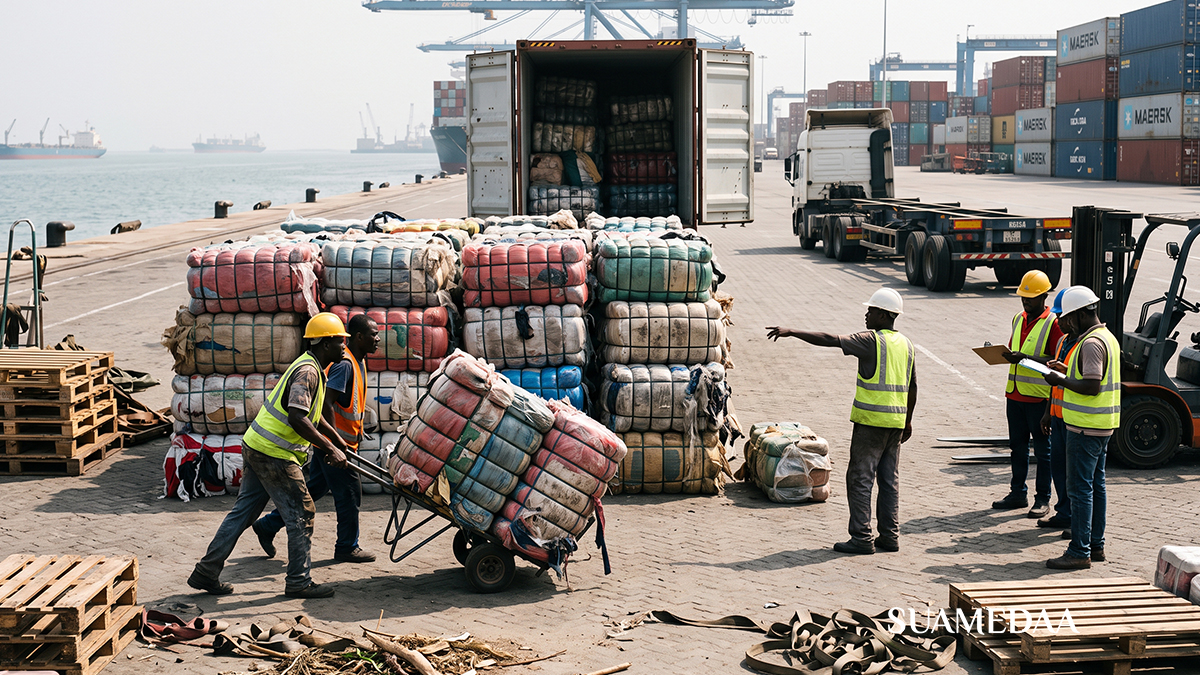


Chalewote. Flip-flops. Literally “my friend, let’s go”, a perfect description of how easily flip-flops are worn. It is also the name of Jamestown’s famous street art festival, so you will see it everywhere.
Shito. The black pepper sauce served with kenkey, fried yam and almost everything else. The word comes from Ga, where shito means pepper.
Kpokpoi. The festive dish of Homowo. It is made from ground corn and served with palm nut soup, and chiefs sprinkle it to bless the land and honour ancestors.
Oobakɛ. A warm “welcome.” The Ga Mantse, the king of Ga Mashie, has helped popularise this word in recent times, and you will increasingly see it on banners and hear it at events.
Greet Like You Grew Up Here
Every beginner learns Ojekoo for “good morning.” Locals go a step further. Try these:
| Ga | Meaning | When to use it |
|---|---|---|
| Miiŋa bo | I greet you | Any time of day, to one person |
| Miiŋa nyɛ | I greet you all | Walking into a room or a group |
| Minaokoo | I have seen you again | Someone you haven’t seen in a while |
| Ojekoo | Good morning | Mornings |
| Ojemra | Reply to Ojekoo | When someone greets you first |
| Oshwiee | Good afternoon | Late afternoon into early evening |
| Wɔshwie mra | Reply to Oshwiee (from a group) | When your group is greeted |
These come straight from Ga usage: Miiŋa bo is a general greeting to one person meaning “I am greeting you,” Miiŋa nyɛ is the version for a group, Minaokoo means “I have seen you again,” and Ojemra is the reply to Ojekoo.
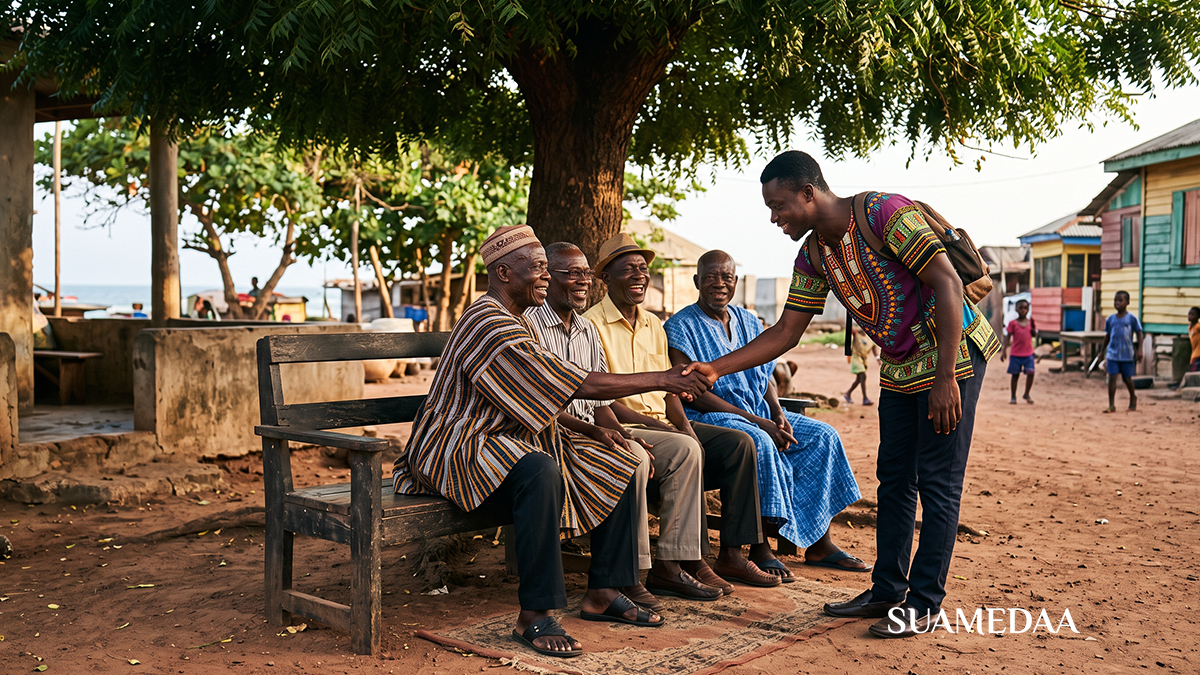
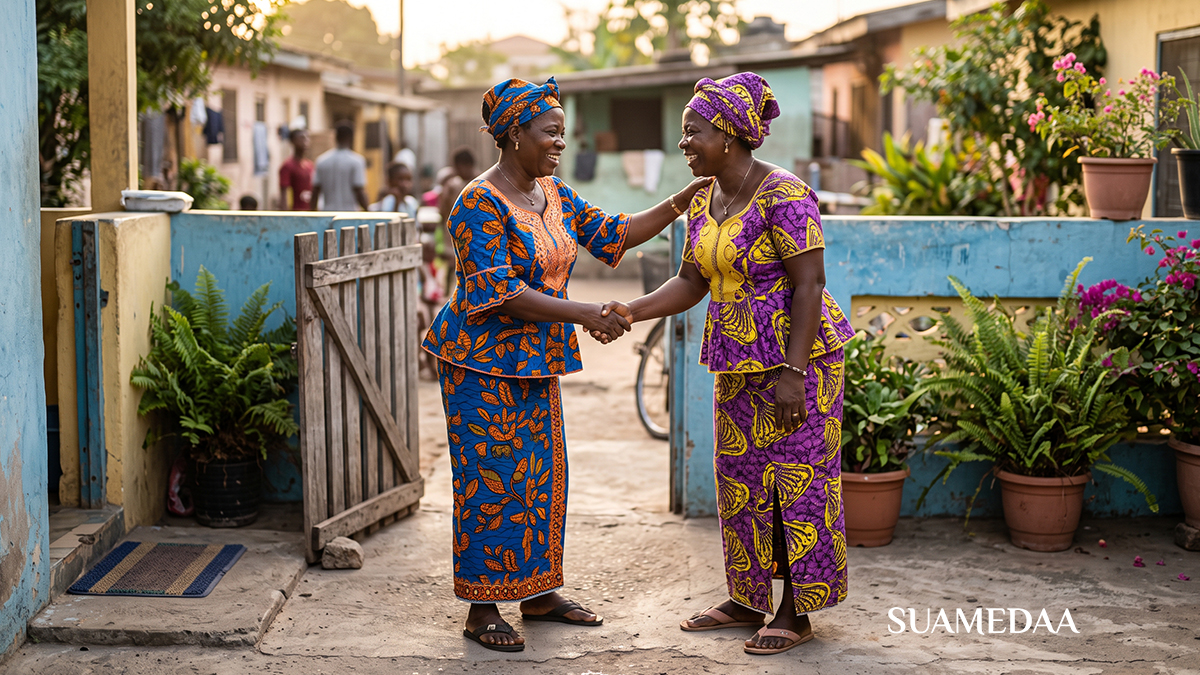
The local move: When you enter a space with several people, don’t greet just one person. Say Miiŋa nyɛ to everyone, then greet the eldest person individually. Leaving someone out, especially an older person, is noticed.
Names Tell Stories
Ga names are a doorway into Ga identity, and recognising them is a quiet sign of cultural fluency.
Nii and Naa. You will meet many men named Nii and women named Naa. These are honorific titles connected to royalty and respect, and many Ga people carry them as part of their name. The word also shows up in place names: Nima is often explained as meaning “city of the King”, since Nii means king in Ga.
Surnames. If you hear names like Lartey, Lamptey, Tetteh, Ankrah, Laryea, Quaye, Quarshie, Sowah, Odoi or Adjetey, you are very likely talking to someone with Ga roots.
Twins. Twins hold a special place in Ga culture. In Ga Mashie, the main Homowo celebration is traditionally preceded by the Twin Festival, known as Akwele Suma or Yeyeeye, when families with twins dress them, often in white, and prepare mashed yam and eggs.
The local move: If someone introduces themselves as Nii or Naa, use it. Calling people by their honorific, rather than switching to a nickname, shows respect.
Understand Homowo and You Understand the Ga
No festival shapes Ga life and language like Homowo. The name literally translates as “hooting at hunger”, and it recalls a famine in Ga history that ended in a bountiful harvest.
A few things every local knows:
- It starts with silence. Weeks before Homowo, a ban on drumming and noise known as “gbemlilaa” is imposed. If you’re told to keep the noise down in May or June, this is why. Respect it.
- It moves around. Different Ga quarters celebrate on their own schedules, so the festive atmosphere can stretch across much of August and into September.
- It can be cheeky. In La and Teshie, the festival is an occasion for Kpa Shimo, a playful “naming and shaming” in satirical songs. Ga humour is quick and sharp, and Homowo is where it shines.
If someone asks whether you came for Homowo, and you can answer with a smile and the word kpokpoi, you’re doing very well.
Everyday Phrases to Sprinkle In
You don’t need full sentences to sound local. Dropping a Ga word into your English is exactly what many Accra residents do.
| Ga | Meaning | Try it like this |
|---|---|---|
| Ofainɛ | Please | “Ofainɛ, one kenkey.” |
| Oyiwaladɔŋŋ | Thank you | Say it to the driver as you get off |
| Ba | Come | “Chale, ba!” |
| Wote | Let’s go | “Wote, we’re late.” |
| Mɛni? | What? | When something surprises you |
| Nɛgbɛ? | Where? | “Nɛgbɛ is the station?” |
| Blɛoo | Slowly | “Ofainɛ, blɛoo.” (Please, slowly) |
A Mini Conversation
Here is how a simple exchange at a roadside stall might sound:
You: Miiŋa bo!
Seller: Yaa! Te oyɔɔ tɛŋŋ?
You: Miyɛ jogbaŋŋ. Ofainɛ, two kenkey with shito.
Seller: (laughing) Ah, you speak Ga!
You: Fioo, fioo. (A little, a little.) Oyiwaladɔŋŋ!
That mix of Ga greetings, English orders and a joke about your own skill level is exactly how locals talk.
Five Habits of Sounding Local
- Greet before anything else. Business comes after the greeting, never before.
- Mix freely. Nobody expects pure Ga. Blending it with English is normal and natural.
- Laugh at yourself. Mispronounce something? Laugh along. People are delighted you’re trying.
- Use your right hand. For greeting, paying, giving and receiving.
- Listen for the music. Ga is tonal, so the melody of a word carries meaning. Copy how people say things, not just what they say.
Start small. Next time you step into a shop, try Miiŋa nyɛ instead of “hello.” Watch the faces change. That is the moment Accra starts treating you like one of its own.