From “Oyiwaladɔŋŋ” to Small Talk -Everyday Ga Made Simple
Almost every Ga learner starts with the same word: Oyiwaladɔŋŋ, “thank you.” It is warm and musical, and it gets an instant smile. But what happens next? The person smiles back, says something in Ga, and you freeze.
This guide takes you past the first word and into real conversation: the easy, friendly back and forth that fills Accra’s markets, compounds and tro-tro stations every day.
Part 1: Get More Out of “Thank You”
First, a note on spelling. You will see Oyiwaladon, Oyiwaladonn, Oyiwala dɔŋŋ and Oyiwaladɔŋŋ. They are all the same word. The double ŋŋ at the end just tells you to finish with a soft nasal “ng” hum: oh-yee-wah-lah-DONG.

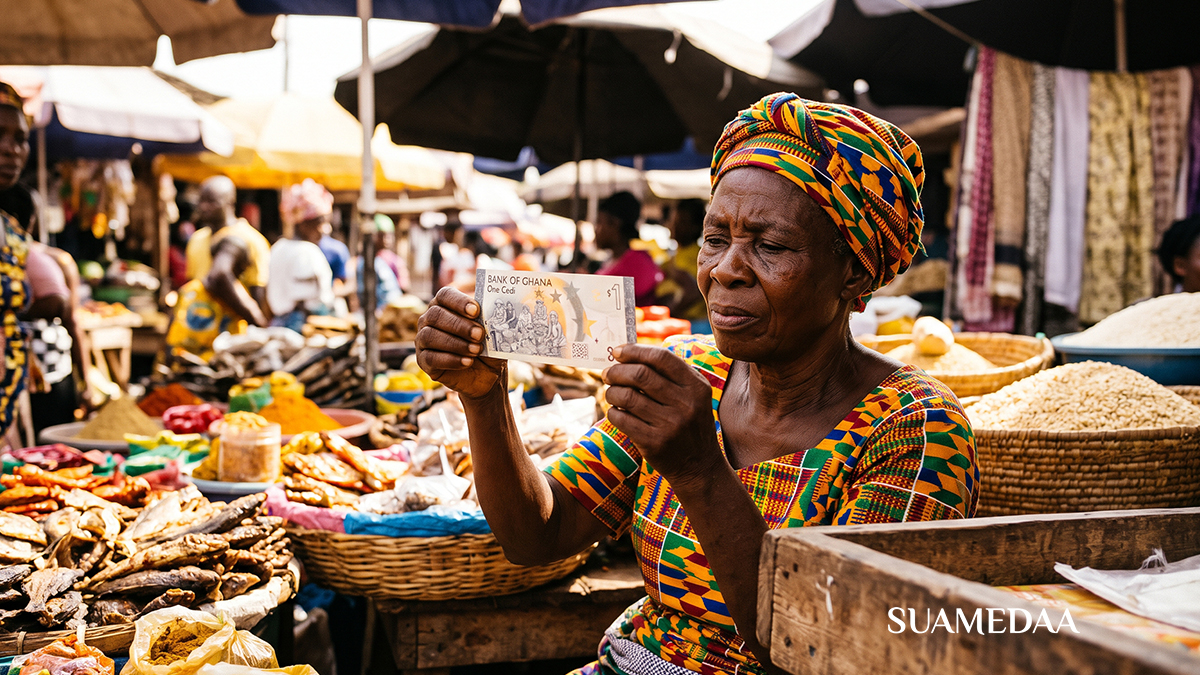

Now level it up:
| Ga | Meaning | When to use it |
|---|---|---|
| Oyiwaladɔŋŋ | Thank you | Everyday thanks |
| Oyiwaladɔŋŋ waa | Thank you very much | When someone goes out of their way |
| Nyɔŋmɔ ajɔɔ bo | God bless you | A heartfelt thank you, especially to elders |
| Noko kwraa bɛ | No problem / It’s nothing | When someone thanks you |
The word waa means “very” or “a lot,” and you can add it to many phrases for emphasis. Pairing thanks with Nyɔŋmɔ ajɔɔ bo (“God bless you”) is extremely common in Ghana, where faith is woven into everyday speech. Say it to the woman who gave you extra kelewele and watch her beam.
Part 2: The Ghanaian Small Talk Formula
Small talk in Accra follows a rhythm. It is not rushed, and skipping steps can feel cold. The usual flow is:
- Greet
- Ask how the person is
- Ask about their family
- Ask where they are going, or what they are doing
- Part with a blessing or a “see you”
Master these five moves and you can hold a pleasant two-minute conversation with almost anyone.
Part 3: “How Are You?” and Beyond
You probably know Te oyɔɔ tɛŋŋ? (“How are you?”). Here is how to stretch it:



| Ga | Meaning |
|---|---|
| Te oyɔɔ tɛŋŋ? | How are you? |
| Te oyɔɔ tɛŋŋ ŋmɛnɛ? | How are you today? |
| Miyɛ jogbaŋŋ | I am fine |
| Mihu | Me too |
| Ani ona hewalɛ fioo ŋmɛnɛ? | Are you feeling a bit better today? |
Common Ga resources list Te oyɔɔ tɛŋŋ ŋmɛnɛ for “How are you today?” and Mihu for “Me too!”. That last one is gold. When someone asks how you are and then says they are fine too, a quick Mihu! keeps things flowing.
Tip: If you know someone has been unwell, asking whether they are feeling better is a real sign of care, and it will be remembered.
Part 4: Asking About Family
In Ghana, asking after someone’s family is not prying. It is basic politeness.
| Ga | Meaning |
|---|---|
| Te oweku mɛɛ yɔɔ tɛŋŋ? | How is your family? |
| Te oŋa kɛ obii lɛ yɔɔ tɛŋŋ? | How are your wife and children? |
| Amɛ fɛɛ amɛyɛ jogbaŋŋ | They are all fine |
The phrase Te oŋa kɛ obii lɛ yɔɔ tɛŋŋ? asks after a man’s wife and children, and the natural reply is Amɛ fɛɛ amɛyɛ jogbaŋŋ, “they are all fine.” Notice how often tɛŋŋ (“how”) and jogbaŋŋ (“well”) come back. These two words are the backbone of Ga small talk.
Part 5: “Where Are You Going?”
Visitors are sometimes surprised by how often they are asked where they’re headed. It is not nosy; it is simply friendly interest, like asking “How’s your day going?”
| Ga | Meaning |
|---|---|
| Nɛgbɛ oyaa? | Where are you going? |
| Mii ya shia | I am going home |
| Nɛgbɛ oyɔɔ? | Where are you? (great for phone calls) |
| Mɛni ofeɔ? | What are you doing? |
You don’t need a detailed answer. A relaxed Mii ya shia (“I’m going home”) is perfectly enough, even if you are really going to the shop first.
Part 6: Keeping the Conversation Alive
These short words and questions help you react, clarify and stay in the conversation even when your Ga runs out.
| Ga | Meaning |
|---|---|
| Mɛni yaa nɔ? | What’s going on? |
| Mɛni nɛ? | What is this? |
| Ehi | It’s okay / It’s fine |
| Minuuu shishi | I don’t understand |
| Ofainɛ, wie blɛoo | Please speak slowly |
| Ha mi gbɛ | Excuse me (let me pass) |
Minuuu shishi is your best friend. Say it with a smile, follow it with Ofainɛ, wie blɛoo, and most people will happily slow down and try again, or switch to English with a laugh.
Part 7: Compliments That Land
Nothing warms up a chat like a compliment.
| Ga | Meaning | When to use it |
|---|---|---|
| Eŋɔɔ! | It’s sweet / delicious! | After the first bite of someone’s cooking |
| Ohe yɛ fɛo | You look beautiful | For a friend dressed up for a funeral, wedding or church |
| Eŋɔɔ minaa akɛ mikɛ bo ekpe | Nice to meet you | First meetings |
Complimenting food is especially powerful. In Ga homes, cooking is a point of pride, and a sincere Eŋɔɔ! can earn you a second helping.
Part 8: Wrapping Up Gracefully
Ghanaian goodbyes are warm and never abrupt.
| Ga | Meaning |
|---|---|
| Mana bo wɔ | See you tomorrow |
| Etsɛŋ ni mana bo | See you soon |
| Yaaba jogbaŋŋ | Goodbye (go and come back well) |
| Nyɔŋmɔ ajɔɔ bo | God bless you |
Putting It All Together
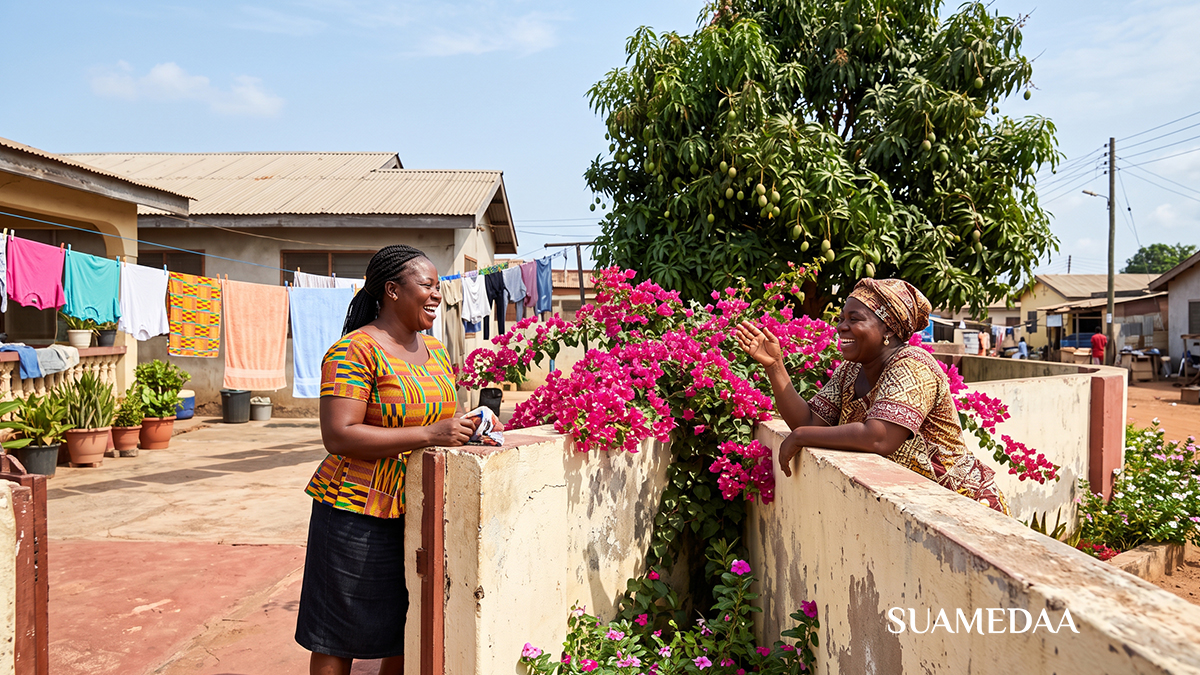
Here is a full small-talk exchange with a neighbour, using only what you’ve learned:
You: Ojekoo!
Neighbour: Ojekoo! Te oyɔɔ tɛŋŋ?
You: Miyɛ jogbaŋŋ. Te oweku mɛɛ yɔɔ tɛŋŋ?
Neighbour: Amɛ fɛɛ amɛyɛ jogbaŋŋ. Nɛgbɛ oyaa?
You: Mii ya shia.
Neighbour: (offering a taste of waakye) Ba, ye!
You: (after a bite) Eŋɔɔ! Oyiwaladɔŋŋ waa!
Neighbour: Noko kwraa bɛ.
You: Mana bo wɔ. Nyɔŋmɔ ajɔɔ bo!
That is a complete, natural conversation, and every line started from a single “thank you.”
Tips for Everyday Practice
- Pick one phrase per day and use it at least three times.
- Practise the formula, not just words. Greet, ask, ask about family, ask where they’re going, bless. Repeat.
- Talk to the same people. The security man, the kiosk owner, the fruit seller. Familiar faces are patient teachers.
- Expect spelling variety. Ga is written in many ways online, so trust native speakers over websites, and listen to the melody of each phrase, since Ga is tonal.
- Keep laughing. Mistakes are part of the fun, and your effort matters more than perfection.
From Oyiwaladɔŋŋ to a full conversation is a shorter journey than you think. Start tomorrow morning, and by the end of the week you’ll be the one asking Nɛgbɛ oyaa?