The Benefits of Coconut Water
Long before electrolyte sachets, vitamin-infused waters, and branded hydration products crowded supermarket shelves, communities across the tropical belt of the world had already found the perfect drink for heat, exertion, illness, and recovery. Coconut water, the clear, slightly sweet liquid found inside a young, green coconut, has been consumed for thousands of years across West Africa, South and Southeast Asia, the Caribbean, and the Pacific Islands, used not merely as a thirst-quencher but as a medicine, a tonic, and a restorative in one.
In Ghana, Nigeria, Côte d’Ivoire, and across coastal West Africa, street vendors crack open young coconuts with a single deft blow of a machete, handing them to buyers who drink directly from the shell. In Thailand and Vietnam, coconut water is as ordinary a part of daily life as tea. In the Caribbean, it is pressed into the hands of children, the elderly, and the sick with an understanding rooted in generations of observation that it does something beneficial that plain water does not.
Modern nutritional science has spent the past two decades attempting to quantify and explain what those communities already knew by experience, and the findings are compelling. A 2024 review published in Beverage Plant Research confirmed that coconut water has therapeutic or preventive effects against a wide range of diseases and has meaningful applications in medicine. A 2026 review in the Journal of Drug Delivery and Therapeutics documented its cardioprotective, anti-inflammatory, and antioxidant properties alongside its application in the management of kidney disease, diabetes, and hypertension.



The global market for coconut water reflects this growing awareness. Valued at approximately 7.2 billion US dollars in 2024 and projected to reach over 20 billion by 2034, it is one of the fastest-growing beverage categories in the world. But the most compelling case for coconut water is not its market size. It is the science behind what happens to the body that drinks it.
What Coconut Water Actually Contains
Understanding the benefits of coconut water begins with understanding what it is made of, because its health effects are a direct product of its specific and unusual nutritional composition.
Coconut water is the liquid endosperm of the young coconut, Cocos nucifera L., extracted before the coconut matures and its liquid solidifies into coconut flesh. It is not coconut milk, which is made by blending grated coconut flesh with water. Coconut water is the clear liquid inside the nut itself, produced naturally by the plant during its early development.
A single cup of approximately 240 millilitres of fresh coconut water contains roughly 40 to 60 calories, making it one of the lowest-calorie natural beverages available that still delivers meaningful nutritional content. It is essentially fat-free, low in sugar relative to most fruit juices, and free from the artificial additives that characterise most commercial beverages.
Its mineral profile is what distinguishes it most sharply from plain water and from most other beverages. A single cup delivers approximately 600 milligrams of potassium, meeting between 18 and 23 percent of an adult’s daily requirement, a potassium concentration double that of a banana. It also contains meaningful amounts of magnesium, calcium, sodium, phosphorus, manganese, and chloride, alongside small amounts of iron and zinc.



Beyond minerals, coconut water contains an array of biologically active compounds: vitamins including vitamin C and several B vitamins, amino acids including arginine, alanine, serine, and proline, cytokinins which are plant hormones with anti-ageing properties at the cellular level, lauric acid which has well-documented antimicrobial properties, flavonoids and other polyphenols that contribute antioxidant activity, and bioactive peptides with enzyme-inhibiting properties.
This combination of electrolytes, micronutrients, and bioactive compounds is what makes coconut water function differently from water, from commercial sports drinks, and from most other natural beverages. Each element contributes to a specific physiological effect, and in combination they produce a health profile that is unusually broad for a single food or drink.
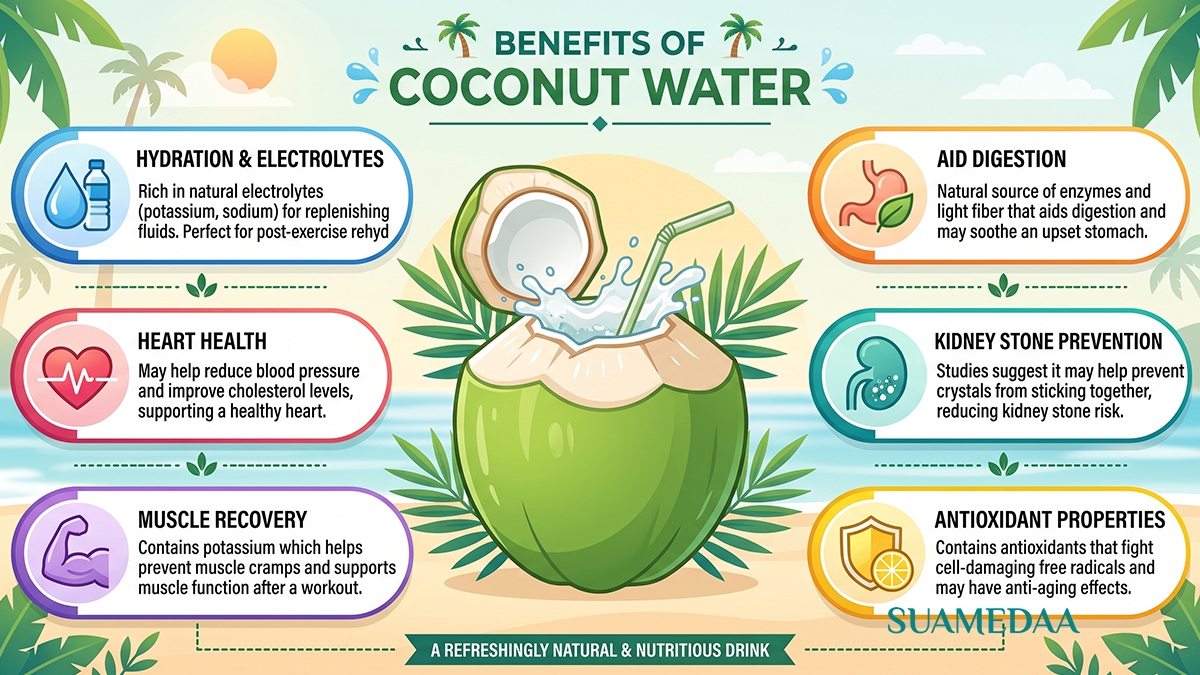
Superior Hydration and Electrolyte Replacement
The most fundamental and best-documented benefit of coconut water is also its most obvious one: hydration. But the kind of hydration it delivers is meaningfully superior to plain water in specific situations, because of the electrolyte composition it carries.
Electrolytes are minerals that carry an electrical charge and are essential for virtually every physiological process the body performs: muscle contraction, nerve signalling, fluid balance across cell membranes, heart rhythm, and kidney function. The body continuously loses electrolytes through sweat, urine, and in illness through vomiting and diarrhoea. Plain water replaces fluid volume but does not replace electrolytes, which is why drinking large quantities of plain water after significant electrolyte loss can sometimes worsen the imbalance rather than correct it.
Coconut water is an isotonic beverage, meaning its osmotic pressure is similar to that of human blood plasma, which allows it to be absorbed rapidly through the gut wall and distributed throughout the body more efficiently than plain water alone. Its potassium, sodium, magnesium, and chloride content mirrors the electrolyte needs of a dehydrated body more closely than most commercially formulated sports drinks, while delivering those electrolytes without the artificial colours, synthetic flavourings, and large quantities of added sugar that most sports drinks contain.



Research consistently places coconut water ahead of plain water and comparably or favourably against commercial sports drinks for rehydration after exercise. A 2024 study specifically found that coconut water corrects potassium imbalance and supports heart and muscle function in the process, confirming that its rehydration benefit extends beyond simple fluid replacement to meaningful electrolyte restoration. The researchers noted that unlike synthetic potassium supplements, coconut water delivers potassium in a naturally balanced matrix that is easier on the body to absorb and metabolise.
For everyday use, coconut water provides sustained hydration that feels qualitatively different from plain water to many people who drink it regularly: a greater sense of physical refreshment and a faster return to normal energy levels after exertion, heat exposure, or illness.
Heart Health: A Potassium-Driven Benefit
The cardiovascular benefits of coconut water are among the most studied aspects of its health profile, and they flow primarily from its exceptional potassium content alongside its antioxidant and anti-inflammatory compounds.
Potassium is the primary mineral responsible for regulating blood pressure. It works by counteracting the blood-pressure-raising effect of sodium: when potassium levels in the body are adequate, the kidneys excrete more sodium through the urine, reducing the fluid volume in the bloodstream and thereby reducing pressure on arterial walls. Most people in the modern world consume too much sodium and too little potassium, a dietary imbalance that contributes directly to the global epidemic of hypertension and its downstream consequences of stroke, heart attack, and heart failure.
Preliminary research indicates that coconut water may lower blood pressure in people with high blood pressure, with studies in hypertensive individuals showing reductions in both systolic and diastolic readings following regular coconut water consumption. The potassium content is the primary driver of this effect, though its magnesium content, another mineral with blood-pressure-lowering properties, likely contributes alongside it.
Beyond blood pressure, coconut water contains compounds that support the broader cardiovascular system. Its antioxidant properties reduce oxidative damage to arterial walls, a key step in the development of atherosclerosis. Its anti-inflammatory compounds reduce the chronic vascular inflammation that contributes to arterial stiffening and plaque formation. Its cytokinins have been associated with reduced risk of age-related deterioration in vascular tissue.
A review published in the Journal of Drug Delivery and Therapeutics in 2026, summarising the body of evidence on coconut water and cardiovascular health, confirmed its cardioprotective status and highlighted its value as a replacement for sugary sodas and sodium-rich beverages, noting that the cardiovascular benefit of coconut water is most pronounced when it displaces drinks that actively harm heart health.
Kidney Health and the Prevention of Kidney Stones
Kidney stones, crystalline deposits of minerals that form in the kidneys when urine becomes too concentrated with calcium, oxalate, or uric acid, are among the most painful and increasingly prevalent conditions in the modern world. The primary prevention strategy is adequate hydration, which dilutes the concentration of stone-forming minerals in the urine. Coconut water appears to go beyond plain water in this capacity, offering specific protective mechanisms that plain hydration does not.
A 2018 human study found that consuming coconut water increased urinary excretion of potassium, chloride, and citrate in people without kidney stones. Citrate is of particular importance: citrate in urine inhibits the crystallisation of calcium oxalate and calcium phosphate, two of the most common components of kidney stones. By raising urinary citrate levels, coconut water actively inhibits the process by which stones form, rather than simply diluting the minerals that might form them.
A study published in Foods in 2025 confirmed this mechanism, finding that coconut water naturally increases the concentration of citrate and potassium chloride in the urine, inhibiting the crystallisation of salts and preventing the formation of kidney stones through a specific biochemical pathway. The same research noted that coconut water appeared to reduce crystal deposits in the kidneys compared to plain water in study participants.
Animal research has further found that coconut water significantly reduces the free radicals produced in response to high oxalate levels in the urine, free radicals that damage kidney cells and worsen the inflammatory response to stone formation. Research published in ScienceDirect demonstrated that coconut water has antioxidant potential that inhibits the formation of struvite crystals, another form of kidney stone, through specific anti-crystallisation properties alongside its antimicrobial activity against urinary pathogens that can complicate kidney stone disease.
For people with a history of kidney stones or at elevated risk of developing them, replacing some or all of their daily water intake with coconut water represents a meaningfully better-evidenced preventive strategy than plain water alone. The important caveat is that people with chronic kidney disease should approach coconut water with caution and medical guidance, since impaired kidneys may not excrete potassium effectively, and the high potassium content of coconut water could contribute to hyperkalaemia in this population.
Antioxidant Properties and Cellular Protection
Every cell in the human body is under continuous attack from free radicals: unstable molecules generated by metabolic processes, environmental pollution, ultraviolet radiation, and the consumption of processed and nutrient-poor foods. The accumulation of free radical damage at the cellular level is the primary driver of biological ageing and of the chronic diseases associated with it, from cardiovascular disease and cancer to neurodegeneration and type 2 diabetes.
Coconut water contains several categories of antioxidant compounds, including flavonoids, polyphenols, vitamin C, and specific bioactive peptides, that neutralise free radicals and reduce oxidative stress. Animal studies have consistently demonstrated strong antioxidant effects: research has shown that fresh coconut water produces significant scavenging activity against DPPH, one of the standard laboratory assays for measuring antioxidant capacity, with fermented coconut water showing even higher antioxidant potential at approximately 55 percent DPPH scavenging activity.
A 2024 study published in PubMed Central, conducted at Khon Kaen University in Thailand, specifically examined the antioxidant and longevity-inducing properties of coconut water on human dermal fibroblasts, using metabolomic analysis to evaluate its ability to promote longevity and reduce oxidative stress in human cells. The findings confirmed both antioxidant activity and evidence of longevity-promoting effects at the cellular level, providing the most direct human cell evidence to date for coconut water’s anti-ageing potential at the molecular level.
Research has also shown that the antioxidants in coconut water may help repair liver damage by reducing oxidative stress in liver tissue, and that regular consumption enhances the body’s own antioxidant enzyme systems, including superoxide dismutase, catalase, and glutathione, in a manner similar to what has been observed with other polyphenol-rich foods.
Blood Sugar Management
Despite its natural sweetness, coconut water has a relatively modest effect on blood sugar compared to most sweet beverages and demonstrates specific antidiabetic properties that make it a particularly interesting beverage for people managing or seeking to prevent blood sugar dysregulation.
The antidiabetic properties of coconut water are attributable to multiple mechanisms. Its flavonoids, phytates, and alkaloids have been shown to inhibit alpha-glucosidase and alpha-amylase, two enzymes responsible for breaking down dietary carbohydrates into glucose. By inhibiting these enzymes, coconut water slows the absorption of glucose from food into the bloodstream, moderating the post-meal blood sugar spike that challenges people with insulin resistance or type 2 diabetes.
A 2021 animal study found that coconut water effectively lowered the blood sugar of rats with diabetes and kept levels under control over the study period. Research on isolated rat muscle tissue published in PubMed Central found that incubation with coconut water led to a significant increase in muscle glucose uptake, with simultaneous enhancement of glutathione levels and antioxidant enzyme activity, mechanisms that together improve the efficiency with which muscle cells respond to insulin. The same study demonstrated that coconut water suppressed malondialdehyde, a marker of oxidative stress associated with insulin resistance.
Animal research has further demonstrated that coconut water improves insulin synthesis, decreases glycosylated haemoglobin levels, and modulates the L-arginine-nitric oxide pathway in diabetic subjects, all of which contribute to better overall blood sugar control.
It is important to be clear that the human evidence for blood sugar management remains limited to preliminary research and animal models. Clinical trials specifically on coconut water and blood sugar regulation in humans are still needed before strong clinical recommendations can be made. What can be said is that the mechanistic evidence is sound, the direction of findings is consistently positive, and replacing sugary beverages with coconut water for people managing blood sugar is clearly a better dietary choice regardless of the specific coconut water mechanisms involved.
Digestive Health and Gut Support
Coconut water has a well-established traditional use in managing digestive disturbance across multiple cultures, and its specific composition offers several mechanisms through which it supports digestive health.
Its electrolyte content, particularly potassium and sodium, helps maintain the fluid balance across the intestinal wall that is necessary for healthy digestive function. Its mild antimicrobial properties, derived from lauric acid and its bioactive peptides, may inhibit the growth of intestinal pathogens that cause gastroenteritis. In traditional medicine across West Africa, India, and the Philippines, coconut water has long been a first-line remedy for gastroenteritis and diarrhoeal illness, both as a fluid and electrolyte replacement and as a mild antimicrobial agent.
Its amino acid content, particularly arginine, supports gut tissue health and the maintenance of the gut mucosal barrier, the single-cell-thick lining of the intestine that prevents harmful bacteria and undigested food particles from entering the bloodstream. A compromised gut barrier, a condition sometimes called leaky gut, is associated with systemic inflammation, immune dysfunction, and a range of chronic conditions. Arginine plays a specific role in maintaining and repairing this barrier.
Coconut water’s mild diuretic and digestive-stimulating properties, documented in the 2024 Beverage Plant Research review, also support regular bowel function and help flush the digestive tract, contributing to the clean, settled sensation that many people report after drinking it.
Skin Health
The benefits of coconut water for skin health operate through both internal and topical mechanisms, though it is primarily consumed as a drink rather than applied topically.
Internally, the hydration it delivers benefits the skin directly: well-hydrated skin is more elastic, more resilient, and less prone to the dryness and flaking that accelerates visible ageing. The potassium and sodium it contains maintain the fluid balance in skin cells that underlies skin texture and suppleness in the same way they maintain fluid balance elsewhere in the body.
Its cytokinins, plant hormones present in coconut water, have attracted specific research attention for their anti-ageing effects on skin cells. Cytokinins regulate cell growth and division, and research suggests they may reduce the rate of cellular ageing in human skin cells, potentially lowering the risk of age-related skin changes. The antioxidant properties of coconut water protect skin cells from free radical damage, which is a primary driver of premature skin ageing caused by sun exposure, pollution, and oxidative stress from diet and lifestyle.
A preliminary 2017 study suggested that consuming coconut water may aid in the fight against acne due to its antimicrobial properties. The lauric acid in coconut water has documented activity against Propionibacterium acnes, the bacterium primarily responsible for inflammatory acne, though more research is needed to confirm whether the amounts present in a typical serving of coconut water are sufficient to produce a meaningful clinical effect.
For skin, as for many other organs, the most significant benefit of coconut water comes from its contribution to overall systemic health: reduced inflammation, improved antioxidant defence, and consistent hydration all create the internal conditions from which healthy skin naturally follows.
Cytokinins and Anti-Ageing Potential
Cytokinins are a class of plant hormones found in meaningful concentrations in coconut water that have attracted scientific interest for their potential anti-ageing effects at the cellular level. In plants, cytokinins regulate cell division and delay cellular senescence, the process by which cells age and lose their functional capacity. Research in human cell models has suggested that these same compounds may produce analogous effects in human cells.
Studies have found that cytokinins may reduce the rate of cellular ageing, help maintain cell division at healthy rates, and potentially lower the risk of age-related cellular dysfunction that contributes to visible ageing and degenerative disease. The 2024 Khon Kaen University study on antioxidant and longevity-inducing properties of coconut water on human dermal fibroblasts provided direct evidence of longevity-promoting effects in human skin cells, with the cytokinins identified as among the bioactive compounds contributing to this effect alongside the antioxidant polyphenols.
While this area of research is still developing and clinical evidence in humans remains limited, the mechanistic evidence for cytokinin-mediated anti-ageing effects at the cellular level is well established, and coconut water represents one of the most accessible dietary sources of these compounds.
Athletic Performance and Recovery
Coconut water’s electrolyte profile makes it one of the most effective natural beverages for athletic performance support and post-exercise recovery. Potassium is critical for muscle contraction and prevents the muscle cramping that occurs when potassium is depleted during extended exertion. Magnesium supports muscle function and reduces the muscle soreness associated with intense exercise. Sodium and chloride replace the primary electrolytes lost in sweat. Together these minerals support endurance during exercise and accelerate recovery afterwards.
Compared to standard commercial sports drinks, coconut water delivers significantly more potassium and substantially less sodium and added sugar. The ideal choice between coconut water and sports drinks for a given athletic situation depends on the duration and intensity of exercise and the conditions: for very long endurance events in hot conditions where sodium loss is high, a higher-sodium beverage may be more appropriate. For moderate exercise and general post-workout recovery, coconut water matches or exceeds commercial sports drinks in evidence for effectiveness while avoiding their synthetic additives and high sugar content.
Research has confirmed that coconut water is equally effective to commercial sports drinks for post-exercise rehydration, and some athletes report a preference for its lighter, more natural flavour over the heavy sweetness of commercial alternatives, which makes sustained consumption during and after exercise more comfortable.
How to Choose and Consume Coconut Water
Not all coconut water products are equal, and the choices made at purchase significantly affect what you are actually getting.
Fresh coconut water, consumed directly from a young green coconut within hours of opening, delivers the highest concentrations of active compounds in their most bioavailable form. The flavanols, vitamins, and cytokinins in coconut water begin to degrade on exposure to oxygen, heat, and light, which is why fresh coconut water tastes and functions differently from packaged versions.
For packaged coconut water, the processing method determines quality. Cold-pressed or minimally processed coconut water that has been refrigerated rather than shelf-stabilised retains more of its active compounds than high-temperature pasteurised products. When reading labels, look for products that list coconut water as the only ingredient, with no added sugar, no added sodium, no artificial flavourings, and no preservatives. Some products labelled as coconut water contain added water, added sugar, or coconut water concentrate reconstituted with water, all of which reduce the nutritional quality of what you are buying.
Pink or reddish coconut water is not a sign of spoilage. The discolouration is caused by the oxidation of phenolic compounds, antioxidants naturally present in the water, and actually indicates a higher polyphenol content. It is perfectly safe to consume and may in fact be more antioxidant-rich than clear coconut water.
Coconut water can be consumed at any time of day. On an empty stomach in the morning, it provides a gentle hydration boost that sets up digestive function for the day. After exercise, it replaces electrolytes and reduces muscle soreness. In the heat of the afternoon, it cools and refreshes in a way that plain water often does not. In the evening, its magnesium content supports the nervous system relaxation that facilitates good sleep.
Cautions and Who Should Take Care
Coconut water is safe and well-tolerated for the vast majority of healthy adults when consumed in reasonable amounts. A few specific situations merit attention.
People with chronic kidney disease should approach coconut water with caution or avoid it entirely without medical guidance. Impaired kidneys may not excrete potassium effectively, and the high potassium content of coconut water can contribute to hyperkalaemia, an elevated blood potassium level that poses a serious risk to heart rhythm in people with reduced kidney function.
People on blood pressure medication should be aware that coconut water’s blood-pressure-lowering effects may compound those of their medication, potentially lowering pressure further than intended. This is a conversation to have with a prescribing doctor rather than a reason to avoid coconut water entirely.
People scheduled for surgery should follow guidance to avoid coconut water in the two weeks prior to any procedure, as its high potassium content may affect blood pressure and its blood-thinning properties may interact with anaesthesia and surgical procedures.
Pregnant women should consult their healthcare provider before making coconut water a daily habit, given its high potassium content and the specific nutritional requirements of pregnancy.
For people with diabetes, while the evidence for blood sugar management benefits is encouraging, coconut water does contain natural sugars and should be factored into overall carbohydrate intake rather than treated as a zero-impact beverage.
Moderation is wise for everyone: one to two cups of coconut water per day is an appropriate and well-supported daily habit for most healthy adults. Large quantities consumed daily deliver potassium and sodium at levels that exceed what most people need and that may cause digestive discomfort or electrolyte imbalance over time.
From the Shell to the Science
There is a particular satisfaction in watching traditional knowledge survive the journey into modern scientific validation intact and enhanced. The communities across West Africa, the Caribbean, and coastal Asia that have been pressing young coconuts into the hands of the sick, the exhausted, and the overheated for thousands of years were not wrong. They were observing, correctly, that something in that liquid restored and protected the body in ways that plain water did not.
Science has now identified the specific compounds responsible, mapped the mechanisms by which they work, and extended the evidence base beyond the anecdotal into the clinical and biochemical. Coconut water hydrates more effectively than water in situations where electrolytes matter. It supports the heart through multiple mechanisms, from blood pressure management to antioxidant protection of arterial tissue. It actively reduces kidney stone risk through specific biochemical pathways. It manages blood sugar through enzyme inhibition and improved insulin sensitivity. It protects cells from oxidative damage and may slow cellular ageing through cytokinins and polyphenols. It settles the gut, clears the skin, and supports athletic recovery with a nutritional profile that no commercial drink has yet replicated in its entirety.
Drink it fresh from the shell when you can. Choose minimally processed and additive-free when you cannot. Let what communities across the tropical world have known for centuries, confirmed now by science, be reason enough to make it a part of your regular life.