The Art of Bookbinding and Fine Press Printing
Long before mass production turned books into disposable objects, every volume that existed was the product of hands, patience, and craft. Bookbinding and fine press printing represent one of the oldest continuous artistic traditions in human history, an intersection of typography, papermaking, leatherwork, and design that has survived centuries of technological upheaval. Even in an age of e-readers and instant digital publishing, these crafts endure, practiced by a dedicated community of artisans who understand that a well made book is as much an object of beauty as it is a vessel for words.
A Brief History of the Book as Object
Before the codex, the book as we know it did not exist. Ancient texts were recorded on scrolls, clay tablets, or papyrus, formats that were functional but cumbersome. The codex, bound pages stacked and sewn along one edge, emerged in the early centuries of the common era and gradually replaced the scroll, offering a more durable and easily navigable format. Early codices were painstakingly copied by hand, often by monks in scriptoriums, and bound in heavy wooden boards covered with leather, sometimes further adorned with metal clasps, gemstones, or intricate tooling.
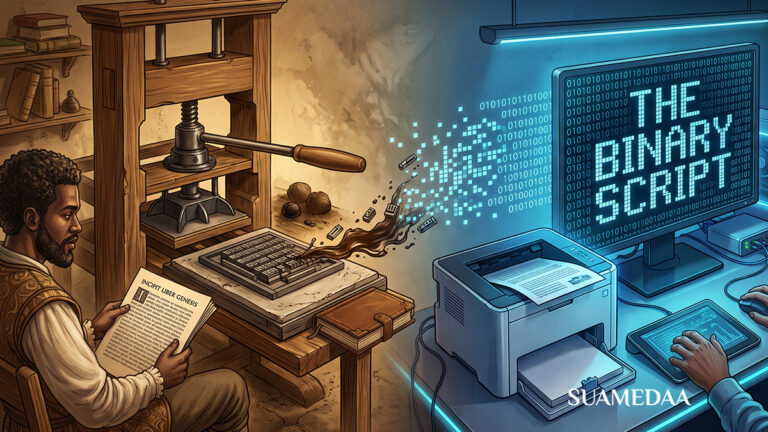
The invention of the movable type printing press in the fifteenth century, most famously by Johannes Gutenberg, transformed how text was reproduced but did not eliminate the need for skilled binding. Printed pages still had to be folded, gathered, sewn, and covered by hand, and for centuries after Gutenberg, fine binding remained a highly respected craft, with wealthy patrons commissioning elaborately decorated volumes as symbols of status and taste.



What Makes a Book “Fine Press”
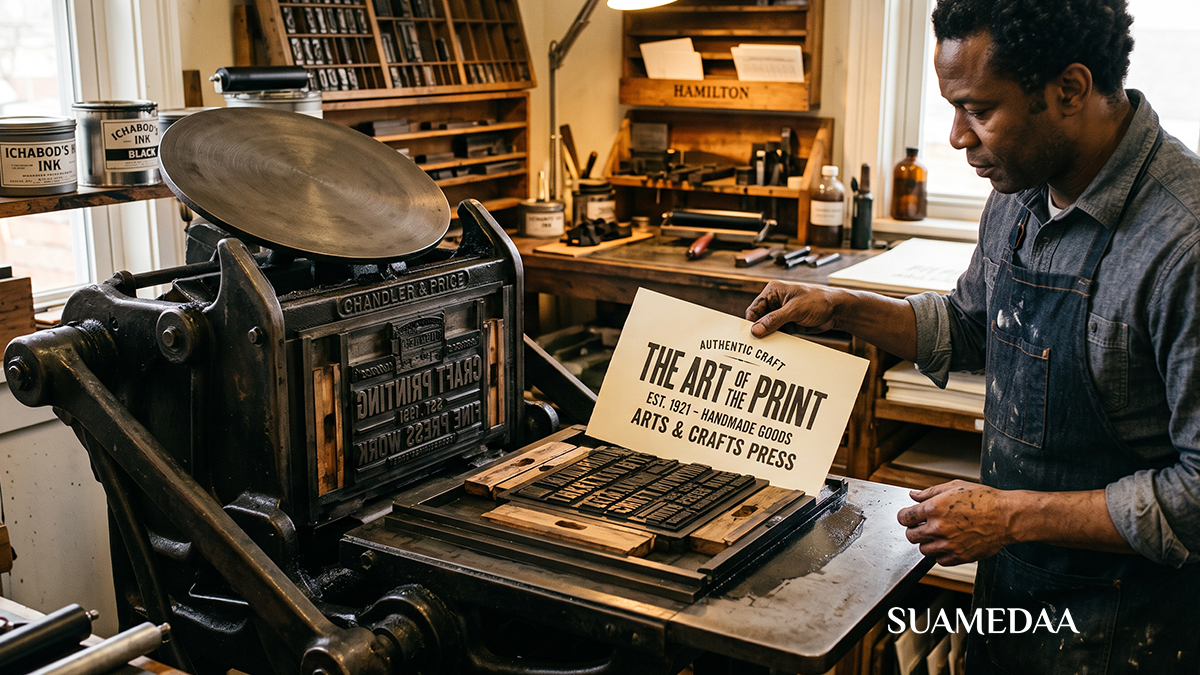
Fine press printing refers to books produced with an unusual degree of care and craftsmanship at every stage of production, standing in deliberate contrast to the efficiency driven methods of commercial publishing. A fine press edition might be printed on a hand operated letterpress using metal or wood type, set one letter at a time rather than through digital typesetting. The paper itself is often handmade or mould made, chosen for its texture, weight, and archival quality rather than simply its cost. Illustrations, when present, might be original woodcuts, engravings, or lithographs rather than digital reproductions.
Fine press books are typically produced in small, numbered editions, sometimes as few as a few dozen copies, making each one closer to a limited edition artwork than a mass market product. Presses such as the Arion Press in San Francisco, the Cheloniidae Press, and historic operations like the Kelmscott Press, founded by William Morris in the late nineteenth century, exemplify this tradition, treating book production as a total art form in which typography, illustration, paper, and binding are all considered together as a unified aesthetic whole.

The Core Techniques of Bookbinding
Bookbinding encompasses a range of structural techniques, each suited to different purposes and aesthetics.
Coptic binding
Coptic binding, one of the oldest surviving methods, uses a chain stitch sewn directly through the folds of each section and often leaves the spine exposed, creating a book that lies remarkably flat when opened. This technique originated in early Christian Egypt and remains popular today for its structural elegance and relative accessibility to beginners.
Case binding
Case binding, the technique behind most modern hardcover books, involves sewing together folded sections called signatures, then attaching that sewn block to a separately constructed cover, or case, using an inner lining called a spine liner. This method balances durability with production efficiency and has remained the standard for commercially printed hardcovers for well over a century.


Long stitch binding
Long stitch binding exposes decorative stitching along the spine, often using contrasting thread as a visual feature rather than something to be hidden. This method is popular in artisan and journal binding for the way it turns a structural necessity into an ornamental element.
Perfect binding
Perfect binding, familiar from most modern paperbacks, glues pages directly to a cover along a flat spine rather than sewing them. While efficient and inexpensive, it is generally considered less durable and less prestigious than sewn bindings, and it rarely appears in fine press work.
Leather binding with tooling
Leather binding with tooling represents the most elaborate end of the craft, in which a finished book block is covered in leather, often calfskin or goatskin, then decorated using heated brass tools pressed into the leather by hand, sometimes with gold leaf applied to create gilded designs. This technique, associated with historic traditions from France, England, and elsewhere in Europe, remains the pinnacle of decorative binding and can take a skilled binder many hours to complete on a single volume.
The Role of Paper and Typography
A fine binding is only as good as the materials and text it protects. Handmade paper, produced by suspending cotton, linen, or other plant fibers in water and forming them into sheets by hand, offers a texture, weight, and longevity that machine made paper rarely matches. Deckled edges, the slightly irregular, feathered borders left by the papermaking process, have become a hallmark of fine press work, signaling handcraft even before a reader opens the cover.
Typography in fine press printing often relies on traditional letterpress techniques, in which individual metal or wood letters are arranged by hand into a composing stick, inked, and pressed directly into dampened paper, leaving a subtle physical impression that digital printing cannot replicate. Typefaces designed specifically for the press, such as those cut by historic type foundries or contemporary type designers working in the same tradition, are frequently chosen with as much care as the illustrations or binding style, since the character of the letterforms shapes the entire reading experience.



Tools of the Trade
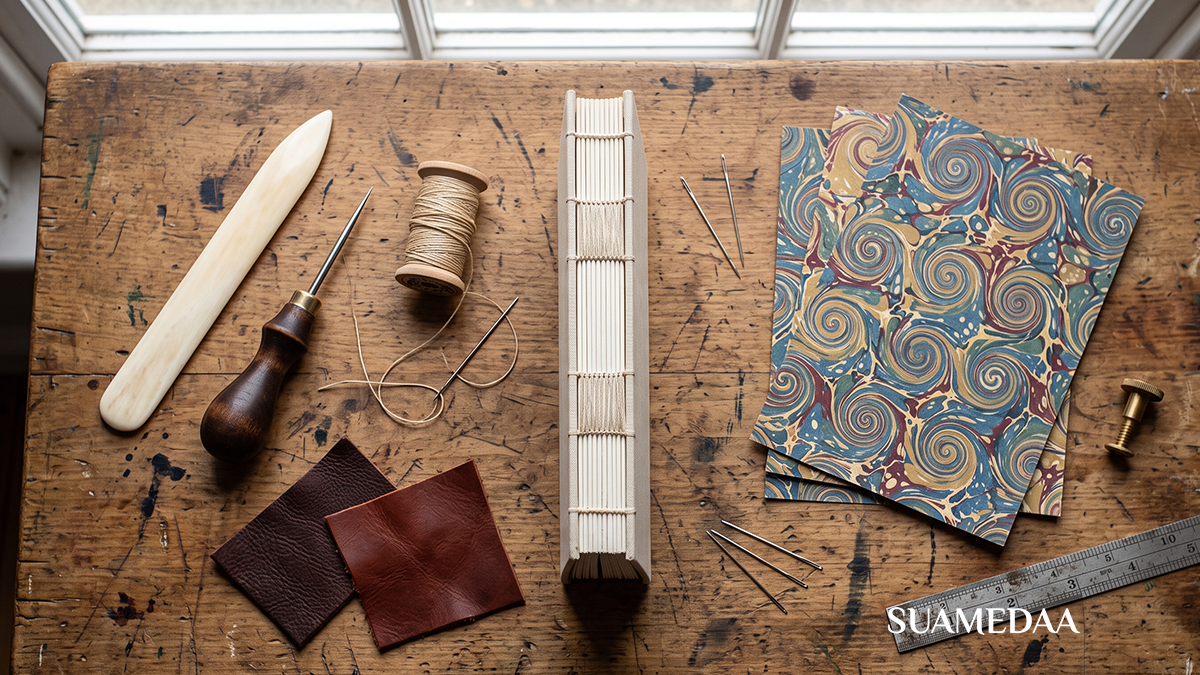
A bookbinder’s workshop tends to look remarkably similar whether the year is 1850 or the present day. A bone folder, used to crease paper cleanly along folds, remains an essential tool alongside an awl for piercing sewing holes, a variety of needles and waxed linen thread, bookbinder’s board for covers, PVA and wheat starch paste for adhesives, and a variety of clamps and presses to hold materials in place while glue or paste cures. Letterpress printers additionally rely on a printing press itself, whether a small tabletop platen press or a larger cylinder press, along with cases of type, ink, and the composing sticks used to arrange individual letters into lines of text.
Why the Craft Persists
In an era where digital publishing can distribute a book to millions of readers instantly and at essentially no marginal cost, fine press printing and hand bookbinding might seem like anachronisms. Yet the craft persists, and in some ways is experiencing a genuine resurgence, driven by a growing appreciation for tactile, physical objects in a world dominated by screens. Independent binders and small presses continue to produce limited edition volumes for collectors, and a thriving community of hobbyists has taken up bookbinding as a meditative, hands on counterpoint to digital life, often sharing techniques and finished work through workshops, guilds, and online communities.
Universities and specialized schools, including the North Bennet Street School in Boston and the American Academy of Bookbinding, continue to train new generations of binders in traditional techniques, ensuring that skills developed centuries ago are not lost even as the broader publishing industry moves in an entirely different direction. For collectors, a fine press edition offers something a mass market book cannot: a direct, physical connection to a centuries old tradition of craftsmanship, and an object built to last far longer than the paperback sitting beside it on the shelf.
Getting Started
For those curious about trying the craft themselves, bookbinding is more accessible than its historical mystique might suggest. Simple pamphlet stitching or Coptic binding require only a handful of inexpensive tools and can be learned from books, online tutorials, or a single workshop session. From there, the craft opens into a deep and rewarding rabbit hole, one where each new technique, whether a more complex sewing structure, a hand marbled endpaper, or a first attempt at leather tooling, offers a tangible sense of progress that few digital hobbies can match.
Bookbinding and fine press printing sit at a rare intersection of art, history, and function, preserving techniques that predate the printing press itself while continuing to evolve through the hands of contemporary practitioners. Every hand sewn spine, hand set line of type, and hand tooled leather cover carries forward a tradition stretching back centuries, a quiet reminder that some crafts endure not because they are efficient, but because the objects they produce are simply worth making well.