The New Bills That Became Law on 26th of August in Ghana – A Detailed Breakdown
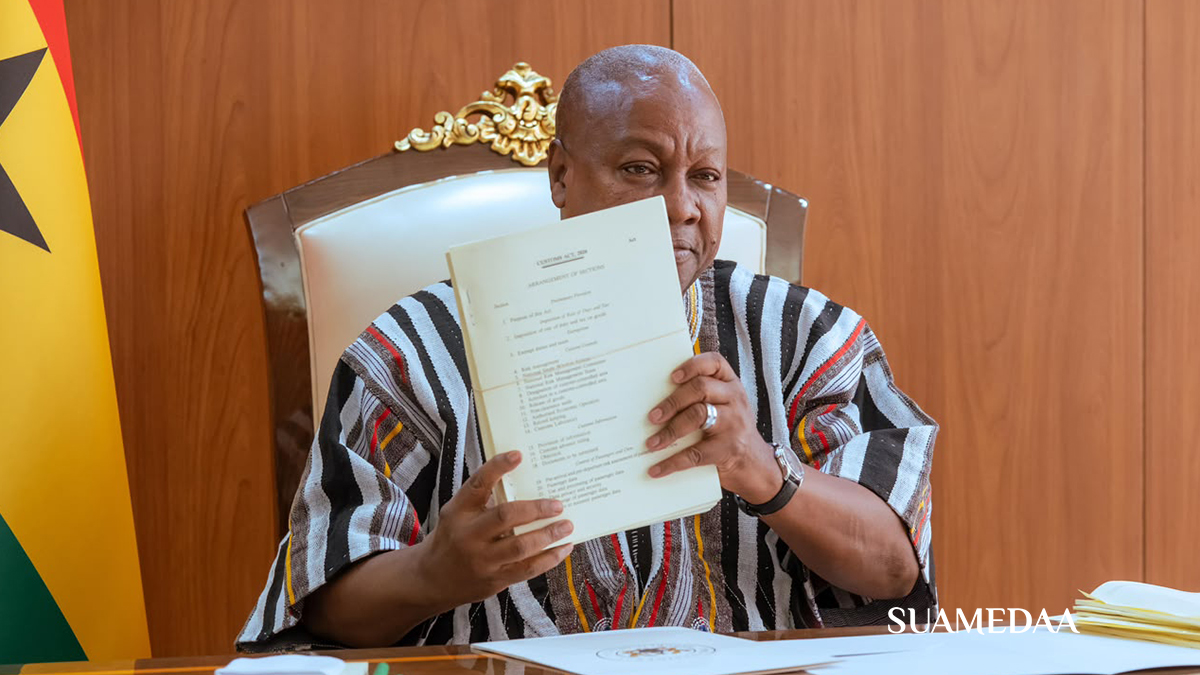
On the 26th of August , 2026, President John Dramani Mahama assented to ten bills in a single ceremony at the Jubilee House, completing the final constitutional step required to turn legislation passed by Parliament into enforceable law. The package touches an unusually wide range of national life at once, tax administration, customs and trade, criminal justice, maritime security, cocoa governance, and military education. All ten bills had cleared Parliament during the Second Meeting of the Second Session of the Ninth Parliament, which wrapped up on 31st of July, 2026, and government officials have framed the package as a coordinated push to plug revenue leakages, modernize outdated legal frameworks, and support key sectors of the economy. Below is a detailed look at each of the ten new laws and what it actually changes.
1. Customs Act, 2026
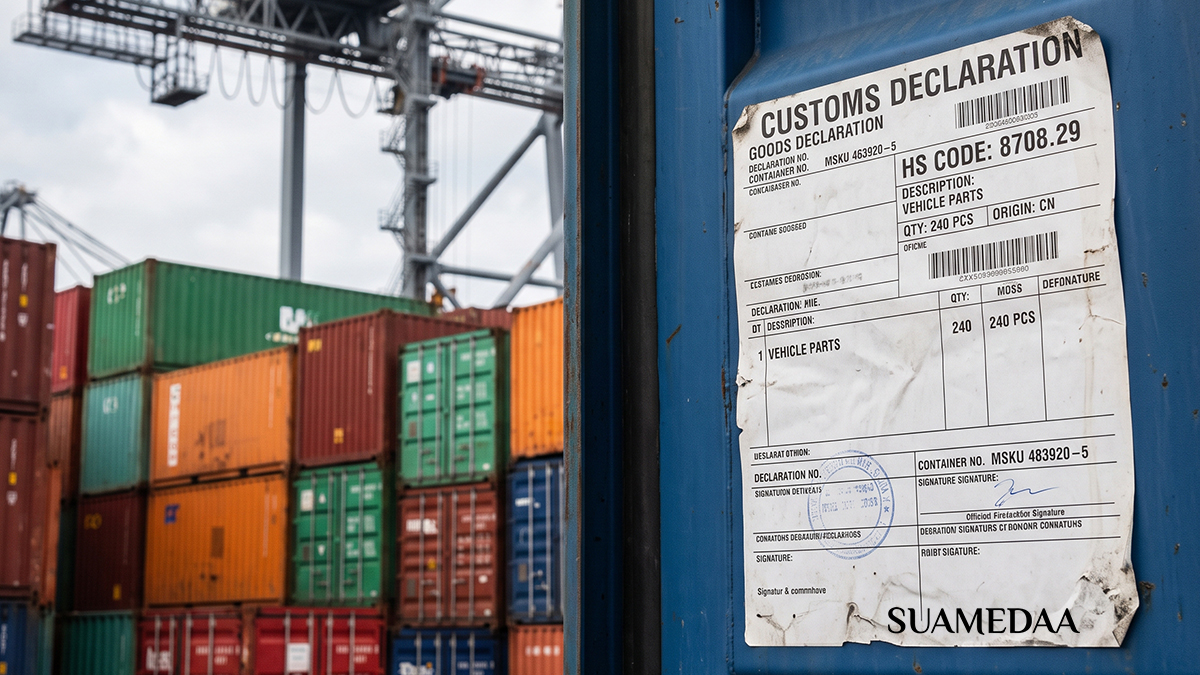
The Customs Act consolidates decades of fragmented and often overlapping customs legislation into a single, comprehensive law governing how goods move in and out of Ghana. Before this reform, customs administration was spread across multiple older statutes, creating inconsistencies and procedural bottlenecks that slowed clearance at ports and border posts. The new Act is structured around several major parts: one governing the declaration, clearance, and valuation of imported and exported goods, and another covering customs procedures relating to home use, temporary admission, inward and outward processing, warehousing, free zones, duty-free shops, transit, transhipment, and export.
The government’s stated aim is to align Ghana’s customs regime with international best practices, cut the red tape that has historically slowed trade at the border, and close loopholes that have contributed to lost customs revenue. The bill was introduced by the Minister for Roads and Highways, Kwame Governs Agbodza, on behalf of the Finance Minister, and was flagged as a reform priority as far back as the 2026 Budget presented in November 2025. For importers, exporters, and clearing agents, the practical effect should be faster, more predictable clearance procedures and a single point of legal reference instead of having to navigate several overlapping older laws.


2. Community Service Act, 2026
This Act introduces non-custodial sentencing for misdemeanours and other minor offences, allowing courts to order eligible offenders to perform supervised community service instead of serving time in prison. The reform is aimed squarely at Ghana’s prison overcrowding problem, and the government has framed it as both a cost saving measure, since housing inmates is expensive, and a rehabilitation focused shift in how the justice system treats less serious crimes. Offenders convicted of qualifying minor offences will now have a formal, legally structured alternative to incarceration, supervised and enforced through the courts, rather than facing prison time that critics have long argued does more to strain the system than to rehabilitate low level offenders.
3. Tribunals Act, 2026
The Tribunals Act gives legal effect to a constitutional provision allowing for the establishment of regional and district tribunals across Ghana, empowering the Chief Justice to set up tribunals dedicated to specific categories of offences. The more than fifty clause bill was laid before Parliament by the Minister of Lands and Natural Resources and is intended to help reduce the significant backlog of cases currently clogging Ghana’s regular court system. By creating specialized tribunals for defined categories of cases, the law is meant to speed up adjudication, expand access to justice outside the country’s already overloaded general courts, and give the judiciary more structural flexibility in how it allocates cases going forward.
4. Maritime and Related Offences Act, 2026
This Act establishes Ghana’s first comprehensive legal framework specifically targeting crimes committed at sea. It criminalises piracy, armed robbery at sea, illegal fishing, human trafficking, and other maritime offences, while also giving domestic legal effect to Ghana’s international obligations under the United Nations Convention on the Law of the Sea and the 1988 Convention for the Suppression of Unlawful Acts Against the Safety of Maritime Navigation. Prior to this law, Ghana’s ability to prosecute many maritime crimes under domestic statute was limited, forcing reliance on a patchwork of older, less specific legislation. With this Act in force, Ghana’s maritime enforcement agencies gain a clearer, internationally aligned legal basis for policing territorial waters, an especially significant development given ongoing regional concerns about piracy and illegal fishing along the West African coast.
5. National Defence University Act, 2026
This Act creates the legal and statutory framework for Ghana’s National Defence University, granting the institution formal legal status and establishing a basis for the accreditation of its academic programmes and courses. The university is designed to provide advanced, degree level training for military personnel and civilian security officials, positioning Ghana to develop homegrown expertise in defence and security studies rather than relying primarily on foreign institutions for this kind of advanced training. The Act effectively transforms what may have previously operated as a training institution without full university status into a formally accredited tertiary institution within Ghana’s defence establishment.
6. Income Tax (Amendment) Act, 2026
This amendment to the Income Tax Act, 2015 (Act 896) delivers one of the more directly felt changes for ordinary Ghanaians: workers earning the national daily minimum wage or below are now exempt from paying income tax entirely. The amendment also revises income tax rates for individuals more broadly and adjusts the turnover threshold used for presumptive tax, a simplified tax regime aimed at small businesses and informal sector operators whose income is difficult to assess through standard accounting methods. Together, these changes are meant to ease compliance burdens on Ghana’s smallest earners and micro enterprises while keeping the broader income tax system intact for higher earners.



7. Energy Sector Levies (Amendment) Act, 2026
This Act targets a specific and longstanding leakage point in Ghana’s energy taxation system: exemptions tied to the use of fuel oil by factories and maritime vessels. Businesses that previously benefited from these exemptions will now be required to pay the applicable energy sector levies and, notably, must provide evidence that any tax relief they do receive is actually being reinvested, rather than simply pocketed. The reform is squarely aimed at closing a loophole that officials say has been exploited well beyond its original intended purpose, tightening the link between tax relief and demonstrated economic reinvestment.
8. Ghana Cocoa Board Act, 2026
This Act repeals the decades old Ghana Cocoa Board Act of 1984 (PNDCL 81) and replaces it with a modernized statutory framework governing Ghana’s cocoa sector, one of the country’s most economically significant industries and a major source of foreign exchange earnings. The reform aims to enhance regulatory transparency within COCOBOD, curb the kind of institutional corruption that has periodically dogged the sector, optimize supply chain logistics from farm to export, and, importantly, maximize direct financial returns flowing back to local smallholder farmers, the people actually growing the crop. Passage of this Act marks the first major structural overhaul of Ghana’s cocoa governance framework in more than forty years.
9. Value Added Tax (Amendment) Act, 2026
This is a more targeted follow up to Ghana’s much larger VAT overhaul that took effect at the start of 2026 under the Value Added Tax Act, 2025 (Act 1151), which had already abolished the COVID-19 Health Recovery Levy, cut the effective VAT rate to 20 percent, and raised the registration threshold for goods suppliers from GH¢200,000 to GH¢750,000. This newer 2026 amendment goes further by adjusting the VAT registration threshold specifically for service providers and introducing a zero rating for the local purchase of gold under the Ghana Accelerated National Reserve Accumulation Programme, a government initiative aimed at building up the country’s gold reserves. In effect, this amendment fine tunes the broader VAT reform passed earlier in the year rather than introducing an entirely new VAT regime from scratch.
10. Excise Act, 2026
The Excise Act repeals and replaces both the Excise Tax Stamp Act, 2013 (Act 873) and the Excise Duty Act, 2014 (Act 878), consolidating excise taxation into a single modern framework. Among its most consumer visible changes, the Act abolishes excise duty on locally manufactured fruit juices entirely, a move officials say is intended to lower prices, encourage healthier consumption habits, and support Ghana’s domestic agro-processing industry. The Act also introduces a hybrid excise system for alcoholic beverages, including a sliding scale for beer and other drinks that lowers the excise rate the more a manufacturer sources its raw materials locally, a direct incentive designed to boost demand for Ghanaian grown agricultural inputs over imported ones. The law further mandates Excise Tax Stamps on all excisable goods and introduces mandatory stockist registration, along with penalties, including a fine equal to twice the excise duty owed, for manufacturing in unapproved premises or storing untaxed goods outside approved warehouses.
The Bigger Picture
Taken together, these ten laws reflect a government pushing hard on two fronts simultaneously: domestic revenue mobilisation and institutional modernization. Four of the ten Acts, Customs, Income Tax, VAT, and Excise, directly reshape Ghana’s tax and trade framework, aiming to close long standing loopholes, simplify compliance for small businesses and low income workers, and tighten enforcement against smuggling and untaxed goods. The remaining six span justice reform, sea and border security, higher education for the defence sector, and a long overdue restructuring of cocoa governance, one of the pillars of Ghana’s export economy.
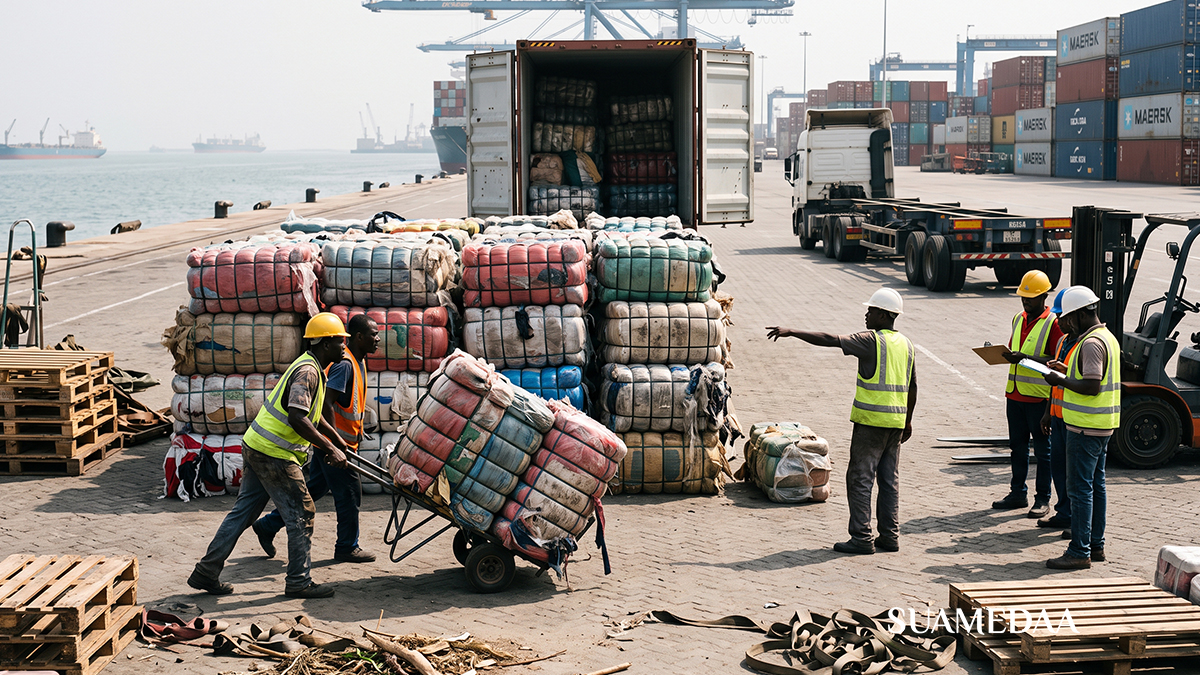


President Mahama, in signing the bills, expressed confidence that the new legislation would advance the country’s broader development agenda and materially improve the lives of citizens. With presidential assent now granted, the relevant ministries and state agencies can begin the work of implementing these laws, which in several cases, particularly the tax and customs reforms, will require new administrative systems, staff guidance, and public communication before their effects are fully felt on the ground.
What to Watch Next
Because several of these Acts amend or interact with legislation that was already mid-implementation, most notably the VAT reforms that took effect in January 2026, businesses and individuals affected by the changes should watch for follow up guidance from the Ghana Revenue Authority and other relevant agencies on exact implementation dates and compliance requirements. As with most tax and customs legislation, the gap between a bill receiving presidential assent and its provisions being fully operational on the ground, through updated systems, staff training, and public notices, is often where the real details get worked out.