One Continent, Many Tables: The Economic Blocs of Africa
Africa is the second-largest continent on earth, home to 54 recognised sovereign states, more than 1.4 billion people, and an estimated share of roughly 30 percent of the world’s remaining natural resource base. It is a continent of extraordinary internal diversity: in language, in legal tradition, in economic structure, in climate, in infrastructure, in political stability, and in the degree to which any given country is integrated into the global economy. That diversity is part of what makes the project of African economic integration so ambitious, and so complicated, and so persistently incomplete.
Since the 1960s, African states have been building regional economic communities. The logic behind them is familiar from other parts of the world. Countries that trade more with each other tend to become wealthier together. Shared markets create scale. Scale attracts investment. Investment builds productive capacity. Productive capacity diversifies economies away from the commodity export dependency that has kept much of sub-Saharan Africa in a structurally vulnerable position for generations. And beyond economics, regional blocs create forums for dialogue, norms for political conduct, and sometimes the practical machinery for managing shared infrastructure, security concerns, and regulatory alignment.
The theory is sound. The execution, across six decades of African regionalism, has been uneven.
The Architecture: Eight Blocs, One Continent
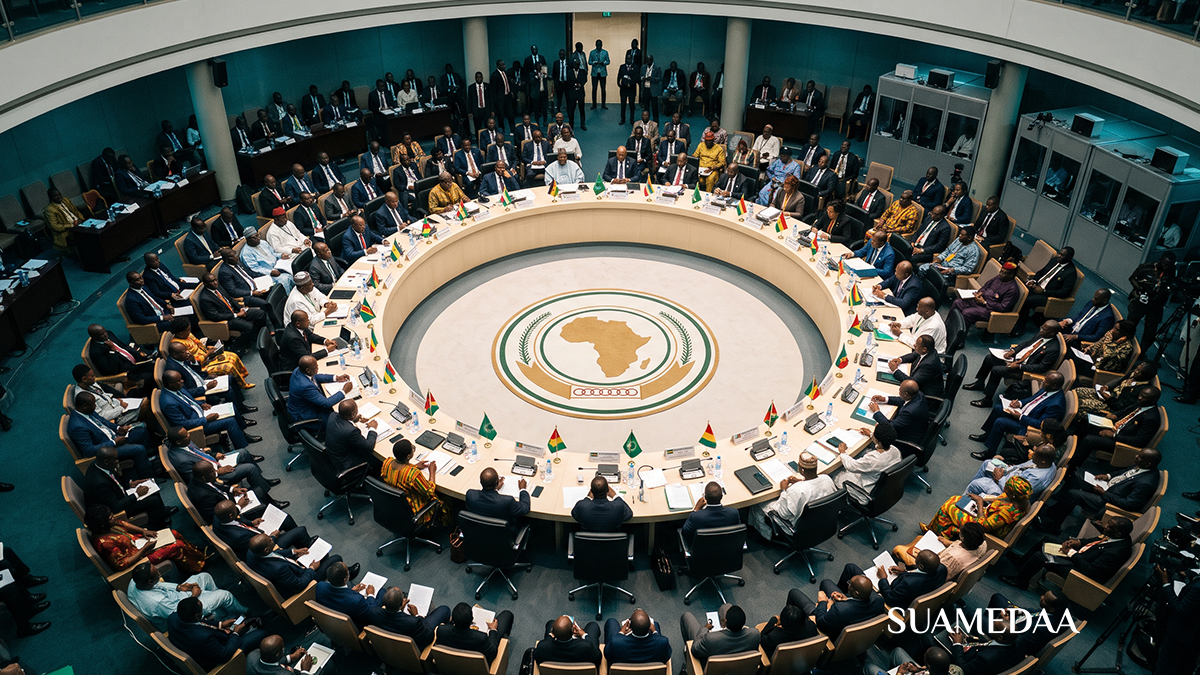
The African Union, the continent’s apex institution, formally recognises eight regional economic communities as the building blocks of its integration agenda. These eight blocs divide the continent by geography, though in practice many countries sit in more than one, and the resulting overlaps have created what analysts have called a “spaghetti bowl” of competing memberships, conflicting obligations, and divided institutional loyalties.
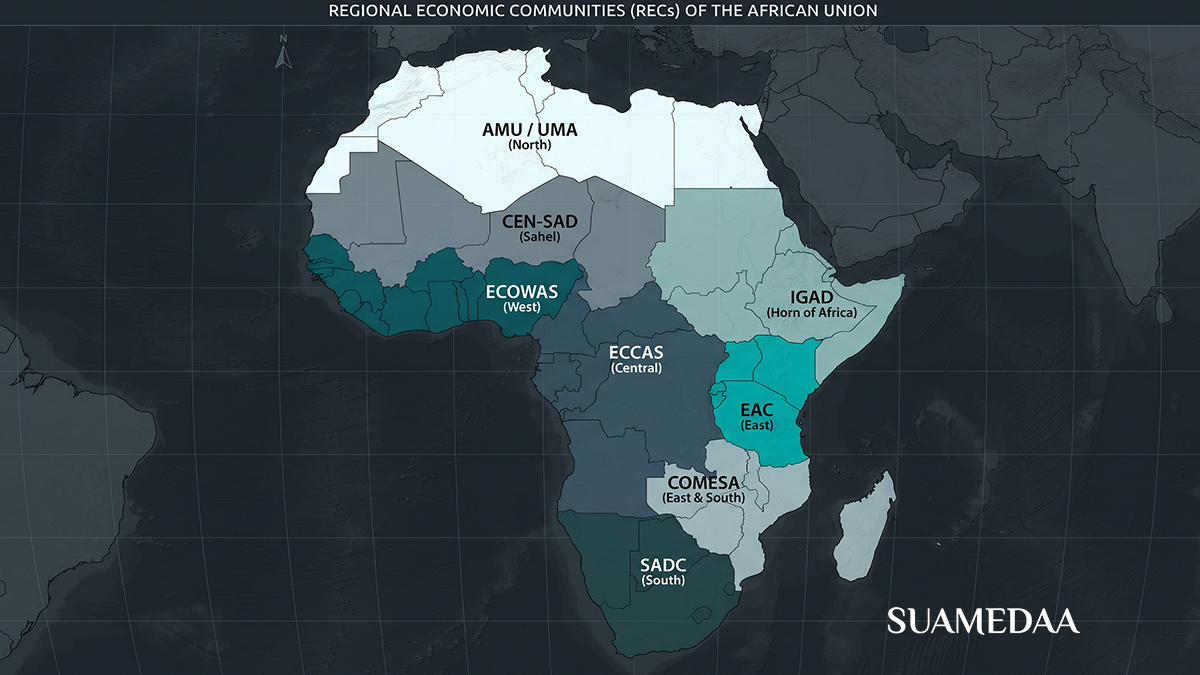
The eight recognised communities are the Economic Community of West African States, the Southern African Development Community, the East African Community, the Common Market for Eastern and Southern Africa, the Economic Community of Central African States, the Intergovernmental Authority on Development, the Arab Maghreb Union, and the Community of Sahel-Saharan States. Each has a distinct mandate, a distinct history, and a distinct track record. Understanding them individually is the prerequisite for understanding the broader continental picture.
ECOWAS: West Africa’s Ambitious Bloc
The Economic Community of West African States, known universally as ECOWAS, was established in 1975 through the Treaty of Lagos. It is among the most institutionally developed of Africa’s regional blocs, with a parliamentary assembly, a court of justice, a commission, and a development bank. Its founding membership of sixteen states has contracted to twelve following the formal withdrawal of Burkina Faso, Mali, and Niger on the 29th of January 2025, in what was the first exit in the bloc’s fifty-year history.
ECOWAS was built around the ambitions of economic integration: a customs union, a common market, the eventual free movement of persons across member states, and a single currency. The free movement protocol has been among its most tangible successes. Citizens of ECOWAS member states can travel across the bloc without a visa, and the ECOWAS passport has become a practical symbol of regional identity. For traders, labourers, and families spread across the porous borders of West Africa, this mobility has real, daily value.
The single currency, to be called the Eco, has been a goal in various iterations since the 1980s and has repeatedly been postponed. The most recent target was set for 2027. The macroeconomic convergence criteria the bloc requires, including targets on inflation, budget deficits, and central bank financing of government deficits, have proven difficult for member states to meet consistently, and the coexistence of the CFA franc zone within the bloc, in which eight of the original sixteen members anchor their currencies to the euro through France, has added a layer of complexity that has not been resolved.


The departure of Burkina Faso, Mali, and Niger, now grouped as the Alliance of Sahel States, represents a genuine stress test for the bloc. The three military-led governments took the position that ECOWAS had become an instrument of external pressure rather than a vehicle for genuine solidarity, citing in particular the severe sanctions imposed on Niger after its July 2023 coup, which included border closures and the disconnection of electricity supply. ECOWAS insists it will keep the door open for their return, and the three countries remain members of the West African Economic and Monetary Union, which means trade in goods continues to flow on relatively normal terms. But the political rupture is real, and its security consequences for a region confronting active insurgencies in the Sahel are significant.
“The departure of Burkina Faso, Mali, and Niger represents a genuine stress test for ECOWAS, exposing the tension at the heart of every regional bloc: how much pressure can integration institutions apply to members before those members conclude that exit is a better option than compliance?”
SADC: Southern Africa’s Industrial Ambition
The Southern African Development Community was established in 1992 from an earlier organisation, the Southern African Development Coordination Conference, which had been created in 1980 to reduce the economic dependence of frontline states on apartheid South Africa. With South Africa’s democratic transition and subsequent membership, the bloc’s original political rationale gave way to a broader development agenda.
SADC’s sixteen member states include some of Africa’s most resource-rich economies: Angola, the Democratic Republic of Congo, Zambia, Zimbabwe, Tanzania, Mozambique, and South Africa itself. The bloc operates a free trade area, in force since 2008, covering trade in goods between most members. Its 2026 theme of industrialisation, infrastructure, and critical minerals reflects both the developmental priorities of its members and the growing global interest in the battery metals and rare earths that the SADC region holds in abundance.
South Africa remains the dominant economic force within SADC and within the broader African integration architecture. It is the continent’s largest contributor to intra-African trade, though its share of that trade fell from 20.8 percent in 2024 to 19.2 percent in 2025, as other economies, including Ethiopia, Uganda, and Zambia, grew their share. South Africa exported $31.1 billion to other African countries in 2025, a figure that reflects both the sophistication of its manufacturing sector and the depth of its commercial links across the continent.
The DRC’s decision to join the EAC in 2022, while remaining in SADC and ECCAS, illustrates the overlapping membership challenge in its most concrete form. The DRC has a population of approximately 100 million people and natural resources of exceptional scale. Its presence across multiple blocs simultaneously reflects the country’s geographic centrality in Africa and the political calculations that drive bloc membership decisions. It also strains the DRC’s own institutional capacity to participate meaningfully in multiple sets of obligations and summits.
EAC: East Africa’s Integration Leader
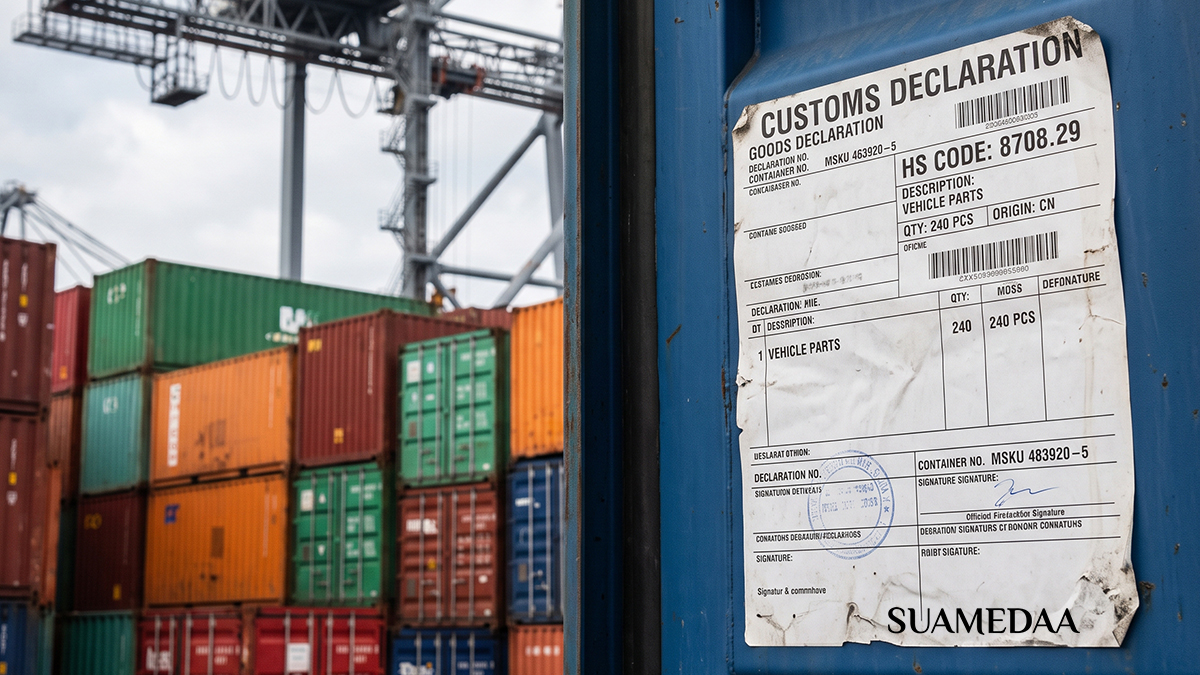
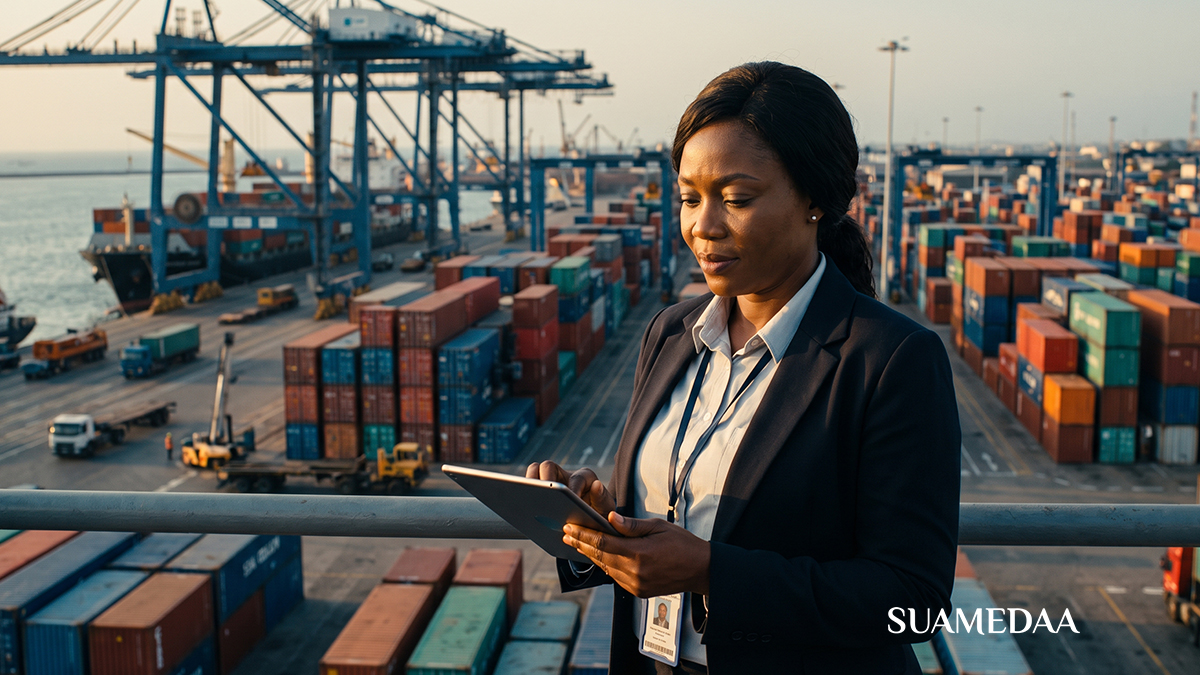
The East African Community is widely regarded as the most economically integrated of Africa’s regional blocs. Based in Arusha, Tanzania, it operates a customs union and a common market. Its partner states can trade within the bloc at preferential rates, and it has introduced the Single Customs Territory framework, which simplifies the movement of goods across internal borders by allowing clearance at the first point of entry rather than at every subsequent border crossing.
The EAC’s performance figures are among the more encouraging on the continent. Intra-EAC trade rose from USD 33 billion in 2024 to USD 40.3 billion in 2025, a meaningful increase in a single year. The East African Customs Bond, introduced under the Single Customs Territory framework, has further reduced the administrative burden on cross-border trade. These are not transformative numbers in global terms, but they represent genuine integration gains achieved through consistent institutional effort.
The EAC’s membership has been expanding. The DRC joined in 2022, Somalia in 2023, and there have been discussions about further expansion. This growth reflects the bloc’s appeal as a functional integration framework, but it also stretches the bloc’s capacity and introduces new political dynamics. The DRC’s history of internal conflict has implications for the bloc’s stability agenda, and managing a larger, more diverse membership requires institutional resources that have not always kept pace with the expansion.
COMESA: The Eastern and Southern Span
The Common Market for Eastern and Southern Africa, covering 21 member states from Libya in the north to Eswatini in the south, is the largest African trade bloc by membership and encompasses some of the most economically varied countries on the continent. Its free trade area has been operational since 2000, and its membership includes both landlocked countries and maritime economies, commodity producers and service-based economies.
COMESA’s institutional footprint includes the COMESA Trade Finance Programme, which addresses trade financing barriers, and digital systems for trade document exchange, which the bloc has been deploying to reduce the paper-based friction that slows cross-border trade in many of its member states. Its 25th Summit was scheduled for Harare in October 2026, where trade digitisation and the economic integration agenda were expected to feature prominently.
The challenge for COMESA is partly one of geographic and economic diversity. A bloc that spans from Ethiopia to Zimbabwe and from Egypt to Zambia is covering very different economic realities under a single integration framework. The overlap with SADC is particularly notable: a substantial number of countries are members of both, creating duplication of obligations and the practical question of which set of rules governs any given transaction.
ECCAS: Central Africa’s Underperforming Giant
The Economic Community of Central African States covers ten countries in a region that sits at the geographic heart of the continent. Its members include the Democratic Republic of Congo, Cameroon, the Republic of Congo, Gabon, the Central African Republic, Equatorial Guinea, Angola, Burundi, Chad, and São Tomé and Príncipe. The region holds the Congo Basin, the world’s second-largest tropical rainforest and one of the planet’s most significant carbon sinks. It sits atop oil fields, mineral deposits, and agricultural potential of enormous scale.
By most measures, ECCAS is the least functionally integrated of the AU’s recognised communities. Intra-regional trade remains low, infrastructure connectivity between member states is poor, and the region has been repeatedly destabilised by conflicts that have made economic integration a secondary priority. The Central African Republic and the DRC have both experienced sustained internal conflict. Chad has faced political instability. These conditions do not create the environment in which customs unions deepen and common markets take root.
ECCAS illustrates a pattern that runs through the African integration story: the existence of an institutional framework does not by itself produce integration. The institutions require political stability among members, adequate financing, trained personnel, and consistent political will from heads of state who must decide whether regional commitments will be honoured when they conflict with immediate national interests.
IGAD: Horn of Africa’s Survival Architecture
The Intergovernmental Authority on Development operates in one of the most conflict-affected and climate-stressed regions on the continent. Its eight members, Djibouti, Eritrea, Ethiopia, Kenya, Somalia, South Sudan, Sudan, and Uganda, include countries that have faced civil war, famine, mass displacement, and state fragility at various points in IGAD’s history. The bloc has accordingly oriented its mandate heavily toward peace-building, migration management, and the coordination of responses to displacement.
IGAD’s 2023 Treaty entered into force in January 2026, representing a formal update to its governing framework after decades of operation under earlier agreements. Sudan resumed active membership in February 2026, with the Khartoum regional office reopening in July, following a period of suspension linked to Sudan’s internal political upheaval. As of mid-2026, the region was coordinating assistance policies for more than 5.5 million registered refugees and asylum seekers, a humanitarian caseload that places IGAD’s work firmly in the domain of regional stability rather than narrowly economic integration.
The EAC’s expansion into areas historically associated with IGAD membership, including Somalia and Uganda, illustrates the blurring of boundaries between blocs in East and Horn of Africa and raises questions about rationalisation that the AU has not yet resolved.
AMU: The Arab Maghreb’s Frozen Potential
The Arab Maghreb Union, comprising Algeria, Libya, Mauritania, Morocco, and Tunisia, was founded in 1989 with the aspiration of creating a unified North African economic space. It has not held a summit since 1994. The principal reason is the unresolved dispute between Algeria and Morocco over the status of Western Sahara, which has made political consensus within the bloc impossible for three decades.
The economic logic for deeper North African integration is compelling. The five countries together have a combined population of roughly 100 million people, significant energy resources, Mediterranean coastlines that link them to European markets, and complementary economic structures. Morocco and Tunisia have both invested in export-oriented manufacturing and services that could benefit from a larger regional market. Algeria’s hydrocarbon wealth could anchor regional energy connectivity.
None of this potential has been realised. The AMU is the starkest illustration on the continent of what political disputes can do to regional integration: an institutional framework in formal existence, a secretariat in Rabat, and virtually no functional activity. Morocco’s approach to regional engagement has instead moved south and west, with its observer status discussions with ECOWAS reflecting an interest in Atlantic Africa that the frozen Maghreb bloc cannot accommodate.
CEN-SAD: The Largest and Least Integrated
The Community of Sahel-Saharan States, with 24 member states, is the largest of the AU’s recognised communities by membership. It is also the least institutionally functional. It has not held a proper summit since 2013. All of its members belong to other RECs, and no meaningful integration architecture has been built that is specific to CEN-SAD. Its continued formal existence alongside the other blocs adds to the complexity of the continental landscape without contributing proportional value.
The Spaghetti Bowl Problem
The term “spaghetti bowl,” borrowed from trade policy literature, describes what happens when a region has so many overlapping preferential trade agreements that the resulting tangle of rules, exceptions, and origin requirements becomes more of a barrier to trade than a facilitator of it. Africa’s integration landscape exhibits this problem in an extreme form.
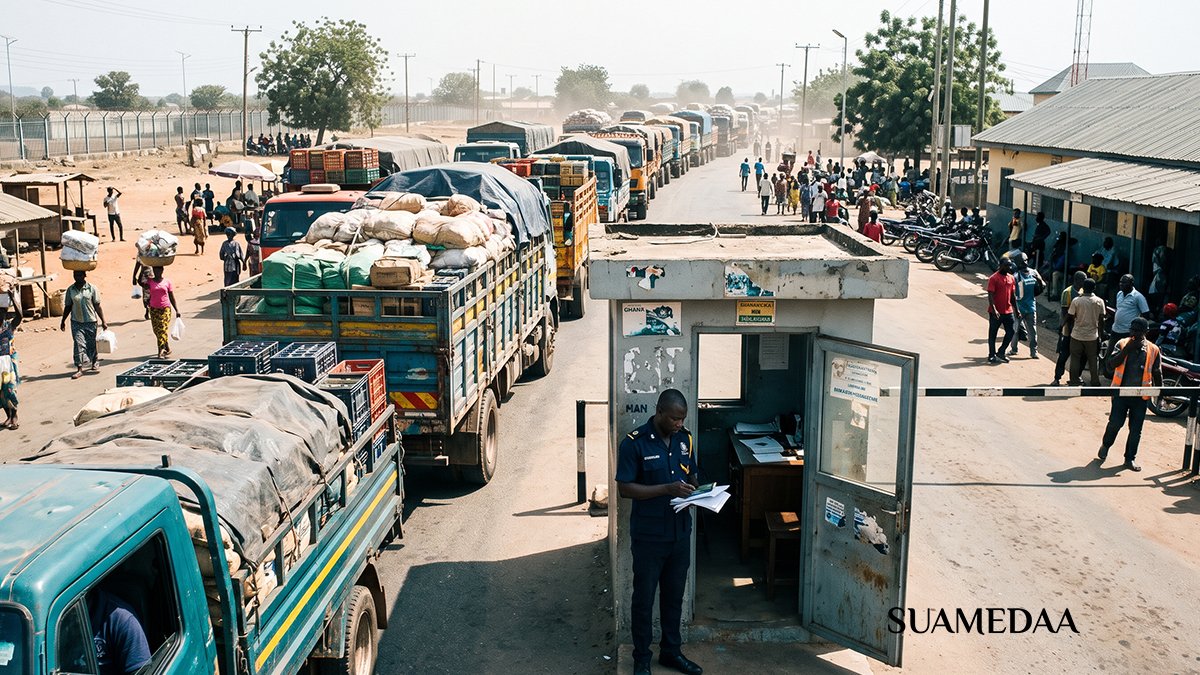
The AU recognises eight communities, but the actual number of integration arrangements on the continent runs to over 150. Countries belong to multiple blocs simultaneously, each with its own tariff schedule, its own rules of origin, its own membership fees, and its own summits requiring attendance from heads of state and finance ministers whose time and institutional capacity are not unlimited. Smaller countries in particular may find that honouring all their bloc obligations simultaneously is simply beyond their administrative reach.
The result is predictable: commitments are made and not implemented. Tariff reductions are agreed and not applied. Summits are held and declarations are issued that change little on the ground. The ISS Africa analysis calls this a problem of “mission creep” alongside structural overlap: blocs have taken on collective security and political governance roles that they are not equipped for, stretching their mandates and dividing their resources in ways that have weakened their core economic function.
The exit of Burkina Faso, Mali, and Niger from ECOWAS, while driven primarily by political and security tensions, is also a data point about the limits of bloc cohesion when members conclude that the costs of membership outweigh the benefits. Rwanda’s withdrawal from ECCAS, Eritrea’s departure from IGAD: these contractions suggest that rationalisation is happening, but through exit rather than through the managed consolidation that the AU has long proposed and not yet achieved.
“Commitments are made and not implemented. Tariff reductions are agreed and not applied. Summits are held and declarations are issued that change little on the ground. The spaghetti bowl is real, and it costs Africa money.”
Intra-African Trade: The Stubborn Gap
The measure against which all African regional integration must ultimately be judged is the share of trade that African countries conduct with each other. By that measure, the continent’s performance remains weak relative to other regions, though it is improving.
Intra-African trade reached $213.8 billion in 2025, up 5.5 percent from $202.7 billion in 2024, according to Afreximbank. That figure represents approximately 18 percent of the continent’s total merchandise trade. For context, intra-European Union trade accounts for over 60 percent of European member states’ total trade. Within ASEAN in Southeast Asia, the share approaches 25 percent. Within USMCA in North America, it exceeds 40 percent.
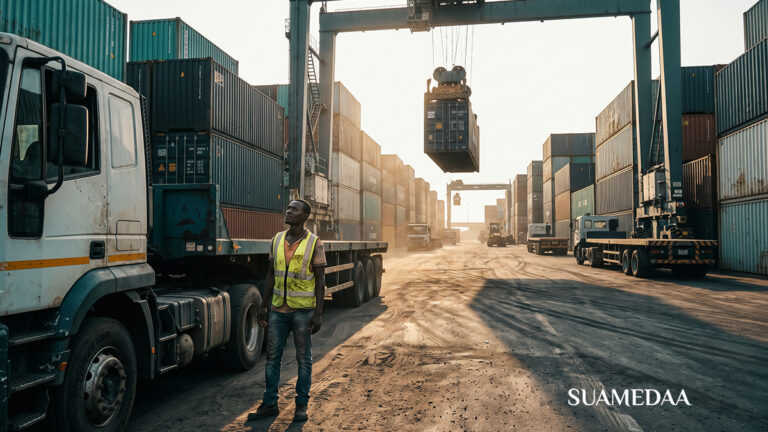
Africa’s 18 percent is not trivial: it represents hundreds of billions of dollars in annual cross-border commerce, the livelihoods of millions of traders, and the beginnings of regional value chains in areas like agriculture, manufacturing, and financial services. But it also reflects the structural reality that Africa’s export orientation has historically been toward Europe, Asia, and North America rather than inward. Colonial-era trade routes were built to extract raw materials for processing in metropolitan economies, and the infrastructure, the ports, the rail lines, the roads, the payment systems, reflects that orientation. It is easier to ship cocoa from Côte d’Ivoire to the Netherlands than to move it to a processing facility in Nigeria.
The Mo Ibrahim Foundation’s research suggests that fully implementing the African Continental Free Trade Area could raise intra-African trade to 53 percent of total trade. The projected gains by 2035 include $1 trillion in manufacturing output growth, $470 billion in additional income, and 14 million jobs. These are transformational numbers. They represent, essentially, the difference between the Africa of today’s economic architecture and the Africa that the integration project has always promised.
AfCFTA: The Continental Bet
The African Continental Free Trade Area entered into force in May 2019 and began operational trading in January 2021. Its ambition is continental in scope: to create a single market for goods and services across all 54 African Union member states, covering a combined GDP of approximately $3.4 trillion and a consumer market of more than 1.4 billion people. It is, by some measures, the largest free trade area in the world by the number of participating countries.
The AfCFTA does not replace the regional economic communities. It layers above them, treating the RECs as the building blocks of the continental market in a manner consistent with the Abuja Treaty of 1991, which established the long-term vision of an African Economic Community. Under this architecture, regional integration is supposed to deepen within each REC before deepening across them, with AfCFTA providing the continental framework that eventually stitches the blocs together into a single economic space.
Whether that architecture works in practice is the central question of African integration today. The AfCFTA Secretariat, based in Accra, has been working to operationalise the agreement, including through the Guided Trade Initiative, which has facilitated actual cross-border trade in specific goods between participating countries, and through ongoing negotiations on services, investment, and intellectual property protocols that are still being finalised.
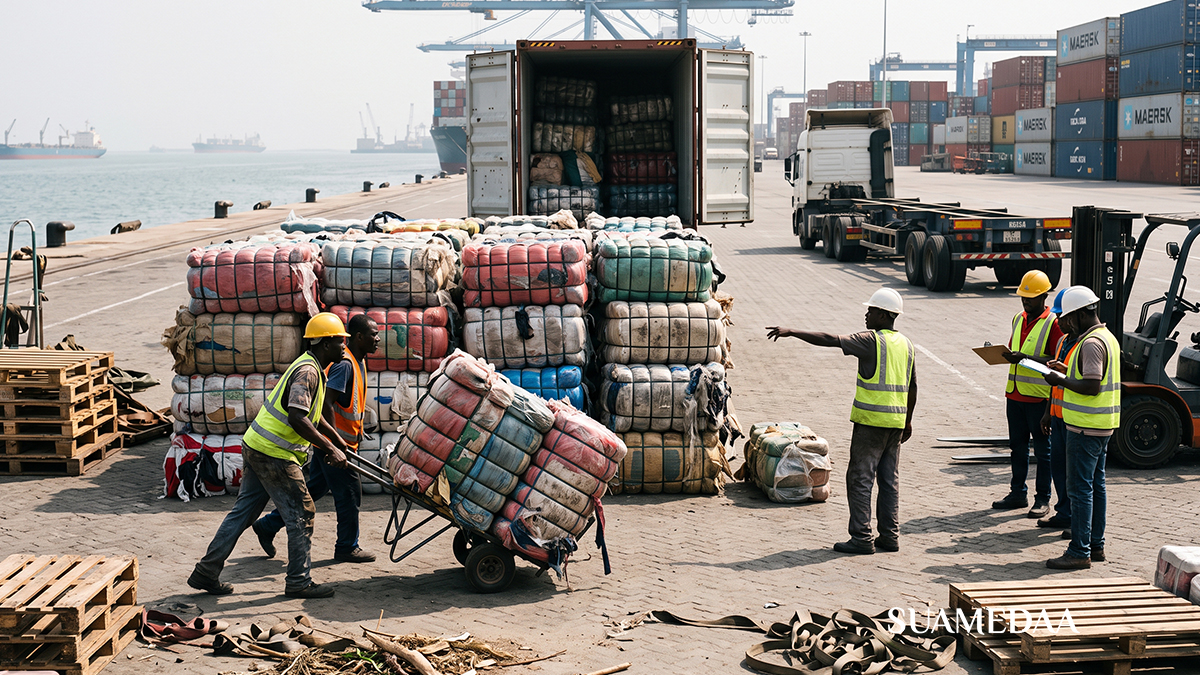
The frictions are real. Tariff liberalisation schedules are being negotiated product by product. Non-tariff barriers, including complex import permit requirements, inconsistent customs procedures, and poor border infrastructure, remain substantial. The free movement of people protocol, which is essential for a genuinely integrated single market, has been ratified by only four countries. And the $100 billion annual trade finance gap identified by Afreximbank means that even when tariffs are reduced and borders are cleared, the financing to execute cross-border transactions is not reliably available.
But the trajectory is positive. Intra-African trade is rising. The EAC’s performance demonstrates what functional regional integration can deliver. South Africa’s early AfCFTA gains, Nigeria’s 21 percent increase in intra-African trade to $9.02 billion in 2025, and Côte d’Ivoire’s emergence as a regional hub for West African commodity trade all point to a system that is working harder than it did a decade ago, even if it is not yet working as well as it must.
The Women Who Move the Trade
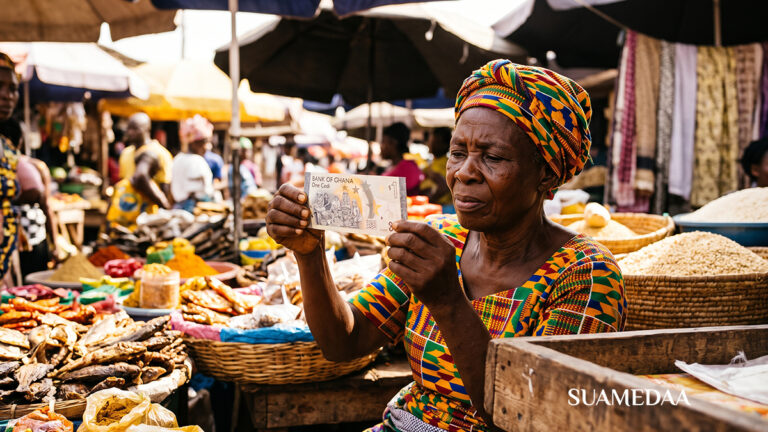
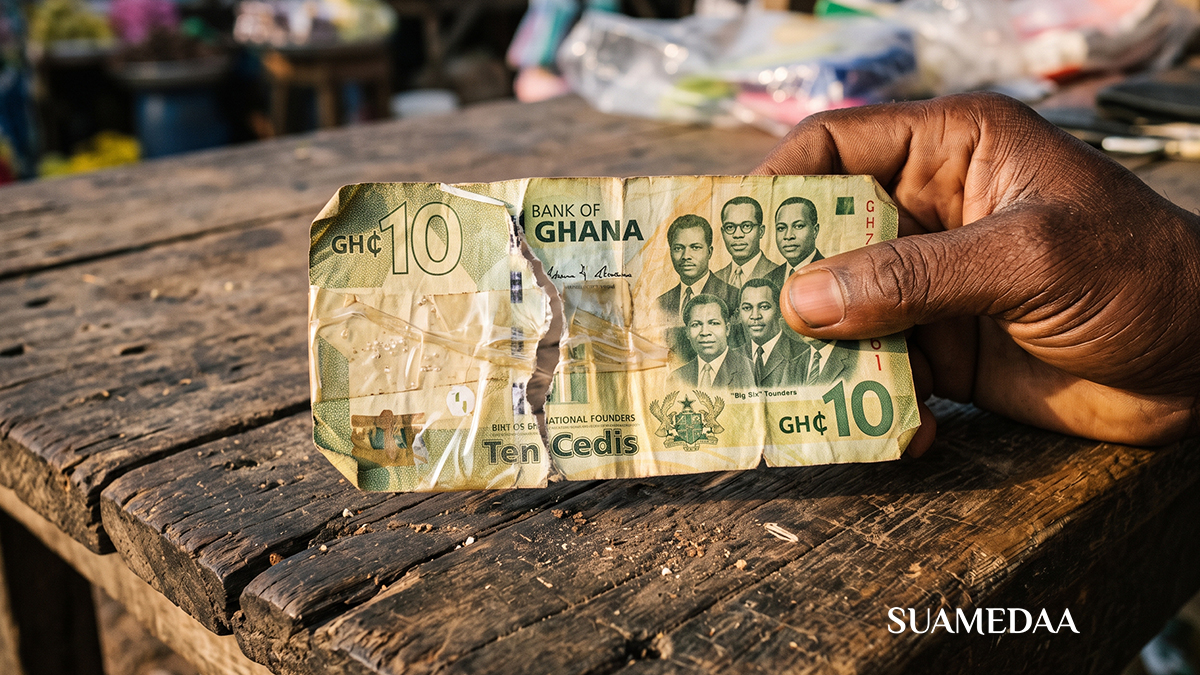
No account of African regional integration is honest without acknowledging the role of women in intra-African commerce. The UN Economic Commission for Africa estimates that informal cross-border trade across the continent amounts to between 30 and 72 percent of formal trade between neighbouring countries. Women conduct more than 70 percent of that informal trade.
These are not marginal economic actors. They are the people who actually move goods across borders, who manage the relationships with traders on both sides, who absorb the costs of harassment at border posts and the risks of travelling with cash. The formal integration agenda, with its emphasis on tariff schedules and institutional frameworks, has historically been built around the needs of registered companies with the capacity to navigate official procedures. It has not been built around the needs of the market woman crossing from Togo into Ghana with two bags of goods and limited access to banking.
An integration architecture that does not make formal trade easier for this population is an architecture that is working for a fraction of the people it should serve. Border regimes that expose women traders to extortion, documentation requirements that are inaccessible without literacy and banking access, payment systems that cannot accommodate cash, all of these represent gaps between the stated ambitions of African integration and its practical reality on the ground.
What Needs to Change
African regional integration has produced genuine achievements over fifty years. Free movement within ECOWAS. The EAC’s growing customs union. COMESA’s digital trade systems. The AfCFTA’s continental architecture. These are not nothing. They are the product of sustained political effort across generations of African leaders and technocrats who believed, often in the face of significant obstacles, that the continent’s economic future depended on its ability to trade with itself.
What those achievements have not yet produced is an integrated continental market. The gap between the architecture and the reality is a function of several persistent problems: overlapping memberships that create confusion rather than complementarity; insufficient political will to implement commitments made at summit level; infrastructure deficits that make physical trade costly even when tariffs are low; and financing gaps that limit the ability of African businesses to access the cross-border commerce the agreements theoretically open to them.
Rationalisation of the bloc architecture is a necessary step that the AU has identified but not achieved. A continent that moves from eight recognised communities and 150 overlapping arrangements toward a cleaner set of building blocks, each with a clear mandate, adequate financing, and genuinely committed membership, would be better positioned to deliver the integration that the AfCFTA’s framework promises.
The alternative is what the continent has already experienced: agreements signed, declarations issued, summits held, and intra-African trade that remains at 18 percent of total commerce while the rest of the world moves goods across its own regional markets at two and three times that share.
Africa has the resources, the population, and the institutional frameworks. The variable that has most consistently been in short supply is the political will to subordinate national interest to regional gain at the moments when doing so is genuinely difficult. The economic blocs of the continent have been waiting for that variable to arrive at scale for more than half a century. The AfCFTA may be the instrument that finally forces the question. What happens when it does will determine what kind of economic power Africa becomes in the decades ahead.