Africans worldwide win big for descendants at UN over declaring the transatlantic slave trade the gravest crime against humanity
The transatlantic slave trade is one of the most devastating chapters in human history. The transatlantic slave trade was the second stage of the so-called triangular trade – in which arms, textiles, and wine were shipped from Europe to Africa, enslaved people from Africa to the Americas, and sugar, tobacco, and other products from the Americas back to Europe. It was the largest long-distance forced movement of people in all of recorded history. For 366 years, European slave traders loaded approximately 12.5 million Africans onto Atlantic slave ships. About 11 million survived the Middle Passage to reach the Americas. As late as 1820, nearly four Africans had crossed the Atlantic for every European. Given the differences in gender ratios between the two migrant streams, about four out of every five females who crossed the Atlantic were African.
What Happened – March 25, 2026
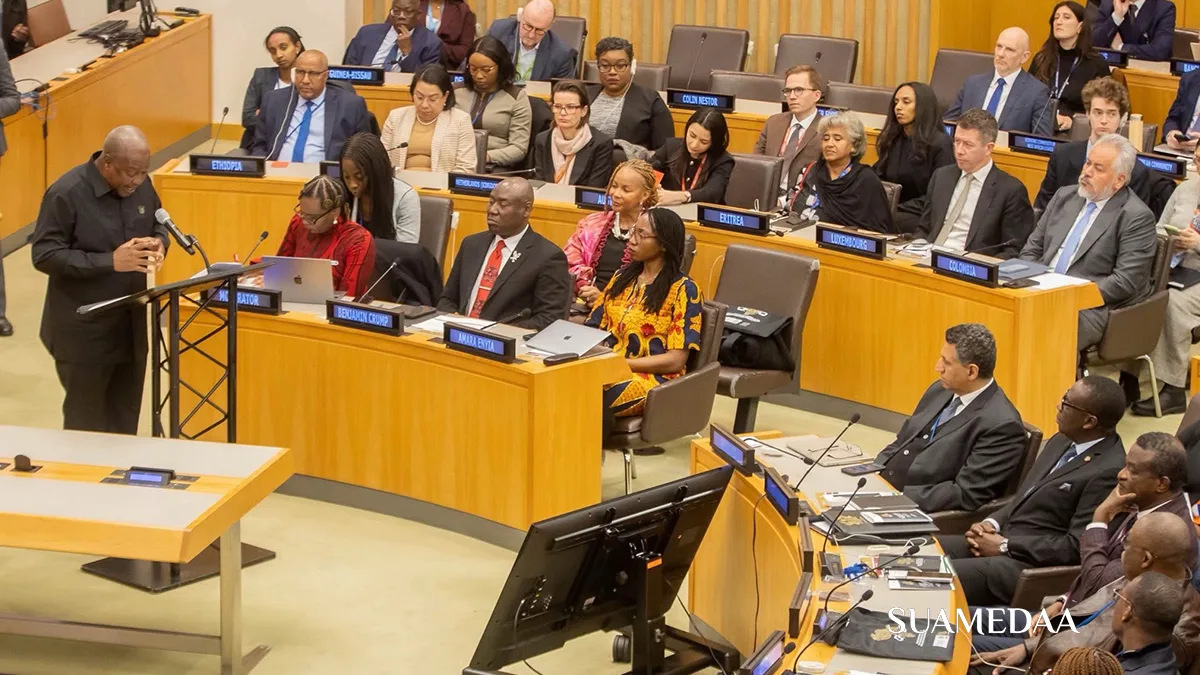
Applause erupted in the UN General Assembly Hall on Wednesday as member states adopted a resolution declaring the transatlantic slave trade the gravest crime against humanity. The resolution spearheaded by Ghana received 123 votes in favour. Three countries — Argentina, Israel, and the United States — voted against, and 52 abstained.
Ghana’s Central Role
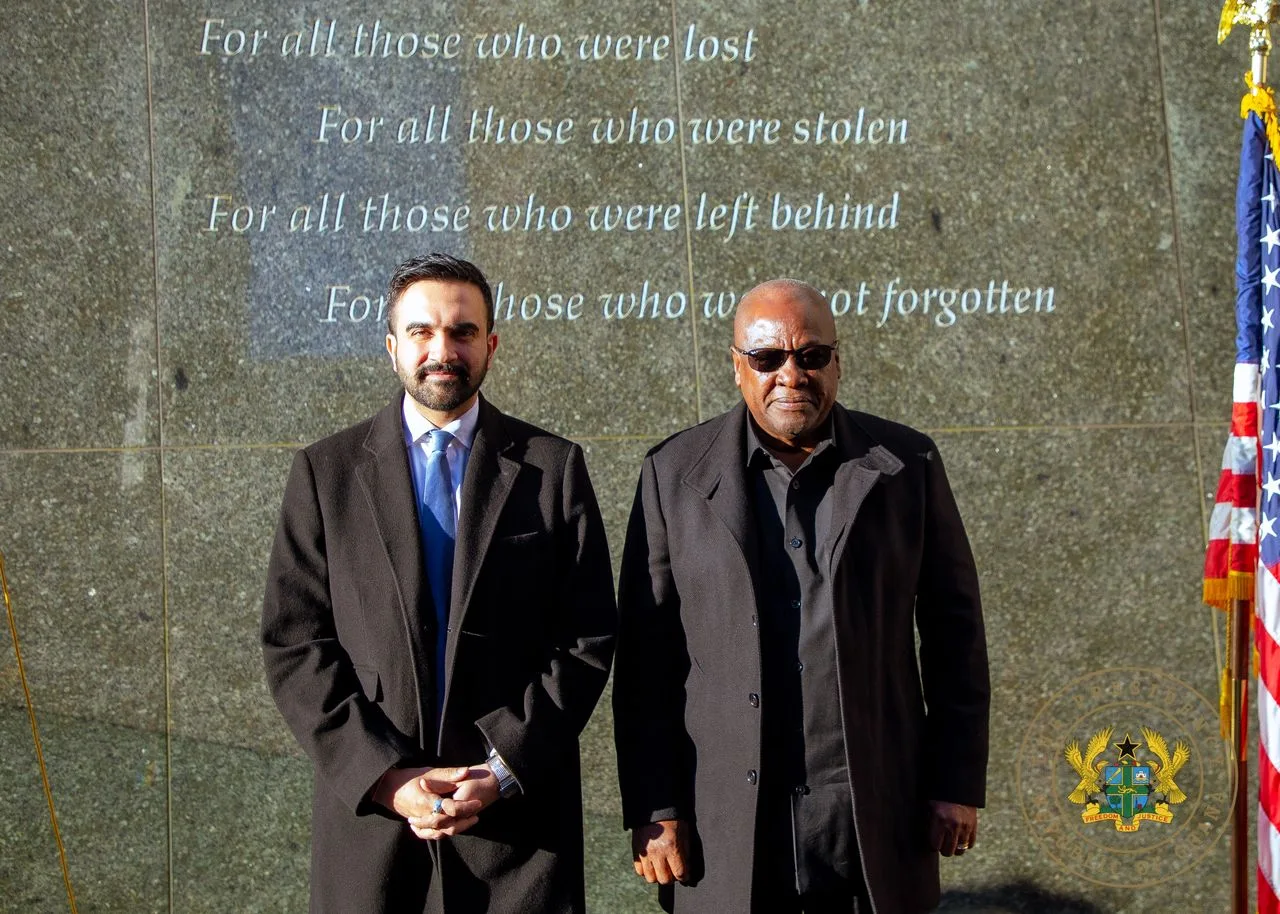
Ghana led negotiations for the resolution over at least a year. President John Dramani Mahama – the African Union Champion for Reparations — said a vote for the resolution was a stand on the right side of history. “This resolution allows us as a global community to collectively bear witness to the plight of more than 12.5 million men, women and children whose homes, communities, names, families, hopes, dreams, futures and lives were stolen from them over the course of 400 years,” Mahama said.
President Mahama spoke ahead of the vote on behalf of the 54-member African Group – the largest regional bloc at the United Nations. The vote was timed deliberately — March 25 is the International Day of Remembrance of the Victims of Slavery and the Transatlantic Slave Trade, the date in 1807 when the Abolition of the Slave Trade Act was passed in Britain.
What the Resolution Says
The resolution “unequivocally condemns the trafficking of enslaved Africans and racialized chattel enslavement of Africans, slavery and the transatlantic slave trade as the most inhumane and enduring injustice against humanity.” It calls on UN member nations to engage in talks “on reparatory justice, including a full and formal apology, measures of restitution, compensation, rehabilitation, satisfaction, guarantees of non-repetition and changes to laws, programs and services to address racism and systemic discrimination.”
It also urges member states to return stolen artefacts — artworks, monuments, museum pieces, documents and national archives — to their countries of origin without charge.
Who Voted Against and Why
Only three nations voted no – United States, Israel, and Argentina.
The US stated it “does not recognise a legal right to reparations for historical wrongs that were not illegal under international law at the time they occurred.” Washington also objected to the resolution’s attempt to rank crimes against humanity in a hierarchy, arguing it diminishes the suffering of victims of other atrocities but conveniently forgot to mention even a few.
Who Abstained and Why
The United Kingdom and all 27 members of the European Union abstained. The EU stated it condemns the slave trade in the strongest terms but cited concerns about the legal references in the text, specifically the retroactive application of international law and calls for reparations it said lacked a sound legal basis in international law. The EU also regretted that the proponents did not allow more time for negotiation.
What It Actually Does
The resolution is not legally binding but carries significant political weight. It does not compel any country to pay anything or apologise. What it does is establish a UN-level political consensus — backed by 123 nations — that the transatlantic slave trade was the gravest crime against humanity, and that reparatory justice conversations must now happen.
Africa’s Reaction
The resolution was widely welcomed across Africa and among advocates of restorative justice and slave descendants. Ghana’s Foreign Minister Samuel Ablakwa said the resolution called for accountability and could pave the way for a reparative framework. “History does not disappear when ignored, truth does not weaken when delayed, crime does not rot… and justice does not expire with time,” he said.
The Bigger Significance
This is one of the most consequential votes Africa has ever won at the UN General Assembly. For decades, reparations for slavery was treated as a fringe political idea in international forums. Getting 123 of 193 UN member states — a clear majority — to formally declare the transatlantic slave trade the gravest crime against humanity, and to call explicitly for reparatory justice, is a seismic diplomatic achievement.
Ghana and the African Union drove it, and President Mahama personally championed it. The Netherlands remains the only European country to have issued a formal apology for its role in slavery – that reality is now squarely on the international table.
- How to Rescue Your Best Outfits – A Guide to Removing tough Stains from African FabricsSpilling something on a basic cotton t-shirt is annoying, but spilling oil on a custom-tailored Adire two-piece or a vintage Kente cloth feels like a genuine crisis. Traditional African textiles rely on rich, saturated dyes and delicate weaving techniques. Because of this, standard commercial stain removers will often bleach the color right out of the fabric,… Read more: How to Rescue Your Best Outfits – A Guide to Removing tough Stains from African Fabrics
- The Six Tools of Strategic ThinkingThere is a difference between being smart and being strategic. Plenty of intelligent people make poor decisions because they think in straight lines, react to the surface of a situation, and stop analyzing the moment an answer feels good enough. Strategic thinkers operate differently. They have a set of mental habits that let them see further,… Read more: The Six Tools of Strategic Thinking
- Why Studying Abroad Can Disadvantage African StudentsDiscover how studying abroad can sometimes disadvantage African students through intentional mis-education, blocked technology access, and unfair preparation - plus how support, mentorship, and the right resources can still help students achieve high grades and thrive.
- Ghana 2025 Constitution Review – Learning, Participation, and What Comes NextThe review matters because a constitution is meant to do more than provide political procedures. It should also enable effective governance, credible accountability, and measurable development outcomes for citizens
- Intentional marginalisation of some outside Africa institutions miseducating African students but guaranteeing them top gradesIntentional marginalisation of some outside-Africa institutions can shape how African students are taught, assessed, and represented. When educational systems limit meaningful engagement, dismiss local contexts, or impose biased standards, students may be “misededucated”; not because they lack ability, but because the learning they receive does not reflect reality or equip them to think critically. At the… Read more: Intentional marginalisation of some outside Africa institutions miseducating African students but guaranteeing them top grades