
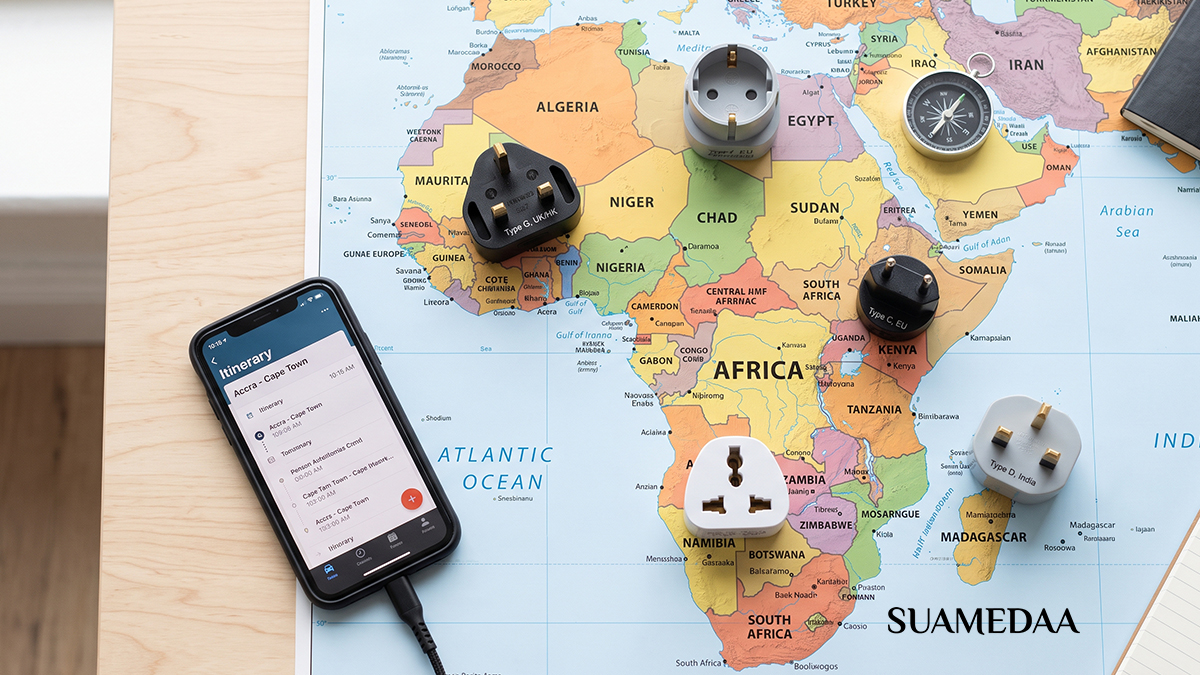
Electrical Ports in the Continent of Africa
Anyone who has packed for a trip across multiple African countries knows the frustration well: a charger that fit perfectly in one hotel room refuses to fit the socket in the next. Africa’s electrical landscape is one of the most varied in the world, a direct legacy of the continent’s stall of organic progress through what parts of the world refers as colonisation history, in which different European countries introduced their own wiring standards into the territories they forced themselves on with control. The result today is a patchwork of plug types, voltages, and infrastructure quality that varies enormously from country to country and even from city to countryside within the same nation.
Why Africa Lacks a Single Standard
Unlike regions such as the European Union, which largely standardized around a shared plug type, Africa never had a unifying political body to enforce one electrical system across the continent. Colonisers of the past, mainly Britain, France, and Portugal, each brought their own domestic wiring standards to their colonies, and those standards largely stuck even after independence. Rewiring an entire country’s electrical infrastructure is enormously expensive, so most nations simply continued using whatever system colonial engineers had originally installed.
This history explains why neighboring countries, even ones that share a border and close cultural ties, can use entirely different plug types depending on which European power once administered them.

Common Plug Types Found Across Africa
Several standardized plug types appear repeatedly across the continent, each associated with a different colonial or regional influence.
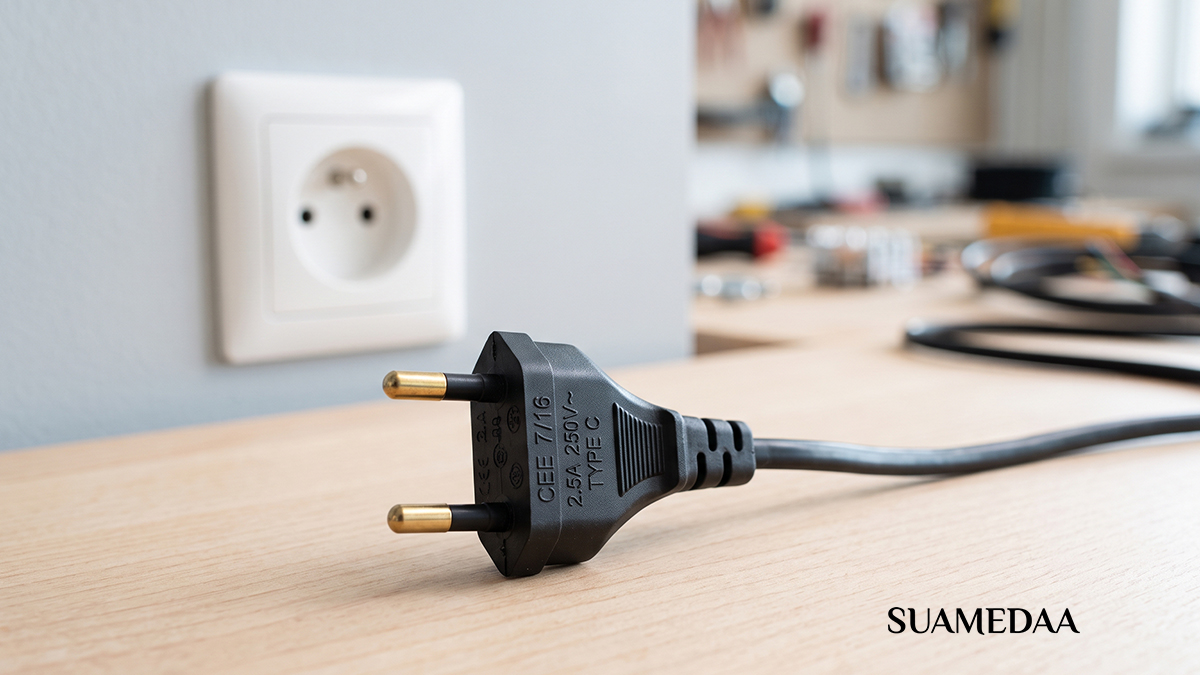
Type C
Type C is a simple two round pin plug, ungrounded, widely used across North Africa and parts of West and Central Africa. It is compatible with the European standard and is common in countries such as Morocco, Algeria, Tunisia, Senegal, and Cameroon.
Type D
Type D features three round pins arranged in a triangular pattern and traces back to older British colonial wiring standards. It remains in use in countries like Namibia, though it has been phased out in many former British territories in favor of newer types.
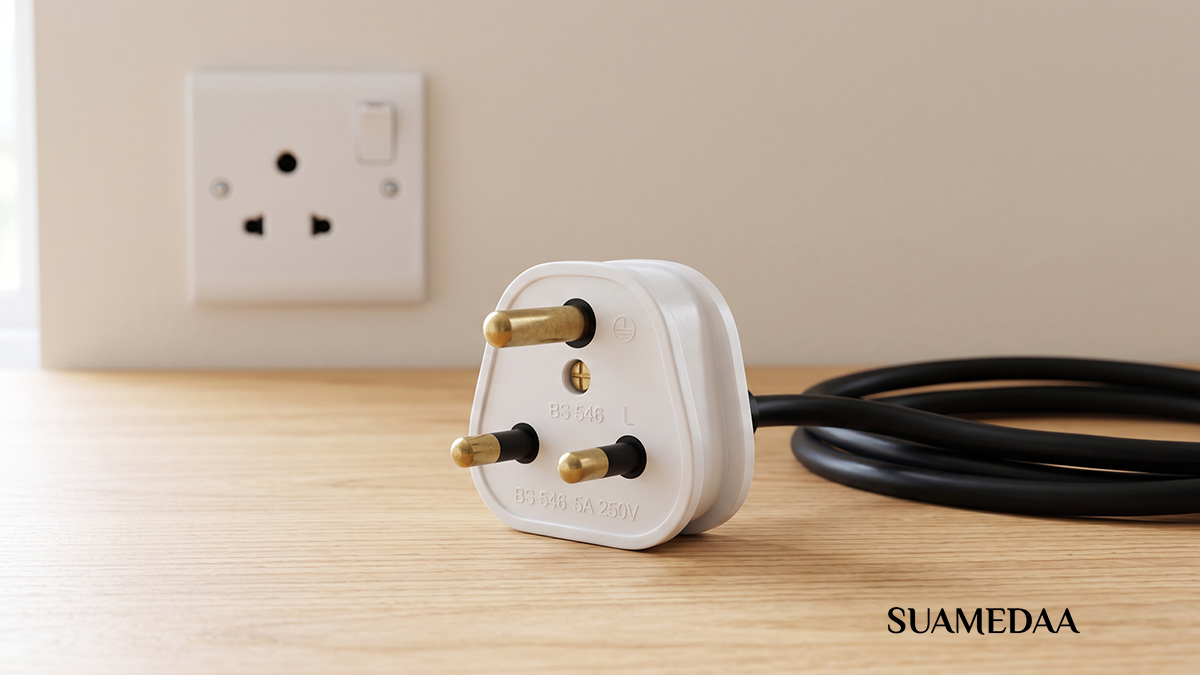
Type E
Type E consists of two round pins plus a grounding pin built into the socket itself, reflecting French colonial influence. It is common in Francophone nations such as Ivory Coast, Senegal, and Madagascar, alongside Type C.
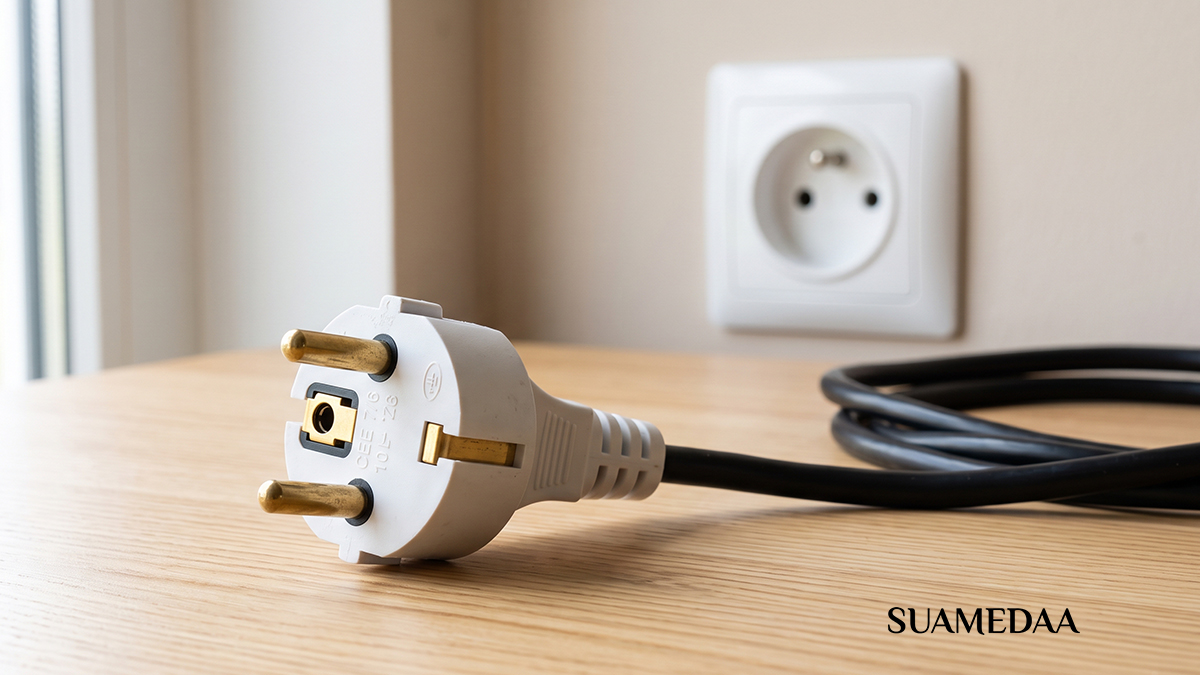
Type F
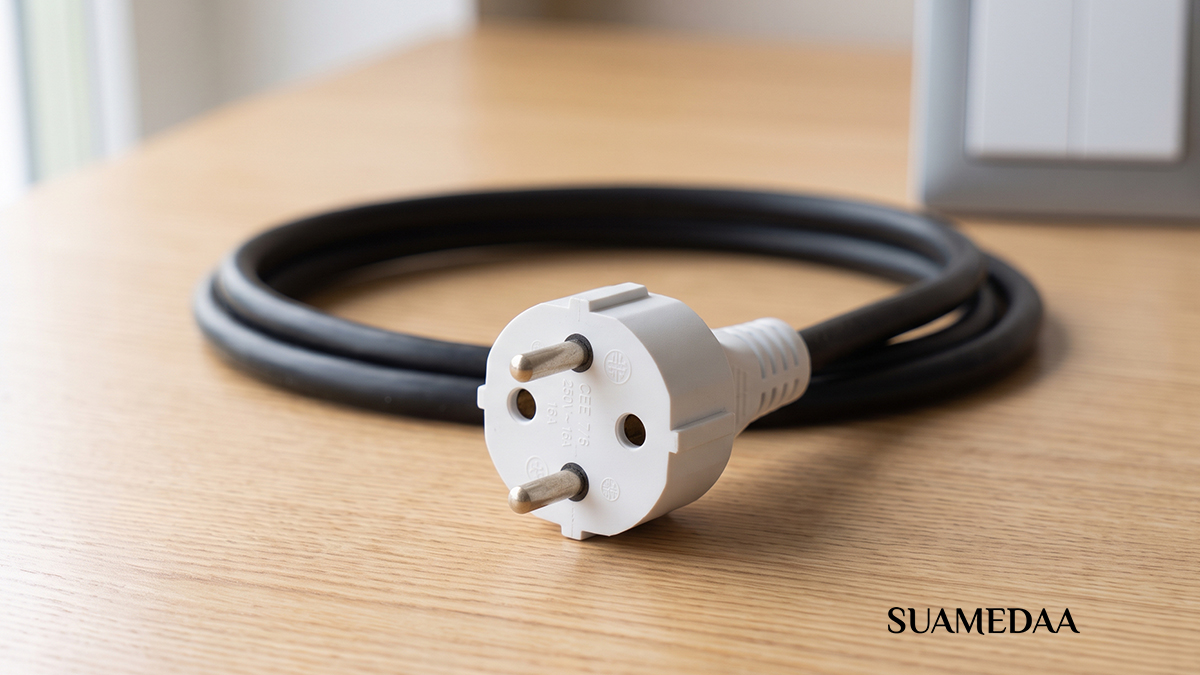
Type F, the German style Schuko plug with two round pins and grounding clips on the sides, appears in various countries with European ties, sometimes alongside Type C and E as an interchangeable option.


Type G
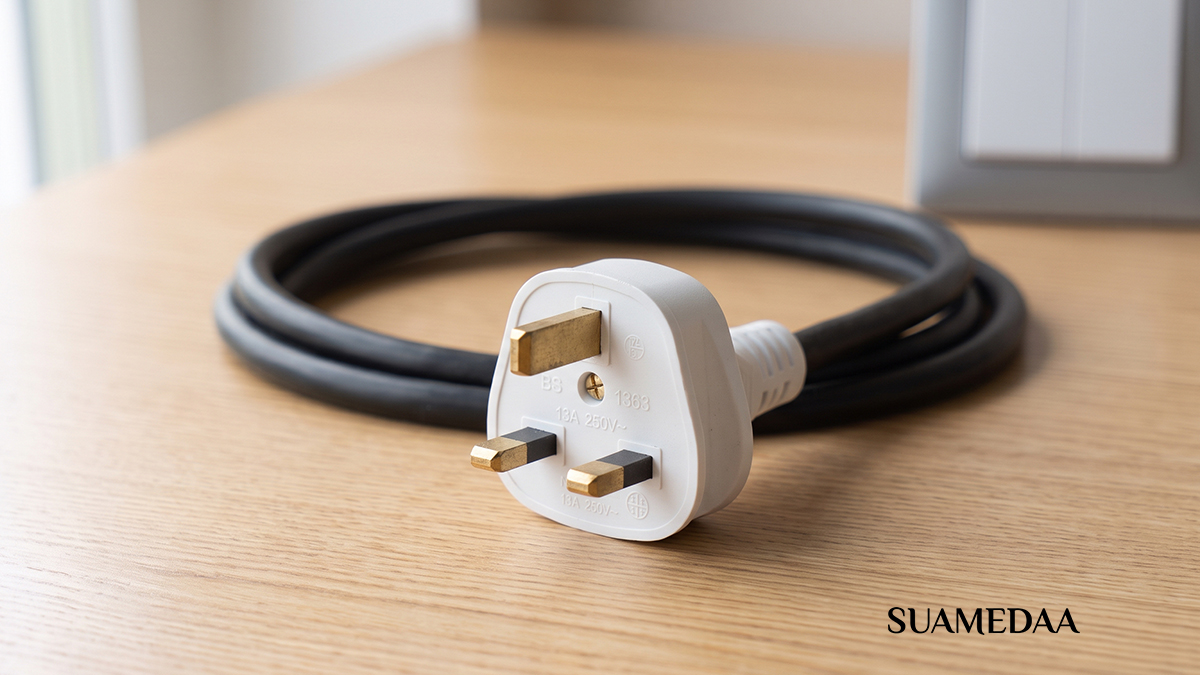
Type G, the rectangular three pin British standard, is widespread in former British colonies such as Kenya, Uganda, Tanzania, Nigeria, and Ghana, a direct carryover from British colonial electrical codes.
Type M
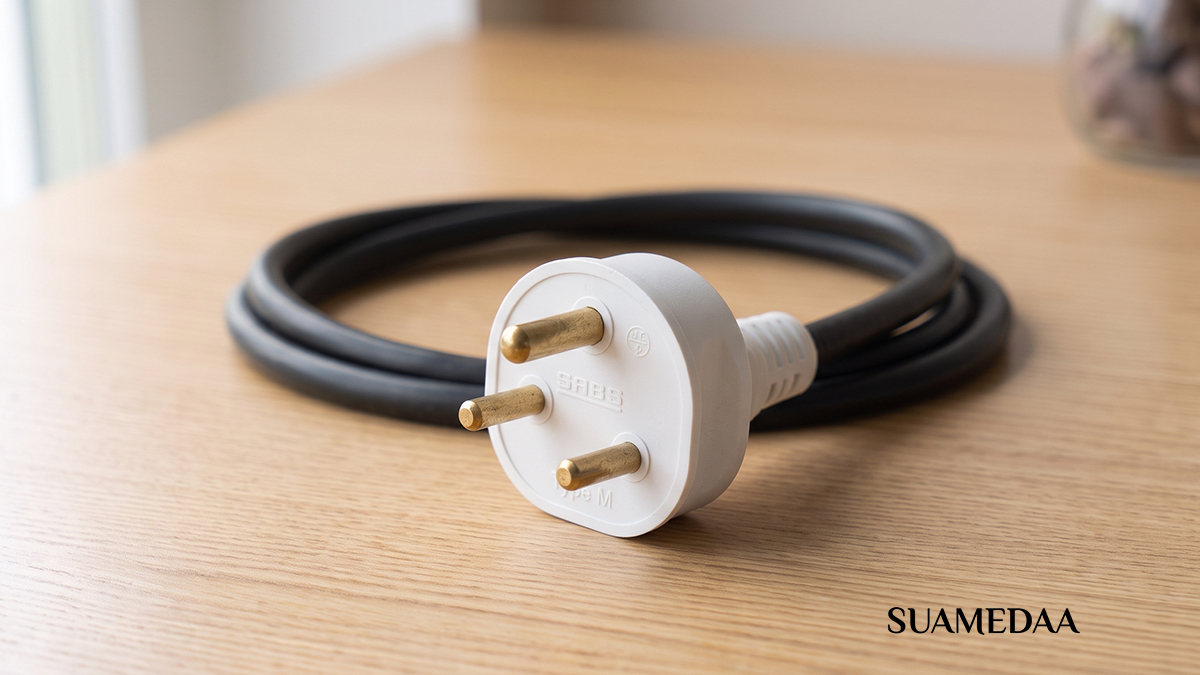
Type M, featuring three large round pins in a triangular arrangement similar to Type D but noticeably bigger, is most associated with South Africa, where it remains the most common socket found in homes and businesses, alongside Lesotho, Eswatini, and Mozambique.
Type N
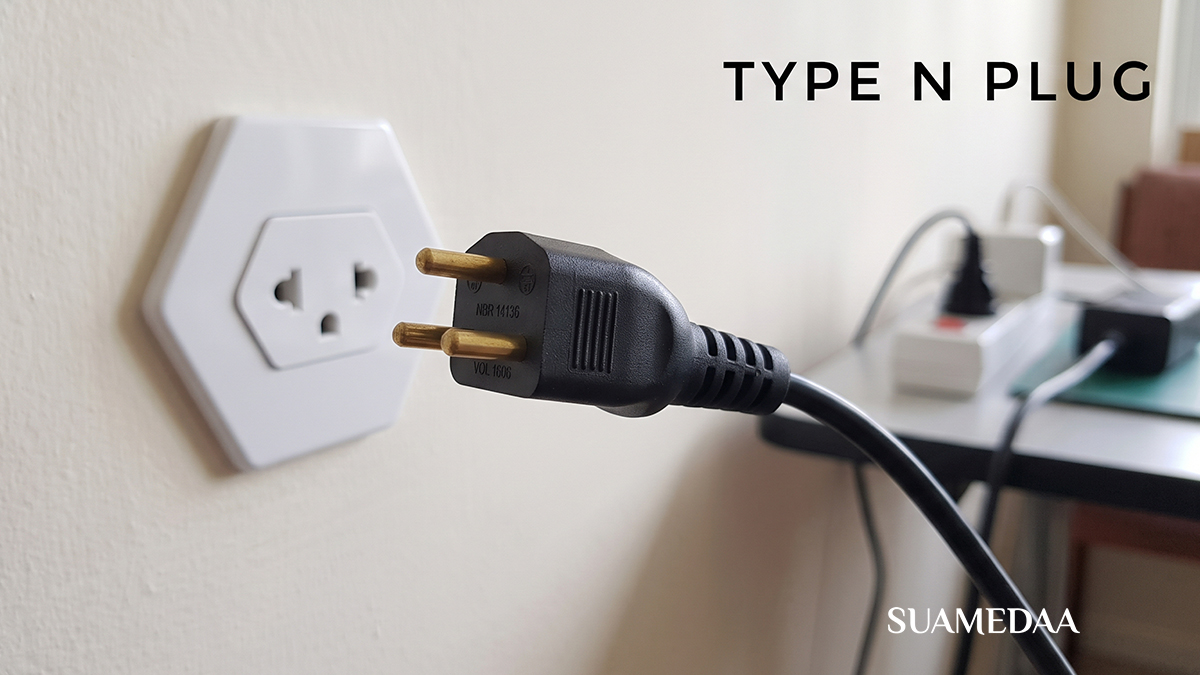
Type N, a newer standard resembling the plug used in Brazil, was officially adopted by South Africa in 2006 and designated the preferred national standard in 2013. Since 2018, new South African homes have been required to include at least one Type N socket at every outlet, though older Type M sockets remain common throughout the country during this extended transition.
Voltage and Frequency
Despite the wide variety of physical plug shapes, Africa is relatively consistent when it comes to voltage. Most of the continent runs on 220 to 240 volts at a frequency of 50 Hz, aligning with the European standard rather than the lower voltage systems used in North America. This is generally good news for travelers coming from Europe, Asia, Australia, or the United Kingdom, since their devices are typically built to handle that voltage range already. Travelers from North America, where household voltage runs at 110 to 120 volts, need to check whether their devices support dual voltage input before plugging in, since using single voltage 110V appliances on Africa’s 220 to 240V grid without a converter can damage or destroy the device.
A small number of exceptions exist. Libya historically used 127 volts in some areas, though much of the country has since transitioned toward the more common 230 volt standard used elsewhere on the continent.


Country Examples
Below is a country by country breakdown of plug types across the continent, grouped by region. Nearly all of these countries run on 220 to 240 volts at 50 Hz unless otherwise noted, so the main thing to check when packing is the pin shape rather than the voltage.
North Africa
- Algeria – Type C and F
- Egypt – Type C and F
- Libya – Type C, F, and L
- Morocco – Type C and E
- Sudan – Type C and D
- South Sudan – Type C and D
- Tunisia – Type C and E
- Western Sahara – Type C and F
West Africa
- Benin – Type C and E
- Burkina Faso – Type C and E
- Cape Verde – Type C and F
- Gambia – Type G
- Ghana – Type G, though many sockets are universal and also accept several other pin types
- Guinea – Type C and F
- Guinea-Bissau – Type C and F
- Ivory Coast – Type C and E
- Liberia – Type C, D, F, and G, with many sockets built as universal outlets
- Mali – Type C and E
- Mauritania – Type C and E
- Niger – Type C and E
- Nigeria – Type G, though many sockets are universal and also accept several other pin types
- Senegal – Type C, D, E, and K
- Sierra Leone – Type D and G
- Togo – Type C and E
Central Africa
- Cameroon – Type C and E
- Central African Republic – Type C and E
- Chad – Type C, E, and F
- Congo-Brazzaville (Republic of the Congo) – Type C and E
- Congo-Kinshasa (Democratic Republic of the Congo) – Type C and E
- Equatorial Guinea – Type C and E
- Gabon – Type C and E
- Sao Tome and Principe – Type C and F
East Africa
- Burundi – Type C and E
- Comoros – Type C and E
- Djibouti – Type C and E
- Eritrea – Type C, E, and L
- Ethiopia – Type C, F, and G
- Kenya – Type G
- Rwanda – Type C, E, F, and G
- Seychelles – Type G
- Somalia – Type C
- Tanzania – Type D and G
- Uganda – Type G
Southern Africa
- Angola – Type C and F
- Botswana – Type M
- Eswatini – Type C, M, and N
- Lesotho – Type M
- Madagascar – Type C and E
- Malawi – Type G
- Mauritius – Type C, E, and G
- Mozambique – Type C, F, M, and N
- Namibia – Type C, M, and N
- South Africa – Type C, D, M, and N, with Type M remaining the most widespread despite Type N being the officially preferred standard
- Zambia – Type C, D, and G
- Zimbabwe – Type D and G
Infrastructure Reliability
Beyond plug shapes and voltage, the reliability of electrical supply varies dramatically across the continent. Countries such as South Africa, Morocco, and Egypt generally maintain more stable power grids, though South Africa in particular has experienced periods of scheduled rolling blackouts, known locally as load shedding, due to strain on its generation capacity. Many other countries face frequent and sometimes unpredictable outages tied to aging infrastructure, limited generation capacity, or underinvestment, and rural areas in many nations still lack any grid connection at all. Off grid solar power, often paired with USB charging ports, has become an increasingly common workaround in areas without reliable access to the main grid.
Practical Advice for Travelers
Given this level of diversity, a universal travel adapter capable of handling multiple pin configurations is generally considered essential for anyone traveling across several African countries, rather than relying on a single adapter suited to just one plug type. It is equally important to check the voltage rating printed on each device, usually found on the charger or power brick, before connecting it to any outlet. Most modern electronics, including phone chargers, laptop adapters, and camera chargers, are built to accept a wide input range and only require a plug shape adapter, but older or single voltage appliances may need a full voltage converter as well. Carrying a portable power bank is also a practical safeguard in regions where outages are common.
Africa’s electrical systems tell a story that mirrors the continent’s broader history, shaped by competing colonial powers, uneven post independence development, and infrastructure investment that continues to vary widely from nation to nation. While the plug type in any given wall socket might depend on whether the country was once administered by Britain, France, or Portugal, the near universal 220 to 240 volt standard offers a thread of consistency across an otherwise fragmented landscape. For travelers, businesses, and residents alike, understanding this patchwork is a practical necessity, and it also offers a small but telling window into the historical forces that continue to shape everyday life across the continent.