The World Went to Belém: What Happened at COP30 and Why It Matters
It was billed as the most important climate summit since Paris. Brazil had spent three years preparing for it, symbolically moving its national capital to Belém for eleven days, upgrading sewage systems and building new public squares in a city that sits at the mouth of the Amazon. President Luiz Inácio Lula da Silva called it the “COP of truth,” his shorthand for a summit that could no longer afford to paper over failure with carefully worded communiqués. By the time the closing gavel fell, more than twenty-seven hours past the scheduled end, the world had a package of agreements. Whether that package deserves the name “truth” is a question that climate scientists, African negotiators, and environmental advocates have spent the weeks since trying to answer.
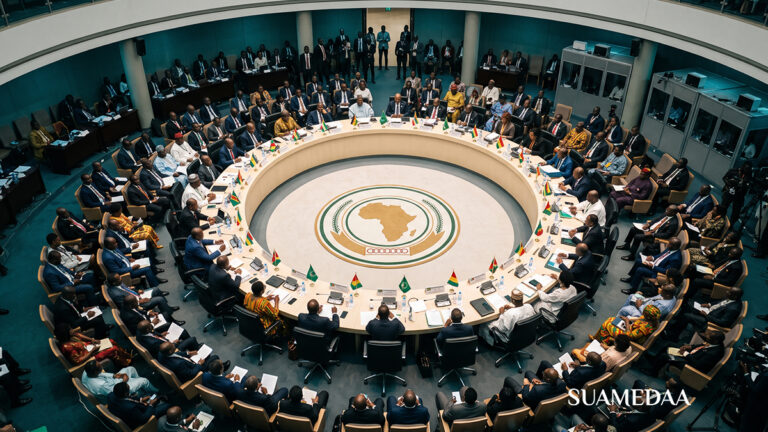
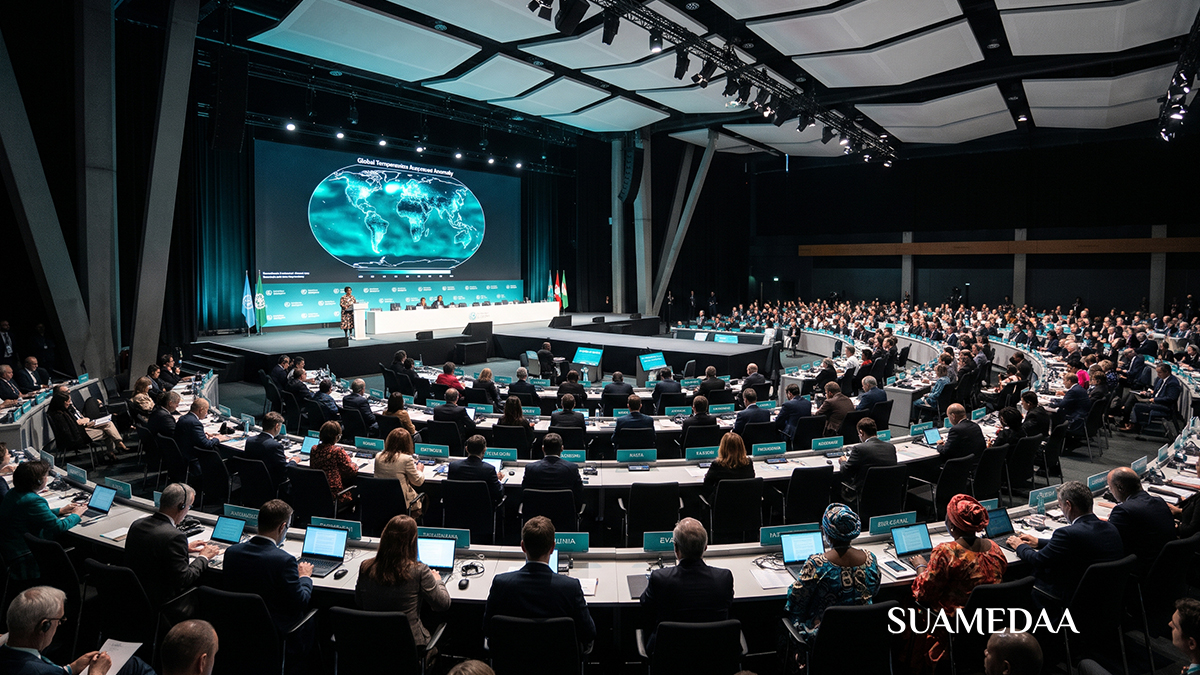
COP30, the 30th Conference of the Parties to the United Nations Framework Convention on Climate Change, took place from the 10th to the 22nd of November 2025 at the Hangar Convention Centre in Belém, in Brazil’s Pará state, deep in the Amazon basin. It drew 56,118 registered delegates, the second-largest attendance in the history of the negotiations after COP28, plus more than 5,000 virtual observers and an observer cap of 9,500 that left tens of thousands of civil society representatives locked out of a process that affects them most. What those delegates produced, after two weeks of negotiations and a final overnight push, was a package the Brazilian presidency named the “global mutirão,” borrowing a Portuguese word that means communal collective effort. The name was chosen deliberately. The outcome, like most things in climate diplomacy, was rather more complicated than the name implies.
Why Belém, Why Now
The choice of Belém as COP30’s host city was not purely logistical. It was a statement. Belém is the gateway to the Amazon rainforest, the largest tropical forest on earth and one of the most critical carbon sinks remaining in the global climate system. Hosting the negotiations in the shadow of that forest was Brazil’s way of placing the stakes on the table before a single text had been drafted.

Brazil’s president had come into office in 2023 on pledges to end Amazon deforestation, reverse the environmental demolition of the Bolsonaro years, and restore Brazil’s standing as a credible partner in multilateral climate action. By the time COP30 arrived, deforestation in the Brazilian Amazon had fallen significantly from its peak, though conservation advocates cautioned that the gains were fragile and that legal protections for certain categories of Amazon land remained under pressure. The COP, Lula hoped, would show that a country could simultaneously develop its economy, protect its forests, and lead the world toward a faster decarbonisation path.
Whether that vision survived the negotiations is contested. What is clear is that the setting gave the summit an urgency that abstract diplomatic venues rarely produce. When negotiators walked outside the convention centre, they were in the Amazon’s zone of influence, in a city where the river floods streets in the wet season and where climate projections for the region are, to put it plainly, alarming.
What the World Arrived With: 2.3 Degrees and Rising
The backdrop against which COP30 opened was not encouraging. The latest round of updated national climate plans, known as Nationally Determined Contributions, had been due by February 2025. Many countries submitted late. Some did not submit at all. By the time the summit opened, the United Nations had assessed 113 plans and estimated that, if fully implemented, they would reduce global emissions by roughly twelve percent below 2019 levels by 2035. Scientists say the world needs reductions of around sixty percent by that date to stay on the path that limits global warming to 1.5 degrees Celsius above pre-industrial levels, the threshold that climate science identifies as the boundary between manageable disruption and cascading catastrophe.
With existing plans, the world remains on track for approximately 2.3 to 2.5 degrees of warming by 2100. At that level, the low-lying coastal areas of West Africa face intensified flooding. The Sahel faces longer and more severe droughts. The northern regions of Ghana, Burkina Faso, and Niger face heat events that exceed the capacity of the human body to function outdoors for extended periods. The fisheries of the Gulf of Guinea face disruption from warming and acidifying seas. These are not distant scenarios. They are extrapolations from trends already measurable in weather stations and crop yield data across the continent.
It was against this backdrop that delegates gathered in Belém to try to do what all twenty-nine preceding COPs had tried and partially failed to do: agree on something ambitious enough to close the gap between political commitment and physical reality.
“The world needs emissions reductions of around sixty percent by 2035 to hold to 1.5 degrees. With current plans, we are on course for reductions of twelve percent. The gap between those two numbers is the gap between a survivable planet and an unmanageable one.”
The Absent United States and What It Meant
One of the most significant facts about COP30 was who was not there. The United States sent no official government delegation. Under the administration that came into office in January 2025, the US had moved away from active participation in the UNFCCC framework, echoing the first Trump-era withdrawal from the Paris Agreement in 2017. The three largest emitters on earth, the United States, China, and India, were absent from the summit’s opening high-level segment. China and India were present in the negotiations, but their absence from the high-level opening sent a signal about the degree to which the multilateral process had, in the view of some major powers, become a forum they were willing to attend but not to lead.
California Governor Gavin Newsom made the journey to Belém and led what he framed as a sub-national delegation, emphasising that American states, cities, and businesses retained their commitment to climate action even as the federal government stood aside. The gesture was noticed and appreciated in the negotiating halls. But a governor, however large the state he governs, cannot sign a UN treaty, cannot commit federal funds, and cannot bind the United States to international obligations. The absence of Washington from the formal process was a structural deficit that no amount of sub-national goodwill could paper over.
The practical consequence was visible in the negotiations. The United States has historically been the largest provider of climate finance to developing countries through bilateral and multilateral channels. Without a Washington committed to the multilateral process, the finance pledges made in Belém rested on a narrower base than they would otherwise have done, and developing country negotiators knew it.
The Money: A Trillion Dollars and a Great Many Questions
Climate finance was, as it has been at every COP since Copenhagen in 2009, the central argument of the summit. The question is always the same: how much will the wealthy countries, whose industrialisation produced the bulk of cumulative historical emissions, pay to help the countries that bear the greatest climate impacts but contributed the least to causing them?
At COP29 in Baku in 2024, the parties had agreed on the architecture of a new climate finance goal of at least $300 billion a year from developed countries by 2035, with a broader “Baku to Belém roadmap” pointing toward a collective mobilisation target of $1.3 trillion a year from all sources by the same date. Those are very large numbers, and the distinction between them matters enormously. The $300 billion is what developed country governments are committing to mobilise, through public budgets and the policies that unlock private investment. The $1.3 trillion is what the whole global economy, public and private, developed and developing, is supposed to mobilise collectively. Much of the $1 trillion gap between those two figures is expected to come from private investment, attracted by the right policy frameworks and de-risking mechanisms, not from government budgets. Critics have consistently pointed out that private investment flows to profitable projects, and that the most vulnerable communities and the most necessary adaptations, the ones that cannot generate a commercial return, do not attract private capital without very significant public subsidy.


At COP30, the parties “took note of” the Baku to Belém roadmap, language that in diplomatic terms falls considerably short of full endorsement. The final text calls for urgent action to scale up finance to that level and launches a two-year work programme to cover all aspects of climate finance under Article 9 of the Paris Agreement. Developing countries, led by India and the Arab Group, pushed hard for this programme to address the foundational question of who is legally obligated to pay. That question, which developed countries have consistently resisted defining too narrowly, will now have a formal forum for the next two years.
The voluntary finance pledges made outside the formal text were, in some cases, substantial. Brazil launched the Tropical Forests Forever Fund, aiming for $125 billion to reward countries for maintaining their forests. By the end of the summit it had raised $5.5 billion, well short of its target but enough to begin operations. Public utility companies pledged $66 billion a year for renewable energy and $82 billion a year for transmission and storage. Thirty-five philanthropic organisations committed $300 million to the Belém Health Action Plan, acknowledging the growing consensus that climate change is a global public health emergency.
The Loss and Damage Fund, established at COP27 in Sharm el-Sheikh to compensate countries that have already suffered irreversible climate impacts, remained chronically underfunded. The fund’s $300 million annual target was not met. For small island states in the Pacific and Caribbean, and for African countries already experiencing the economic costs of climate-driven disasters, the gap between what the fund holds and what they need is not abstract.
Fossil Fuels: The Argument That Would Not Be Settled
The fight over fossil fuels was always going to be the summit’s defining confrontation. At COP28 in Dubai, the parties had agreed for the first time to language about “transitioning away from fossil fuels in energy systems, in a just, orderly and equitable manner.” That language, known as the UAE Consensus, was a historic first. COP30 was supposed to build on it, with more than eighty countries, including the European Union and many small island states, pushing for a formal roadmap that would specify how and when that transition would happen.
It did not happen.
The final text contains no fossil fuel roadmap. It references the UAE Consensus from COP28 but does not go beyond it. Saudi Arabia, backed by other oil-producing states, made clear that any formal targeting of the energy sector was not acceptable. The roadmap that more than eighty countries had backed was removed from the negotiated text in the final hours and shifted to an informal process outside the UNFCCC framework. COP30 president André Corrêa do Lago announced that he would present two such roadmaps, on fossil fuels and on deforestation, at COP31 in Antalya, Turkey in 2026, drawing on a preparatory conference that Colombia and the Netherlands are hosting in April 2026.
The European Union called this a “missed opportunity.” The EU’s chief climate negotiator was blunt about the significance of the omission: a COP30 text that does not mention fossil fuels, in the year that the IPCC’s latest assessment has established that burning those fuels is the dominant cause of the warming already locked in, is a document with a conspicuous gap at its centre.
The deforestation issue followed a similar pattern. Despite Brazil’s advocacy for a formal deforestation roadmap, backed by the symbolism of holding the summit in the Amazon, the final text includes no binding commitment on forests. The Tropical Forests Forever Fund represents an attempt to create a financial mechanism outside the formal process to achieve what the negotiations could not. Whether a fund of $5.5 billion, against an annual deforestation rate that costs the planet ecosystem services worth many times that amount, is adequate is a question the Amazon itself will answer over the coming years.
“A COP30 text that does not mention fossil fuels, in the year that climate science has once again confirmed they are the dominant driver of warming, is a document with a conspicuous gap at its centre.”
The 1.5-Degree Question: First Time in Text
One of the most analytically significant things the COP30 text did was acknowledge, for the first time in formal UN climate negotiations language, that an overshoot of the 1.5-degree threshold is now likely. This was not a resignation from the goal. The text states that 1.5 degrees remains “within reach.” But it acknowledges that the remaining carbon budget, the amount of greenhouse gas that can still be emitted while keeping the chance of staying below 1.5 degrees alive, is small and being depleted quickly.
This acknowledgement matters because it signals that the conversation about climate policy must now include not only how to prevent warming from exceeding 1.5 degrees, but also how to respond if it does. Overshoot scenarios involve temporary crossing of the threshold followed by drawdown of carbon from the atmosphere, a process that depends on technologies like direct air capture that are not yet available at the scale required. The formal recognition that this scenario may have to be planned for is a sober evolution in the language of multilateral climate diplomacy.
For Africa, an overshoot of 1.5 degrees is not an abstract number. The continent contributes less than four percent of global greenhouse gas emissions but hosts seven of the ten countries most vulnerable to climate impacts. A temporary overshoot, even one that is eventually corrected, produces real and lasting harm in the form of species extinction, infrastructure damage, agricultural losses, and forced displacement, all of which fall disproportionately on communities whose per capita emissions are a fraction of those in the countries whose industrial history caused the problem.
Africa at COP30: What Was Won, What Was Not
The African Group of Negotiators arrived in Belém with a clear agenda. They wanted a funded, enforceable path away from fossil fuel dependence. They wanted reliable concessional finance for clean energy that did not come burdened with debt conditions their economies could not absorb. They wanted a Loss and Damage Fund that was scaled up quickly and delivered with direct access, meaning that African governments and civil society could access it without the delays and administrative barriers of routing everything through multilateral development banks. And they wanted adaptation commitments backed by actual money, not by aspirational language.
The scorecard on those demands is mixed, and the more honest African negotiators have been in saying so, the clearer the picture becomes.
On adaptation finance, the parties agreed to “call for efforts” to triple it by 2035. The five-year extension from 2030, which had appeared in earlier drafts, diluted the ambition somewhat. The 59 adaptation indicators agreed as part of the Global Goal on Adaptation are voluntary, which means their actual implementation depends on political will rather than legal obligation. The Adaptation Fund’s $300 million annual target was not met. For countries in the Sahel already adapting to conditions that climate models projected for 2050, the distance between aspiration and delivery is a matter of immediate practical consequence.
On climate finance more broadly, the reconfirmation of the $1.3 trillion annual target by 2035 is welcome in principle. The question of accountability, of who measures whether that money is actually flowing, in what form, and to whom, is what the two-year work programme is supposed to address. The reform of multilateral development banks, expanded use of grants rather than loans, and debt-for-climate swap mechanisms are all in the text as directions of travel. The speed of travel remains to be determined.
The Just Transition Mechanism was one of the summit’s clearer wins for Africa. The mechanism is designed to support economies that depend heavily on fossil fuel revenues as they diversify toward cleaner energy sources. For countries like Nigeria, Angola, Equatorial Guinea, and Gabon, whose public finances are substantially derived from oil exports, any serious global transition away from fossil fuels without compensatory support represents an acute economic threat. The mechanism acknowledges this. What it does in practice, the packages it assembles for worker protection, clean energy skills development, and economic diversification, will be its measure.
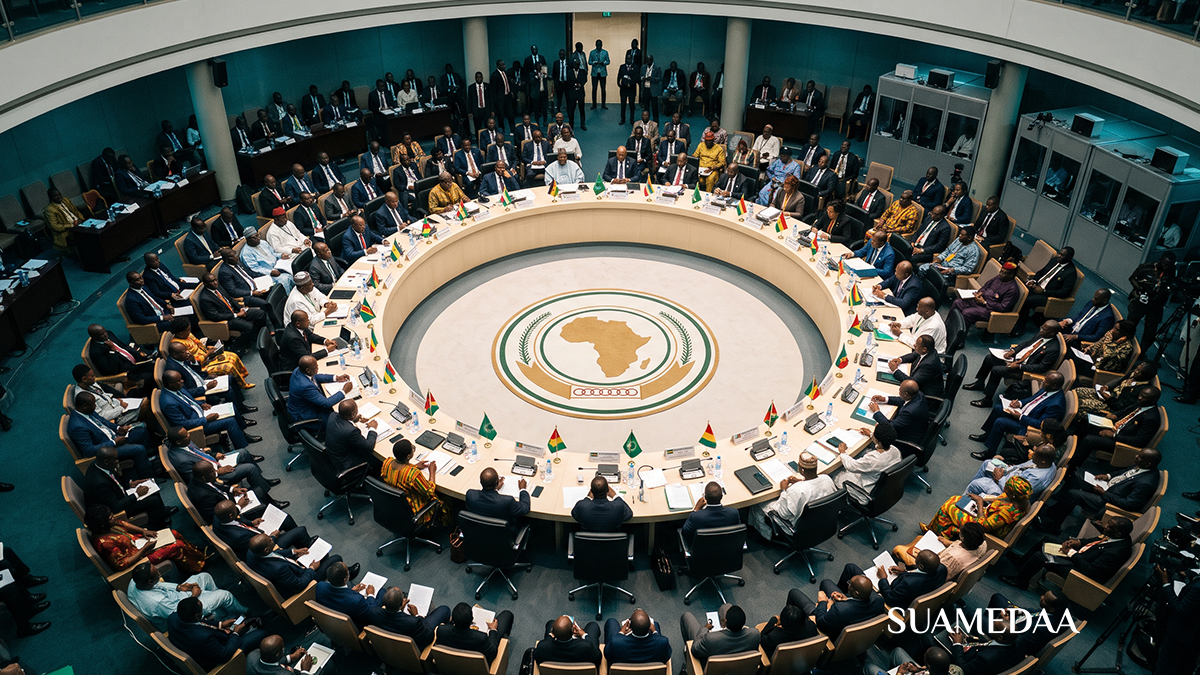
The announcement that COP32 will be held in Addis Ababa, Ethiopia, in 2027 was widely celebrated across the African delegations. It will be only the fourth COP hosted on the African continent, in a process that has met in Dubai, Paris, Baku, and Glasgow. The symbolism is not lost on African negotiators who have spent years making the argument that the countries bearing the greatest climate burden should have more say in where, and in what spirit, the negotiations are conducted.

Chaos, Fire, and German Candour
No honest account of COP30 can omit what happened outside the negotiating rooms. The logistics of hosting 56,000 delegates in a mid-sized Amazonian city proved spectacularly challenging. Accommodation prices reached thousands of dollars per night for unremarkable rooms. Austria cancelled its entire delegation after failing to secure affordable lodging. Some local residents were evicted from their own homes to make way for the surge of delegates. The UN had offered free cabins on cruise ships moored in the harbour, a solution that struck many observers as symbolically dissonant at a conference ostensibly about the future of human habitation.
Inside the venue, the air conditioning failed repeatedly, creating extraordinary heat in a tropical city in November. The drainage was inadequate when rain came down, which in Belém it reliably does. On the 11th of November, Indigenous protesters forced their way through the security perimeter in one of the more visually striking moments of the summit, expressing a frustration that years of formal civil society engagement had not adequately communicated: that the people whose lands and livelihoods are most directly affected by climate change and by extractive industries are the least represented at the table where the decisions are made.
Then, on the 20th of November, a fire broke out in the Africa Pavilion, forcing evacuations and briefly pausing proceedings. Officials said it was contained within six minutes and that thirteen people were treated for smoke inhalation. The timing, with just two days remaining in the summit and negotiations at their most critical juncture, added an unwelcome practical disruption to an already fractious final week.
The most diplomatically notable incident outside the halls was the remark made by German Chancellor Friedrich Merz, who said publicly that he was “delighted to be back in Germany and to have left that place.” Brazilian officials condemned the remarks. Merz declined to apologise. Germany subsequently pledged one billion euros to the Tropical Forests Forever Fund, a contribution that some observers characterised as an expensive form of diplomatic clarification.
The Final Deal: What the Mutirão Actually Says
The “global mutirão,” the collective package that delegates eventually adopted without objection at the closing plenary, runs to more than 150 pages of decision text across the multiple bodies that meet simultaneously at a COP. Its headline elements have been described throughout this article, but it is worth pulling together what the package is and is not.
It is an agreement to triple adaptation finance by 2035, without specifying where the money comes from. It is a set of 59 voluntary indicators for measuring adaptation progress, with a two-year process to refine them. It is a reconfirmation of the goal to mobilise $1.3 trillion in annual climate finance by 2035 from all sources. It is the creation of a Just Transition Mechanism to support the economic transformation of fossil-fuel-dependent economies. It is the first formal acknowledgement in COP text that a 1.5-degree overshoot is now a likely scenario to be planned for. It is a decision to hold three annual dialogues on trade and climate measures, recognising for the first time in COP text the existence of “unilateral trade measures” such as the European Union’s Carbon Border Adjustment Mechanism. It is an agreement to refine the global goal on adaptation, start a dialogue on climate finance architecture, and continue the institutional machinery of the Paris Agreement.
What it is not: a binding commitment to phase out fossil fuels. A funded, specific, time-bound adaptation finance plan. An adequately resourced Loss and Damage Fund. A mechanism for holding countries accountable for delivering the finance they pledge. A formal deforestation roadmap. A mention of fossil fuels anywhere in its text.
Whether the mutirão amounts to meaningful progress or managed retreat from ambition depends on what you compare it to. Compared to previous COPs, it moves some things forward. Compared to what climate science says is necessary, it falls considerably short. That gap has characterised every COP for a generation. At COP30, it did not close.
“The world has agreed to plan for a 1.5-degree overshoot for the first time in formal climate text. That is an honest step. It is not a plan to prevent one.”
What Comes Next
The road from Belém leads to Antalya, Turkey, where COP31 will take place in 2026. Between now and then, the Colombia-Netherlands preparatory conference in April will attempt to build the informal fossil fuel roadmap that the formal process could not deliver. The Bonn intersessionals in 2026 will begin the work programme on climate finance. The Loss and Damage Fund will begin making payouts to affected countries, an operational step that matters whatever the state of the negotiations.
The next round of Nationally Determined Contributions is due in 2030, the five-year cycle established by the Paris Agreement. By that point, the world will have considerably more clarity on whether the carbon reductions pledged in Belém are being delivered, and whether the finance needed to deliver them is actually flowing.
For Ghana and for Africa more broadly, the period between COP30 and COP32 in Addis Ababa is a window for the continent to do what advocates at Belém urged: to position Africa not merely as a victim of climate change, waiting for the finance and technology that wealthier countries have long promised, but as a continent of climate solutions. Africa’s renewable energy potential, its forest resources, its young and growing population, and its relatively low per capita emissions give it a credible argument for leading a development path that the rest of the world needs to follow.
Whether that argument is heard depends, in part, on whether the agreements made in Belém are honoured, and in part on whether the conversations that did not happen in Belém, the ones about fossil fuel phase-out timelines, about binding adaptation finance, about genuinely reformed multilateral development bank lending conditions, happen somewhere between now and 2027 in a form that produces binding obligations rather than aspirational language.
The Amazon was chosen as the backdrop for COP30 because it represents, more visibly than perhaps any other place on earth, what is at stake. That the summit concluded without a binding commitment to stop burning the fuels that are warming it is a fact that the forest itself does not have the luxury of treating as a diplomatic nuance.