Stability Is Not Enough – Central Bank of Ghana Governor Calls on Ghana to Convert Recovery Into Industrial Growth
The numbers tell a story that would have seemed implausible three years ago. Inflation, which peaked at 54.1 percent in December 2022, fell to 3.4 percent by April 2026. Gross international reserves climbed above US$13.9 billion. The policy rate has been cut by 1,400 basis points since early 2025. The cedi, after years of sustained depreciation, appreciated by nearly 40 percent against the dollar in 2025 and has held steady near GH¢10.50 to the dollar in 2026. Ghana’s GDP has crossed the $100 billion mark. The country is on track to exit its $3 billion IMF Extended Credit Facility ahead of schedule.
By any measure, Ghana has achieved a remarkable economic recovery. But Dr. Johnson Pandit Asiama, the Governor of the Bank of Ghana, has a pointed message for anyone tempted to stop there: stability without growth is not enough.
In a series of speeches and policy statements delivered across the first half of 2026, the Governor has consistently redirected the national conversation from the achievement of macroeconomic stabilisation to the harder and more consequential question of what comes next. The answer he keeps returning to is industrial growth, and the message is both a vision and a warning.
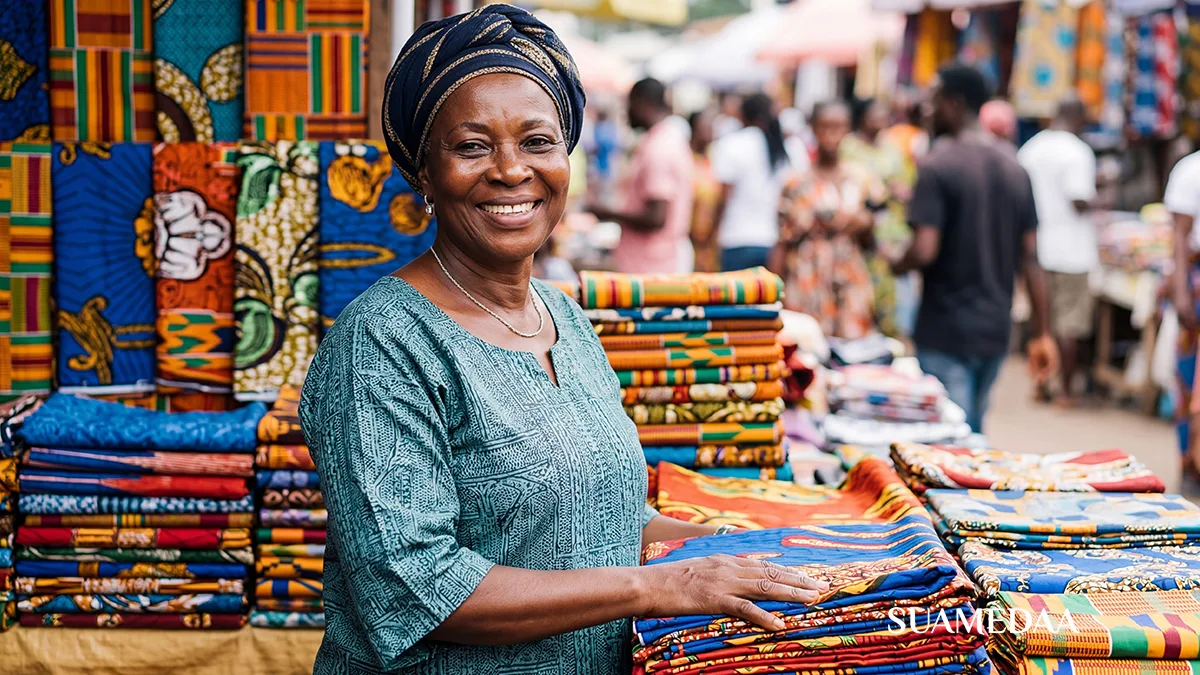
A Curated Guide to Ghana’s Vibrant Markets and Artisan Culture
Here is a deep dive into the best places to experience Ghana’s vibrant commerce and artisan culture.
Read More
The Wisest Profit Margin to Make on Product Sales – A Detailed Guide for Sellers and Entrepreneurs
What percentage should you actually mark up your products? The answer is more nuanced than any single number,…
Read More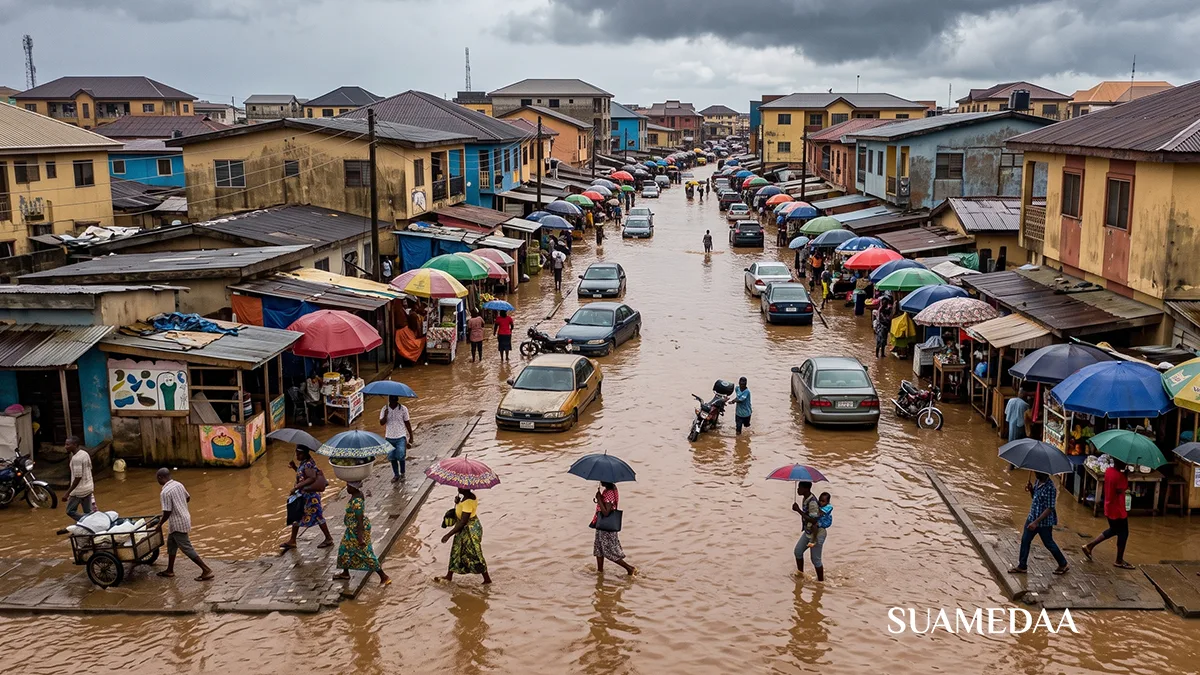
Ghana Interior Ministry Warns of Moderate Rain and Flooding Risk This Monday Morning
The Interior Ministry's advisory is part of a broader effort by government agencies to improve early warning communication…
Read MoreThe recovery in full
To understand the Governor’s argument, the scale of the turnaround needs to be stated plainly.
When Ghana entered its debt restructuring process in late 2022 and subsequently sought IMF support in 2023, the country was facing an acute convergence of crises. Inflation had exceeded 50 percent, the cedi was in freefall, international capital markets were closed to Ghanaian borrowing, and the banking sector was still carrying scars from the 2017 to 2019 “financial sector cleanup”. The government’s ability to finance basic operations depended on emergency support.
Dr. Asiama, appointed Governor by President John Mahama in February 2025, inherited a stabilisation programme already underway but far from complete. In the 12 months from February 2025 to February 2026, the six key economic indicators shifted in ways that analysts at the Ghana Export-Import Bank conference described as a chain reaction rather than parallel achievements. Headline inflation fell from 23.1 percent to 3.3 percent, a reduction of 19.8 percentage points. The Monetary Policy Rate dropped from 27 percent to 14 percent. The cedi strengthened. External buffers built. Investor confidence returned.
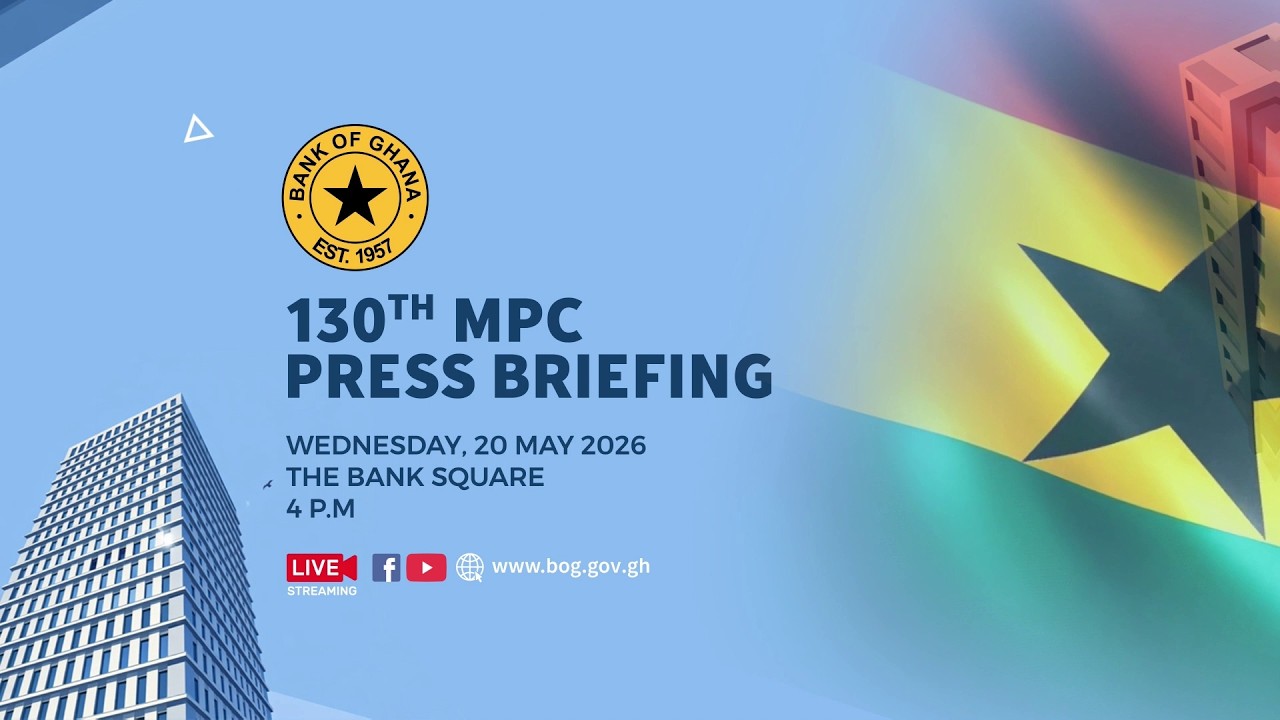
At the opening of the 130th Monetary Policy Committee meeting on 18 May 2026, the Governor confirmed that the trajectory had continued. “The Ghanaian economy has improved meaningfully since our last meeting in March 2026,” he said. “This reflects the sustained reform efforts of recent years.” He pointed to stronger external buffers, improved investor confidence, and gains in debt sustainability as the markers of a recovery that had moved from fragile to credible.
But in the same breath, he signalled the pivot. Ghana had stabilised. Now it needed to grow in a different way.
Taxation in Ghana – How the System Works and What Has Changed in 2026
Ghana's tax system is administered by the Ghana Revenue Authority (GRA), the body responsible for collecting taxes, enforcing…
Read More
Ghana’s Flood Disaster – A Recurring Crisis fueled by indiscipline
Ghana's flooding crisis continues in 2026, with Accra and Tema underwater again today. Read what's driving the disaster…
Read More
How to Rescue Your Best Outfits – A Guide to Removing tough Stains from African Fabrics
Spilling something on a basic cotton t-shirt is annoying, but spilling oil on a custom-tailored Adire two-piece or…
Read More
The industrialisation argument
The Governor made his case most directly at the 77th Annual New Year School and Conference organised by the University of Ghana, where he committed the Bank of Ghana’s institutional weight behind an explicit policy direction. “In 2026, the emphasis will be on the quality of intermediation, ensuring that capital supports small and medium-scale enterprises, manufacturing, agro-processing, and export-oriented enterprises that drive structural transformation,” he said. The central bank, he added, would create an enabling environment to channel more credit toward the manufacturing sector specifically to boost industrialisation.
This is a departure from the language of a central bank focused on fire-fighting. Channelling credit toward manufacturing and agro-processing is a structural ambition. It requires not just stable interest rates but financial institutions willing to lend to productive enterprises over the medium to long term, something Ghana’s banking sector has historically struggled to do.
At the heart of the Governor’s argument is a structural diagnosis that Ghana’s economists and policymakers have debated for decades. The country’s economy has grown in episodes but without consistent deepening. Recovery has often been driven by commodity windfalls, particularly gold and cocoa, and by services sector expansion, while manufacturing has remained underdeveloped relative to Ghana’s size and potential. When commodity prices fall or external financing tightens, the gains unwind. What Ghana has repeatedly lacked is the kind of industrial base that creates durable, employment-generating growth that is not dependent on what the ground produces or what foreign capital is willing to lend.
The Governor’s framing of 2026 as a “bridge year” is important. It signals that the Bank of Ghana regards the current macroeconomic environment not as a destination but as a window. The conditions for structural transformation, stable prices, a functional exchange rate, accessible credit, and investor confidence, are now present in a way they have not been for several years. The question is whether Ghana uses that window.
The digital dimension
The industrial growth argument is not confined to factories and farms. Dr. Asiama has been equally insistent on the role of digital finance and homegrown technology in driving the next phase of economic development.

The Six Tools of Strategic Thinking
There is a difference between being smart and being strategic. Plenty of intelligent people make poor decisions because…
Read More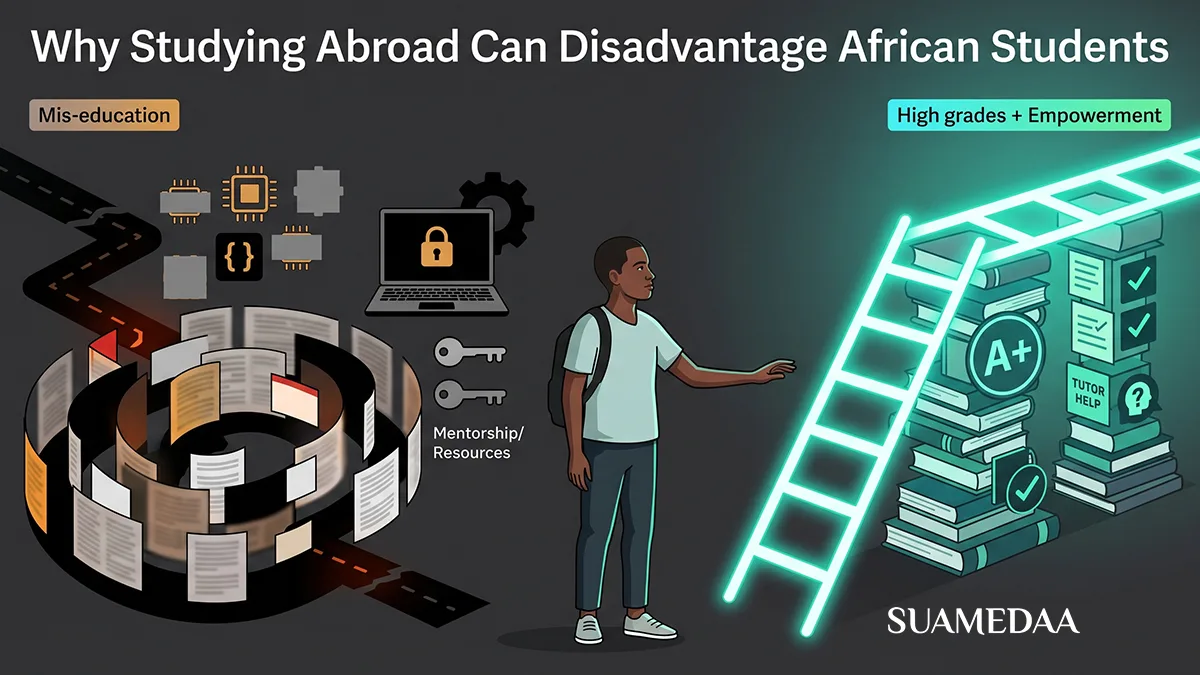
Why Studying Abroad Can Disadvantage African Students
Discover how studying abroad can sometimes disadvantage African students through intentional mis-education, blocked technology access, and unfair preparation…
Read More
Ghana 2025 Constitution Review – Learning, Participation, and What Comes Next
The review matters because a constitution is meant to do more than provide political procedures. It should also…
Read MoreSpeaking at the 2026 3i Africa Summit on fintech and digital technology investments in Accra, the Governor argued that Africa must support homegrown digital advancement and leverage emerging technologies to create value and drive growth, rather than remaining dependent on externally designed systems. With at least 49 percent of adults in sub-Saharan Africa now holding access to digital financial services, he said the continent had built sufficient momentum for technology-led growth but had not yet converted that momentum into structural economic change.
“Mobile money and branchless banking models have long driven this progress, bringing financial services closer to underserved populations,” he said. “It is now being reinforced by broader technological developments, including digital credit, digital trade, and evolving micro, small, and medium enterprise financing models.” The next phase of digital finance, he argued, will not be defined by payments alone. It will be defined by whether digital tools are used to finance productive activity, particularly the small and medium enterprises that make up the backbone of Ghana’s private sector.
The Bank of Ghana’s operationalisation of the Virtual Asset Service Providers (VASP) Act, passed in 2025, sits within this same framework: building regulatory architecture that keeps pace with the rapid evolution of digital finance, ensuring Ghana is a credible destination for the kind of technology-led investment the Governor is calling for.
The global context
The Governor’s domestic industrial argument is taking place against an external environment that makes it both more urgent and more difficult.
At the African Consultative Group meeting during the 2026 IMF-World Bank Spring Meetings in Washington, Dr. Asiama placed Ghana’s recovery within a continent-wide challenge. The IMF had projected that Africa’s growth would slow from 4.5 percent in 2025 to 4.2 percent in 2026, citing tightening global financing conditions, rising debt burdens, and geopolitical tensions. Against this backdrop, the Governor positioned Africa not as a passive recipient of global shocks but as a region that had already made difficult adjustments and now required the international system to respond in kind. He called for expanded concessional financing, faster deployment of climate-related funds, and a more agile IMF capable of responding to overlapping crises with speed and scale.
The message was that structural transformation in Africa cannot happen if the international financing environment perpetually pulls in the opposite direction. Ghana can channel credit to its manufacturers, but if global rates remain elevated and external financing remains expensive, the cost of investment stays prohibitive for exactly the enterprises the Governor is targeting.
The warning embedded in the vision
For all its confidence, the Governor’s argument carries a quietly insistent warning. It is visible in a phrase that has surfaced in multiple addresses: stability without growth is not enough.
The World Bank’s 2025 Policy Notes, Transforming Ghana in a Generation, provided the sobering counterpoint that the Governor’s policy direction is designed to answer. Despite the macroeconomic recovery, international poverty increased to 39.6 percent in 2024. The poverty rate is projected to hold at 37.1 percent in 2026 but is forecast to rise to 55.2 percent at the lower-middle-income line by 2027 if inclusive growth is not prioritised. In other words, the gains of macroeconomic stabilisation have not yet reached the majority of Ghanaians in any tangible way. Inflation is down, but the cost of living remains high relative to incomes. The cedi is stable, but wages have not kept pace with the depreciation of recent years.
This is the gap that the industrial growth argument is trying to close. A central bank can create the conditions for productive lending. It cannot, by itself, build factories, train workers, create export markets, or reform the tax and land regimes that determine whether a manufacturing business in Ghana is viable. The Governor is pointing in a direction. The institutions and policies that need to follow belong to others.
Who Dr. Asiama is
Dr. Johnson Pandit Asiama was appointed Governor of the Bank of Ghana in February 2025 by President John Dramani Mahama, succeeding Ernest Addison. He holds an MPhil in Economics from the University of Ghana and a PhD in Economics from the University of Southampton. His career at the Bank of Ghana began in 1996, and he served across Banking Supervision, Financial Markets, and Research departments before his appointment as Second Deputy Governor in 2016. He also served as Director of the Macroeconomic Management Department at the West African Institute for Financial and Economic Management (WAIFEM), where he led regional policy training for central banks and finance ministries across ECOWAS.
His tenure has been defined by post-crisis adjustment, and his public positioning in 2026, insistent on converting recovery into structural change, reflects a governor who understands that the hard work of economic management has not ended. It has shifted.
What it means for Ghana
The Bank of Ghana Governor’s repeated calls to turn recovery into industrial growth amount to one sustained argument: the stabilisation programme gave Ghana back its options. What Ghana does with those options will determine whether the recovery becomes a transformation or simply another episode before the next crisis.
The conditions are better than they have been in years. Inflation is low. The exchange rate is stable. The banking sector is functioning. International investors are paying attention. The IMF programme is nearly complete. Ghana is, as economists have taken to calling it, in its bridge year.
The question the Governor keeps posing is whether the bridge leads somewhere. Whether the credit that the banking sector is now capable of extending will actually reach the manufacturers, the agro-processors, the export enterprises, and the technology companies that create the jobs and value chains that make growth durable. Whether the digital financial infrastructure that has transformed how Ghanaians transact will be used to finance productive enterprise rather than simply smooth consumption.
These are questions that require answers from government, from the private sector, from development institutions, and from the businesses and entrepreneurs who will ultimately have to build what the Governor is calling for. The central bank has done its part. It is now asking Ghana to do the rest.
- The benefits of Mango TeaMango leaf tea is a refreshing herbal drink with a naturally fragrant flavor, traditionally enjoyed for its wellness benefits; learn how to brew it and enjoy a soothing cup.
- A Curated Guide to Ghana’s Vibrant Markets and Artisan CultureHere is a deep dive into the best places to experience Ghana’s vibrant commerce and artisan culture.
- The Wisest Profit Margin to Make on Product Sales – A Detailed Guide for Sellers and EntrepreneursWhat percentage should you actually mark up your products? The answer is more nuanced than any single number, but the principles are clear, time-tested, and learnable.
- Ghana Interior Ministry Warns of Moderate Rain and Flooding Risk This Monday MorningThe Interior Ministry's advisory is part of a broader effort by government agencies to improve early warning communication to the public and reduce the human and economic cost of weather-related emergencies.
- The Hidden Architecture of Decision Making – Six Traps That Undermine StrategyTable of Contents 1. Sunk Cost Fallacy 2. Confirmation Bias 3. Overconfidence 4. Anchoring 5. The Planning Fallacy 6. Loss Aversion How These Traps Interact Closing Thought Knowing the right mental tools is only half the battle. Even people who understand second order thinking, mental simulation, and strategic withdrawal can still make poor decisions, because the… Read more: The Hidden Architecture of Decision Making – Six Traps That Undermine Strategy