Ghana’s Flood Disaster – A Recurring Crisis fueled by indiscipline
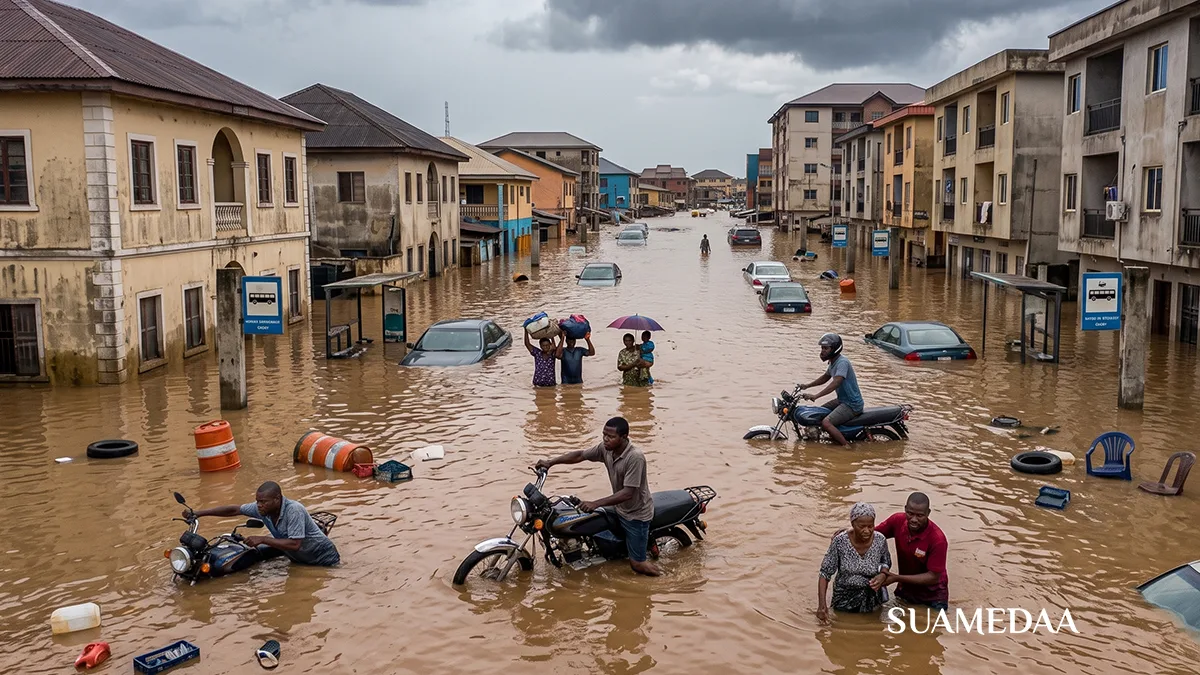
As of this Monday morning, the 29th of June, 2026, heavy rains have once again turned parts of Accra into a series of impassable rivers. The National Disaster Management Organisation (NADMO) has issued an alert confirming that both Accra and Tema are experiencing flooding. The Tetteh Quashie interchange is choked with stranded vehicles. The stretch beneath the rail overpass from Spintex Road through to the Polo Grounds and Hajj Village is submerged. Abeka, Lapaz, Achimota, Dzorwulu, and Tesano are all heavily affected. On the southwestern side of the city, commuters travelling from Kasoa toward Accra along the N1 highway through the Weija barrier and Mallam are facing serious disruption, with floodwater taking over entire sections of the road. Some residents in flood-prone communities have already begun moving their belongings to higher ground as water levels keep rising.
This is not an isolated event. It is the latest chapter in a flooding crisis that has gripped Ghana for over a decade, and 2026 has already been a particularly brutal year. Just weeks ago, on the 3rd of June, exactly eleven years after the catastrophic 2015 disaster that killed more than 150 people near Kwame Nkrumah Circle, Accra flooded again. A building collapsed. Markets burned. Rescue teams pulled nine people from floodwaters in Oyarifa and Ashongman, fortunately without loss of life in those specific incidents.
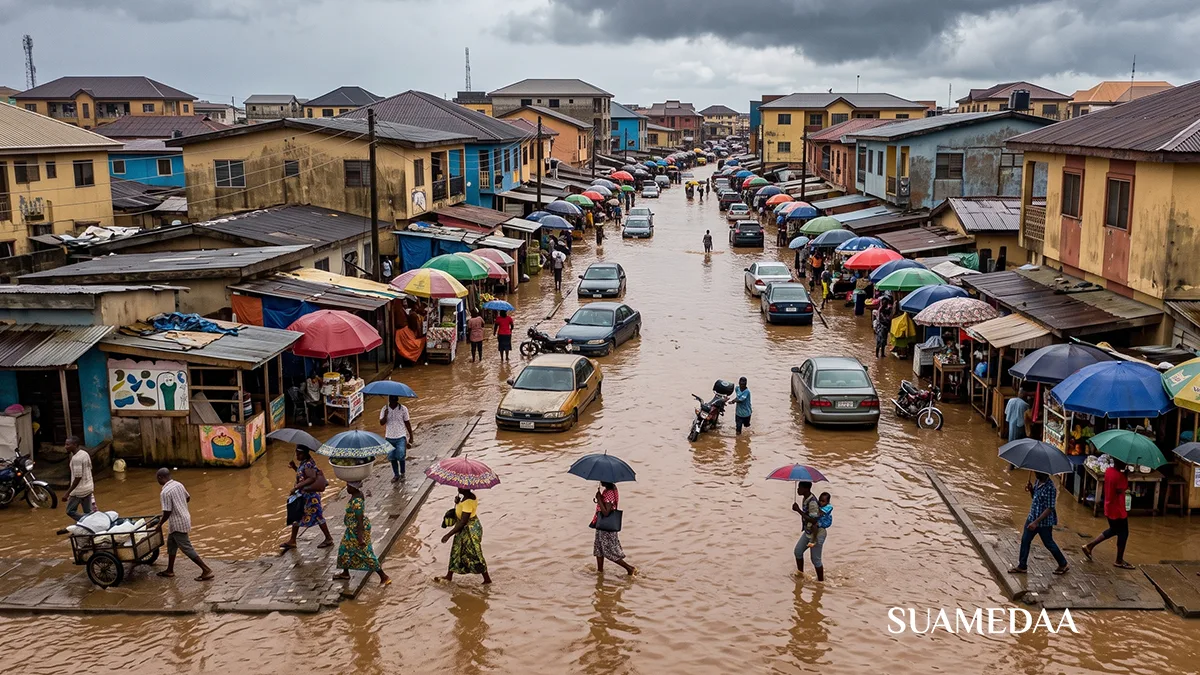
Beyond the capital, the picture is just as grim. In the Western Region, more than 1,700 people have been displaced in the Wassa Amenfi West Municipality after nearly a week of torrential rain, with residents pointing to illegal mining as a major factor worsening the damage, since the activity has degraded land and blocked natural waterways. In the Central Region, 18 deaths have been recorded after torrential rains swept across 13 districts. In Cape Coast, eight houses, mostly mud structures, collapsed during a heavy downpour, killing four people. In the Volta Region, NADMO is actively managing flooding across five municipalities and districts. Earlier in the year, on the 29th of March, communities in the Upper West Region, including Kambali, Mangu, Kpaguri, and Kumbiehi, were hit by a downpour that lasted over three hours, submerging homes and shops and washing away bridges.
Why This Keeps Happening
Experts and officials largely agree on the underlying causes, even if they disagree on how much weight to give each one.
Poor drainage infrastructure. Many of Ghana’s urban drainage systems were designed decades ago for populations a fraction of their current size. As cities have grown, the drains have not kept pace, so even moderate rainfall now overwhelms them.
Construction on waterways and wetlands. Many of the communities that flood every year, including Alajo, Odawna, Kaneshie, Weija, and Kasoa, sit on or near natural flood plains and drainage corridors that historically absorbed excess rainwater. Building on these areas removes the land’s natural capacity to manage water.
Choked gutters and improper waste disposal. Plastic waste and debris regularly clog drains, a problem President John Dramani Mahama recently described as partly a matter of “indiscipline,” a characterization that has drawn criticism from those who argue it understates the role of infrastructure failure and weak enforcement of building regulations.
Climate change. Meteorologists note that rainfall patterns across Ghana, especially in the north, are becoming less predictable, with longer dry spells followed by short, intense bursts of rain. This increases surface runoff and flood risk even where total annual rainfall has not changed dramatically.
Illegal mining. In parts of the Western Region, illegal small-scale mining has degraded land and obstructed natural waterways, a factor residents say has made flooding far worse than it would otherwise be.
Dam spillage. In 2023, the Volta River Authority released water from the Akosombo and Kpong dams during heavy rains, displacing over 35,000 people across eight districts. This remains a less frequent but high-impact contributor to flood disasters downstream.
The Government’s Response
The Minister for Works, Housing and Water Resources, Kenneth Gilbert Adjei, recently announced a set of measures aimed at addressing the recurring crisis. These include accelerating drainage improvement projects, removing structures that obstruct waterways, strengthening early warning systems, and intensifying the desilting and maintenance of drainage channels in major flood-prone areas. Longer-term plans focus on expanding drainage infrastructure, improving urban planning enforcement, restoring wetlands, and enforcing existing environmental regulations. Emergency response has already been activated through the Ghana Hydrological Authority, NADMO, and Metropolitan, Municipal and District Assemblies.
Ministry of Interior issued alert to all citizenry and admonished them to stayindoors due to the long hours of continuous rain and flooded roads be it foot or in a vehicle.
Whether these measures will break the cycle remains an open question. Critics point out that Ghana has produced flood risk assessments, committees, and reports for over a decade without translating them into durable infrastructure on the ground. Some thing whose end must be now.
Advice for Commuters
If you are travelling through flood-affected areas in Accra, Tema, or any other flood-prone part of Ghana, keep the following in mind.
Avoid submerged roads entirely if you can.
Floodwater often hides the true depth and condition of the road beneath it. A road that looks passable may have a washed-out section, an open manhole, or a damaged culvert underneath the surface. Even six inches of fast-moving water can cause a vehicle to lose control, and roughly a foot of water can float many cars.
Never drive around barriers or through areas NADMO has flagged as flooded.
Barriers exist because officials have already identified the route as unsafe.
Check road conditions before you set out.
Listen to radio updates, check NADMO alerts, and look at real-time reports from local news outlets before choosing your route, especially during the rainy season from April through mid-June and again from September through November.
If you are caught in rising water while driving, abandon the vehicle if it stalls and water keeps rising.
Move to higher ground immediately rather than staying with the car. Cars can be swept away or become death traps if water rises quickly.
Avoid walking through floodwater wherever possible.
Floodwater can conceal open drains, sharp debris, electrical hazards from downed power lines, and strong currents. If you must walk, use a stick or pole to check the ground ahead of you and move slowly.
Allow extra time for your journey.
Flooded interchanges like Tetteh Quashie and routes through Spintex, Weija, and Mallam regularly back up for hours during heavy rain. Build in buffer time or consider delaying non-essential travel until conditions improve.
Keep your phone charged and carry a small emergency kit in your vehicle.
A torch, a basic first aid kit, and a fully charged phone can make a significant difference if you become stranded.
Advice for Residents of Flood-Prone Areas
If you live in a community that has flooded before, such as Kaneshie, Adabraka, Alajo, Dansoman, Nima, Weija, Kasoa, Odawna, or similar low-lying areas, the following steps can reduce risk to your life and property.
Move valuables and important documents to higher locations inside your home before the rains intensify.
Keep identification papers, certificates, and cash in a waterproof container that you can grab quickly if you need to evacuate.
Know your evacuation route in advance.
Identify the nearest higher ground or designated NADMO shelter and make sure every member of your household, including children, knows where to go.
Do not wait until water has entered your home to act.
Once water starts rising in your street, move belongings and vulnerable family members, including the elderly, children, and anyone with mobility difficulties, to safety early rather than waiting to see how bad it gets.
Keep household drains and gutters near your property clear of waste.
While this will not solve the larger infrastructure problem, clogged personal drainage makes localized flooding worse and faster.
Avoid storing fuel, gas cylinders, or flammable materials at ground level.
The 2015 disaster that killed over 150 people was made catastrophic by floodwater mixing with leaked fuel near a filling station, which triggered an explosion. Keeping flammable materials elevated and secured reduces this specific risk.
Be alert to structural risk in mud or poorly built structures.
Several deaths in the Central Region this year resulted from house collapses during heavy downpours. If your home shows cracks, leaning walls, or water seepage at the foundation, treat that as an urgent warning sign, not a minor issue.
Stay tuned to NADMO alerts and Ghana Meteorological Agency (GMet) warnings.
Early warning communication through radio, television, and social media has improved in recent years. Acting on these warnings before rain intensifies, rather than after, is the single most effective thing residents can do.
After water recedes, be cautious about returning home too quickly.
Floodwater can leave behind contaminated water, weakened structures, and disease risk. Check for structural damage and avoid drinking tap water until authorities confirm it is safe.
Consider community-level drainage advocacy.
Many of the worst-affected communities sit on natural floodplains. Where possible, supporting local efforts to keep waterways and drainage corridors free of illegal construction and waste can reduce collective risk, even though this is a longer-term effort.
A Predictable Disaster
What makes Ghana’s flooding crisis especially painful is not that it is unexpected. Residents of Accra’s flood-prone neighborhoods do not gasp in disbelief when the rains come. They recognize the pattern immediately, because they have lived through it many times before. The communities that flood this year are largely the same ones that flooded last year, and the year before that, stretching back over a decade.
The path forward, according to most experts who study the issue, requires sustained investment in drainage infrastructure, enforceable restrictions on building in floodplains, restoration of wetlands that once absorbed excess rainwater, and consistent year-round enforcement against waste disposal in waterways, not just emergency response after disaster strikes. Until that happens, the practical reality for commuters and residents alike is that vigilance, preparation, and quick action during the rainy season remain the most reliable forms of protection available.
If you or someone you know has been displaced or affected by the ongoing flooding, NADMO regional offices and local district assemblies are the first point of contact for emergency assistance and shelter.
- Taxation in Ghana – How the System Works and What Has Changed in 2026Ghana’s tax system is administered by the Ghana Revenue Authority (GRA), the body responsible for collecting taxes, enforcing compliance, and educating the public on tax obligations. Taxes account for more than 60 percent of government revenue, funding healthcare, education, security, justice, and infrastructure. Despite that reliance, compliance remains a persistent challenge. Only around 29 percent of… Read more: Taxation in Ghana – How the System Works and What Has Changed in 2026
- Ghana’s Flood Disaster – A Recurring Crisis fueled by indisciplineGhana's flooding crisis continues in 2026, with Accra and Tema underwater again today. Read what's driving the disaster and get safety advice for commuters and residents in flood-prone areas.
- How to Rescue Your Best Outfits – A Guide to Removing tough Stains from African FabricsSpilling something on a basic cotton t-shirt is annoying, but spilling oil on a custom-tailored Adire two-piece or a vintage Kente cloth feels like a genuine crisis. Traditional African textiles rely on rich, saturated dyes and delicate weaving techniques. Because of this, standard commercial stain removers will often bleach the color right out of the fabric,… Read more: How to Rescue Your Best Outfits – A Guide to Removing tough Stains from African Fabrics
- The Six Tools of Strategic ThinkingThere is a difference between being smart and being strategic. Plenty of intelligent people make poor decisions because they think in straight lines, react to the surface of a situation, and stop analyzing the moment an answer feels good enough. Strategic thinkers operate differently. They have a set of mental habits that let them see further,… Read more: The Six Tools of Strategic Thinking
- Why Studying Abroad Can Disadvantage African StudentsDiscover how studying abroad can sometimes disadvantage African students through intentional mis-education, blocked technology access, and unfair preparation - plus how support, mentorship, and the right resources can still help students achieve high grades and thrive.